Home EV Charger Load Calculation: Step-by-Step 2026
Home EV charger load calculation explained step by step: NEC methods, worked 200A and 100A panel examples, and what to do when the math says no.
11 MIN READ · UPDATED 2026-09-22
Key takeaways
- A load calculation compares your panel's capacity against existing loads plus the new charger — it is required by code, not optional.
- EV chargers count as continuous loads: multiply the charger amps by 125% when sizing the circuit and breaker.
- Most 200A services can absorb a 40–48A charger; most 100A services cannot without load management or an upgrade.
- Smart load management devices can add a charger without a panel upgrade by pausing charging when the house peaks.
- Have a licensed electrician perform and document the calculation — inspectors and insurers both ask for it.
Every EV charger permit application asks the same question: does your electrical panel have room for the new load? The answer comes from a load calculation — a formal NEC worksheet that totals what your house already draws and checks whether a 32-, 40-, or 48-amp charger fits safely. It is the step that decides between a $1,500 install and a $6,000 service upgrade, and understanding it keeps you from paying for work you do not need — or skipping work you do. Here is the full walkthrough, with worked examples for 200-amp and 100-amp panels.
What a Load Calculation Actually Is
Article 220 of the National Electrical Code defines how to compute the load a dwelling's electrical service must be able to carry. For existing homes adding a new load, electricians generally use the standard method: general lighting and receptacles at 3 volt-amps per square foot, small-appliance and laundry circuits at fixed values, major appliances at their nameplate ratings, and HVAC at 100% of the largest heating or cooling load (you do not count both, since they never run simultaneously). Demand factors then reduce certain categories — the first 10,000 VA of general load counts at 100%, the remainder at 40% — reflecting that not everything runs at once.
The EV charger enters this worksheet as a new continuous load, and continuous loads get special treatment: the NEC requires circuits and overcurrent protection sized at 125% of the continuous current. A 48-amp charger therefore needs a 60-amp breaker and conductors rated for 60 amps; a 40-amp charger needs a 50-amp circuit; a 32-amp charger needs a 40-amp circuit. This 125% rule is the single most misunderstood number in home charging — homeowners shop for a 48-amp charger and assume a 50-amp breaker suffices. It does not.
Why does any of this matter to you as the homeowner? Three reasons. First, the permit: your building department will want to see the calculation before issuing the electrical permit. Second, safety: an overloaded service does not politely announce itself — it shows up as nuisance main-breaker trips on the coldest night of the year, or worse, as chronic overheating. Third, money: the calculation is the document that proves whether you need a $5,000 panel upgrade or can proceed with a $1,800 charger install. It is worth understanding even though a licensed electrician should perform it.
Step 1: Gather Your Panel's Facts
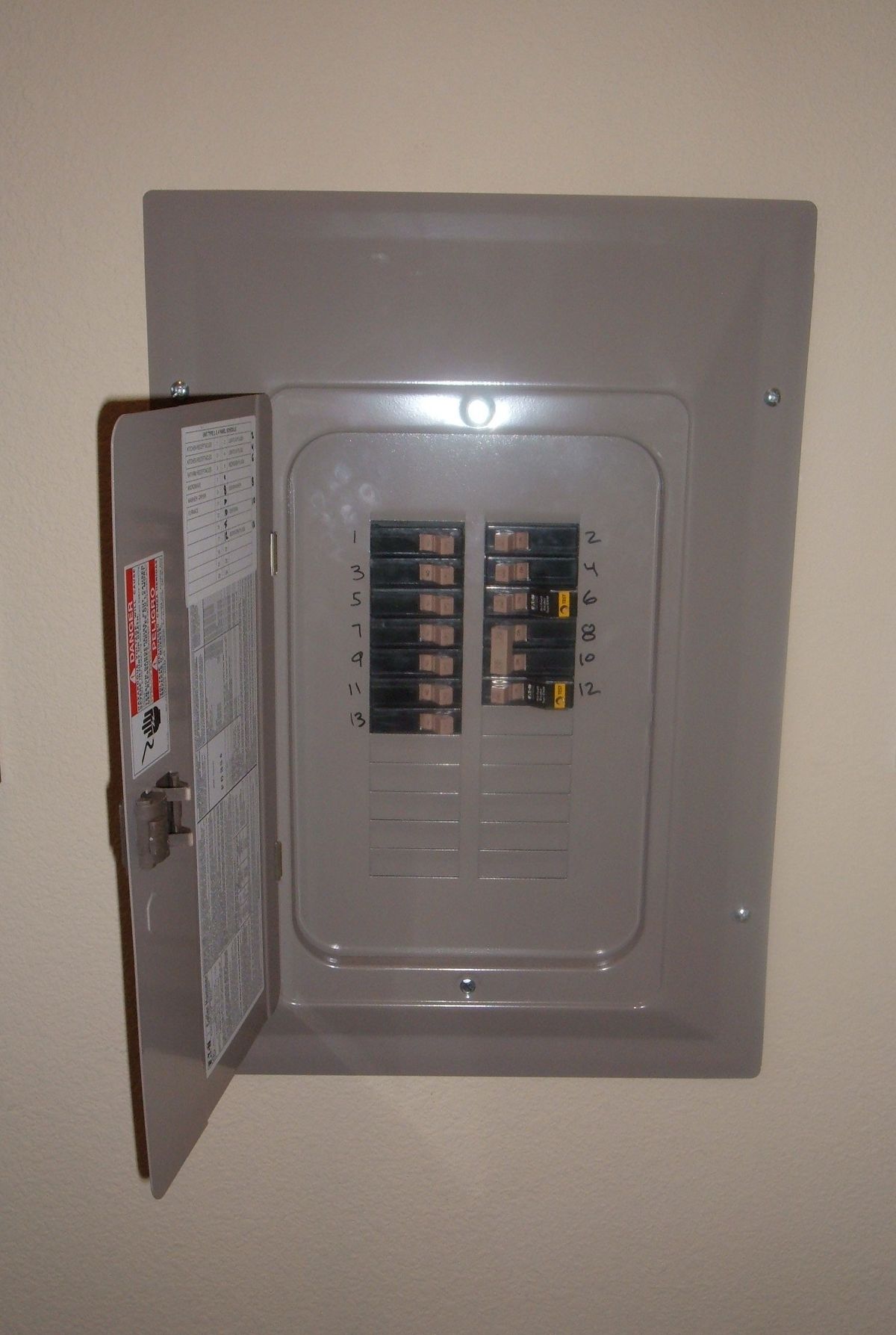
Before any math, collect the inputs. Find your main breaker rating — 100, 150, or 200 amps are the common residential sizes — and note whether the panel has physical space for a new double-pole breaker. Then inventory the major loads: electric range or cooktop nameplate rating, electric dryer, electric water heater, HVAC system tonnage or nameplate amps, pool or hot tub equipment, and any existing subpanels. Your home's square footage (finished, conditioned space) drives the general lighting calculation.
The nameplate is the source of truth, not your memory. That 20-year-old electric dryer might draw 5,000 watts; the replacement you are eyeing might draw 5,400. For HVAC, use the larger of the heating or cooling load from the equipment nameplate — in most of the country that is the air conditioner, but in all-electric homes with heat strips, heating often wins. If you have gas heat, gas water heating, and a gas dryer, your electrical baseline is dramatically lower than an all-electric home of the same size, and that difference is usually what makes or breaks the charger math.
One more input people forget: existing 240-volt loads added after the house was built. Hot tubs, welders, kilns, and second HVAC zones are common culprits that never appeared on the original plans. Walk the panel with your electrician and account for every double-pole breaker. The calculation is only as honest as its inputs, and an inspector who spots an unlisted 50-amp hot tub breaker will send the paperwork back.
- Main service size from the main breaker (100A, 150A, 200A) — not the panel's maximum rating.
- Square footage of finished living space for the general lighting load.
- Nameplate ratings of range, dryer, water heater, HVAC, and any other 240V equipment.
- Fuel types — gas appliances radically reduce the electrical baseline.
- Spare breaker spaces — capacity on paper means nothing without a place to land the breaker.
Step 2: Run the Standard Method Worksheet
Here is the worksheet logic your electrician follows, simplified so you can follow along. Start with general lighting and receptacles: multiply finished square footage by 3 VA. A 2,000-square-foot home gives 6,000 VA. Add 1,500 VA each for the two required small-appliance circuits and 1,500 VA for the laundry circuit. That is your general load subtotal — in this example, 10,500 VA. Apply the demand factor: the first 10,000 VA at 100%, anything above at 40%. Here, 10,000 plus 40% of 500 gives 10,200 VA of demand load.
Next, add the major appliances at nameplate with their own demand treatment. An electric range at 12,000 VA, a dryer at 5,000 VA, a water heater at 4,500 VA — these generally enter at or near full value in the standard method for a single dwelling, with the code's demand tables applied where eligible. Then add HVAC: the larger of heating or cooling at 100%. A 4-ton air conditioner might contribute roughly 5,800 VA; electric heat strips could contribute far more. Sum everything, convert to amps at 240 volts (divide VA by 240), and you have your existing demand load.
Finally, add the EV charger at 125% of its rated current, converted to VA. A 48-amp charger becomes 60 amps of calculated load, or 14,400 VA at 240 volts. Add that to the existing demand, convert back to amps, and compare against the service rating. If the total stays at or under the service size — with a comfortable margin, not scraping the line — the charger fits. If it exceeds it, you have a problem to solve, which the later sections address honestly.
Worked Example: 200A Panel Adding a 48A Charger
Take a 2,400-square-foot home with a 200-amp service, gas heat and gas water heating, an electric range (12,000 VA), an electric dryer (5,000 VA), and a 4-ton air conditioner as the largest HVAC load (about 5,800 VA). General lighting: 2,400 × 3 = 7,200 VA, plus 4,500 VA for small-appliance and laundry circuits, gives 11,700 VA; after demand factors, roughly 10,680 VA. Add the range, dryer, and AC at their values: about 22,800 VA. Total existing demand lands near 33,500 VA, or about 140 amps at 240 volts.
Now add the 48-amp charger at 125%: 60 amps, or 14,400 VA. New total: roughly 47,900 VA, or just under 200 amps. That is uncomfortably close to the line — and this is exactly where professional judgment matters. An electrician might note that the range, dryer, and AC essentially never peak simultaneously with overnight EV charging, and many jurisdictions accept the calculation as shown. But a conservative electrician — or a strict inspector — might recommend dropping to a 40-amp charger (50 amps calculated, 12,000 VA), which lands the total near 190 amps with real margin.
The lesson: 200 amps usually accommodates a full-power charger in a gas-appliance home, but it is not automatic. All-electric homes with heat pumps, electric water heating, and induction ranges can push a 200-amp service to its limit even before the charger. This is why the worksheet exists — the answer depends on your specific loads, not on the number 200 alone.
Worked Example: 100A Panel — When the Math Says No
Now a 1,600-square-foot all-electric home with 100-amp service: electric heat strips as the heating load (a brutal 15,000 VA), electric water heater (4,500 VA), electric range (12,000 VA), dryer (5,000 VA), and a modest AC. General lighting: 1,600 × 3 = 4,800 VA plus 4,500 VA for appliance and laundry circuits = 9,300 VA, all at 100% demand since it is under 10,000. Add the appliances and the heating load: the existing demand easily reaches 85–95 amps. There is simply no room for a 60-amp calculated charger load — the total would exceed 150 amps on a 100-amp service.
This is the most common bad-news scenario in older homes, and it is worth understanding precisely because the temptation is to fudge it. You cannot. The main breaker will trip when the heat strips, water heater, and charger coincide on a cold evening — and repeated tripping is the system working as designed, protecting wire rated for 100 amps from a 150-amp reality. Ignoring the calculation risks overheated service conductors, and no inspector will sign off on it.
But no does not mean never — it means not this charger on this service as configured. The next section covers the legitimate paths forward, from smallest to largest intervention. Many homeowners in this situation are surprised to learn that a 24-amp charger (30 amps calculated) plus a load management device gets them 100+ miles of overnight range for a fraction of a service upgrade's cost.
Your Options When the Calculation Fails
Option one is the smallest charger that meets your driving needs. Charging speed scales linearly with amperage, and most Americans drive under 40 miles a day — a 16-amp charger on a 20-amp circuit restores roughly 120 miles overnight, which covers the vast majority of commutes. A 24-amp charger on a 30-amp circuit handles about 180 miles. Right-sizing the charger to actual driving instead of maximum bragging rights is the cheapest compliant path, and the hardware costs less too.
Option two is a listed load management system. These devices monitor your total service current in real time and pause or throttle EV charging when the house approaches its limit — NEC Article 625 explicitly recognizes energy management systems as a legitimate way to avoid overloads. A load manager typically costs $500–$1,200 installed and can make a 40-amp charger work on a service that the raw calculation says cannot support it. Inspectors accept listed systems; what they will not accept is a handshake promise to never run the dryer while charging.
Option three is the service upgrade: new panel, heavier service conductors, utility coordination, and sometimes a meter socket replacement, running $2,500–$8,000 depending on scope and market. It is the right answer when the house genuinely needs more capacity — growing families adding heat pumps, induction ranges, and two EVs will outgrow 100 amps regardless. Treat the upgrade as infrastructure that serves the next twenty years of electrification, not just today's charger, and get the load calculation redone for the future loads you can already see coming.
- Derate the charger: 16–24A covers most daily driving; cheapest compliant option.
- Load management device: $500–$1,200 installed; NEC-recognized; pauses charging during house peaks.
- Service/panel upgrade: $2,500–$8,000; the durable answer for all-electric homes planning more electrification.
- What never works: skipping the calculation, upsizing the main breaker without utility approval, or 'we'll just be careful.'
Permits, Inspections, and What Your Electrician Needs
The load calculation is a permit document. Your electrician submits it with the electrical permit application, showing existing loads, the new charger load at 125%, and the resulting total against the service rating. Some jurisdictions provide a standard worksheet form; others accept the electrician's own format as long as the NEC article references are clear. Either way, expect the plan reviewer to check the math — this is the most-scrutinized page of a charger permit.
At inspection, the work gets checked against the calculation: breaker size matches the 125% rule, conductor sizing matches the breaker, the disconnect is where required, and GFCI protection is present where the code requires it. If you used a load management device to make the numbers work, the inspector will verify it is a listed device installed per its instructions — the settings that limit charging current must be configured and, on many units, sealed or password-protected so a homeowner cannot casually override them.
Hire a licensed electrician and ask to see the actual worksheet, not just the verdict. A professional will walk you through the inputs and show you exactly where your headroom sits — and will tell you plainly when the answer is a smaller charger or an upgrade rather than creative arithmetic. Costs are 2026 US market ranges; get itemized local quotes. A load calculation typically costs $150–$350 standalone, though most installers fold it into the project quote.
Frequently asked questions
It is the NEC-prescribed method (Article 220) for adding up everything your electrical service must power — general lighting, appliances, HVAC, and new loads like an EV charger — and comparing that total against your service and panel rating. It answers one question: can the existing electrical system safely carry the new load? Permits for EV charger installs require it.
The NEC defines a continuous load as one expected to run at maximum current for three hours or more, and EV charging routinely does exactly that overnight. Continuous loads must be sized at 125% of their rated current, so a 48-amp charger needs a 60-amp circuit and breaker. This is a safety margin for heat buildup in breakers and conductors, not bureaucratic padding.
Sometimes, but the math is usually against you. A 100A service in an all-electric home with electric heat, water heating, or a dryer often has little headroom left. Options include a lower-amperage charger (16–24A still adds meaningful overnight range), a listed load management device that pauses charging during peaks, or a service upgrade to 200A. Have an electrician run the actual numbers before assuming.
The standard method (NEC 220.82/220.83 for dwellings) itemizes loads with specific demand factors for each category. The optional method (220.82) uses a simplified formula based on square footage plus nameplate ratings of major appliances, which is faster but can be less favorable. Your electrician will choose the method that is both code-compliant and most accurate for your home.
Yes — panel rating alone does not prove capacity. A 200A panel feeding electric heat, a hot tub, a double oven, and a tankless water heater can be closer to its limit than a 100A panel in a gas-appliance home. The calculation is about actual connected load, not the number printed on the panel door. Inspectors will ask for it regardless.
As a standalone service it typically runs $150–$350, but most electricians include it in the charger installation quote at no separate charge. If the calculation shows you need a panel or service upgrade, that work runs $2,500–$8,000 depending on scope. Costs are 2026 US market ranges; get itemized local quotes.