Selling a Home With a Standby Generator: Value & Disclosure
Selling a home with a standby generator? Learn how appraisers value backup power systems, what sellers must legally disclose, and how to market the system.
11 MIN READ · UPDATED 2026-09-22
Key takeaways
- A standby generator typically recovers only a portion of its installed cost at resale — it is a marketability feature, not a dollar-for-dollar investment.
- Appraisers usually treat generators as personal property or a minor adjustment unless they are permanently installed; keep permits and receipts to support value.
- In outage-prone markets, a generator can shorten time on market and win bidding situations even when the appraisal adjustment is modest.
- Sellers must disclose known defects, permit status, and fuel arrangements — hiding a problem system creates legal liability.
- Transfer warranties, monitoring accounts, and maintenance records to the buyer; a documented system sells better than a mysterious one.
You spent $15,000 on a standby generator, and now you are selling the house. The natural question: do you get that money back? The honest answer is more nuanced than most generator dealers will tell you. A standby generator rarely adds its full installed cost to your sale price — but in the right market, it can be the feature that gets your home shown, bid on, and sold faster than the identical house down the street. This guide covers how appraisers actually value backup power, what the law requires you to disclose, how to market the system, and the paperwork that turns a generator from a question mark into a selling point.
What a Standby Generator Actually Adds (and Doesn't)
Let us start with the uncomfortable math. A permanently installed standby generator typically costs $11,000-$25,000 installed in 2026, depending on size, fuel, and site work. At resale, most owners recover only a portion of that — industry experience and resale analyses generally point to a fraction of installed cost, not dollar-for-dollar recovery. A generator is not a kitchen remodel; it does not photograph well, and buyers cannot experience its value during a 30-minute showing.
But appraised value and market value are not the same thing. In outage-prone markets — hurricane coasts, wildfire zones with public-safety shutoffs, ice-storm corridors, rural areas with fragile grids — a standby generator is a genuine differentiator. It will not double your offers, but it can be the tiebreaker between your listing and the comparable home without one. Agents in these markets consistently report that generator-equipped homes draw stronger interest and, anecdotally, spend less time on market during storm season.
In markets with reliable grids, the effect is smaller but not zero. Luxury buyers in particular respond to whole-home generators as part of a resilience package — alongside battery backup, smart panels, and hardened infrastructure. The key insight: a generator adds the most value where outages are a lived experience, not an abstraction. If your buyers have all sat through a three-day blackout, they price backup power from memory. If they have not, they price it from the spec sheet, and the number is lower.
One more honest note: a poorly maintained, noisy, or ugly installation can subtract value. A rusting unit with a dead battery and no records reads as a liability, not an asset. The value conversation assumes a working, documented system — which is why the preparation sections below matter as much as the appraisal discussion.
How Appraisers Treat Backup Power
Understanding the appraiser's perspective prevents disappointment. Residential appraisers value homes primarily through comparable sales — recent sales of similar homes nearby. A standby generator becomes a line-item adjustment only if the appraiser can find comparable sales with and without generators to measure the difference. In most markets, there are not enough generator-equipped comparables to support a large adjustment, so the number stays modest.
There is also a classification question. Some appraisers treat standby generators as real property — a permanent improvement, like a built-in appliance — while others lean toward personal property, especially for smaller or portable units. Permanently installed units on concrete pads, hard-wired through a transfer switch with permits on file, are far more likely to be counted as real property. Anything that looks removable invites the personal-property treatment and a smaller (or zero) adjustment.
You can help your case. Provide the appraiser with the installation invoice, permit records, the unit's specifications, and documentation of the transfer switch and fuel system. Appraisers cannot value what they cannot verify, and a file folder of documentation turns "there's a generator out back" into a documented permanent improvement. Your listing agent should deliver this packet before or at the appraisal appointment — do not assume the appraiser will ask.
Finally, keep expectations realistic and never promise a buyer a specific appraised value. Markets vary enormously: in coastal Florida or fire-country California, backup power carries real weight; in a suburb with a bulletproof grid, it is a nice-to-have. Your agent's local experience is the best guide to how much weight it will carry in your specific sale.
Marketing the System to Buyers
Most listings waste the generator with a single line — "whole-house generator" buried in the features list. That undersells a five-figure system. Market it like the asset it is, with specifics that let buyers picture the benefit.
Lead with capacity and coverage, not brand jargon. "24 kW automatic standby generator powers the entire home — HVAC, well pump, and all circuits — with automatic transfer in under a minute" tells a buyer everything. "Generac generator" tells them nothing. Mention the fuel source (natural gas or propane with tank size), the automatic transfer switch, and the fact that it exercises itself weekly. If you have a monitoring app, mention that the system can be checked from a phone — tech-forward buyers love this.
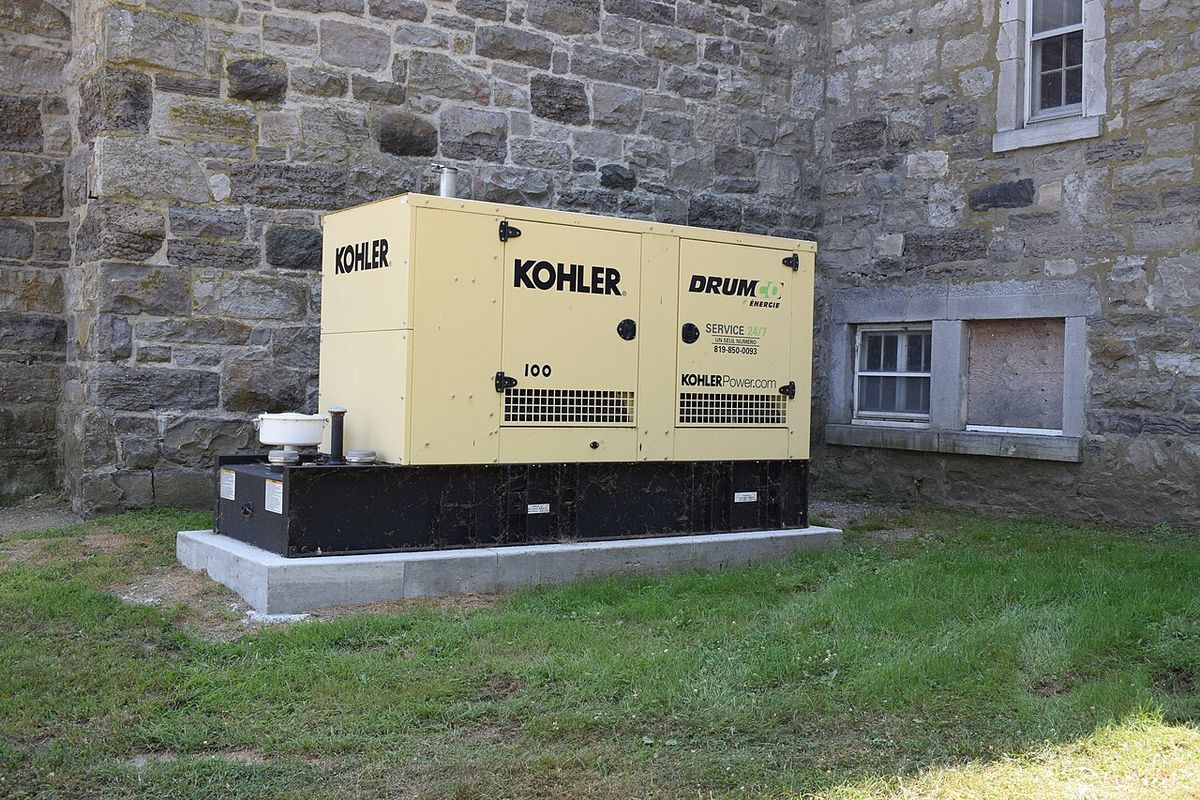
Photography matters more than you would think. A clean, well-kept generator on a tidy pad photographs as infrastructure; a weedy, rust-streaked unit photographs as a problem. Before listing photos, have the unit serviced, clear vegetation around it, and hose down the enclosure. Ask the photographer to include one clean exterior shot — it signals "maintained systems" to detail-oriented buyers.
Time your story to the market. Listing in late spring in hurricane country or early fall in ice-storm regions? The generator is a headline feature, and your agent should say so in the remarks. After a major regional outage, buyer interest in backup power spikes — if you are listing in that window, lean into it. Recency is the most persuasive marketing there is.
Disclosure: What Sellers Must Reveal
Every state has seller disclosure requirements, and they all boil down to the same principle: disclose known material defects. A standby generator is a major home system, and its condition is material. If the unit has a known problem — it fails to start, the transfer switch is faulty, the charger is dead, it was damaged in a storm — you must disclose it. Concealing a known defect exposes you to post-closing lawsuits, and generator repairs are expensive enough to litigate over.
Disclosure goes beyond defects. Disclose the fuel arrangement: is the propane tank owned or leased, what are the lease terms, and what does transfer require? Disclose the permit status — if the installation was never permitted or inspections were never finalized, say so. Disclose any unpermitted modifications, like a homeowner-added interlock or a relocated unit. Disclose service history, including any major repairs. When in doubt, disclose; over-disclosure almost never hurts a sale, while a surprise discovered at inspection always does.
Be precise on the disclosure form rather than vague. "Generator serviced annually, new battery 2024, no known issues" is useful. "Generator — unknown" on a unit you have owned for six years looks evasive and invites the buyer's inspector to dig. If you genuinely do not know something — say, the install date on a unit that predates your ownership — say that plainly.
One special case: leased propane tanks. The lease is a contract the buyer must assume or renegotiate, and some suppliers charge transfer fees or require credit approval. Get the lease terms in writing from your supplier before listing, and make sure your agent discloses the arrangement early. A $200 annual tank lease discovered at the closing table has killed more than one deal's goodwill.
Transferring Warranties, Monitoring, and Fuel Contracts
A generator with transferable warranty coverage is worth more than the same unit without it — and many buyers do not know to ask. Most major manufacturers allow warranty transfer to a new owner, sometimes for a small fee and within a time window after closing. Pull your warranty documents now, confirm they are transferable, and note the process and deadline. Handing the buyer a warranty transfer form at closing is a small gesture that signals a well-managed home.
Monitoring accounts need the same treatment. If your unit reports to a manufacturer app or a dealer's monitoring service, arrange the account transfer before closing — or at minimum, provide the buyer with clear instructions and the dealer's contact information. A monitoring subscription in your name that lapses after closing can generate confusing alerts for the new owner. Some dealers offer a "new homeowner orientation" visit; if yours does, offer it as part of the sale.
Fuel contracts deserve a clean handoff too. For natural gas units, there is nothing to transfer — but confirm the gas meter is adequately sized and note it for the buyer. For propane, coordinate with your supplier on the tank: lease transfer, buyout, or removal, plus a final fill reading so the fuel level is documented at closing. Get everything in writing; verbal assurances from a fuel supplier have a way of evaporating.
Assemble all of this — warranty, monitoring, fuel, service records, manuals, installer contact — into a single folder or binder for the buyer. It costs you an hour and it transforms the generator from an unknown into a documented asset. Buyers pay for certainty.
The Inspection and How to Prepare
The buyer's home inspector will look at the generator, and you want that visit to go well. Most general home inspectors are not generator specialists — they will note the unit's presence, check for obvious issues (damage, clearances, error codes on the display), and recommend specialist evaluation if anything looks off. Your job is to make sure nothing looks off.
Schedule a professional service 2-4 weeks before listing. Ask the technician for a written condition report: battery load test, charger verification, exercise cycle observation, transfer switch test, and a general once-over. Fix anything it finds — a $150 battery replacement now beats a $1,500 buyer credit demand later, because buyers price unknown problems at their worst case. Keep the service invoice; it becomes part of your documentation packet.
On inspection day, make sure the inspector can access the unit: clear vegetation, unlock any gates, and ensure the control panel is accessible. Leave the documentation folder where it can be found. If the inspector flags something minor, having the recent service report on hand lets your agent respond with facts instead of promises.
Know in advance how you will handle generator-related repair requests. Decide with your agent before the inspection whether you will repair, credit, or hold firm on generator items — negotiating from a plan beats improvising under deadline. In most cases, repairing a working-system issue is cheaper than the credit a nervous buyer will demand.
When a Generator Hurts More Than It Helps
Honesty requires the other side of the ledger. There are situations where a generator complicates a sale rather than helping it, and recognizing them early lets you plan.
An unpermitted installation is the biggest one. In jurisdictions with strict enforcement, an unpermitted generator — especially one with gas and electrical work — can spook appraisers, trigger lender conditions, or become a closing-table negotiation. If your unit was installed without permits, talk to your agent about retroactive permitting before listing. It costs a few hundred dollars and some patience, and it removes the issue entirely.
A neglected or non-functional unit is worse than no unit. Buyers do not think "I can fix that for $500" — they think "what else did these people neglect?" If the generator does not run, either repair it properly or remove it before listing. A dead generator on the side of the house is a red flag that tints the buyer's view of the entire property.
Oversized or obtrusive installations can also hurt in certain markets. A commercial-grade liquid-cooled unit dominating a modest backyard may read as overkill to buyers who will mentally price its removal. And in dense neighborhoods with strict HOAs, a loud or non-compliant installation can become a disclosure headache. None of these are fatal — but they are reasons to prepare documentation and set expectations with your agent early, rather than discovering the problem in the buyer's inspection objection.
The through-line: a generator helps your sale when it is permitted, working, documented, and appropriate to the home. Meet those four conditions and it is an asset. Miss them and it is a negotiation — one you can still win, but only with preparation.
Frequently asked questions
It can, but modestly. Appraisers typically treat a permanently installed standby generator as a minor value adjustment rather than a major feature, and most owners recover only a portion of the installed cost. The bigger payoff is often marketability: in outage-prone areas, a generator can make your listing stand out and attract more offers.
Yes. Standard seller disclosure forms require you to report known defects in major systems, and a standby generator counts. Disclose repair history, any current issues, permit status, and fuel arrangements like leased propane tanks. Concealing a known defect can expose you to lawsuits after closing.
Almost always yes. A fresh professional service with a clean bill of health — and the paperwork to prove it — removes buyer objections and gives your agent something concrete to market. Expect $200-$400 for a standard service visit. If the unit needs a battery or minor repair, fix it; buyers discount unknown problems heavily.
An unpermitted installation can complicate appraisals and, in strict jurisdictions, delay or derail financing — appraisers and lenders get nervous about unpermitted electrical and gas work. If your installation was never permitted, talk to your agent about whether retroactive permitting is worth pursuing before listing.
Propane tanks are often leased from the fuel supplier, and the lease typically transfers to the buyer at closing — but only if the buyer agrees and qualifies with the supplier. Confirm the lease terms, any buyout option, and transfer fees before listing, and disclose the arrangement early so it does not surprise anyone at the closing table.
Yes — transfer everything. Provide the monitoring app login or transfer the account, hand over warranty documents with transfer instructions, and include maintenance records and the original installer's contact info. A well-documented system reads as an asset; a system with no paperwork reads as a risk.