Sodium-Ion Home Batteries: 2026 Reality Check
Sodium-ion home batteries in 2026: what's actually shipping, real installed costs, safety claims examined, and where the chemistry genuinely beats lithium.
10 MIN READ · UPDATED 2026-09-22
Key takeaways
- Early residential sodium-ion units are purchasable in 2026 but scarce, with 5-10 year warranties and $1,000-$1,400/kWh installed costs.
- The chemistry's real edges are cold-weather performance and thermal-runaway resistance, not price — the cost advantage hasn't reached retail.
- Energy density trails LFP by 20-40%, so units are bigger and heavier per kWh; verify fit for tight spaces.
- Best 2026 use cases: unheated sheds/garages and cabins in cold climates, plus fire-code-constrained installations.
- Most homeowners should buy proven LFP now and revisit sodium-ion around 2028 when scale brings lower prices and longer warranties.
Sodium-ion batteries have been "two years away" for the better part of a decade — but in 2026, the first residential products are actually reaching installers, and the pitch is seductive: no lithium, no cobalt, better cold-weather performance, and a chemistry that simply doesn't burn the way lithium can. For a homeowner about to spend $15,000 to $30,000 on lithium storage, the question is urgent and practical: is sodium-ion a real alternative today, a niche product for cold climates, or still a science project? Here's the 2026 reality check.
What Sodium-Ion Actually Changes
Sodium-ion cells work on the same rocking-chair principle as lithium-ion — ions shuttle between electrodes during charge and discharge — but the charge carrier is sodium, the sixth most abundant element on Earth, instead of lithium. That abundance is the economic argument: sodium carbonate costs a fraction of lithium carbonate, and the chemistry needs no cobalt or nickel, sidestepping the two most expensive and geopolitically fraught materials in batteries. In theory, mature sodium-ion manufacturing should undercut lithium iron phosphate (LFP) — today's home-storage standard — by 20 to 30 percent at the cell level.
The performance tradeoffs are well understood from the lab and from early grid-scale deployments. Energy density runs 100 to 160 watt-hours per kilogram, versus 150 to 200 for LFP — meaning a sodium-ion home battery needs roughly 20 to 40 percent more physical space and weight for the same kilowatt-hours. Cycle life in early commercial cells lands in the 2,000 to 4,000 cycle range, comparable to early LFP but behind the 6,000-plus cycles top LFP cells now claim. The standout advantages: sodium-ion retains far more capacity in the cold (usable discharge down toward -20°C where LFP needs heating), and the chemistry is dramatically less prone to thermal runaway — puncture and crush tests that vent lithium cells leave sodium cells merely warm.
For a wall-mounted home battery, the density penalty barely matters — your garage wall doesn't care if the box is 30 percent bigger. The cold-weather performance and the fire-safety story matter a great deal, which is why sodium-ion's first residential beachhead is cold-climate markets and fire-code-sensitive installations.
What's Actually Shipping in 2026
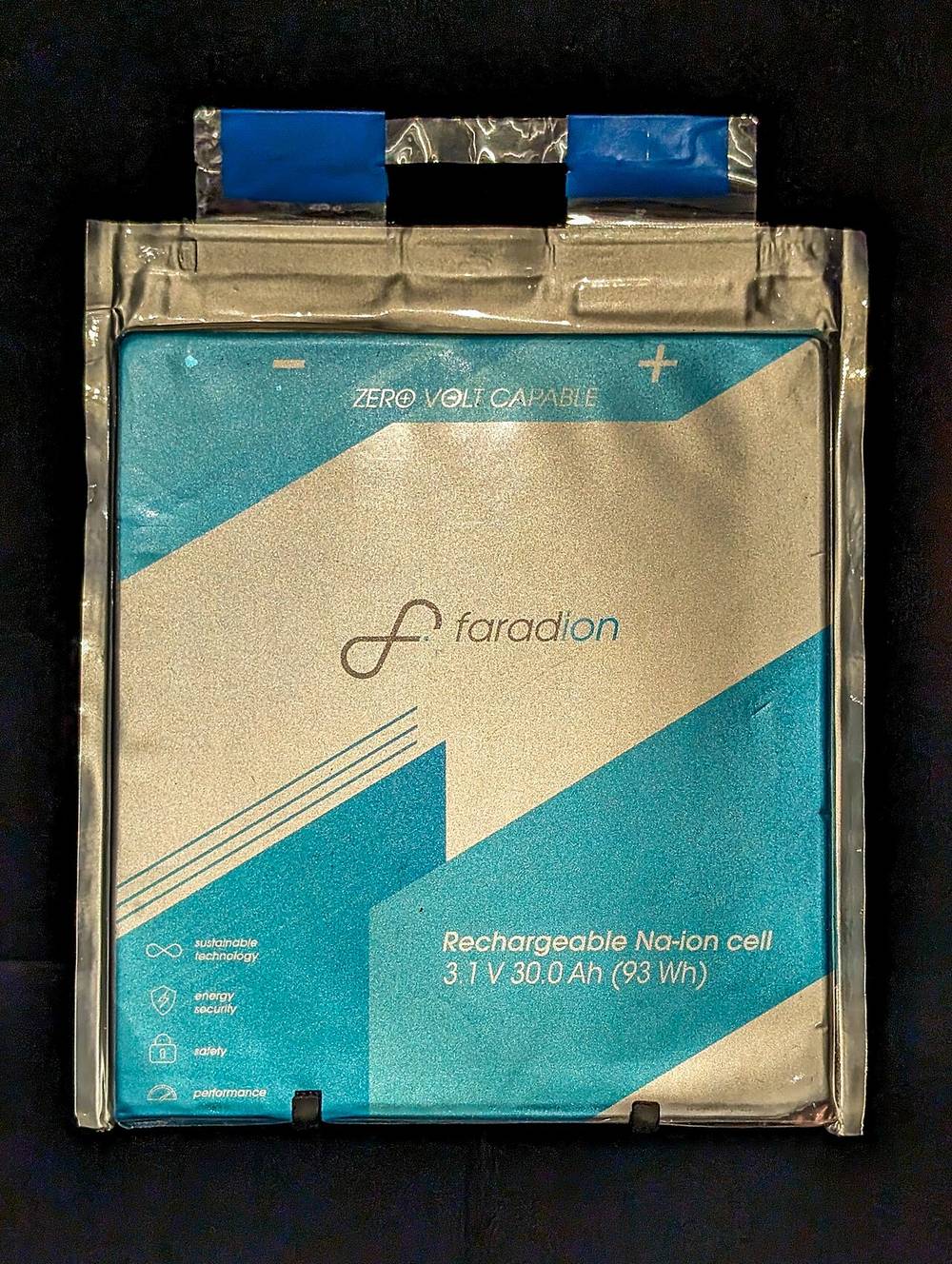
Let's be precise about the market reality, because hype outruns inventory. As of 2026, sodium-ion home batteries exist as early commercial products from a small number of manufacturers, primarily out of China, with limited but growing distribution through US installers. These are real, purchasable, UL-listed (or in the listing process) residential units — not lab prototypes — but availability is patchy, lead times run long, and your local installer has probably never mounted one. Grid-scale and commercial sodium-ion deployments are further along, which is where most of the manufacturing volume is going.
Pricing reflects the early stage. Installed costs for the sodium-ion residential units reaching the US market in 2026 run roughly $1,000 to $1,400 per kWh — at parity with or slightly above LFP, not below it. The promised cell-level cost advantage hasn't reached homeowners yet because volumes are small and the supply chain is immature. Anyone quoting you a dramatically cheaper sodium-ion system today is either confused or selling something else. Expect the cost story to improve over the next two to four years as manufacturing scales, but don't buy on a future price curve.
Warranties tell the maturity story honestly. Early residential sodium-ion products typically carry 5 to 10-year warranties with cycle or throughput caps, versus the 10-year, 70-percent-capacity-retention warranties standard on LFP home batteries. Shorter warranties aren't a verdict on the chemistry — they're a verdict on the track record. No sodium-ion home battery has a decade of field data yet, and manufacturers price that uncertainty into their guarantees. Costs are 2026 US market ranges; get itemized local quotes.
Total Cost of Ownership: A 10-Year Sketch
Sticker price isn't the whole story, so sketch the decade. Take a 13.5-kWh system used for daily time-of-use cycling plus outage duty. The LFP version installs at roughly $12,000 to $18,000, carries a 10-year warranty, and in a high-rate utility territory earns $500 to $1,200 a year in bill savings — call it $7,500 over the decade before incentives. The sodium-ion version installs at roughly $13,500 to $19,000 today, carries a shorter warranty, and earns the same bill savings because arbitrage depends on the inverter and the rate plan, not the cell chemistry. On pure economics, LFP wins the decade by the size of its upfront discount plus the value of warranty certainty.
Now adjust for the cold-shed scenario, where sodium-ion earns its keep. An LFP unit in an unheated Minnesota garage spends winter nights running its internal heater — a parasitic draw that can consume 5 to 10 percent of stored energy on the coldest weeks — and may refuse charging on sub-zero mornings, forcing peak-rate grid purchases. Over ten winters, that penalty is real but modest: perhaps $300 to $800 in lost savings and bought peak power. It narrows the gap without closing it at today's prices. The scenario where sodium-ion wins outright on economics is the one where LFP can't be installed at all — a fire marshal who won't permit lithium in a particular location, or an insurer who prices it punitively — because then the alternative isn't cheaper LFP, it's no battery or a costly detached enclosure.
Factor in the federal tax credit, which in 2026 generally applies to standalone storage of 3 kWh or more regardless of chemistry (confirm with your tax advisor): the 30 percent credit shrinks both systems' net cost proportionally and doesn't change the ranking. The honest 10-year verdict: at 2026 prices, sodium-ion is a performance purchase for cold or code-constrained sites, not an economic one. Revisit the spreadsheet when installed costs fall 20 percent — at that point the chemistry's longer-term advantages start showing up in the bottom line too.
The Safety Story: Real Advantage, Careful Claims
Sodium-ion's strongest card is safety, and the underlying physics is genuinely favorable. LFP — already the safest lithium chemistry — can still enter thermal runaway under abuse, venting hot gases. Sodium-ion cells use materials with higher thermal stability, and destructive testing consistently shows them failing more gracefully: less heat, less venting, no sustained fire in nail-penetration tests that ignite lithium cells. For a battery mounted inside a home, in a garage under bedrooms, or in a jurisdiction with strict fire codes, that margin matters.
But keep two cautions in mind. First, "safer" is not "safe to ignore": any multi-kilowatt-hour energy storage system stores enough energy to be dangerous if mistreated, and sodium-ion installations still require proper fusing, disconnects, ventilation clearances, and code-compliant mounting. Second, residential fire incidents with modern LFP home batteries are already rare — the installed base's safety record is strong. Sodium-ion improves on an already good number rather than fixing a crisis. If your AHJ (authority having jurisdiction) restricts lithium batteries in certain locations, sodium-ion may open doors that LFP can't; otherwise, treat safety as a tiebreaker, not the decision.
Insurance is the sleeper issue here. Some carriers already ask about battery chemistry on applications, and a demonstrably lower-risk chemistry could eventually earn premium treatment — but in 2026, most underwriters haven't priced sodium-ion separately from lithium. Ask your agent before assuming a discount; early adopters occasionally face the opposite problem, with underwriters flagging unfamiliar equipment.
Cold Climates: Sodium-Ion's Best Argument
This is where sodium-ion stops being theoretical and starts being the rational choice. LFP batteries lose usable capacity fast below freezing and most residential units run internal heaters — consuming stored energy — to keep cells above 0°C during charging. In an unheated garage in Minnesota or a mountain cabin, that heating load is a real parasitic drain, and charging restrictions in deep cold can leave you with a battery that won't accept solar on the coldest mornings.
Sodium-ion chemistry remains electrochemically active far colder, with usable charge and discharge performance down to temperatures that sideline LFP. For detached battery sheds, unheated garages, and off-grid cabins in cold regions, that eliminates the heater parasitic load and the cold-morning charging lockout in one stroke. If your battery lives outside conditioned space in a climate with real winters, sodium-ion deserves a serious look even at price parity — the effective winter capacity can exceed LFP's despite the lower nameplate density.
Do the site-specific math, though. A battery inside a heated basement in a cold climate sees none of this benefit — the ambient temperature never drops near the LFP threshold. The cold-weather advantage only pays for installations where the battery itself gets cold: sheds, detached garages, barns, and cabins. Match the chemistry to the enclosure, not just the zip code.
Where Sodium-Ion Doesn't Win Yet
Energy density is the honest weakness. At 100 to 160 Wh/kg versus LFP's 150 to 200, a 13.5-kWh sodium-ion unit is noticeably larger and heavier than its LFP equivalent. For garage wall mounts with generous space, that's cosmetic. For townhomes, tight utility rooms, or installations with strict weight limits on walls, it can be the deciding constraint. Check the unit's dimensions and mounting requirements against your actual space before falling for the chemistry story.
Track record is the deeper weakness. LFP home batteries have millions of installed unit-years behind them; failure modes are known, recycling streams exist, and installers have seen everything. Sodium-ion has none of that yet. Early-adopter risks are real: firmware immaturity, sparse service networks, uncertain parts availability in year seven, and the small but nonzero chance your manufacturer exits the residential market. These are the standard penalties of buying generation-one hardware, and they apply here in full.
Finally, the ecosystem is thin. Fewer inverter pairings are certified, fewer installers have training, monitoring platforms are less polished, and virtual-power-plant programs may not accept the equipment. If you value a mature support experience — one app, deep installer knowledge, easy warranty service — LFP remains the calmer ownership choice in 2026. Sodium-ion is for buyers who understand they're early and have priced that in.
Should You Buy Sodium-Ion in 2026?
For most homeowners, the 2026 answer is: watch closely, buy LFP. The lithium iron phosphate market is mature, competitively priced at $900 to $1,300 per kWh installed, backed by decade-long warranties and deep installer experience. Sodium-ion's cost advantage hasn't materialized at retail, its track record is unwritten, and its support ecosystem is thin. If your install is happening this year in conditioned space, LFP is the rational default.
Buy sodium-ion now if you check specific boxes: the battery will live in unheated space in a cold climate, your fire marshal or HOA restricts lithium placements, you're comfortable being an early adopter with a shorter warranty, and you've verified UL listing, installer training, and parts availability in writing. Off-grid cabins, cold-climate sheds, and fire-code-constrained retrofits are the genuine 2026 use cases — not the average suburban garage.
The strategic play for everyone else is timing. Sodium-ion manufacturing is scaling fast on the back of grid and EV demand, and the chemistry's fundamentals — abundant materials, cold tolerance, safety margin — are durable advantages, not fads. Revisit the decision in 2028: if costs have fallen 20 percent and warranties have lengthened to match LFP, the calculus changes completely. Until then, let the early adopters in cold sheds generate the field data, and spend your battery budget on the proven chemistry sized correctly for your loads. Have a licensed electrician design any installation regardless of chemistry — the electrical work, permits, and load planning matter far more than the cell type inside the box.
Frequently asked questions
Yes, but in limited quantities. Early commercial residential sodium-ion units from a small number of manufacturers are reaching US installers in 2026, though availability is patchy and lead times are long. Most manufacturing volume is still going to grid-scale and commercial projects.
Not yet at retail. Early 2026 residential sodium-ion systems cost roughly $1,000-$1,400 per kWh installed, at parity with or slightly above LFP. The chemistry's theoretical 20-30% cell-cost advantage hasn't reached homeowners because production volumes are still small.
The chemistry is more resistant to thermal runaway in destructive testing, which is a genuine advantage. But modern LFP home batteries already have a strong safety record, so treat sodium-ion safety as a tiebreaker or a solution for fire-code-constrained sites, not as fixing a crisis.
This is its best residential argument. Sodium-ion charges and discharges at temperatures that sideline LFP, which needs internal heating below freezing. For batteries in unheated sheds, detached garages, or cabins in cold climates, it eliminates heater parasitic drain and cold-morning charging lockouts.
Lower energy density (20-40% larger and heavier per kWh), shorter warranties (typically 5-10 years vs 10 for LFP), no long-term field track record, thin installer and service networks, and limited inverter pairings. Standard generation-one hardware tradeoffs.
For most homeowners, no. Buy proven LFP now if you need storage; the cost advantage hasn't materialized and the track record is unwritten. Revisit sodium-ion around 2028, when scaled manufacturing should bring lower prices and longer warranties.