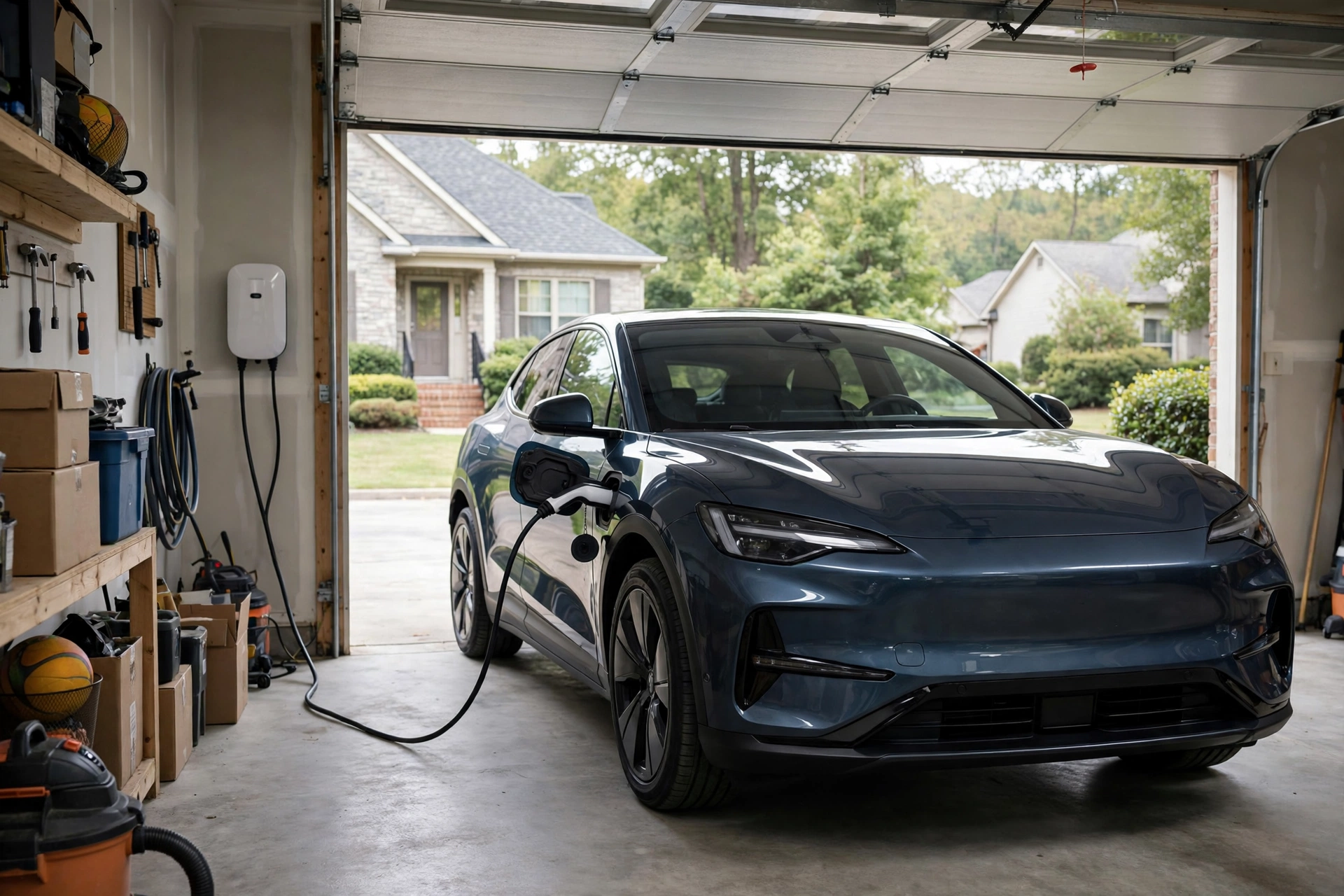
Bidirectional Charging Home: 2026 V2H Guide & Costs
Key takeaways
- Vehicle-to-home (V2H) lets a compatible EV discharge power back into your house during outages or peak-rate hours.
- You need three matched pieces: a bidirectional-capable vehicle, a bidirectional charger, and a transfer switch or home-integration panel.
- All-in installed costs typically run $10,000-$18,000+ in 2026, including hardware, electrical work, permits, and utility approval.
- Compatibility is narrow and brand-specific - the car, charger, and home hardware must be designed to work together.
- For most luxury households in 2026, a stationary home battery remains the more mature, flexible backup option.
Your electric vehicle is the biggest battery you own. A typical EV pack holds enough energy to run a home's critical loads for days - yet most of the time that battery just sits in the driveway, doing nothing. Bidirectional charging promises to put it to work: sending power from the car back into your house during an outage, or discharging during expensive peak-rate hours and recharging overnight when electricity is cheap.
In 2026, vehicle-to-home (V2H) has crossed from auto-show fantasy into something you can genuinely buy. But it remains an early-adopter technology with meaningful costs, real limitations, and a short list of compatible vehicles. This guide gives you the honest picture - how V2H works, what the installation demands, what it costs, and whether your household should buy in now or wait.
How vehicle-to-home actually works
Standard home charging is a one-way street. AC power flows from your electrical panel into the car, where the vehicle's onboard charger converts it to DC for the battery. Bidirectional charging reverses the journey: the battery discharges DC power, a specialized charger converts it back to AC, and that power feeds your home's circuits.
The critical safety piece is islanding. When the grid goes down, your home must be electrically separated from it before the car starts feeding power - otherwise you could energize lines that utility crews believe are dead. That's what the transfer switch or home-integration panel is for: it disconnects your house (or a designated critical-loads subpanel) from the grid and lets the EV take over seamlessly.
The four pieces every V2H setup needs
- A bidirectional-capable vehicle. The car itself must support discharging its battery to an external load. Most EVs on the road in 2026 do not - this is the single biggest constraint.
- A bidirectional charger. A special wall unit containing an inverter that converts the car's DC output back into home-usable AC power.
- A transfer switch or home-integration panel. Safely islands your home from the grid during outages and manages which circuits the vehicle powers.
- Permits and utility approval. Because you're interconnecting a power source with the grid, expect electrical permits, inspections, and utility interconnection sign-off - similar in spirit to a solar or stationary battery install.
Think of V2H as a whole-home battery that happens to have wheels. The physics are proven; it's the product ecosystem that's young.
Tesla Wall Connector Level 2 Hardwired EV Charger (48A)

Official Tesla 48A home charging station with 24-foot cable
*Affiliate Disclosure: As an Amazon Associate, Elevate Home earns from qualifying purchases. Pricing and availability subject to change.
What you can actually buy in 2026
A small but growing set of automakers and energy companies now sell V2H as packaged systems. The landscape changes quickly, so treat the following as a qualitative snapshot - always verify current compatibility lists and manufacturer spec sheets before spending anything.
- Ford's home integration approach pairs its electric pickup with a dedicated home integration system and a high-power bidirectional charger, aimed at powering a home through extended outages.
- GM Energy takes an ecosystem approach, offering bundled home energy hardware designed to work across its electric lineup, with modular options for different home sizes.
- Enphase has developed bidirectional EV charging hardware intended to integrate with its home energy management systems, appealing to households that already have or want solar-plus-storage.
- Wallbox and other charging specialists offer standalone bidirectional chargers aimed at early adopters, though vehicle compatibility remains the gating factor.
The crucial point: compatibility is narrow and specific. The vehicle, the charger, and the home-integration hardware must all be designed to work together. This is not a mix-and-match market, and a bidirectional charger bought in isolation is useless without a compatible car. Confirm the exact pairing - vehicle model year, charger model, and integration hardware - with both the automaker and the charger manufacturer.
Vehicle-to-home is best understood as a capability you buy as part of a vehicle decision, not as an accessory you add to any EV. Start with the car; the hardware follows.
What installation requires
This is a licensed-electrician project, full stop - there is no safe DIY version of interconnecting a 60+ kWh power source with your home's electrical system. A proper V2H installation typically involves:
- An electrical assessment and NEC load calculation. Your electrician verifies that your panel and service can accommodate the bidirectional equipment alongside your existing loads.
- A dedicated high-amperage circuit for the bidirectional charger, similar in scale to a high-power Level 2 charger circuit.
- The transfer switch or critical-loads panel, which determines whether the EV backs up your whole home or a prioritized subset of circuits (refrigeration, heat, well pump, home office, medical equipment).
- Permits, inspections, and utility interconnection approval - plan for paperwork timelines similar to a solar installation.
- Possible panel or service upgrades if your electrical system is already near capacity.
Expect coordination between your electrician, the automaker's energy division or certified installer network, and your utility. Several weeks from signed contract to commissioned system is normal, and rural or capacity-constrained utilities can take longer.
Realistic costs in 2026
You're paying for three things: the bidirectional hardware, the electrical work, and the soft costs of permits, utility fees, and commissioning.
- Bidirectional charger and home-integration hardware: typically $5,000-$9,000 for the equipment bundle, depending on the system and power rating.
- Electrical installation: many electricians report $3,000-$8,000+ depending on panel work, wire-run length, trenching, and whether a critical-loads subpanel is added.
- All-in project costs commonly land in the $10,000-$18,000+ range for a complete, permitted, utility-approved installation.
Costs are 2026 US market ranges; get itemized local quotes.
Whether V2H "pays for itself" depends on your use case. As pure outage insurance, compare it against a stationary battery or generator. As a rate-arbitrage tool - charging overnight, discharging during peak pricing - the math depends entirely on your utility's rate structure and how often you actually cycle the system. Be skeptical of payback claims that assume ideal conditions.
The honest limitations
Enthusiasm for V2H is justified, but go in clear-eyed about the constraints:
- Vehicle compatibility is the bottleneck. If your current EVs don't support bidirectional discharge, the entire conversation is theoretical until your next vehicle purchase.
- Battery warranty questions are real. Check the automaker's warranty terms regarding bidirectional use - policies differ, and frequent deep cycling for rate arbitrage is a different wear profile than occasional outage backup.
- Outage-duration math cuts both ways. A large truck battery can run critical loads for several days, but it won't run a whole luxury home - HVAC, pool equipment, and multiple EVs - indefinitely. And while it's powering your house, it's not available as transportation.
- Utility rules vary. Export rules, interconnection requirements, and rate structures differ dramatically by utility and state. What's streamlined in one territory is a paperwork odyssey in another.
- Installer experience is thin. Few electricians have commissioned many V2H systems. Choosing an installer with direct experience on your specific hardware pairing matters more here than with conventional chargers.
Who should actually consider V2H in 2026
V2H makes genuine sense if you already own - or are about to buy - a compatible vehicle, outage resilience matters to your household, and you're comfortable being an early adopter. The elegance is real: one expensive asset doing two jobs.
For everyone else, the pragmatic move is a stationary home battery. It's a mature product category with broad installer availability, no vehicle dependency, and predictable performance. You can always add V2H later when your next vehicle supports it - the critical-loads panel and electrical groundwork from a battery install even make a future V2H addition easier.
Backup options compared
| Option | Typical all-in cost | Strengths | Watch-outs |
|---|---|---|---|
| Vehicle-to-home | $10,000-$18,000+ | Huge capacity from the EV pack; no separate battery to buy | Few compatible vehicles; early-stage ecosystem |
| Stationary home battery | $15,000-$35,000+ | Mature, always available, pairs with solar | Fixed capacity; higher cost per kWh |
| Standby generator | $10,000-$20,000+ | Runs indefinitely on fuel; well-understood | Noise, maintenance, fuel storage, emissions |
The bottom line: bidirectional charging is one of the most exciting developments in home energy, and it's genuinely purchasable in 2026. But it's a vehicle-led decision with early-adopter trade-offs. If the stars align - compatible car, outage-prone location, appetite for new tech - it's compelling. If not, there's no shame in waiting; the technology will only get cheaper, more compatible, and better supported from here.
Frequently asked questions
Which vehicles support bidirectional charging for home use in 2026?
Only a small subset of EVs support vehicle-to-home discharge, primarily certain electric pickups and models from automakers with dedicated home-energy divisions. Compatibility is specific to model and model year, and it changes as new vehicles launch. Always verify bidirectional support in the current manufacturer spec sheet for the exact vehicle you're considering - don't assume a brand's entire lineup qualifies.
How long can an EV power a house during an outage?
It depends on the battery size and what you're running. A large truck battery powering only critical loads - refrigeration, heat, lights, internet, a well pump - can last several days. Powering a whole luxury home with HVAC, pool equipment, and heavy appliances drains it far faster. Your installer should help you model realistic outage scenarios against your actual loads before you buy.
Does bidirectional charging void the EV battery warranty?
It depends on the automaker. Some manufacturers explicitly address bidirectional use in their warranty terms, while others are silent or restrictive about it. Because frequent cycling for rate arbitrage wears a battery differently than occasional backup use, read the warranty language carefully and get any assurances in writing. When in doubt, ask the automaker directly before installing.
Can I install a bidirectional charger myself?
No. A V2H installation involves high-amperage circuits, a transfer switch or integration panel, permits, inspections, and utility interconnection approval. This work must be done by a licensed electrician, and many jurisdictions require the installer to be certified on the specific hardware. DIY electrical work here risks your safety, your home, and your insurance coverage.
Is vehicle-to-home better than a stationary home battery?
It depends on your situation. V2H offers enormous capacity at a lower incremental cost if you already own a compatible EV, but it's vehicle-dependent and the ecosystem is young. A stationary battery works with any home, is always available, and has a mature installer base - but costs more per unit of capacity. Many energy advisors suggest the stationary battery as the safer 2026 choice unless V2H aligns with a vehicle you already plan to buy.
Do I need utility approval for bidirectional charging?
Yes, in virtually all cases. Because the system interconnects a power source with the grid, your utility will require an interconnection application and approval, similar to solar or battery storage. Requirements, timelines, and fees vary widely by utility. Your installer typically handles this paperwork, but confirm who's responsible before signing a contract.
Keep reading
Cost Guide
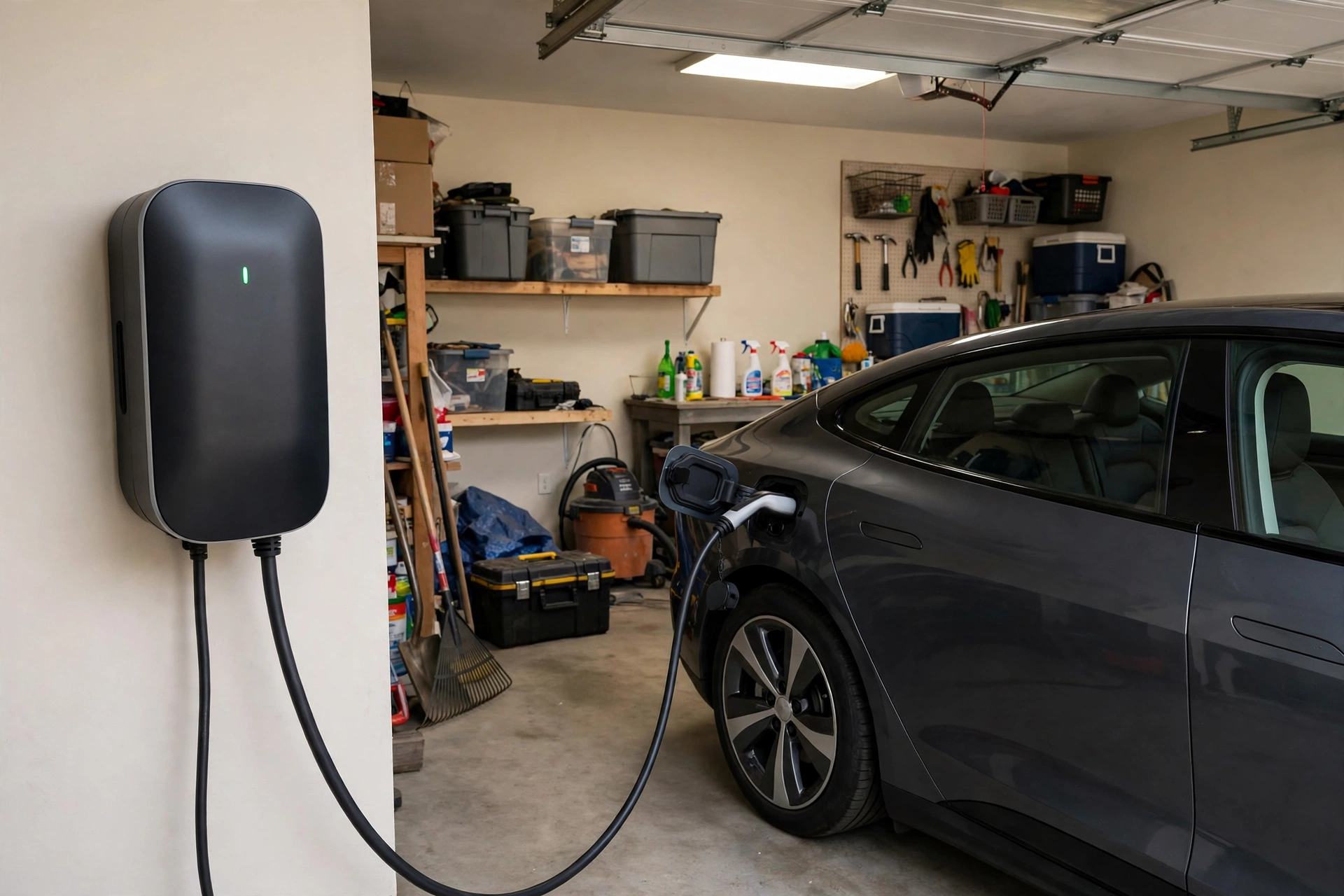
Home EV Charger Installation Cost in 2026: Full Breakdown
How much does home EV charger installation cost in 2026? Hardware, labor, panel upgrades, trenching, and rebat…
Buyer's Guide
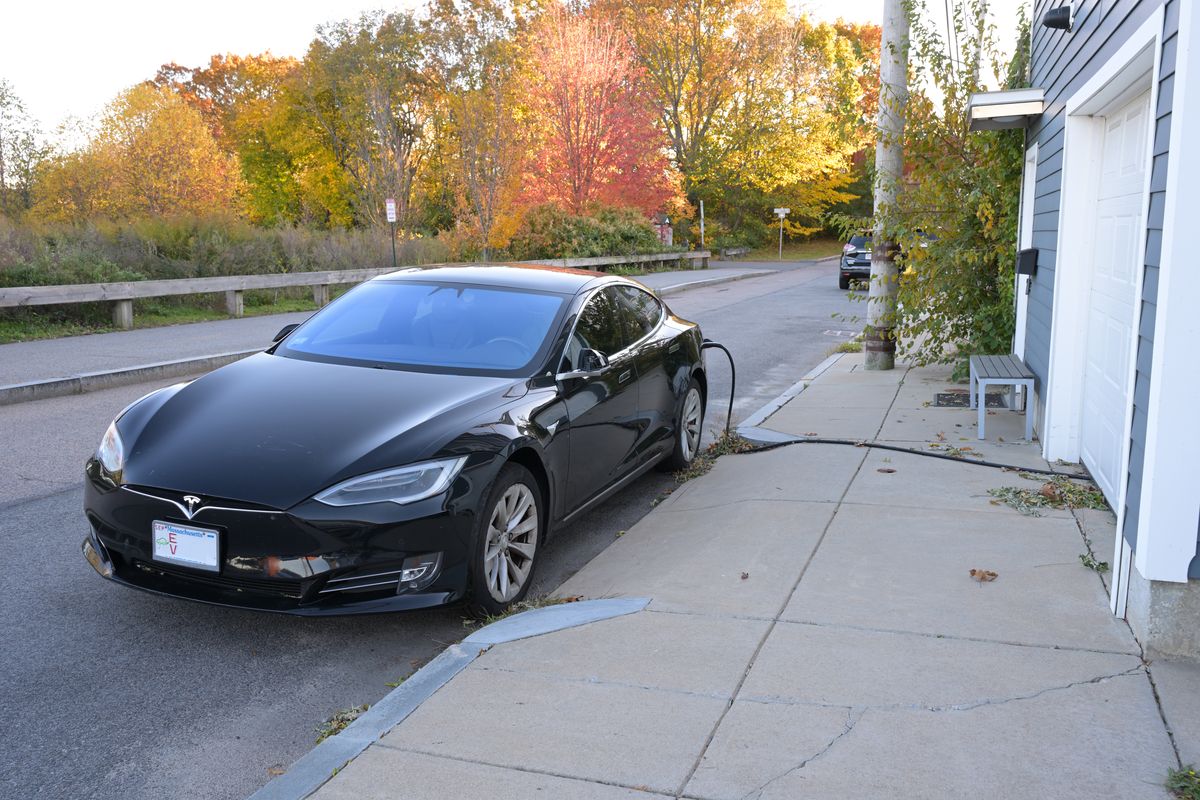
Best Home EV Charger for Multi-Car Households (2026 Guide)
The best home EV chargers for multi-car households in 2026: power sharing, NACS/J1772 compatibility, smart fea…
Explainer
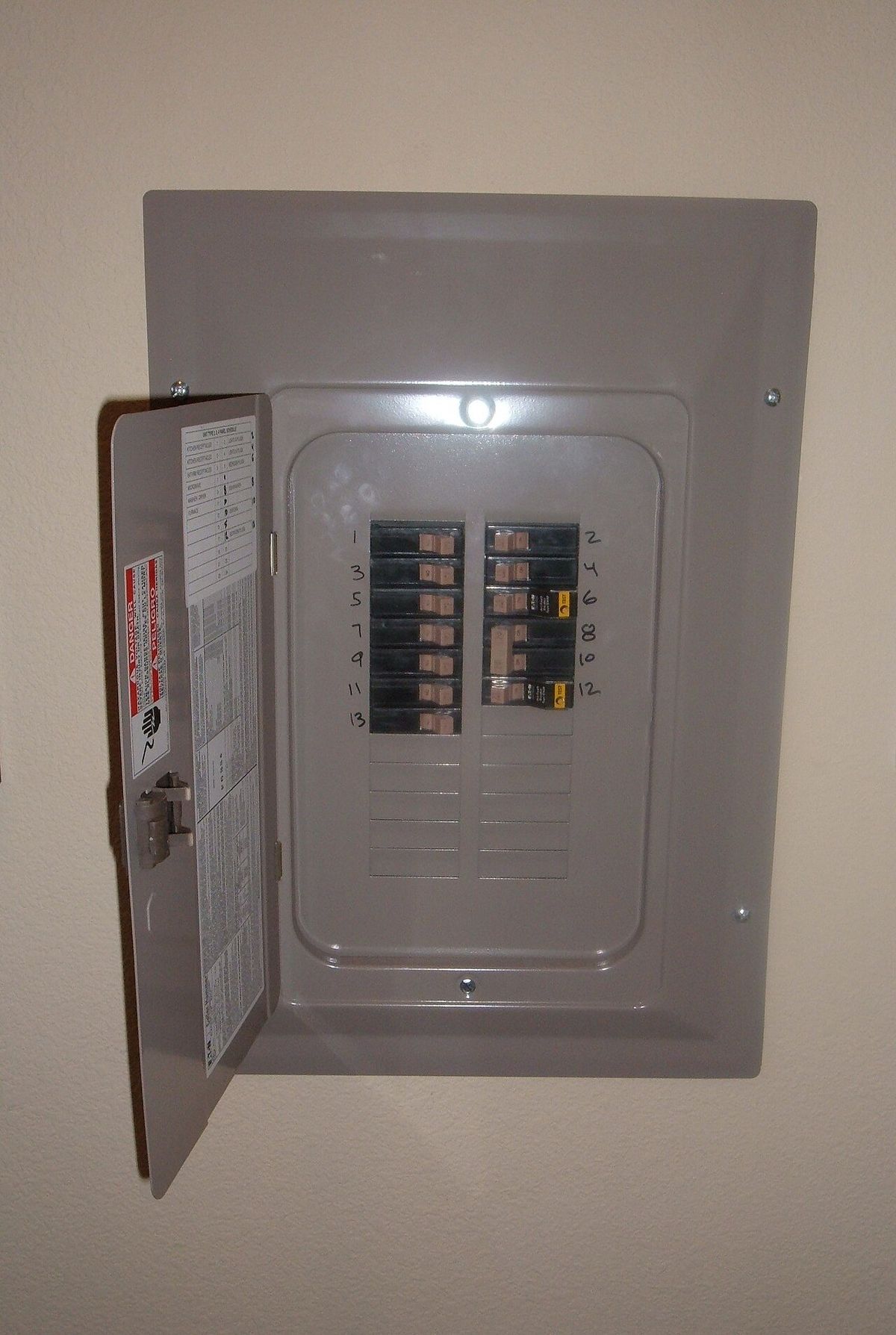
Do You Need a Panel Upgrade for an EV Charger? Load Calculation, Worked Examples & 2026 Costs
Run the NEC load calculation yourself with two worked examples (100A and 200A panels), see what a panel upgrad…
Head-to-Head
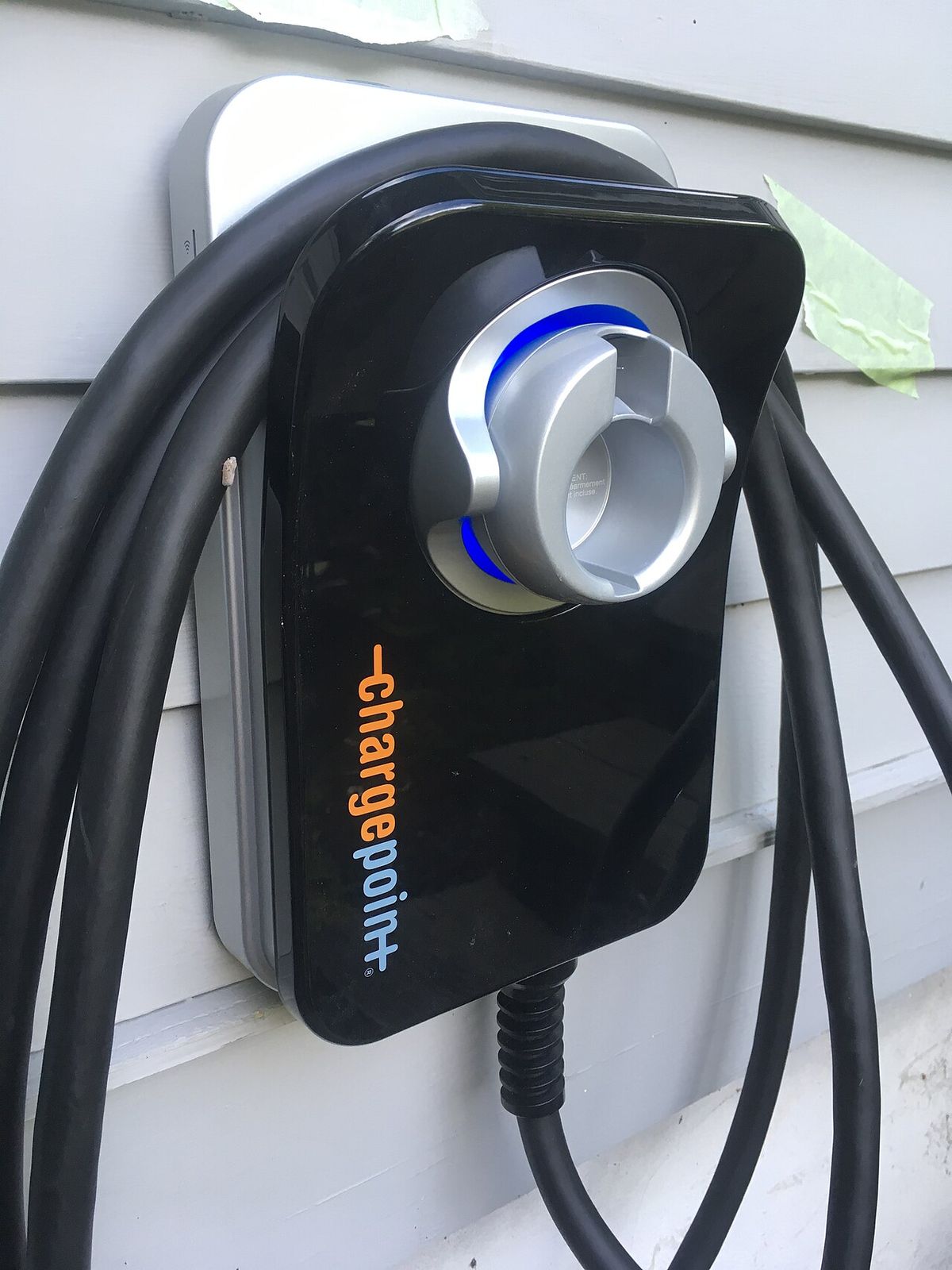
Tesla Wall Connector vs ChargePoint Home Flex: 2026 Face-Off
Tesla Universal Wall Connector vs ChargePoint Home Flex: compatibility, power sharing, app, and install compar…
Interactive Tool
EV Charger Installation Cost Estimator: 2026 Prices
Estimate your EV charger installation cost in seconds. 2026 pricing for hardware, labor, panel upgrades, trenc…
Interactive Tool
EV vs Gas Savings Calculator: Fuel Costs Compared 2026
EV vs gas: which is cheaper to fuel? Compare your car's real gasoline cost against home EV charging and see yo…