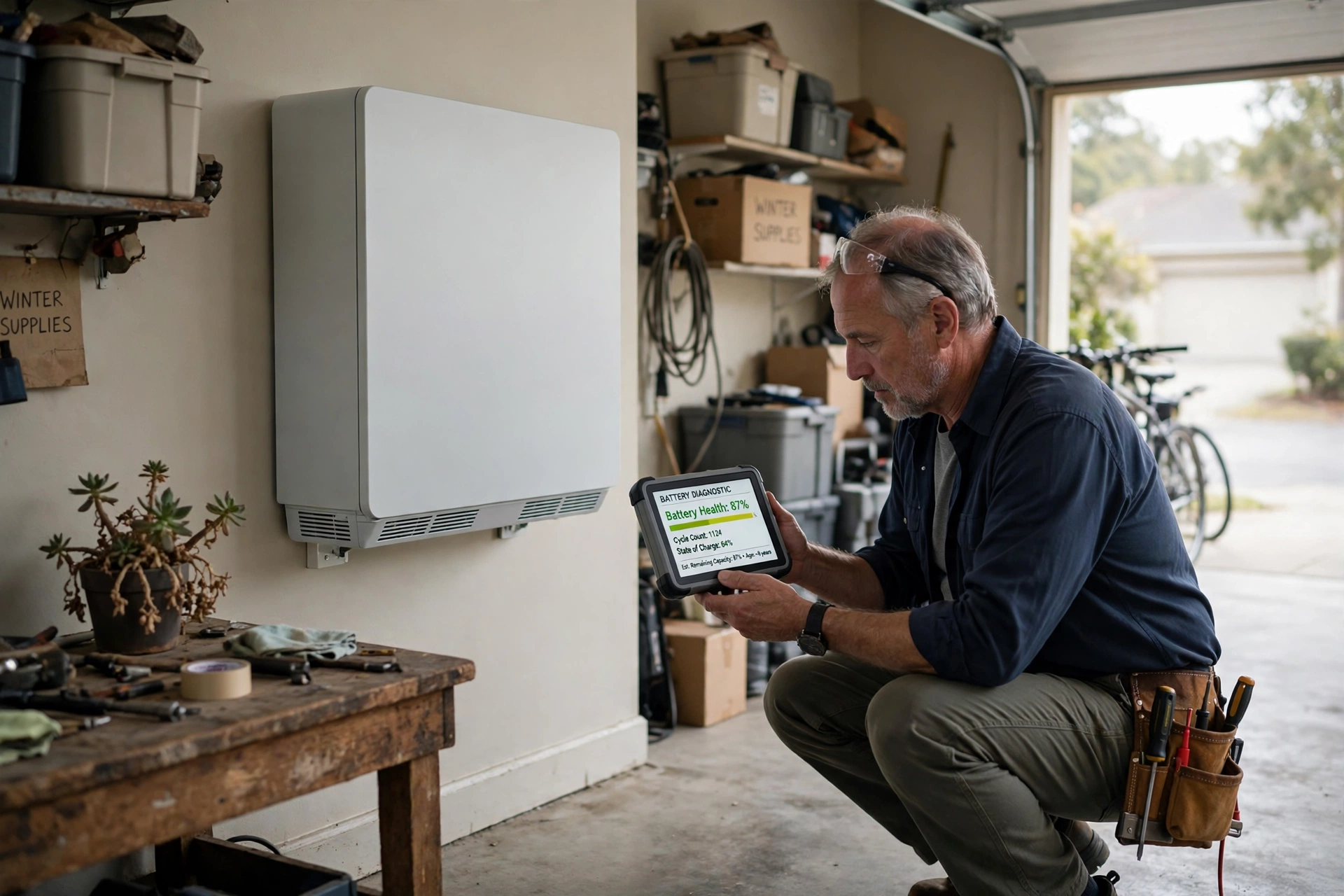
Home Battery Degradation: What to Expect Over 10 Years (2026)
Key takeaways
- Home battery degradation is gradual capacity loss, not sudden failure: most modern LFP systems lose roughly 2 to 3 percent of usable capacity per year under normal use.
- Warranties typically guarantee around 70 percent retained capacity after 10 years, which is the industry's practical end-of-warranty line, not the end of useful life.
- Heat is the single biggest accelerator of degradation, followed by deep daily cycling and long storage at a full charge.
- A 13.5 kWh battery at 80 percent health still stores about 10.8 kWh, enough for essential overnight loads in most homes, so degradation rarely means starting over.
- You can slow degradation measurably with simple settings: a sensible reserve level, a charge cap below 100 percent for daily cycling, and a cool, shaded install location.
Home battery degradation, what to expect over a decade of ownership, is a slow and predictable loss of storage capacity: a healthy modern lithium iron phosphate (LFP) system typically sheds about 2 to 3 percent of its usable capacity per year, so after 10 years it still holds roughly 70 to 80 percent of what it held on day one.
That sentence surprises most buyers, because degradation is usually discussed as if it were a cliff. It is not. Your battery does not work perfectly for nine years and then die in year ten. It fades, gradually and measurably, and the fade is slow enough that most owners notice it only as slightly shorter overnight runtimes or a little more grid import in the early morning. Understanding the shape of that fade, what accelerates it, and where the warranty line actually sits is the difference between a confident purchase and a decade of quiet worry.
What Home Battery Degradation Actually Means
Degradation has two distinct parts, and confusing them causes most of the anxiety around the topic. The first is capacity fade: the battery simply stores fewer kilowatt-hours than it did when new. The second is power fade, or rising internal resistance: the battery can still hold energy, but it delivers it less efficiently and may struggle with large surge loads, such as a well pump or air conditioner starting up. Capacity fade is what warranties measure; power fade is what you feel when a big load kicks on during an outage.
Both kinds of fade come from chemistry, not from defects. Inside every lithium cell, charging and discharging shuttles lithium ions between electrodes, and each trip leaves a tiny residue behind. The best-known mechanism is growth of the solid electrolyte interphase (SEI) layer on the anode, which permanently traps a small amount of lithium with every cycle. Calendar aging adds a second, slower drain: even a battery sitting idle degrades through slow side reactions, faster when hot and faster when stored at a high state of charge. No chemistry escapes this. The question is only how fast it happens, and that rate is largely set by chemistry choice, temperature, and how the system is operated.
Two chemistries dominate home storage, and they degrade at different rates. LFP (lithium iron phosphate) is the current default for most new home batteries because its crystal structure tolerates thousands of cycles with modest fade. Older or more energy-dense NMC (nickel manganese cobalt) systems pack more energy into a smaller box but typically fade faster and are more sensitive to heat and high states of charge. If you are comparing two batteries and one quotes a much longer cycle life, chemistry is usually the reason. Our guide to LFP battery fire safety explains why LFP became the default for garage and indoor installs, and the chemistry discussion there applies directly to degradation too.
EF ECOFLOW 12kWh Power Station: DELTA Pro Ultra with Extra Battery, 120/240V 7200W AC Output, LiFePO4 Home Battery Backup Expandable to 90kWh

LFP chemistry with long cycle life is the degradation story of this article; DELTA Pro Ultra is the purchasable LFP whole-home unit buyers compare against wall-mounted systems
*Affiliate Disclosure: As an Amazon Associate, Elevate Home earns from qualifying purchases. Pricing and availability subject to change.
How Fast Do Home Batteries Degrade?
For a typical LFP home battery cycled once per day in a temperate climate, expect roughly 2 to 3 percent capacity loss per year in the early years, tapering slightly as the battery ages. That is an average, not a promise: a battery in a hot garage in Phoenix will fade faster than the same unit in a cool basement in Minnesota, and a battery cycled twice daily for aggressive time-of-use arbitrage will fade faster than one that cycles gently for overnight self-consumption. NMC systems in the same conditions typically lose capacity a little faster, often in the 3 to 4 percent per year range early on, which is one reason their warranties tend to be structured around throughput limits rather than pure time.
The table below shows what those rates mean in practice for a common 13.5 kWh system. These are planning figures drawn from manufacturer warranty curves and published degradation research, not readings from any single unit, and your own system will vary with climate and usage.
Two details in that table matter more than the numbers themselves. First, the fade is front-loaded in a mild way: the first year includes an initial settling loss of 1 to 3 percent as the SEI layer forms, then the curve flattens into a long, gentle decline. A battery that drops 3 percent in year one has not failed; it has settled. Second, the warranty line at 70 percent after 10 years is a floor, not a forecast. Most reputable systems outperform their warranty, and a battery that reaches 75 percent at year ten has delivered exactly what a careful buyer should have expected. Our home battery warranty guide breaks down how time limits, cycle limits, and throughput limits interact, because hitting any one of them can end coverage even if the calendar says otherwise.
What Speeds Degradation Up
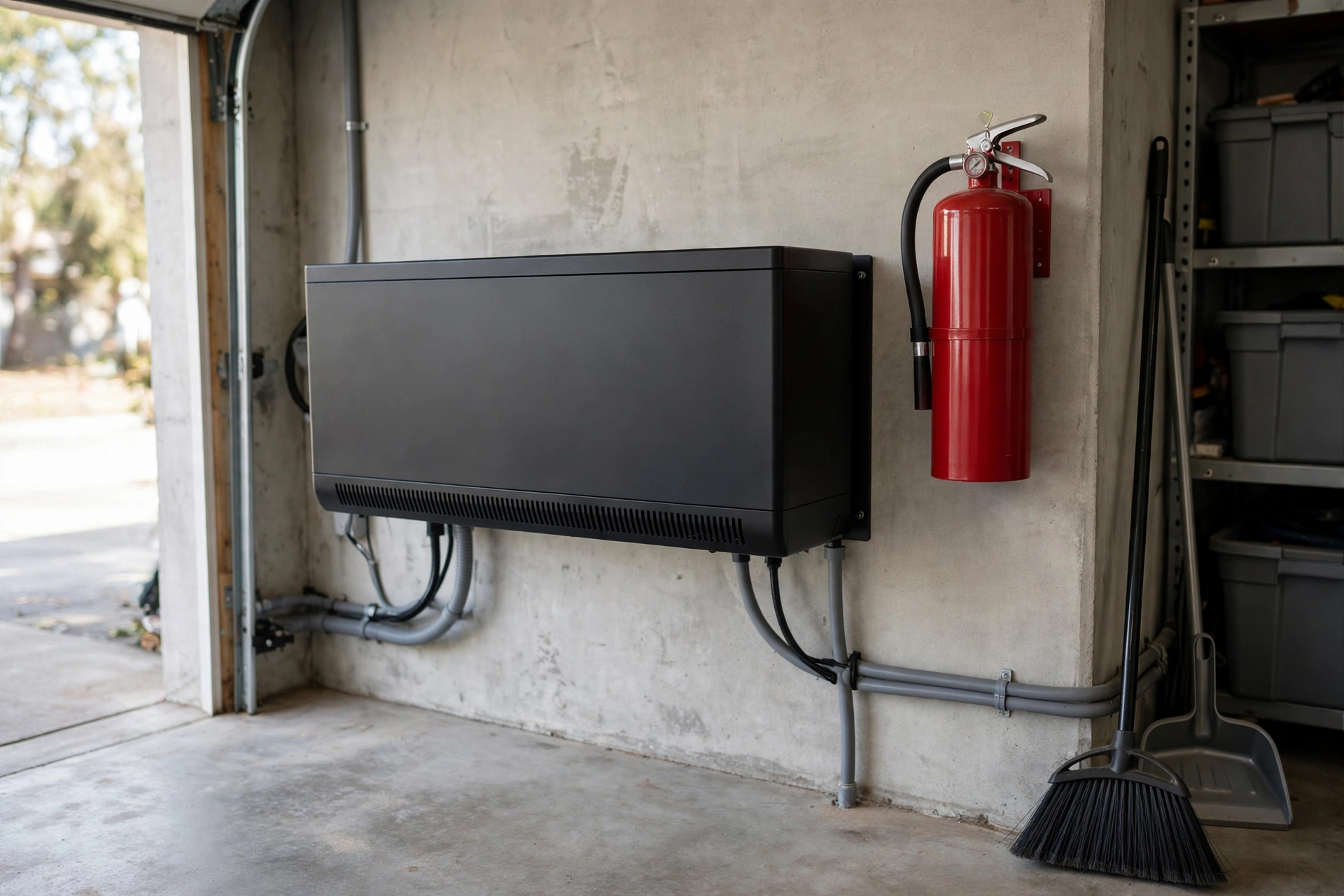
Degradation is not random, and it is not mostly bad luck. Five factors explain nearly all of the difference between a battery that holds 80 percent at year ten and one that limps to 70 percent by year seven. Heat dominates the list. Every sustained 10-degree rise in average cell temperature roughly doubles the rate of the parasitic chemical reactions behind calendar aging, which is why a battery baking in a sun-facing garage in a hot climate ages visibly faster than the same unit in a conditioned space. If you have a choice of install location, a cool, shaded, ventilated spot is the single highest-value degradation decision you will make, and it costs nothing after install day.
Depth of discharge deserves a plain-English explanation, because it is the factor owners control most directly. A cycle from 100 percent down to 0 percent stresses cells far more than two cycles from 80 percent to 30 percent, even though the total energy moved is similar. That is why many manufacturers now let you set a daily charge cap and a reserve floor: cycling in the middle of the range, roughly 20 to 80 percent for daily use, can meaningfully extend cycle life, while the full 0 to 100 percent range stays available when an outage actually demands it. Time-of-use arbitrage, where a battery cycles hard every single day to chase rate spreads, is the use case most likely to trade lifespan for savings, and it is worth running that math honestly before committing a battery to two full cycles a day.
What Degradation Looks Like in Real Life
Abstract percentages become concrete at 2 a.m. during an outage. Take a home whose essential overnight loads, fridge, furnace fan, lights, router, and a few outlets, draw about 600 watts continuously. A new 13.5 kWh battery with roughly 12 kWh usable after inverter losses and reserve settings covers those loads for about 20 hours. At 80 percent health, usable energy falls to roughly 9.6 kWh, and the same loads run for about 16 hours. At 70 percent, about 14 hours. The house does not go dark; the margin shrinks. For most families, the practical response to degradation is load discipline during long outages, shedding the electric range, the dryer, and the EV charger, rather than an emergency replacement.
Day-to-day, degradation shows up first as behavior, not as an alarm. The battery reaches its reserve a little earlier on winter mornings. The app's state-of-health reading, if your system exposes one, ticks down a percent or two a year. Solar self-consumption drops slightly because there is less room to store midday surplus. None of this is a fault, and none of it justifies a service call on its own. What does justify a call is a sudden change: a battery that loses 10 percent of apparent capacity in a few months, a unit that stops charging above a certain percentage, or a system throwing repeated cell-imbalance or temperature faults. Gradual fade is chemistry; sudden loss is a symptom, and the distinction is exactly what separates normal aging from the genuine faults covered in our home battery failure modes guide.
Monitoring matters here more than most owners realize. A battery management system (BMS) tracks cell voltages, temperatures, and throughput, and many apps now report state of health directly. Check it twice a year and write the number down; a trend line beats any single reading, because app estimates can jump a percent or two after a firmware update or a full recalibration cycle. If your system does not report state of health, track runtime instead: pick a repeatable load, note how long the battery sustains it, and repeat the observation every six months. Consistent method beats fancy dashboards.
How to Slow Degradation Down
The honest version of this section is short, because there are no miracle cures, only good habits. Keep the battery cool: shade, ventilation, and, where the climate demands it, a conditioned space. Cycle in the middle of the range for daily use and save full depth for outages. Avoid leaving a backup-only battery pinned at 100 percent for months; if your system offers a storage mode or a reserve setting, use it. Keep firmware current, since manufacturers regularly ship BMS improvements that refine cell balancing and thermal management. And do not chase every rate-spread dollar with aggressive double cycling unless you have priced the lifespan cost into the savings.
One habit to avoid is the opposite extreme: babying the battery into uselessness. A battery bought for backup that never cycles at all still ages on the calendar, and a system left untested may hide a fault until the outage when it matters. Run a planned discharge test a few times a year, exercise the system through a real load, and confirm the switchover works. Degradation management is about avoiding unnecessary stress, not about avoiding use. A battery that cycles sensibly and gets used for its purpose will outlast a battery that is either hammered daily or ignored entirely.
When Degradation Becomes a Warranty or Replacement Issue
The warranty question has a precise answer and a practical one. Precisely, most home battery warranties guarantee a minimum retained capacity, commonly 70 percent, at the end of the warranty term, usually 10 years, or after a stated throughput of energy, whichever comes first. If a capacity test shows the battery below that line inside the term, the manufacturer owes a remedy, typically repair, replacement, or a capacity-restoring module swap, subject to the warranty's conditions on installation, climate, and maintenance. Practically, claims require evidence: installer records, app history, and often a manufacturer-run diagnostic. Start the paper trail early by keeping install documentation and noting state-of-health readings over time.
Replacement timing, separate from warranty, is a household decision, not a chemistry deadline. Replace when the battery no longer meets the need: overnight essentials no longer make it to morning, outage runtime falls short of your area's realistic outage length, or a planned expansion makes a new module cheaper than nursing the old one. Many owners never face a hard replacement at all; they add capacity instead. Modular systems let you bolt on a fresh module beside an aging one, which restores total storage even though the original modules keep fading on their own curve. Our guide to expanding home battery storage covers the compatibility traps in that move, because mixing ages and chemistries is not always plug-and-play. And if you are still deciding how long the whole investment lasts in the first place, our overview of how long home batteries last puts degradation in the context of inverter life, warranty terms, and realistic replacement horizons.
The Verdict
Home battery degradation is real, measurable, and much less dramatic than the fear around it suggests. Expect roughly 2 to 3 percent per year for a modern LFP system, a warranty floor around 70 percent at 10 years, and a long, useful second life below that line for essential loads. Buy LFP where you can, install it somewhere cool, cycle it sensibly, and check its health twice a year. Do that, and degradation becomes a line item in your planning, not a surprise in your outage. The battery you buy today will not hold what it holds today in 2036, but if you sized it with a margin for fade, which every careful sizing exercise should, it will still do the job you bought it for.
Frequently asked questions
How much capacity does a home battery lose per year?
A modern LFP home battery typically loses about 2 to 3 percent of its usable capacity per year under normal daily cycling in a temperate climate. NMC systems tend to lose capacity slightly faster. The first year includes a small initial settling loss, then the decline flattens into a long, gradual curve.
Is home battery degradation covered under warranty?
Most home battery warranties guarantee a minimum retained capacity, commonly around 70 percent, after 10 years or a stated energy throughput, whichever comes first. If a manufacturer diagnostic shows capacity below that line inside the term, the warranty typically covers repair or replacement, subject to installation and maintenance conditions.
Does charging from solar wear a battery out faster than grid charging?
No, the energy source does not matter; what matters is how deeply and how often the battery cycles, and at what temperature. Solar charging is usually gentler than fast grid charging because it follows the sun's curve, but a system cycled twice daily for time-of-use arbitrage will age faster regardless of where the energy comes from.
Can a degraded home battery be repaired or rebalanced?
Sometimes. Cell imbalance can occasionally be corrected by a full calibration cycle or a BMS firmware update, and some modular systems allow a weak module to be replaced. True chemical capacity loss, however, cannot be reversed. A sudden capacity drop should be diagnosed by the installer or manufacturer rather than treated as normal aging.
Should I replace a home battery when it reaches 80 percent capacity?
Not automatically. At 80 percent, a 13.5 kWh battery still stores about 10.8 kWh, which covers essential overnight loads in most homes. Replace when the battery no longer meets your actual needs, when outage runtime falls short, or when adding a module costs less than living with the shortfall.
Keep reading
Buyer's Guide
Home Battery Warranty: What to Know Before You Buy
Home battery warranty decoded: years vs cycles vs throughput, capacity-retention guarantees, what voids covera…
Explainer
How Long Do Home Batteries Last? Lifespan Explained
How long do home batteries last? Learn about cycle life, degradation, warranties, and what affects the 10-15 y…
When Backup Power Fails
Home Battery Failure Modes: What Actually Goes Wrong
Home battery failure modes explained: BMS faults, stuck contactors, and firmware bricks — what actually goes w…
Safety
Home Battery Fire Safety: LFP vs NMC Guide
Home battery fire safety explained: LFP vs NMC chemistry, how rare thermal runaway really is, code rules for g…
Interactive Tool
Home Battery Size Calculator: What Size Do You Need?
How many kWh of battery storage do you need? Our free home battery size calculator estimates your backup need,…
Interactive Tool
Power Outage Cost Calculator: What Blackouts Cost You
What do blackouts really cost you? Our power outage cost calculator totals food loss, hotels, lost work, and f…