Stairlift Maintenance & Repair: Annual Cost Guide
Stairlift maintenance and repair costs explained: service contracts, batteries, common repairs, and realistic 2026 annual budgets for straight and curved models.
11 MIN READ · UPDATED 2026-09-22
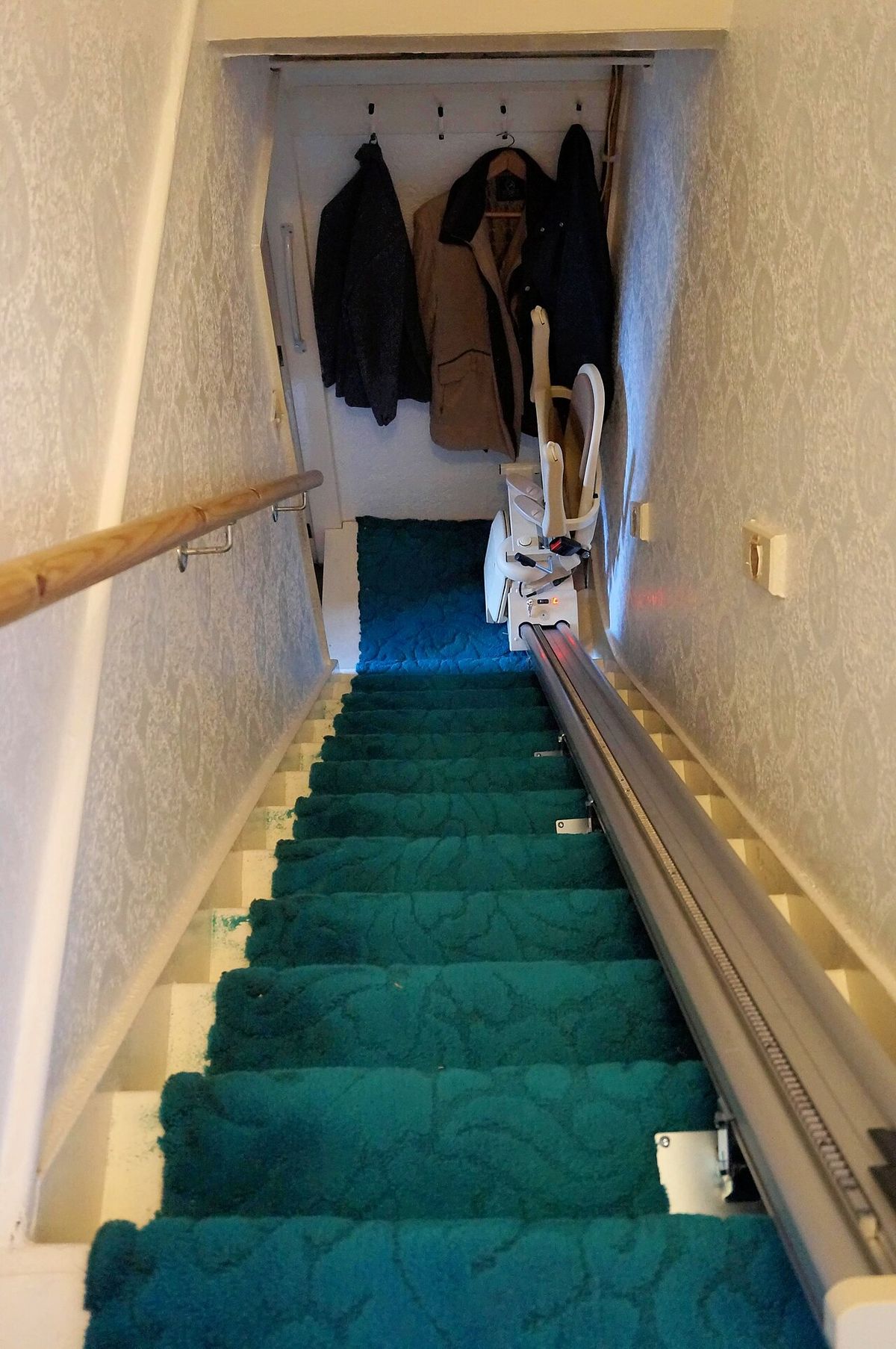
Key takeaways
- Budget $250 to $600 per year for stairlift upkeep once the warranty period ends; spending clusters around batteries, rollers, and electronics.
- Batteries are a consumable: expect replacement every 2 to 4 years at $100 to $300, and always park the chair on its charger.
- Annual service contracts ($200 to $450) tend to pay off for curved rails and older units; read the exclusions before you sign.
- Curved stairlifts cost significantly more to maintain because rails and key parts are proprietary to the original custom build.
- Use the 50-percent-of-replacement rule and the 10-year mark to decide between one more repair and a new unit.
A stairlift typically costs $3,000 to $15,000 installed, and that number dominates every buying conversation. But the purchase price is only the first check you will write. Batteries wear out, rollers wear down, circuit boards fail, and the rail needs periodic attention — and because most stairlifts are sold and serviced by a single dealer in your area, you will be negotiating service on their terms. This guide lays out what stairlift ownership really costs year by year in 2026: service contracts, the repairs you are most likely to face, the straight-versus-curved maintenance gap, and the owner habits that keep warranties intact and bills small.
The Real Annual Cost of Stairlift Ownership
Once the initial warranty expires — usually one to two years for parts, sometimes longer for the motor and gearbox — a realistic maintenance budget is $250 to $600 per year for a straight-rail unit, and more for curved. That is not $400 every year like clockwork; it is lumpy. You might spend $120 in year three and $900 in year seven when the batteries, rollers, and a circuit board all decide to retire in the same season. Budgeting the average and keeping a small reserve smooths the surprises.
The spending follows a predictable life cycle. Years one and two are mostly warranty coverage plus basic owner care. Years two to four bring the first battery replacement. Years five to eight are when rollers, wheels, and rail components start showing wear, especially on stairs the chair travels many times a day. Electronics — boards, chargers, hand controls — can fail at any age, which is why a service relationship matters more than any single part's lifespan.
Curved-rail owners should budget roughly 50 to 100 percent more across the board. The rail is custom-bent for your staircase, key components are proprietary to that build, and fewer technicians are qualified to work on it. If you bought curved, the maintenance premium is the price of a rail that follows your stairs instead of forcing your stairs to follow a straight line — worth it for many floor plans, but not free.
The most expensive maintenance mistake is not a bad part; it is neglect. A chair left off its charger for weeks, a rail never wiped down, a grinding noise ignored for months — each turns a $150 service call into a $700 repair. Stairlifts are simple machines that reward simple attention, and almost everything in this guide comes down to catching small problems while they are still small.
Service Contracts: What They Cover and When They Pay Off
Most dealers offer an annual service contract, typically $200 to $450 per year, and the value proposition is straightforward: one preventive visit, priority scheduling when something breaks, and discounted — sometimes waived — labor on repairs. For a household that depends on the stairlift daily, the priority scheduling alone can justify the cost; waiting two weeks for a non-contract repair visit is a very different experience when the stairs are your only route to the bedroom.
Read the contract before you sign, because the exclusions define the real value. Batteries are commonly excluded or covered only in the first year. Cosmetic parts, damage from misuse, and failures caused by power surges or flooding are usually out. Some contracts cap the number of covered visits or exclude after-hours calls. Ask specifically: what is the guaranteed response time, what is the labor discount, and which parts categories are excluded?
Contracts make the most sense in three situations: curved-rail systems, where every repair is expensive and dealer-dependent; units past their manufacturer warranty; and households where the stairlift is medically essential rather than merely convenient. They make the least sense for a brand-new straight-rail unit still under comprehensive warranty, where you may be paying for coverage you already have. You can always add a contract later as the warranty winds down.
One more consideration: the contract ties you to the dealer. That is fine if the dealer is excellent and likely to be around, and it is a real risk if they are neither. Before signing a multi-year agreement, check how long the company has operated locally and whether the manufacturer authorizes other servicers in your area. A contract with a shaky dealer is worse than no contract, because it can delay you from finding competent help.
Batteries: The Consumable Nobody Budgets For
Nearly all modern stairlifts run on rechargeable batteries — usually sealed lead-acid — that charge whenever the chair parks at the top or bottom of the rail. The batteries are what let the chair keep working through a power outage, typically for a limited number of trips. They are also a consumable with a 2-to-4-year lifespan, and replacement usually costs $100 to $300 installed. Nobody mentions this in the showroom; everybody learns it in year three.
The single biggest factor in battery life is charging discipline. Park the chair on its charging point every time — not most times, every time — and never leave the unit switched off and uncharged for weeks, which is how vacation homes kill batteries. If your model beeps, moves sluggishly, or stops mid-rail and restarts, weak batteries are the prime suspect, and they are the cheapest possible explanation, so check them before assuming a bigger failure.
Power outages deserve a plan, not just a hope. Know roughly how many trips your batteries support when the power is out, and keep the chair parked at the level where the person sleeps if an outage is forecast. A small uninterruptible power supply on the charger helps in areas with frequent blips, though it does not replace the batteries themselves. And if an extended outage fully drains the batteries, recharge promptly — deep discharge shortens their remaining life.
When replacement time comes, use the correct specification batteries and have them installed by a technician unless your manual explicitly blesses owner replacement. The wrong batteries can cause charging faults or error codes, and some manufacturers treat non-approved batteries as a warranty issue. It is a $200 job; do not turn it into a $600 board replacement by improvising.
Common Repairs and What They Cost
Most stairlift repairs fall into a familiar set, and knowing the price ranges keeps any quote honest. Labor typically runs $100 to $200 per hour with a trip or diagnostic charge of $75 to $150, so even a simple fix starts around $150 all-in. Curved systems and limited-competition markets price higher across the board. Costs are 2026 US market ranges; get itemized local quotes.
- Drive rollers and wheels ($150–$400): the most common wear item; the chair gets noisy or jerky when they go. Straightforward replacement.
- Rail cleaning, lubrication, and realignment ($200–$500): fixes grinding, hesitation, and error codes caused by a dirty or shifted rail.
- Circuit or control board ($400–$900): the electronics brain; failures show up as dead controls, phantom beeping, or intermittent operation.
- Motor or gearbox ($600–$1,500): the big one — straining sounds, failure to start under load, or a seized drive. Often the repair-or-replace trigger.
- Hand control, remote, or key switch ($75–$200): small parts, but the chair is unusable without them; keep a spare remote if your model uses one.
- Safety sensors and limit switches ($150–$350): the edge sensors and end-of-travel switches that stop the chair; a frequent source of nuisance faults.
- Seat swivel mechanism ($200–$450): wear in the locking swivel shows up as wobble or a seat that will not lock at the landing.
Get quotes in writing with parts and labor separated, and ask whether the part is new or refurbished — refurbished boards are common and can be fine, but you should know which you are buying and what warranty it carries. For any quote over $500, a second opinion from an independent mobility-equipment company is cheap insurance, especially if your dealer is the only game in town.
Straight vs. Curved: The Maintenance Gap
A straight stairlift is close to a commodity: standardized rails, widely available parts, and many technicians who have seen your exact configuration dozens of times. A curved stairlift is a custom machine built for one staircase. That difference, invisible on installation day, dominates the next fifteen years of ownership.
Curved rails mean proprietary everything. Replacement rail sections, custom-bent track components, and sometimes even the carriage parts are specific to your build and obtainable only through the original manufacturer or dealer network. Lead times stretch from days to weeks, prices run well above straight-rail equivalents, and the pool of qualified technicians is smaller — which also means less competitive pressure on labor rates.
The practical consequences show up in three places. First, emergency repairs take longer, because parts may need to be ordered rather than pulled from a van. Second, you have less leverage: switching servicers is harder when only one company in the region handles your brand's curved systems. Third, moving house usually means leaving the rail behind — a curved rail cannot be re-bent for a new staircase — and the used market for curved units is thin, since the next buyer needs your exact stair geometry.
None of this means curved stairlifts are a bad buy; for stairs with turns, landings, or intermediate doors, they are often the only option that preserves the staircase. It means budgeting honestly: higher annual reserves, a service contract from day one, and a relationship with the dealer before you need them at 9 p.m. on a Sunday. Buy the curved rail your stairs require, and maintain it like the custom equipment it is.
Owner Habits That Protect Your Warranty
Manufacturers expect owners to handle basic care, and the manual spells it out: keep the rail clean and free of dust and pet hair, wipe it down regularly, apply only the manufacturer-recommended lubricant if any, and always park the chair on its charging contacts. Respect the weight limit — it is an engineering limit, not a suggestion — and never force the chair, the swivel, or the footrest past a resistance. These habits cost nothing and prevent a remarkable share of service calls.
Just as important is what not to do. Do not open the carriage to “take a look” at the wiring. Do not substitute non-approved batteries. Do not let a handy relative rewire the charger or bypass a safety switch that keeps nuisance-tripping — a bypassed safety switch is how a minor fault becomes a dangerous one. And do not use the stairlift to move furniture, laundry loads, or anything beyond its rated passenger purpose; commercial-style use voids warranties fast.
Keep records. File the manual, the installation paperwork, and every service receipt in one place, and log the date of each battery replacement. If a warranty dispute ever arises, a documented maintenance history is your leverage. Note the warranty terms at purchase: what is covered, for how long, and whether annual professional servicing is a condition of the warranty — for some brands, skipping the yearly tune-up voids coverage you thought you had.
Schedule the professional tune-up annually even when everything seems fine. A technician cleans and inspects the rail, checks battery health under load, tests every safety switch, and torques the rail fixings — the kind of preventive work that finds the loose bracket before it becomes a failed rail section. Think of it like servicing a furnace: the appointment you skip is the one that would have caught the problem.
Repair or Replace? The Decision Framework
Every stairlift eventually faces the repair-or-replace question, and the cleanest rule is the 50-percent rule: if a repair costs more than half the price of a new equivalent unit, replacement usually wins. A $1,200 motor on a $3,500 straight-rail chair is a judgment call; a $1,200 motor on a twelve-year-old unit with obsolete electronics is throwing good money after bad.
Age is the second input. Around the 10-year mark, parts availability starts to thin as manufacturers discontinue older platforms, and one obsolete circuit board can strand an otherwise sound machine. Repeated failures are the third: a unit that needs three service visits in a year is telling you the systems are aging together, and the next failure is already scheduled. Add up a year of patchwork repairs before authorizing the next one.
Replacement has gotten more attractive over time. Newer units tend to be quieter, slimmer on the rail, and better on battery management, and safety features have improved across the industry. If the household's needs have changed — a heavier user, a second person now using the chair, or a staircase reconfiguration — sizing the replacement to today's reality beats nursing yesterday's compromise.
Plan the money ahead of the crisis. From about year three, setting aside $400 to $600 a year covers routine maintenance and builds a replacement fund for the far side of year ten. If you do replace, budget $300 to $800 for professional removal of the old unit, and ask the dealer about trade-in or recycling — straight-rail units sometimes have modest resale or donation value, while curved rails rarely do. The cheapest stairlift emergency is the one you saw coming.
Frequently asked questions
Typically 2 to 4 years, depending on use and charging habits. The chair should always be parked on its charging point; batteries that sit discharged degrade fast. Warning signs include beeping, sluggish travel, or the chair stopping mid-rail. Replacement usually costs $100 to $300 installed.
Basic owner care — wiping down the rail, keeping the chair parked on charge, and respecting the weight limit — is expected of you and keeps the warranty intact. Anything involving wiring, circuit boards, the motor, or rail realignment belongs to a trained technician. DIY electrical or mechanical work can void the warranty and create safety risks.
Expect a trip or diagnostic charge of roughly $75 to $150 plus $100 to $200 per hour of labor, so a straightforward annual tune-up often lands between $150 and $300 before parts. Curved-rail systems and units from dealers with limited local competition tend to price higher. Ask for the trip charge and hourly rate up front.
They usually are for curved stairlifts and for any unit past its warranty, because one avoided emergency visit can cover the $200 to $450 annual cost. For a new straight-rail unit still under full warranty, a contract may duplicate coverage you already have. Read the exclusions — batteries, cosmetic parts, and damage are commonly left out.
Contact the manufacturer for the nearest authorized servicer; most keep a dealer network list. Independent mobility-equipment companies often service multiple brands, though curved-rail parts may only be obtainable through the original manufacturer. Keep your model and serial numbers somewhere safe — they are what any new servicer will ask for first.
With regular maintenance, 10 to 15 years is a reasonable expectation for a quality unit. Heavy daily use, skipped servicing, and chronically discharged batteries shorten that. When repairs pass half the cost of replacement, parts become scarce, or failures repeat, replacement is usually the better financial call.