
AC Coupled Battery Retrofit Cost 2026: What Adding Storage Really Costs
Key takeaways
- A typical single-battery AC-coupled retrofit runs roughly $10,000 to $18,000 installed in 2026, with most of the spread coming from battery size, panel work, and local labor rates.
- AC coupling is usually $4,000 to $6,000 cheaper than a DC-coupled retrofit on an existing solar system because it keeps your existing inverter and solar wiring untouched.
- The battery itself is only part of the bill: gateway and backup panel hardware, labor, permits, and any panel upgrade together often add several thousand dollars.
- Size the retrofit to your evening load (4 p.m. to midnight), not your daily total — most homes need 10 to 15 kWh of usable storage for essentials plus a normal evening.
- The federal residential clean-energy credit ended for expenditures after December 31, 2025, so 2026 retrofit budgets should not count on it; check state and utility incentives instead.
AC coupled battery retrofit cost in 2026 typically lands between $10,000 and $18,000 installed for a single-battery system with 10 to 15 kWh of usable storage, and the reason the range is that wide is that a retrofit is never just a battery: it is a battery plus a gateway, wiring, labor, permits, and sometimes a panel upgrade, and each of those line items varies by home.
If you already have rooftop solar and you are adding storage, AC coupling is the retrofit path most installers reach for first. Your panels and your existing solar inverter stay exactly as they are. The new battery system, which carries its own inverter, connects on the AC side of your home's electrical system, usually through a gateway or backup panel. Nothing in your solar array is rewired, and in most cases the solar system does not even need to be taken out of service for long. That simplicity is the whole cost story of this article: what AC coupling saves you, what it still costs, and where quotes quietly grow.
AC Coupled Battery Retrofit Cost 2026: The Short Answer
For a straightforward retrofit — a modern 200-amp panel, a short wire run to the battery location, and one battery in the 10 to 13.5 kWh range — expect the low-to-middle part of the range. Homes that need a panel upgrade, a long wire run, a second battery for whole-home coverage, or a critical-loads subpanel land at the top end or beyond it. The table below is the shape of a typical quote, not a promise: get at least two itemized local quotes before budgeting, because labor rates and permit fees vary sharply by market.
Two cautions about reading those ranges. First, they are installed costs, not equipment prices: a quote that looks cheap because it lists only the battery is not comparable to a quote that includes gateway hardware, labor, and permits. Second, costs are 2026 US market ranges gathered from installer and industry reporting; your utility's interconnection rules and your local code requirements can move the number in either direction. For the broader context of sizing before you price anything, see our 10kWh vs 13.5kWh vs 20kWh home battery guide.
EF ECOFLOW 12kWh Power Station: DELTA Pro Ultra with Extra Battery, 120/240V 7200W AC Output, LiFePO4 Home Battery Backup Expandable to 90kWh

Modular 12.3kWh LFP home battery (expandable to 90kWh) that gives retrofit buyers interim whole-home backup while a permanent AC-coupled system is quoted
*Affiliate Disclosure: As an Amazon Associate, Elevate Home earns from qualifying purchases. Pricing and availability subject to change.
What an AC-Coupled Retrofit Actually Includes
An AC-coupled retrofit has more parts than the battery on the wall, and a good quote itemizes all of them. If a quote shows a single lump sum, ask for the breakdown — it is the fastest way to spot what is missing, such as permits or a panel upgrade that another installer included.
The gateway deserves a sentence of its own because buyers often do not know it exists until they see it on the quote. During a grid outage, your battery must be physically separated from the grid so it does not back-feed power onto lines that utility crews may be repairing. The gateway (sometimes called a system controller or backup panel) does that switching, and it decides which circuits stay live. If you want whole-home backup rather than a backed-up subpanel, the gateway configuration and the battery's continuous power rating both matter more — and the quote rises accordingly. Our guide to adding a battery to existing solar walks through the retrofit sequence step by step.
AC-Coupled vs DC-Coupled Retrofit Cost
The comparison that matters for existing solar owners is not AC versus DC in the abstract; it is what each path does to equipment you already own. DC coupling is generally the more efficient architecture for a brand-new solar-plus-storage install, because the battery charges directly from the DC solar output without an extra conversion step. But on an existing system, DC coupling usually means replacing your solar inverter with a hybrid inverter and rewiring the DC solar circuit — and that is where the extra cost lives. Our DC vs AC coupled battery comparison explains the architecture trade-offs in full.
The efficiency difference is real but small in practice — on the order of a few percentage points of round-trip losses — and for most retrofit buyers it is outweighed by the avoided inverter replacement. The exception is worth naming: if your solar inverter is already 10 or more years old and nearing the end of its life, paying for a hybrid inverter as part of a DC-coupled retrofit can be the better lifetime deal, since you were going to replace that inverter soon regardless. Price both paths against that fact, not against efficiency alone.
What Pushes Your Retrofit Above (or Below) the Typical Range
Five variables explain most quote-to-quote differences, and they are worth checking before you compare numbers from different installers.
Your panel. A modern 200-amp service with spare breaker space is the cheapest starting point. An older 100-amp panel, a panel with no spare capacity, or a service that needs a meter or main upgrade adds labor and hardware and can add weeks for utility coordination.
Distance and location. A battery mounted on the garage wall a few feet from the panel is a short, cheap wire run. A battery sited on the far side of the house, in a detached structure, or somewhere that needs trenching or long conduit runs costs more in materials and labor. Battery placement also has to satisfy manufacturer clearances, ventilation, and temperature limits, plus local fire-code rules — see our home battery garage fire code guide before assuming a spot will work.
How much backup you actually want. Backing up a handful of essential circuits is a smaller gateway and panel job than backing up the whole house. Whole-home backup usually means a larger battery, a higher-output inverter, and sometimes load-shedding hardware for heavy loads such as central air conditioning or an electric range.
Your solar setup. Enphase microinverter systems pair naturally with AC-coupled batteries from the same ecosystem, which can simplify commissioning and monitoring. String-inverter systems work fine with AC coupling too, but the installer needs to verify compatibility between the battery gateway and your existing inverter, particularly for how the system behaves during an outage when solar production continues.
Local labor and permitting. Installer rates, permit fees, inspection requirements, and utility interconnection timelines vary widely by state and even by municipality. Two identical systems in different states can differ by thousands of dollars for these reasons alone, which is why national averages should never be treated as quotes.
Sizing an AC-Coupled Retrofit: Hours, Not Just Kilowatt-Hours
Buyers fixate on the kilowatt-hour number on the battery, but what you actually experience is hours of runtime at your real load. Usable capacity runs below headline capacity after depth-of-discharge limits and inverter losses, so a nominal 13.5 kWh battery delivers roughly 12 kWh you can actually use. Divide that by your average load and you get your runtime.
The sizing method that avoids both undersizing and overspending is simple: pull twelve months of hourly usage from your utility, total your consumption between 4 p.m. and midnight, and match the battery's usable capacity to that figure. A home using 30 kWh a day may only use 10 to 12 kWh in the evening — that home needs a single 13.5 kWh battery, not a 30 kWh system. And remember that your solar array refills the battery the next day: in a multi-day outage, daily solar production matters as much as battery size, and winter production can drop to a third of summer output in northern states. If your load is growing — an EV on order, a heat pump conversion planned — a modular system you can expand later is usually cheaper than buying capacity you will not use for years; see our guide to expanding home battery storage.
Permits, Panel Work, and Interconnection: The Hidden Costs
Three items surprise retrofit buyers most often, and all three are avoidable with the right questions. First, permits: most jurisdictions require an electrical permit for a battery retrofit, and some require a separate battery or energy-storage permit. Ask whether the quote includes permit fees and who handles the application. Second, panel work: if your panel needs an upgrade, that work may need its own permit and a utility shutoff appointment, and it can add weeks to the timeline. Third, interconnection: adding storage changes your system's export and islanding behavior, so many utilities require an updated interconnection application or at least notification, even though your solar array itself is unchanged. Confirm in writing who files it and whether any utility fee applies.
One more hidden cost is worth budgeting for: recommissioning. A retrofit is not finished when the battery is on the wall. The installer should recommission the whole system — battery, gateway, solar inverter, and monitoring app — and verify the transfer test, where the system islands correctly when the grid drops. A quote that does not mention recommissioning and a settings review (storm-precharge reserves, time-of-use schedules, backup reserve level) is a quote to question.
Incentives in 2026: What to Actually Expect
The incentive picture changed materially for 2026, and older articles that promise a federal credit are out of date. The federal residential clean-energy credit under Section 25D ended for expenditures after December 31, 2025, so a battery retrofit purchased in 2026 does not earn that credit under that provision. That single change raises the effective cost of a retrofit versus 2025 by roughly the credit's value for buyers who qualified for it, and it is the main reason year-over-year retrofit cost comparisons look worse even though equipment prices have not jumped.
What remains is patchwork: state programs, utility rebates, and demand-response or virtual-power-plant payments that vary by location and can change with little notice. California's SGIP program, various utility storage rebates, and state tax treatments all exist in some form in some places — but none of them is universal, and several have waitlists or capacity caps. Treat any incentive as unconfirmed until your installer shows it in writing for your utility and your address, and confirm the tax treatment with a tax professional rather than a sales brochure. Our battery tax credits and incentives guide for 2026 tracks the current picture.
There is also an interim option worth considering while a permanent retrofit is being quoted: a modular portable home battery system can cover essential loads during outages without any panel work or permits, and it can later serve as a supplement or a portable backup for other uses. It is not a substitute for a whole-home retrofit, and its output and capacity limits mean it will not run central air conditioning or a whole house — but for buyers facing a long retrofit timeline, it closes the gap between deciding and being protected.
When AC Coupling Is the Wrong Choice
AC coupling is the default retrofit answer, not the universal one. Choose a different path if your solar inverter is at end of life and a hybrid replacement is due anyway; if you are building a new solar system from scratch, where DC coupling's efficiency edge comes free; or if your installer finds a compatibility problem between your existing inverter and the battery gateway you want, such as islanding behavior that cannot be resolved cleanly. Also reconsider if your main goal is whole-home backup including large motor loads: in that case the battery's continuous power rating and the gateway's load-management capability matter more than the coupling architecture, and you may need a larger or different system regardless of how it connects.
The Verdict: What to Budget and What to Ask
Budget $10,000 to $18,000 installed for a single-battery AC-coupled retrofit in 2026, more if your panel needs work or you want whole-home coverage, and treat anything far outside that range as a signal to get a second quote rather than a bargain or a rip-off. Before you sign, ask for an itemized quote that separates battery, gateway, labor, permits, and panel work; confirm who files permits and the interconnection update; confirm the battery's usable capacity and continuous output, not just its headline kilowatt-hours; and get the expansion path in writing if you think you will add capacity later. The cheapest retrofit is rarely the one with the lowest battery price — it is the one whose quote already includes everything the job actually requires, installed by a crew that recommissions the system properly and leaves you with a backup reserve you understand. For the full cost picture across system types, see our whole-home battery backup cost guide.
Frequently asked questions
How much does an AC-coupled battery retrofit cost in 2026?
A typical single-battery AC-coupled retrofit costs roughly $10,000 to $18,000 installed in 2026, including the battery, gateway hardware, labor, and permits. Panel upgrades, long wire runs, or a second battery push the total higher.
Is AC coupling cheaper than DC coupling for adding a battery to existing solar?
Usually yes, by roughly $4,000 to $6,000. AC coupling keeps your existing solar inverter and wiring untouched, while a DC-coupled retrofit typically requires a new hybrid inverter plus rewiring of the DC solar circuit.
Can I add an AC-coupled battery to any existing solar system?
Most systems, yes. AC-coupled batteries connect on the AC side of your electrical system and work with both microinverter and string-inverter setups, but your installer should verify gateway compatibility and outage islanding behavior with your specific inverter.
Do I need a panel upgrade for a battery retrofit?
Not always. Modern 200-amp panels with spare capacity usually need no upgrade, but roughly 15 to 20 percent of retrofits — typically older 100-amp services — require panel work costing roughly $1,500 to $4,000.
Is there still a federal tax credit for a home battery retrofit in 2026?
No, not under the former Section 25D residential clean-energy credit, which ended for expenditures after December 31, 2025. State and utility incentives may still apply in some locations; confirm them in writing and check tax treatment with a tax professional.
How long does an AC-coupled battery retrofit take to install?
The physical installation typically takes one to a few days for a straightforward retrofit. Permits, panel work if needed, and utility interconnection updates can extend the total timeline to several weeks.
Keep reading

Retrofit Guide
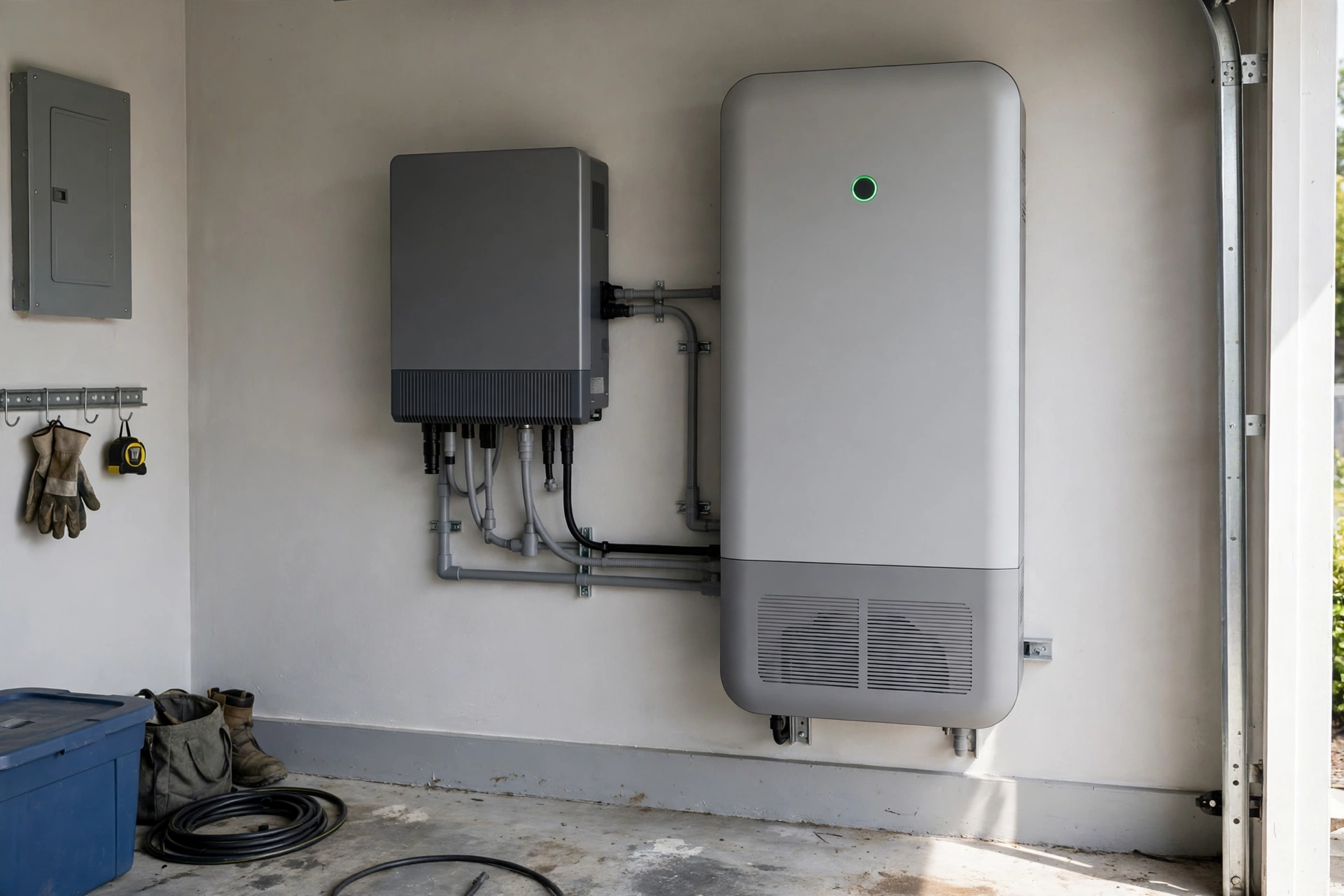
How to Add Battery to Existing Solar: 2026 Retrofit Guide
How to add battery to existing solar in 2026: AC vs DC coupling, inverter compatibility, net-metering impacts,…
Battery Design
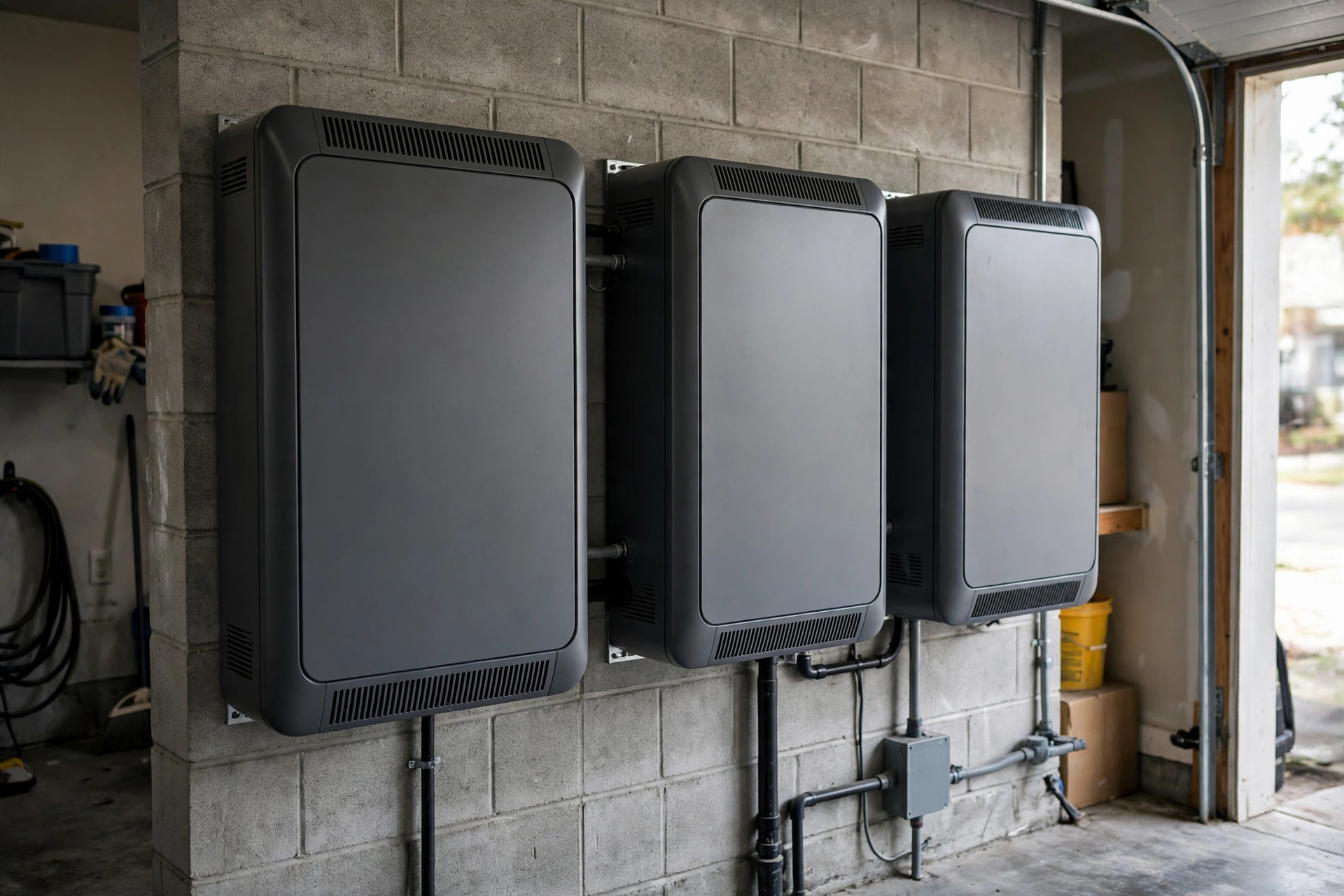
DC-Coupled vs AC-Coupled Home Battery Systems: Which Architecture Wins?
DC-coupled vs AC-coupled home battery systems compared: efficiency, retrofit cost, outage behavior, and brand …
Pillar 01 · Energy Resilience
10kWh vs 13.5kWh vs 20kWh Home Battery: Which Size Is Right? (2026)
10kWh vs 13.5kWh vs 20kWh home battery compared: usable capacity, backup runtime, solar pairing, and which tie…
Incentives Guide
Home Battery Tax Credit: 2026 US & Canada Incentives Guide
Home battery tax credit guide for 2026: US federal credits, state rebates, utility VPP payments, and Canadian …
Interactive Tool
Home Battery Size Calculator: What Size Do You Need?
How many kWh of battery storage do you need? Our free home battery size calculator estimates your backup need,…
Interactive Tool
Power Outage Cost Calculator: What Blackouts Cost You
What do blackouts really cost you? Our power outage cost calculator totals food loss, hotels, lost work, and f…