Fall-Proofing Your Home: Room-by-Room Checklist
Fall-proofing your home room by room: prevention-focused fixes for stairs, bathrooms, kitchens, and outdoors. Whole-home checklist, $500-$2,000 total.
10 MIN READ · UPDATED 2026-09-23
Key takeaways
- Prevention beats detection: fix lighting, footing, and obstacles first — a fall-detection watch is the airbag, not the brakes.
- Bathrooms are the highest-risk room: stud-anchored grab bars, non-slip surfaces, shower seating, and 120°F water-heater setting.
- Stairs need handrails on both sides, lit treads, and high-contrast nosing strips — the top interventions for aging eyes and balance.
- Remove or fully secure all throw rugs, coil cords along baseboards, and keep 36-inch clear paths through every transit zone.
- Review medications annually for dizziness and balance side effects — the most overlooked fall factor — and re-walk this checklist yearly.
Falls are the leading cause of injury for adults over 65 — and the majority happen at home, in familiar rooms, doing routine things. A hip fracture from a bathroom fall can cascade into months of rehab and a permanent loss of independence, yet most of the fixes cost less than $50 and take an afternoon. This room-by-room checklist goes beyond detection gadgets to the prevention-focused fixes that actually stop falls: lighting, flooring, grab support, clutter, and the habits that tie them together. Budget $500 to $2,000 for a comprehensive whole-home pass.
The Fall-Proofing Mindset: Prevention Beats Detection
Fall-detection watches and emergency pendants have their place — but they're the airbag, not the brakes. Prevention asks a better question: why do falls happen here, and what removes the cause? Falls cluster around a short list of mechanisms: tripping on obstacles or level changes, slipping on wet or slick surfaces, losing balance in the dark, misjudging steps and stairs, and reaching or bending beyond a stable base. Every room in this checklist is audited against those five mechanisms, because a fix that doesn't address a mechanism is decoration.
Two principles govern everything. First, fix the environment before blaming the person. "Be careful" is not a safety plan; adequate lighting, clear paths, and secure footing are. Second, design for the worst day, not the best — the 3 a.m. bathroom trip when you're groggy, the rainy day when shoes are wet, the week after a medication change when balance is off. If the home is safe on the worst day, it's safe every day.
A note on professional input: a physical or occupational therapist can do a home safety assessment (often covered by insurance with a referral) that catches person-specific risks — the exact chair height that challenges a particular hip replacement, the medication timing that affects balance. Pair that personalized assessment with this checklist's environmental fixes and you've covered both halves of the problem.
Entryway, Hallways, and Stairs: The Transit Zones
More falls happen in transit — moving between rooms — than anywhere else, so start where feet travel. Lighting: hallways and entries need bright, even illumination with no dark pockets; add motion-sensor nightlights ($10 to $25 each) along every nighttime path, especially the bedroom-to-bathroom route. Stairs need a light switch at both top and bottom (code in most jurisdictions, but verify older homes) plus illumination of each tread — adhesive LED stair strips ($20 to $50 per staircase) are a superb retrofit.
Stairs themselves: secure handrails on both sides, extending the full flight and ideally 12 inches past the top and bottom steps; rails should be graspable (1.25 to 2 inch diameter, circular or oval — not a 2x4) and firmly anchored. Mark step edges with high-contrast nosing strips ($15 to $40 per staircase) — the number-one stair intervention for aging eyes is simply making each step's edge visible. Verify carpet is tightly secured with no loose edges; refinish or replace slick wooden treads, and consider low-pile carpet or anti-slip tread tape on bare wood.
Clutter and obstacles: hallways need a clear 36-inch path — relocate shoe racks, umbrella stands, and decorative tables that narrow the route. Secure every rug with non-slip pads or double-sided carpet tape ($10 to $20 per rug), or remove small throw rugs entirely; they're among the most common trip culprits in the home. Coil or reroute cords along baseboards with cord covers ($10 to $25) — the phone charger snaking across the hallway is a fall waiting for a dark night.
Living Room and Bedrooms: Where Comfort Hides Hazards
Living areas look safe because they're familiar — which is exactly why they cause falls. Furniture arrangement: create clear, wide paths between the door, seating, and key destinations (TV, window, bathroom route); anchor the layout so a person using furniture for support won't pull a light side table over. Seating height: chairs and sofas should allow sitting and standing without a struggle — seat height roughly matching knee height (17 to 19 inches for most adults); add firm seat cushions or furniture risers ($20 to $50 per chair) to low-slung modern pieces rather than replacing beloved furniture.
Bedroom specifics: the bed height matters enormously — too high and getting in is a climb, too low and standing up is a lunge. Ideal: feet flat on the floor with knees at roughly 90 degrees when sitting on the edge. A sturdy bed rail ($40 to $120) provides a grab point for the sit-to-stand transition — choose models that tuck securely under the mattress and don't create entrapment gaps. Keep a clear, lit path from bed to bathroom: nightlights, no rugs in the path (or fully secured ones), and essentials (glasses, phone, walker) within arm's reach of the bed — never across the room.
Reaching hazards: relocate everyday items to between waist and shoulder height — the top-shelf stretch on a step stool and the deep-cabinet bend are both classic fall setups. If step stools remain in use, they must have a wide base, non-slip steps, and a grab handle ($40 to $90 for a safe model); better yet, install pull-down shelving ($80 to $200 per cabinet) in the kitchen for high storage. And check pet factors honestly: small dogs and cats underfoot cause real falls — a bell on the collar ($5) and training pets to stay out of stair paths are cheap, effective mitigations.
Kitchen: Spills, Reaches, and Hard Floors
Kitchens combine the home's hardest floors with its most frequent spill zone — a high-consequence combination. Flooring: tile and polished stone are beautiful and treacherous when wet; anti-slip treatments ($100 to $300 professionally applied per kitchen) or quality anti-fatigue mats with beveled, non-slip edges ($40 to $90 each) at the sink and stove tame the slip risk without a remodel. Replace any curled or sliding mats immediately — a mat that moves is worse than no mat.
Spill protocol: keep a mop or quick-dry cloth within immediate reach of the main work zones, and make wiping spills immediately a household rule — most kitchen slips happen on spills that "I'll get in a minute." Store cooking oils and frequently used items at counter height, not above the stove where reaching means leaning over heat. Lighting: under-cabinet lighting ($30 to $100 per run, LED strips) eliminates the shadowed-counter problem where spills and obstacles hide; it's also one of the cheapest kitchen upgrades with the biggest daily impact.
Layout and seating: ensure a stable, armless-or-armed chair or stool is available for tasks done standing — peeling vegetables, waiting for water to boil. Perching stools ($80 to $200) let someone rest mid-task without leaving the kitchen. Keep the floor clear of the classic kitchen clutter: pet bowls pushed to a consistent corner (never mid-path), trash cans against the wall, and step stools stored out of walkways. The kitchen trash placement deserves a specific callout — the bag carried across the kitchen to a far can is a spill-and-trip combo; move the can to the prep zone.
Bathroom: The Highest-Risk Room in the House
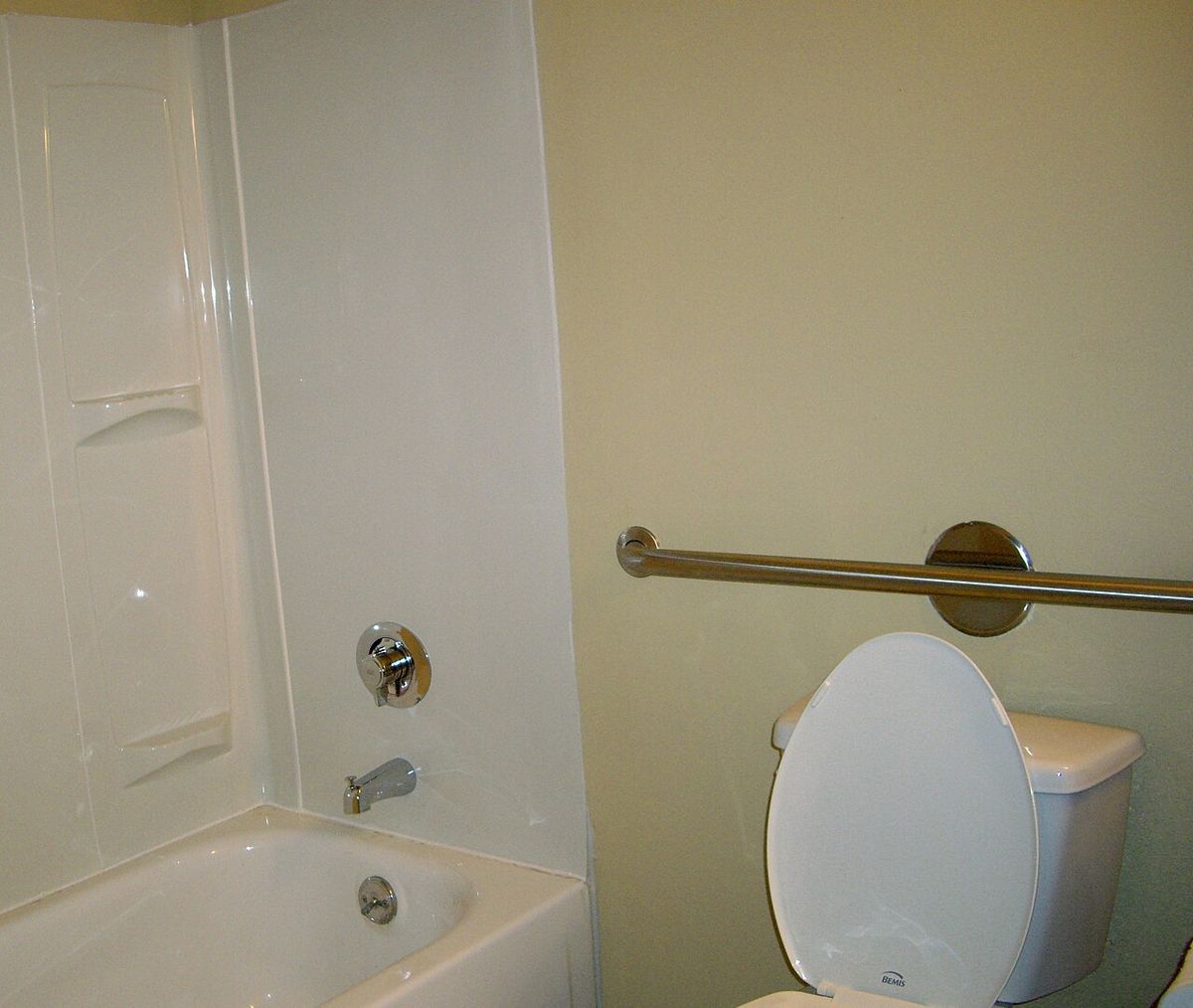
Bathrooms concentrate every fall mechanism — water, slick surfaces, confined space, sit-to-stand transitions — in one small room. Grab bars are the cornerstone: properly installed bars (anchored into studs or with rated anchors, never suction-cup models for weight-bearing) at the toilet (one side minimum, both ideal), in the shower/tub (vertical bar at entry, horizontal along the wall), and anywhere a transition happens. Budget $150 to $400 professionally installed for a bathroom's worth of bars — the single best dollars in fall prevention. (See our grab-bar placement guide for the full specification.)
Shower and tub: non-slip mats or adhesive treads ($15 to $40) inside every tub and shower — no exceptions; a sturdy shower chair or bench ($50 to $150) for anyone with balance concerns or who tires standing; a handheld showerhead ($40 to $120 installed) so seated showering works properly; and a raised toilet seat ($30 to $70) or comfort-height toilet if the low standard height makes standing difficult. Curbless or walk-in shower conversion ($5,000 to $15,000) is the definitive fix for tub-entry falls — the high tub wall is a daily hurdle; phase it into the next bathroom remodel if a full conversion isn't immediate.
Floors and lighting: bathroom floors should be matte, textured tile or slip-resistant vinyl — glossy tile is a skating rink when wet. Keep a non-slip bath mat with rubber backing ($20 to $40) outside the shower, laundered regularly so the backing doesn't degrade. Lighting needs to be bright and shadow-free: a well-lit vanity plus a nightlight for the 3 a.m. visit. And water temperature: set the water heater to 120°F to prevent scalds — startle reactions to scalding water cause falls, and thinner aging skin burns faster. An anti-scald valve ($100 to $250 installed) adds protection at the shower itself.
Outdoors: Porches, Paths, and the Yard
The home's exterior gets less attention and causes plenty of falls. Entry steps and porches: handrails on both sides of any steps (even two-step porches — the "it's just one step" fall is a classic), high-contrast edge marking on step nosings, and adequate overhead or motion-sensor lighting. Repair uneven pavers, cracked concrete, and heaved walkway sections promptly — a 1-inch lip is enough to trip anyone, and freeze-thaw cycles create new ones yearly.
Paths and driveways: keep walkways clear of leaves, moss, and ice — mossy shaded paths are shockingly slick; a pressure wash each spring ($150 to $300 professionally, or a $100 electric washer for DIY on ground level) restores traction. In snow and ice regions, this is non-negotiable: contracted snow/ice removal ($300 to $800 per season) plus ice-melt stocked by every exterior door. Consider heated walkway mats ($100 to $300 per section) for the primary entry path in heavy-snow climates — they eliminate the daily ice battle entirely.
Yard and garden: raised beds ($100 to $400 each) bring gardening to waist height, eliminating the kneel-and-stand cycle; stable, wide garden paths; tool storage at reachable height; and honest assessment of sloped areas — a steep backyard slope that was fine at 50 deserves a handrail, stepped path, or simply reduced access at 75. Outdoor lighting along every regular route, on timers or motion sensors, extends safe use into the evening.
Habits, Footwear, and the Annual Re-Check
Environment is half the equation; habits are the other half. Footwear: the slippers-with-no-back are a fall machine — switch to closed-heel, non-slip-sole house shoes ($30 to $80) worn consistently indoors; going barefoot or in socks on hard floors is asking for a slip. The sit-to-stand pause: dizziness on standing (orthostatic hypotension, common with blood-pressure medications) causes real falls — the habit is simple: sit on the bed edge, pause, stand slowly, pause again before walking. Mention recurrent dizziness to the doctor; medication timing adjustments often fix it.
Vision and hearing: annual eye exams with current prescriptions — outdated glasses are a documented fall risk factor; keep glasses clean and worn (the "I only need them for reading" habit fails on stairs). Hearing aids worn consistently help balance more than most people realize. Exercise: balance and leg-strength training (tai chi, physical-therapy-prescribed programs) is the only intervention proven to reduce fall rate itself rather than just cushioning the environment — ask the doctor for a referral; many programs are covered.
The annual re-check: walk this checklist once a year — abilities change, and last year's safe home may have new gaps. Replace worn non-slip pads, re-test nightlights and rail stability, reassess the bed and chair heights, and review medications with the doctor or pharmacist for dizziness, drowsiness, or balance side effects (the single most overlooked fall factor). Total annual upkeep: an afternoon and under $200 in replacements. The comprehensive first pass runs $500 to $2,000 depending on how many grab bars, rails, and lighting upgrades the home needs — a fraction of one emergency-room visit, and the rare investment that pays for itself by the disaster it prevents.
Frequently asked questions
Professionally installed, stud-anchored grab bars in the bathroom ($150-$400 for a bathroom's worth) deliver the best return — bathrooms concentrate every fall mechanism in one small room. Close seconds: motion-sensor nightlights along the bedroom-to-bathroom path, handrails on both sides of all stairs, and removing or securing every throw rug. None of these require remodeling, and together they address the majority of home fall mechanisms.
A comprehensive first pass runs $500-$2,000: grab bars ($150-$400 per bathroom), nightlights and stair lighting ($100-$250), handrail additions ($200-$600), non-slip treatments and mats ($100-$300), and miscellaneous fixes. Annual upkeep is an afternoon plus under $200 in replacements. Compare that to a single hip-fracture hospitalization, and it's among the highest-ROI spending in all of homeownership.
Yes — loose throw rugs are among the most common trip culprits in homes. Either remove them entirely from walking paths or secure every rug with a quality non-slip pad or double-sided carpet tape, checking the backing yearly since it degrades. Pay special attention to rugs at the top and bottom of stairs, in hallways, and beside the bed — the places feet land in the dark.
Maximize stair safety immediately: handrails on both sides (graspable, 1.25-2 inch diameter, extending past top and bottom steps), bright lighting with switches at both ends, high-contrast nosing strips on each tread edge, tightly secured carpet or anti-slip treatment on treads, and a strict no-carrying-while-using-stairs rule — use a bag or basket instead. If stairs are becoming genuinely unmanageable, consult an occupational therapist about timing a stairlift or bedroom relocation before a fall forces the decision.
This checklist covers the environmental fixes well, but a physical or occupational therapist's home assessment (often covered by insurance with a doctor's referral) catches person-specific risks — the exact chair height troubling a particular hip, the medication timing affecting balance, the walker width versus hallway clearance. The combination of professional assessment plus environmental fixes covers both halves of the fall problem.
Closed-heel shoes or slippers with non-slip soles, worn consistently — backless slippers and socks on hard floors are major slip hazards. Expect $30-$80 for quality supportive house shoes. The key word is consistently: the safest shoe is the one actually worn for the 3 a.m. bathroom trip, so keep them right beside the bed and make them comfortable enough to never skip.