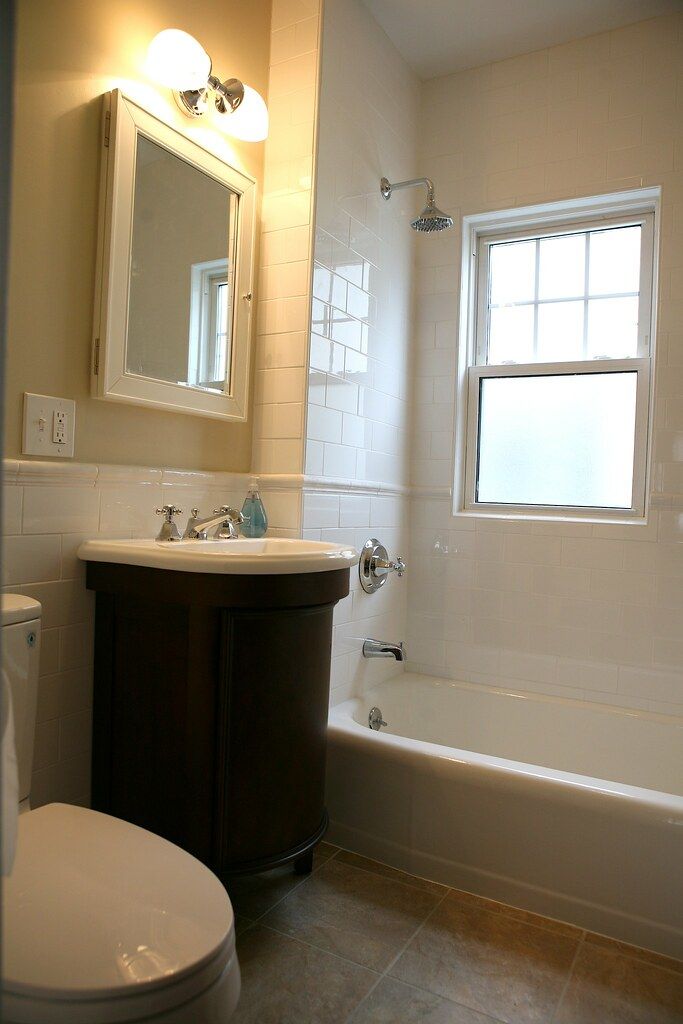
Aging in Place Bathroom Remodel Cost: 2026 Pricing Guide
Key takeaways
- A 2026 US aging in place bathroom remodel typically falls into three tiers: a refresh ($3,500–$8,000), a full remodel ($25,000–$55,000), or a luxury spa-level project ($60,000–$120,000+).
- Plumbing relocation, curbless showers, in-wall blocking, and premium tile and fixtures are the biggest price drivers.
- Phasing safety work first—grab bars, blocking, a raised-height toilet—lets you spread cost without redoing finished work.
- Wall reinforcement must be installed during a remodel; a licensed contractor should handle plumbing, electrical, and structural work.
- Permits are typically required for plumbing, electrical, and structural changes; always get itemized local quotes before committing.
What an Aging in Place Bathroom Remodel Costs in 2026
A bathroom designed for the long term should look like a beautiful bathroom first and a supportive one second. That is the guiding principle behind every aging in place bathroom remodel: independence preserved with dignity, never a clinical or patronizing result. The question homeowners ask most often is what the project will cost, and the honest answer is that it depends far more on scope than on any single feature.
This guide breaks the work into three cost tiers, explains exactly what drives the price within each one, and shows how to phase a remodel over time so you can spread the investment without wasting money. Cost tiers below reflect 2026 US market ranges for professional labor and materials in major metropolitan areas; rural markets and high-cost cities will land at different points on the spectrum.
Moen Home Care 24-Inch Stainless Steel Concealed Screw Grab Bar (8724)

Supports up to 500 lbs with SecureMount anchoring in showers and tubs
*Affiliate Disclosure: As an Amazon Associate, Elevate Home earns from qualifying purchases. Pricing and availability subject to change.
The Three Cost Tiers
Tier 1: The Safety Refresh ($3,500–$8,000)
A refresh keeps your existing layout and finishes intact while upgrading the elements that matter most for everyday confidence. This typically includes professionally installed grab bars, a raised-height toilet, a handheld shower on an adjustable slide bar, improved lighting, and high-quality non-slip treatment for an existing tub or shower floor. Because nothing structural changes and no tile is demolished, labor stays modest and the project can often be completed in a few days. Costs are 2026 US market ranges; get itemized local quotes.
Tier 2: The Full Remodel ($25,000–$55,000)
A full remodel is where aging in place design truly takes shape. The typical project converts a tub or standard shower into a curbless (zero-threshold) shower, installs blocking behind the walls for current and future grab bars, replaces flooring with slip-resistant tile, widens the doorway to 32 inches or more, raises the toilet height, and adds a comfort-height vanity with lever-handle faucets. Plumbing is usually kept in its existing locations to control cost, and finishes are attractive mid-to-high range selections. This tier suits homeowners planning to stay put for a decade or more. Costs are 2026 US market ranges; get itemized local quotes.
Tier 3: Luxury Spa Level ($60,000–$120,000+)
At the spa level, the bathroom becomes both a retreat and a long-term investment in independence. Expect a generously sized curbless shower with a linear drain and full-height tile, radiant heated floors, a separate soaking or walk-in tub, custom stone or large-format porcelain surfaces, wall-hung fixtures for easy floor cleaning, integrated bench seating, steam capability, and designer grab bars that match the faucet finish so they read as decor. Plumbing is often relocated for an ideal layout, and premium lighting, sound, and smart controls are integrated during rough-in. Costs are 2026 US market ranges; get itemized local quotes.
| Tier | Typical Scope | 2026 US Range |
|---|---|---|
| Safety Refresh | Grab bars, raised toilet, handheld shower, lighting, non-slip treatment | $3,500–$8,000 |
| Full Remodel | Curbless shower, wall blocking, new tile, wider doorway, comfort-height fixtures | $25,000–$55,000 |
| Luxury Spa Level | Relocated plumbing, heated floors, custom stone, steam, designer finishes | $60,000–$120,000+ |
Costs are 2026 US market ranges; get itemized local quotes.
What Drives the Price Most
- Plumbing relocation. Moving a drain or supply line means opening floors or walls and reworking substructure. Keeping the toilet, shower, and vanity in their current positions can save thousands.
- The curbless shower. A true zero-threshold shower requires recessing or ramping the subfloor, a properly sloped waterproof pan or linear drain system, and meticulous waterproofing. It is one of the most valuable aging in place features and one of the priciest single line items.
- Wall reinforcement (blocking). Solid wood blocking installed between studs gives grab bars something substantial to anchor into. It must go in before the walls close, which is why planning it during any remodel—even if you do not install every bar now—saves significant money later.
- Tile and stone. Material and installation can swing a budget more than any other finish. Large-format porcelain costs far less to buy and install than natural stone, and both look elegant with the right design.
- Fixtures and hardware. Wall-hung toilets and vanities, thermostatic shower valves, and matched designer grab bars add cost but deliver daily ease and a cohesive, high-end look.
- Electrical and lighting. Layered lighting—bright task light at the mirror, soft night lighting near the floor—often means new circuits or fixtures, which calls for a licensed electrician.
Phasing a Remodel Over Time
You do not have to do everything at once. The smartest phasing strategy works from the inside out: complete the hidden, structural work during the first phase, then add visible features later when budget allows. Doing it in the wrong order—installing beautiful tile first, then opening the wall for blocking later—is how homeowners pay twice.
Do first: wall blocking for all planned and likely future grab bars, any plumbing or electrical rough-in changes, the curbless shower pan and waterproofing, and doorway widening if framing must be altered. These items live behind finished surfaces and are dramatically cheaper to install before tile and paint.
Can wait: additional grab bars (the blocking is already there), a fold-down shower bench, upgraded lighting fixtures, smart mirrors or voice controls, heated floors in some cases, and decorative finishes. Each can be added without disturbing completed work.
A practical two-phase plan looks like this: Phase 1 covers demolition, blocking, plumbing, waterproofing, tile, and core fixtures. Phase 2, months or a year later, adds the remaining grab bars, bench, lighting upgrades, and accessories. Your contractor should document blocking locations with photos before walls close so Phase 2 installers know exactly where to fasten.
Design for the person you intend to be in fifteen years, not the person you are today. The most successful aging in place bathrooms never look like a compromise—they look like the nicest bathroom in the house.
Vetting Your Contractor: Questions to Ask
An aging in place remodel blends design, accessibility, and technical trades. Vet candidates with questions specific to this work:
- Are you licensed and insured for this scope, and will you pull the required permits?
- How many curbless showers have you built, and can I see photos of the waterproofing process?
- How do you plan and document grab-bar blocking before walls close?
- Will plumbing and electrical work be performed by licensed specialists on your team?
- What is your process for dust containment and keeping one bathroom usable during the project?
- Can you provide an itemized quote separating labor, materials, and allowances?
- What is your change-order policy, and how are surprises behind the walls handled?
- What warranty do you offer on workmanship, especially waterproofing?
Get at least three itemized quotes, check references from projects of similar scope, and be wary of any bid dramatically lower than the others—it usually means something important was left out.
Permits and Licensed Professionals
Most jurisdictions require permits when a remodel touches plumbing, electrical, or structural elements—and an aging in place bathroom remodel usually touches at least two of the three. Permits protect you: inspections verify that waterproofing, drainage slopes, electrical grounding, and structural changes meet code. Your contractor should handle the permit process as part of the project.
Always use licensed contractors for plumbing, electrical, and any structural work such as widening a doorway or recessing a shower floor. These trades carry safety and code implications that go well beyond cosmetics, and unlicensed work can create problems with insurance coverage and future resale. For design guidance, look for professionals familiar with accessible design principles who share your goal: a bathroom that supports independence while looking unmistakably luxurious.
Budget a contingency of ten to fifteen percent on top of your chosen tier. Behind-the-wall surprises—subfloor rot, outdated wiring, or framing that complicates a curbless shower—are common in older homes, and a contingency keeps them from derailing a well-planned project. With the right phasing and the right team, an aging in place bathroom remodel becomes one of the most rewarding investments a homeowner can make in their own future.
Frequently asked questions
What is the average cost of an aging in place bathroom remodel in 2026?
A full aging in place bathroom remodel typically costs $25,000–$55,000 in 2026 US markets, while a lighter safety refresh runs $3,500–$8,000 and a luxury spa-level project starts around $60,000. Final cost depends on plumbing changes, tile selection, and local labor rates. Costs are 2026 US market ranges; get itemized local quotes.
Can I phase an aging in place bathroom remodel to spread out the cost?
Yes, and phasing from the inside out is the smartest approach. Complete hidden work first—wall blocking, plumbing rough-in, waterproofing, and doorway widening—then add visible features like extra grab bars and upgraded lighting later. This avoids paying to open finished walls twice.
What should I do first in an aging in place bathroom remodel?
Prioritize anything hidden behind finished surfaces: blocking for grab bars, a curbless shower pan with proper waterproofing, and any plumbing or electrical changes. These are far cheaper to install before tile goes up. Cosmetic upgrades and additional accessories can safely wait for a later phase.
Do I need permits for an aging in place bathroom remodel?
In most US jurisdictions, permits are required when a remodel involves plumbing, electrical, or structural changes, which most aging in place bathrooms do. A reputable licensed contractor will pull permits and schedule inspections as part of the project. Unpermitted work can cause problems with insurance and resale.
Is a curbless shower worth the cost in an aging in place remodel?
For most homeowners planning to stay long term, yes. A curbless shower eliminates the step-over threshold, reduces slip risk, and reads as a high-end design feature rather than an accommodation. It is one of the priciest single line items because of the subfloor work and waterproofing involved, so it belongs in the first phase.
How do I choose a contractor for an aging in place bathroom remodel?
Look for a licensed, insured contractor with documented experience building curbless showers and installing grab-bar blocking, and ask for photos of their waterproofing process. Request itemized quotes from at least three candidates and check references from similar projects. Always confirm that plumbing and electrical work will be done by licensed specialists.
Keep reading
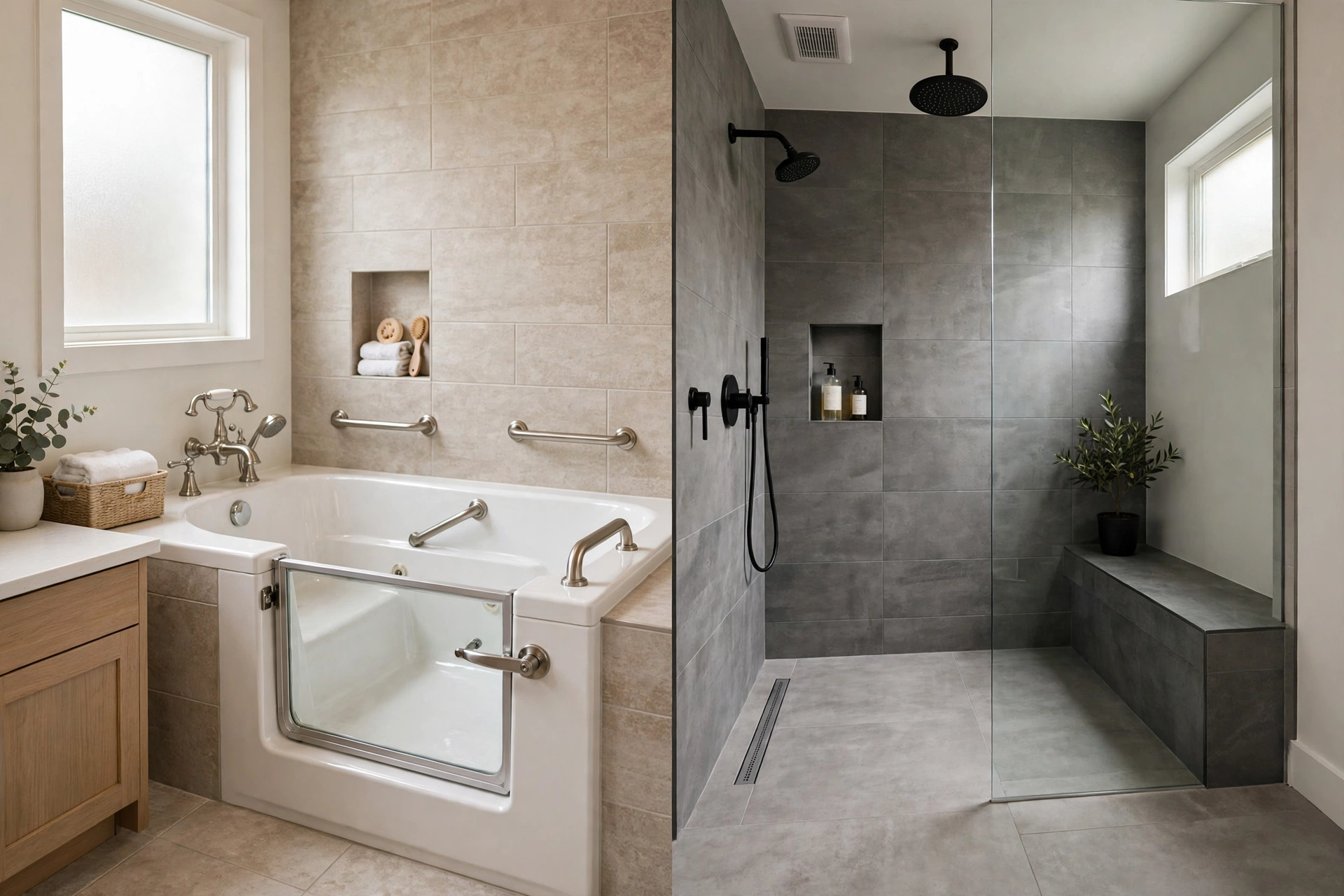
Comparison
Walk In Tub vs Curbless Shower: Honest 2026 Comparison
Walk-in tub vs curbless shower: honest 2026 costs, accessibility, cleaning, and resale compared. Which bathing…
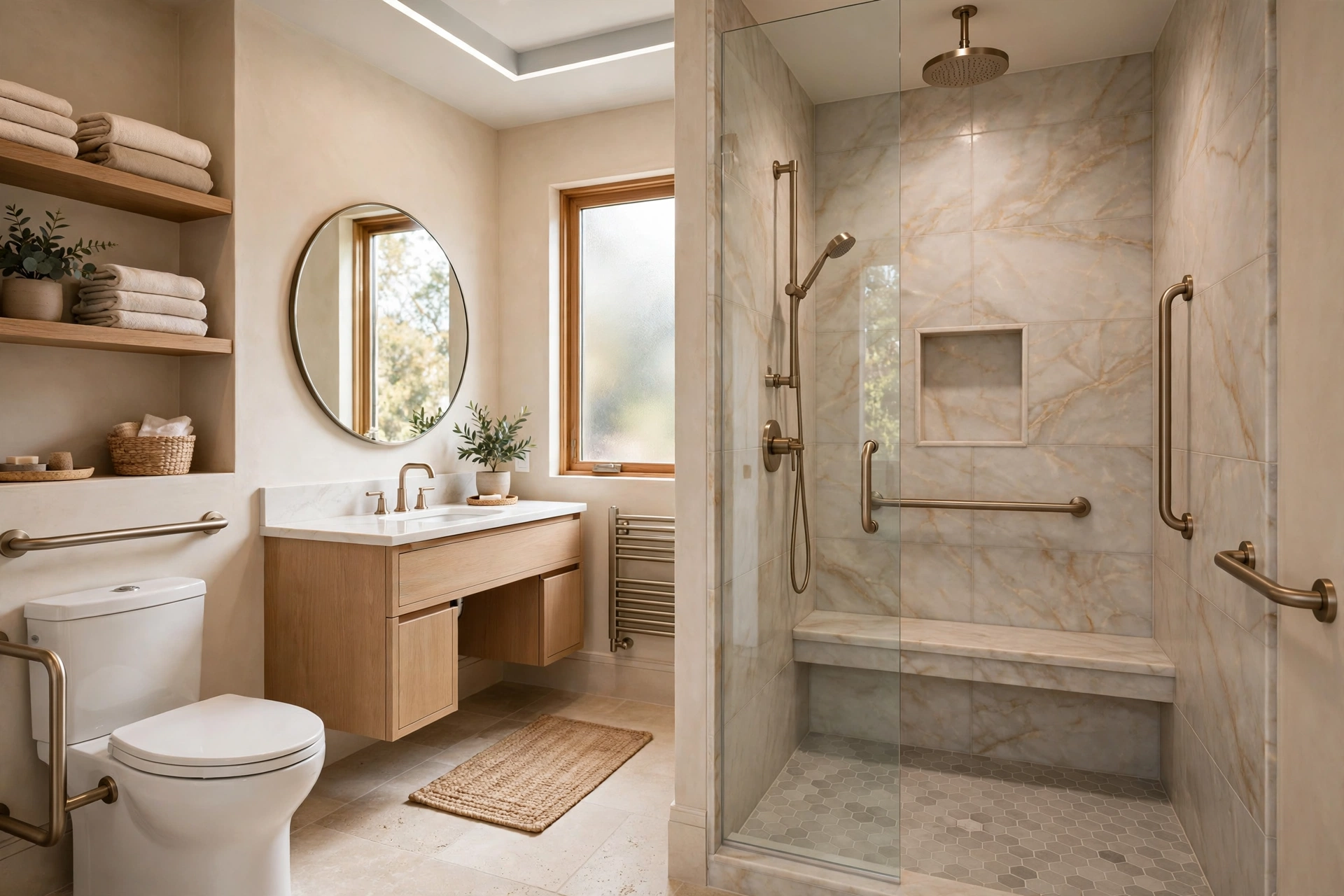
Cost Guide
Aging in Place Renovation Cost: 2026 Luxury Guide.
High-end aging in place renovation cost in 2026: US cost ranges for luxury accessible bathrooms, kitchens, lig…
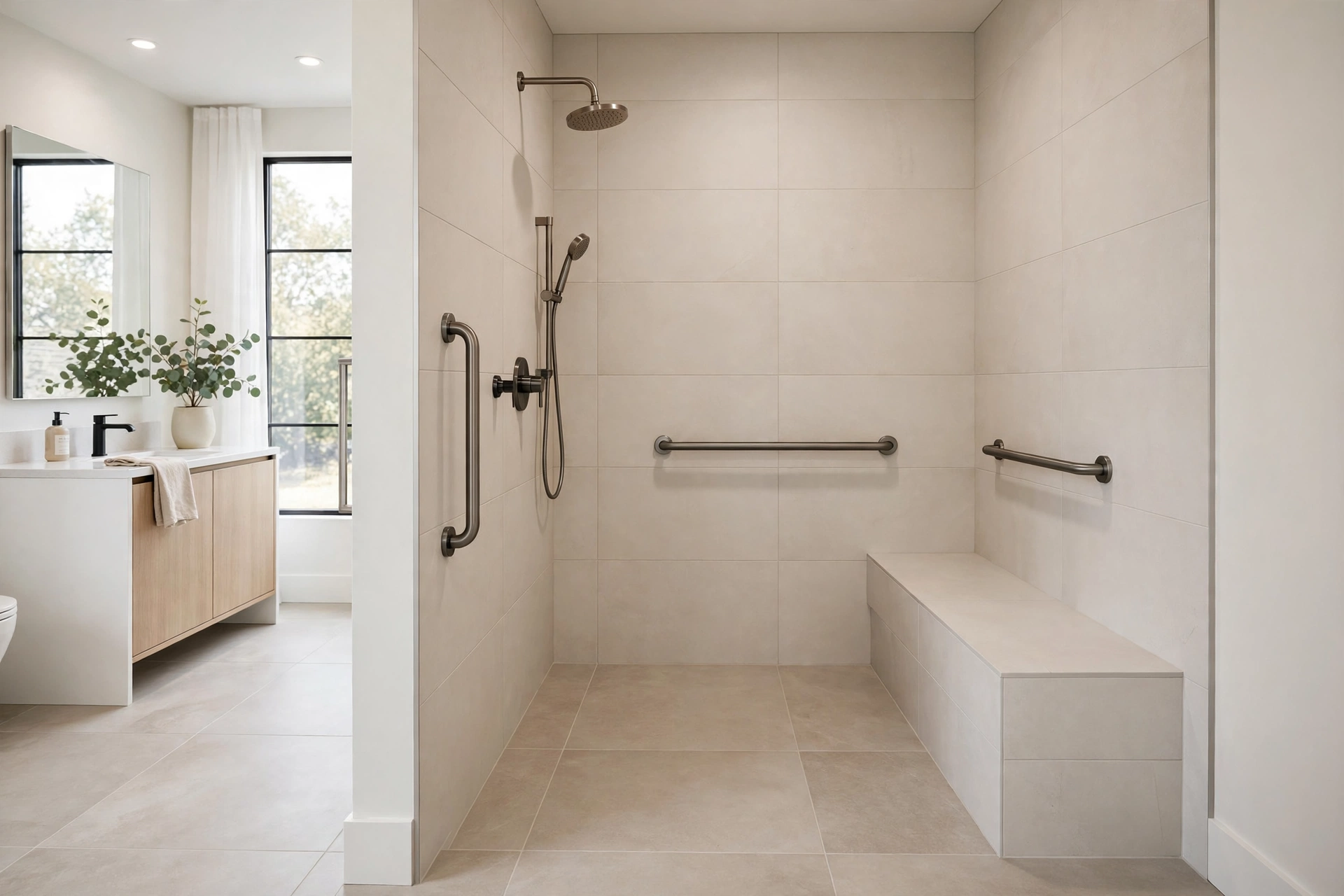
Design Guide
Curbless Shower Ideas: Luxury Accessible Bathroom Design
Designer curbless shower ideas for 2026: linear drains, statement tile, built-in benches, sculptural grab bars…
Bathroom Remodeling
Zero Threshold Shower Cost: 2026 Pricing Guide & Breakdown
Zero threshold shower cost in 2026: cost breakdown, linear drains, waterproofing systems, retrofit vs. new-bui…
Tech Guide
Smart Home Aging in Place: The Practical Tech Stack
Smart home aging in place: voice control, automated lighting, fall detection, stove shutoff and video doorbell…
Interactive Tool
Aging in Place Renovation Cost Estimator 2026 Guide
Budget your aging-in-place renovation with our interactive estimator. Price accessible bathrooms, kitchens, el…