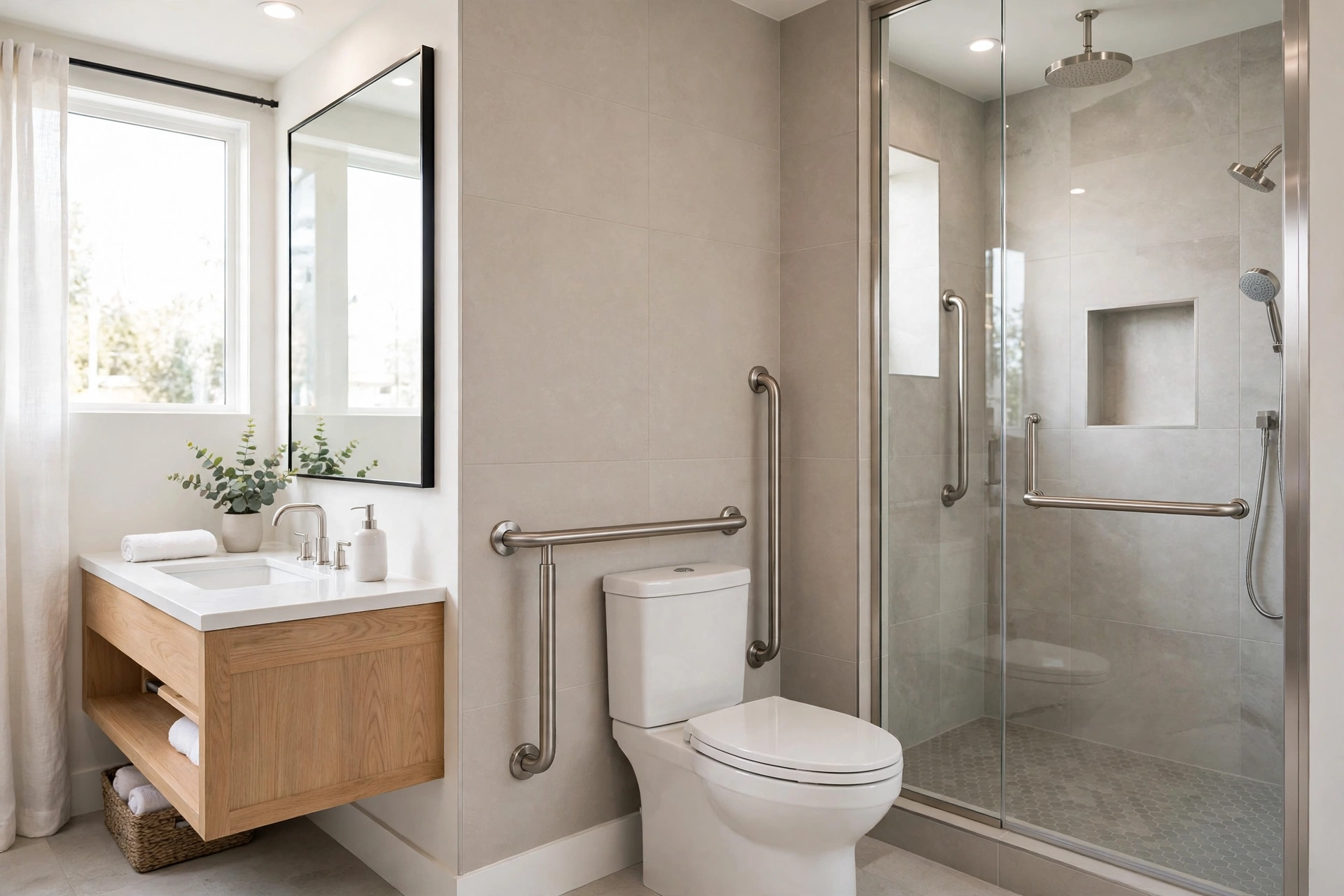
Bathtub Cut Out vs Walk In Tub: Cost, Safety & the 2026 Verdict
Key takeaways
- A tub cut-out costs $370 for a DIY kit or $400–$900 professionally installed; a walk-in tub runs $4,000–$15,000+ all-in, roughly 10 to 20 times more.
- The cut-out lowers the step-over wall from 14–16 inches to about 4 inches in 2–4 hours; a walk-in tub replaces the entire fixture in 1–2 days with real plumbing changes.
- Cut-outs end full baths — the tub becomes a step-in shower — while walk-in tubs keep deep soaking but force you to sit through slow fills and drains.
- Renters, HOAs, and anyone who mostly showers should start with the cut-out; buy the walk-in tub only if deep therapeutic soaking is the actual goal.
- Either option pairs best with properly anchored grab bars — a cut-out insert alone is not a substitute for secure handholds.
In the bathtub cut out vs walk in tub debate, the honest answer is that a tub cut-out wins on budget and speed — a roughly $370 conversion kit or $400–$900 professional install that drops your tub's step-over wall to about 4 inches — while a walk-in tub wins on comfort and full-bath soaking at $4,000–$15,000+ installed, with a full day or two of plumbing work. Neither is universally better: the right choice depends on whether you actually need to soak, how long you plan to stay in the home, and what your existing tub and plumbing can support.
Both upgrades solve the same problem: a standard bathtub demands stepping over a 14-to-16-inch wall on a wet, slippery surface, which is exactly the motion behind a huge share of bathroom falls. Roughly 80 percent of senior bathroom injuries involve slips and falls, and the tub wall is the single most dangerous feature in a typical bathroom. The question is how much modification — and how much money — that problem deserves.
This guide compares the two options head-to-head on installed cost, installation disruption, day-to-day safety, what you give up with each, and the effect on resale value, so you can make the call with 2026 pricing in hand.
What a Tub Cut-Out Actually Is
A tub cut-out (also called a tub conversion or step-through insert) is a modification to your existing bathtub. An installer — or a careful DIYer with a kit — cuts a roughly 24-inch-wide section out of the tub's front wall, then fits a custom-molded, watertight insert over the opening. The insert bridges the inner and outer walls of the tub and creates a finished, non-skid step-through opening. The standard 14–16 inch step-over drops to about 4 inches.
The category-defining product is the CleanCut Step system: the kit includes the step insert, a two-part support structure, a cutting template, industrial-grade adhesive cartridges, and written instructions, and it comes in narrow, medium, and wide sizes to match your tub's rail width. Installation takes 2–4 hours of work, plus roughly 48 hours for adhesives and sealants to cure before use. Most common tub materials — fiberglass, acrylic, steel, and cast iron — can be converted, though cast iron cuts generate serious dust and take longer.
There is also a convertible variant of the cut-out concept: an insert with a removable watertight plug that lets you step through for showers and still fill the tub for baths. It costs more and adds moving parts, but it erases the single biggest drawback of the standard cut-out — which brings us to the trade-off.
The permanent trade-off: a standard cut-out turns your tub into a step-in shower. You cannot take a full bath afterward. If soaking is medically or personally important — hydrotherapy for arthritis, for example — this matters. You also need a good shower curtain with a weighted hem, because water will run toward the lower opening.
CleanCut Step Tub Conversion Kit, White, Large

The cut-out kit is the exact budget-side product the article evaluates; category-defining brand, 4.5-star, Prime — converts readers who reject the $4k+ walk-in tub
*Affiliate Disclosure: As an Amazon Associate, Elevate Home earns from qualifying purchases. Pricing and availability subject to change.
What a Walk-In Tub Actually Is
A walk-in tub is a completely different fixture, not a modification. The old tub is demolished and removed, plumbing is adapted to the new drain and fill configuration, and a deep, watertight unit with a swing-in (or swing-out) door, a chair-height built-in seat, and textured non-slip surfaces is set in the same 60-inch alcove. Thresholds are typically 2–4 inches — even lower than a cut-out — and the seat means you never have to stand on one leg to climb in.
Mid-range and premium units add hydrotherapy jets, air jets, heated surfaces, and fast-fill/fast-drain plumbing. Two realities to understand before you fall in love with the brochure: first, you must sit in the tub while it fills and wait for it to completely drain before the door can be opened — budget several minutes on each end, which some users find chilly and tedious. Second, a walk-in tub holds 50–80 gallons of water versus a standard tub's ~40 gallons, so many homes need a water heater upgrade to a 75-gallon tank or a tankless unit, adding $1,500–$2,500 to the real total (see our full breakdown in Walk-In Tub Cost: The Complete 2026 Price Guide).
On the electrical side, units with air jets, pumps, or inline heaters need a dedicated GFCI-protected branch circuit per NEC 680.71 (hydromassage bathtub requirements), which your electrician will factor into the installation quote. If you're comparing models first, our walk-in tub buying guide walks through door types, sizes, and which features are worth paying for.
Cost Comparison: Tub Cut-Out vs Walk-In Tub in 2026
Cost is where the comparison is least ambiguous. Here is the side-by-side math with realistic 2026 US figures:
The ratio is the story: a cut-out delivers roughly 80 percent of the fall-risk reduction for 5–10 percent of the walk-in tub's cost. That is why contractors consistently recommend cut-outs as the first move for a parent recovering from surgery or a senior whose balance is declining — it can be done this week, not next quarter.
Safety Compared: Step-Over, Seats, and Drain Times
Both options eliminate the high tub wall, but they protect you in different ways. A cut-out reduces the fall risk of entering and exiting; once inside, you are still standing in a shower, on a surface that needs to be non-slip, with nothing to sit on. A walk-in tub's chair-height seat removes standing entirely — you sit to enter, sit to bathe, and sit to exit — which is a fundamentally safer motion profile for anyone with limited balance, knee replacements, or Parkinson's-related freezing.
What the walk-in tub brochures underplay is the drain cycle. Because the door seals the tub, you cannot open it until the water has fully drained, which takes several minutes even with fast-drain options. During that time you are sitting wet in a cooling tub. For seniors who chill easily, this is a real comfort — and compliance — issue: a tub nobody wants to sit in doesn't prevent falls, it just moves bathing to the sink.
One critical point applies equally to both: a cut-out or walk-in tub is not a substitute for grab bars. Every accessible bathing setup needs properly anchored grab bars at the entry and along the wall, fastened into studs or rated anchors — not suction cups, which are balance aids at best. Our grab bar placement guide shows exactly where each bar should go and which anchors actually hold 250+ pounds.
Installation: Three Hours vs Two Days
The disruption gap is nearly as large as the cost gap. A tub cut-out installation is a half-day project: template, cut, fit the insert, adhesive, cleanup. The tub is back in service after the adhesive cures — typically 48 hours. No demolition, no dumpster, no plumber, no permit in most jurisdictions (verify locally; some HOAs and condo boards restrict structural tub modifications).
A walk-in tub is a small construction project: demolition and removal of the old tub (a cast-iron tub gets smashed out with a sledgehammer), drain adaptation, possible subfloor or slab work if the drain must move, electrical for jets or heaters, setting and leveling the unit, waterproofing the surround, and finishing. Expect 1–2 full days of work plus any inspection scheduling. If the drain sits on a concrete slab and must relocate, add $500–$1,000 and real jackhammer noise.
For renters, the calculation is simple: a walk-in tub is almost never an option without the landlord's blessing and a permanent plumbing change, while a cut-out — or, for a fully reversible option, no-drill safety add-ons — can happen without remodeling. If you do need the plumbing details for the bigger project, our walk-in tub installation requirements guide covers drain, electrical, and door-swing clearances.
What You Give Up With Each Option
Every accessibility upgrade trades something away. Being explicit about it now prevents regret later.
With a cut-out, you give up baths. The tub can no longer hold water — it becomes a step-in shower permanently. For households where someone still soaks (kids, a partner who loves baths), that loss is real. The convertible variant with a watertight plug is the workaround, but it adds cost and a maintenance item (the plug seal needs periodic attention). You also inherit a new cleaning responsibility: the insert's seams and step edges need regular scrubbing to prevent mildew.
With a walk-in tub, you give up speed and simplicity. Every bath becomes a 20–30 minute production: fill while seated, soak, drain while seated, then exit. Spontaneous "quick shower" habits die — most walk-in tub owners shower elsewhere or accept the ritual. You also give up a meaningful chunk of bathroom floor space visually; the tall, deep unit reads as institutional in smaller bathrooms, which feeds directly into the resale question.
Resale Value: Which Helps and Which Hurts
This is the question sellers ask most, and the answer is nuanced. A professionally finished tub cut-out is the lower-risk choice at resale: it reads as a practical accessibility upgrade, it cost little, and a future buyer who wants a standard tub faces a modest re-tub or replacement — annoying, but a $1,500–$3,000 line item, not a dealbreaker. In markets with older buyers (Florida, Arizona, retirement communities), a cut-out can even be a mild selling point.
Walk-in tubs are polarizing. Accessibility-focused buyers love them; everyone else sees a $5,000 fixture they'll pay to remove. Appraisers generally do not assign a walk-in tub meaningful added value the way they would a second full bathroom, and in a family-oriented market, replacing the home's only full-size tub with a walk-in unit can actively narrow your buyer pool — young families want a tub their kids can splash in. Our broader comparison of tub alternatives, including curbless showers, lives in walk-in tub vs curbless shower, which is worth reading if resale is a top-three concern.
Rule of thumb: if you might sell within 3–5 years and the bathroom has only one tub, prefer the cut-out (cheaper to reverse) or keep at least one standard tub elsewhere in the house. If this is your forever home and soaking therapy is the point, the walk-in tub's resale quirks are irrelevant — buy for your life, not the next buyer's.
The 2026 Verdict: Which Should You Choose?
Choose the tub cut-out if: the primary user mostly showers; budget is under $1,000; you need the fix this week (post-surgery discharge, a parent moving in); you're renting or in an HOA that restricts plumbing changes; or you might sell within a few years and want the reversible, low-cost option. Pair it with anchored grab bars and a non-slip mat, and you have solved the core fall risk for the price of a nice dinner out.
Choose the walk-in tub if: deep soaking is genuinely therapeutic — arthritis, chronic pain, circulation issues where warm-water immersion is part of the care plan; the user cannot stand safely for a full shower even with the wall lowered; this is a long-term home; and the budget comfortably covers the $4,000–$15,000+ all-in figure including the likely water heater or electrical upgrades. Don't buy the tub and skip the infrastructure — an underpowered setup is how $8,000 tubs end up unused.
And if you're still torn between the two, the convertible cut-out insert deserves a serious look: it delivers the low step-over for daily showers and restores full-bath capability with a watertight plug, splitting the difference for households where one person showers and another soaks. For the full bathroom-level plan — flooring, lighting, door widths, and all — see our aging-in-place bathroom remodel cost guide, which puts any single fixture decision in the context of the whole room.
Frequently asked questions
How much does a bathtub cut-out cost in 2026?
A DIY tub cut-out kit runs about $370, and a professional installation typically totals $400–$900 including labor and materials. That is roughly one-tenth the $4,000–$15,000+ all-in cost of a walk-in tub, which is why contractors recommend cut-outs as the first, fastest safety fix.
Can you still take a bath after a tub cut-out?
No — a standard cut-out permanently converts the tub into a step-in shower, because the opening in the tub wall cannot hold water. If soaking matters, look at convertible cut-out inserts with a removable watertight plug, which restore full-bath capability, or choose a walk-in tub instead.
Is a walk-in tub worth it for seniors?
It is worth it when deep soaking is genuinely therapeutic — arthritis, chronic pain, or circulation issues — and the senior cannot stand safely for a full shower. For pure fall prevention on a budget, a $400–$900 tub cut-out plus anchored grab bars delivers most of the safety benefit at a tenth of the cost.
How long does a tub cut-out take to install?
The cutting and fitting work takes 2–4 hours for a professional installer. The tub must then sit unused for about 48 hours while the industrial adhesives and sealants fully cure. A walk-in tub, by comparison, takes 1–2 full days of demolition, plumbing, and electrical work.
Do walk-in tubs add value to a home?
Rarely in dollar terms. Accessibility-focused buyers like them, but appraisers seldom assign added value, and replacing a home's only full-size tub can narrow the buyer pool in family-oriented markets. If resale within a few years is likely, a low-cost tub cut-out is the lower-risk accessibility upgrade.
Can a tub cut-out be installed on a cast iron tub?
Yes — conversion kits work on fiberglass, acrylic, steel, and cast iron tubs. Cast iron takes longer to cut, generates significant dust, and usually calls for a professional with the right blades and dust control, but the finished result is the same low 4-inch step-over.
Keep reading
Cost Guide
Walk-In Tub Cost: The Complete 2026 Price Guide
A walk-in tub costs between $5,500 and $12,000 fully installed in 2026. See the breakdown of equipment, plumbi…

Buying Guide
Walk-In Tub Buying Guide: Costs & Features (2026)
Walk-in tub buying guide for 2026: costs, must-have features, sizing and layout, plumbing and electrical needs…
Comparison
Walk In Tub vs Curbless Shower: Honest 2026 Comparison
Walk-in tub vs curbless shower: honest 2026 costs, accessibility, cleaning, and resale compared. Which bathing…
Safety Guide
Grab Bar Placement Guide: Safe, Elegant Bathroom Layouts
Grab bar placement guide: shower, toilet, hallway, and stair positioning—plus mounting, heights, designer fini…
Cost Guide
Aging in Place Bathroom Remodel Cost: 2026 Pricing Guide
What does an aging in place bathroom remodel cost? 2026 US cost tiers from refresh to luxury spa level, plus p…
Interactive Tool
Aging in Place Renovation Cost Estimator 2026 Guide
Budget your aging-in-place renovation with our interactive estimator. Price accessible bathrooms, kitchens, el…