Generac PWRcell Cost Per kWh: What Each Stored Kilowatt-Hour Really Costs (2026)
Key takeaways
- A typical Generac PWRcell system installs for about $14,000 to $22,000 in 2026 for 9 to 18 kWh of storage, depending on configuration and site work.
- That works out to roughly $1,100 to $1,900 per installed kWh, with the per-kWh figure falling as you add battery modules to the same inverter and cabinet.
- The inverter, battery cabinet, controls, and labor are fixed costs, so the smallest PWRcell configuration always looks the most expensive per kWh.
- On a lifetime basis, a PWRcell cycled regularly works out far cheaper per delivered kWh than its installed price suggests, but it is still not a money-saving device on its own in most homes.
- Get at least two itemized quotes and compare the same usable kWh, the same backup scope, and the same warranty terms, not just the headline system price.
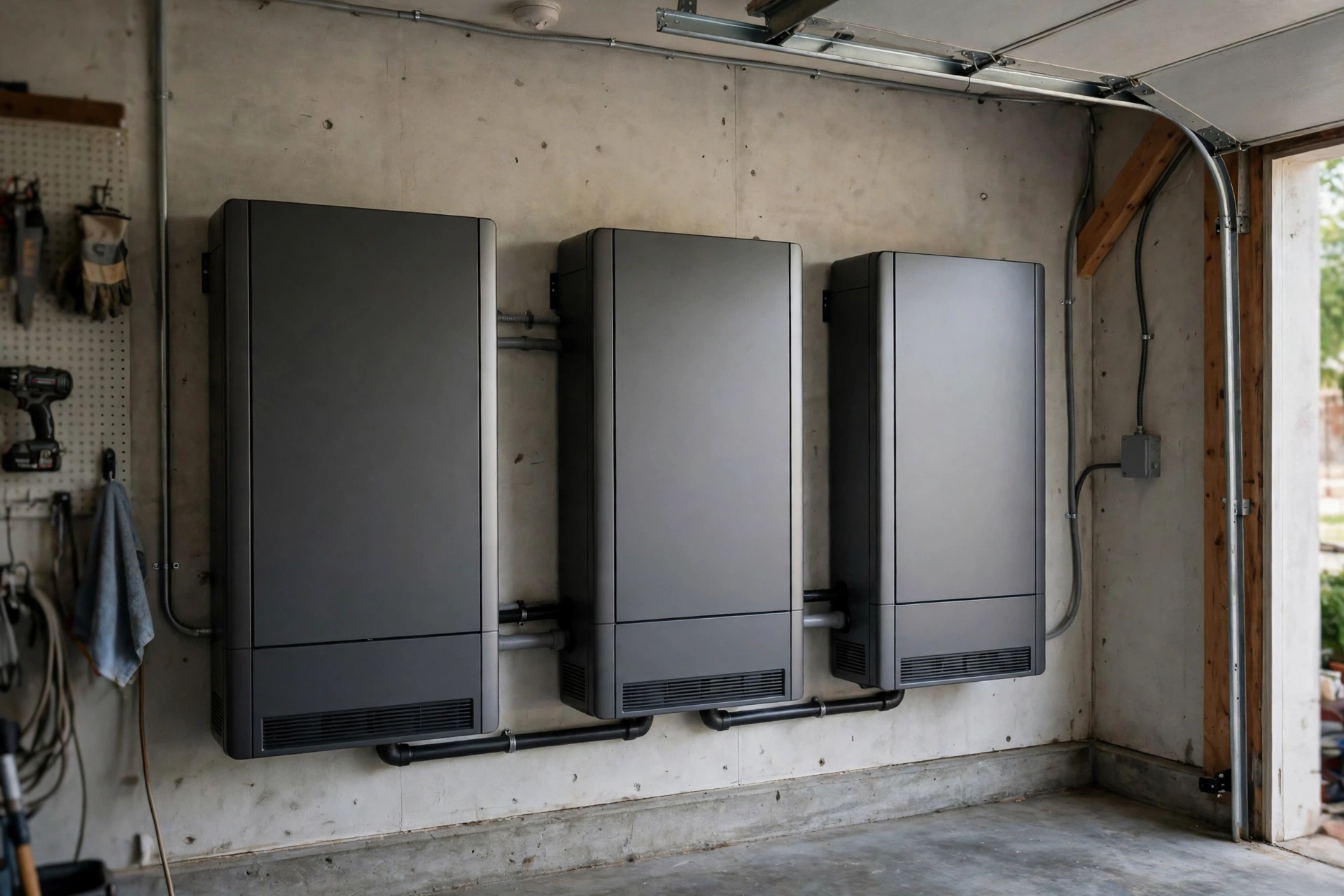
Generac PWRcell cost per kWh in 2026 typically lands between about $1,100 and $1,900 per installed kilowatt-hour, with a whole system usually costing $14,000 to $22,000 installed for 9 to 18 kWh of storage. The exact figure depends less on the battery modules themselves than on how many modules share one inverter, one cabinet, and one installation crew, which is why the per-kWh number improves sharply as the system gets bigger.
If you are comparing home batteries, cost per kWh is the only fair yardstick. A $14,000 system and a $22,000 system tell you nothing on their own, because one may store half as much energy as the other. This guide normalizes Generac PWRcell pricing by size, explains what the installed price actually buys, compares it with the main rivals on the same basis, and then goes one step further: what a PWRcell costs per kilowatt-hour actually delivered over its life, not just per kilowatt-hour sitting on your wall.
The short answer: PWRcell cost per kWh in 2026
The original Generac PWRcell is a modular system. Battery modules of about 3 kWh of usable storage each stack into a cabinet, typically three to six modules per inverter, giving total storage of roughly 9 to 18 kWh. Continuous output scales with the configuration, up to about 9 kW for the larger setups. That modular design is the whole story behind its cost per kWh: every system, big or small, needs the same core hardware and the same basic installation, so small systems carry that fixed cost across fewer kilowatt-hours.
For a straightforward installation in 2026, expect the following typical installed ranges. These are system prices including the inverter, cabinet, modules, controls, electrical work, and permits, before any state or utility incentive. Complex sites, panel upgrades, long wire runs, or a paired generator can push a quote above these ranges.
Read the table from right to left if you are shopping: the cheapest system is the worst value per kilowatt-hour, and the most expensive system is the best value per kilowatt-hour. That is normal for modular storage, and it is the single most common misunderstanding in PWRcell quotes. A homeowner who buys the smallest system because it looks affordable is paying a premium per unit of backup, and may end up adding modules later at a higher effective cost, because a return visit still involves labor, reprogramming, and testing.
For a direct comparison with Generac's rival systems, see our Generac PWRcell vs Tesla Powerwall 3 comparison, and for help choosing the right size before you chase quotes, see our home battery sizing guide.
EF ECOFLOW 12kWh Power Station: DELTA Pro Ultra with Extra Battery, 120/240V 7200W AC Output, LiFePO4 Home Battery Backup Expandable to 90kWh

Modular 12.3kWh LFP home battery (expandable to 90kWh) at comparable scale to a mid-size PWRcell system, for readers sizing storage by cost per kWh; PWRcell itself is dealer-installed, so this is the closest live-verified buyable alternative
*Affiliate Disclosure: As an Amazon Associate, Elevate Home earns from qualifying purchases. Pricing and availability subject to change.
What the installed price actually buys
A PWRcell quote is not a price for a battery. It is a price for a small energy system, and the battery modules are only part of it. Understanding the parts is the fastest way to spot an inflated quote or a suspiciously cheap one.
The inverter converts solar DC power to household AC power and manages charging and discharging. The battery cabinet houses the modules, provides the enclosure and safety systems, and sets the limit on how many modules one system can hold. The PWRmanager or load-management controls decide which circuits stay powered during an outage and shed the rest, which is what lets a mid-size battery back up a whole home for a short outage or essential circuits for much longer. Then there is the installation itself: mounting, wiring, a critical-loads panel in many designs, interconnection with your existing solar inverter, permits, inspection, and commissioning.
That fixed hardware and labor is why adding a module later is cheaper in hardware than in total cost. The module itself is a few thousand dollars, but the truck roll, the electrician's time, the firmware update, and the retest are not free. If you think you will want more storage within a few years, it is usually cheaper per kWh to buy the larger configuration now, even if the headline price stings.
Two things are commonly not in a base PWRcell quote. The first is a main panel upgrade, if your service panel cannot accept the new equipment or the backup configuration you want. The second is solar itself: PWRcell is a storage system that pairs with solar, and a quote that assumes your existing panels will charge it is a different project from a quote that adds new panels. Always ask the installer to state, in writing, whether the price assumes existing solar, new solar, or no solar at all.
How PWRcell compares per kWh with its rivals
On installed cost per kWh, the original PWRcell sits in the middle to upper part of the mainstream pack, not at the cheap end. Tesla's Powerwall 3 benefits from a single integrated unit that includes its inverter, so its installed cost per kWh is usually lower at a comparable size. Franklin's aPower 2, at 15 kWh per unit, is priced competitively per kWh for a single-battery system. Enphase's 5P looks expensive per kWh when bought as a single 5 kWh unit, but it is designed to be stacked, and its longer warranty changes the lifetime math below.
These are published 2026 installed ranges, not quotes, and they move with region, installer, and scope. The comparison still teaches three useful lessons. First, integrated single-unit batteries tend to win on installed cost per kWh because there is less separate hardware. Second, PWRcell's advantage is not price per kWh at all: it is modularity, a large maximum capacity from one system, and pairing with Generac standby generators for long outages. Third, a per-kWh ranking that ignores warranty length, chemistry, and usable output is incomplete, which is why the lifetime calculation in the next section matters more than the headline table.
If your main goal is adding storage to panels you already own, read our guide to adding a battery to existing solar before you choose a brand, because AC-coupled compatibility can matter more than a few hundred dollars per kWh. If you are planning to grow the system later, our expanding home battery storage guide covers the expansion traps, including the fixed costs of a return visit.
The number that matters more: cost per kWh delivered
Installed cost per kWh answers how much you pay to own storage. Cost per kWh delivered answers how much you pay for each unit of energy the battery actually hands back to your home over its life. For a buyer, the second number is far more honest, because a battery that is rarely cycled is expensive energy no matter how cheap it looked on day one.
Take an illustrative 18 kWh PWRcell installed for $20,000. Suppose it delivers 10 kWh of usable energy on a typical cycle day, runs about 250 cycles a year, and lasts 10 years under warranty. That is 25,000 kWh delivered over its life, before accounting for round-trip efficiency losses of roughly 12 percent. Divide $20,000 by 25,000 kWh and you get about $0.80 per kWh delivered, and closer to $0.90 once efficiency losses are included. That is the storage cost alone, before the value of the solar energy that charged it, and it is far above the average US grid price of about $0.16 per kWh.
Now change one assumption and watch the conclusion flip. If the same system cycles only 100 times a year, for backup use only, it delivers about 10,000 kWh over 10 years, and the storage cost rises to about $2.00 per delivered kWh, or more with losses. If it cycles daily in a time-of-use market, displacing expensive evening grid power and earning demand-response or export value, the effective cost falls sharply, because each delivered kWh is replacing a costly kWh rather than a cheap one.
This is why two neighbors with identical PWRcell systems can reasonably disagree about whether it was worth it. The backup-only buyer is buying insurance against outages, and should judge the system the way they would judge a generator: cost per outage avoided, not cost per kWh. The daily-cycling buyer in a high-rate or time-of-use market is buying an energy tool, and should judge it on delivered kWh and avoided peak rates. Be suspicious of any sales pitch that promises a payback period without stating the cycling assumption behind it, because that assumption is doing all the work.
What pushes your PWRcell quote up or down
Five factors move a PWRcell quote more than the battery modules do. The first is scope: whole-home backup needs more load management, a larger inverter configuration, and often a panel or service change, while essential-circuits backup is simpler and cheaper. The second is your existing solar: a clean, modern solar inverter pairing is straightforward, while an older or unusual inverter can add integration hardware and labor.
The third is your electrical panel and service. A 100-amp service, a crowded panel, or a long run from the panel to the battery location all add labor and materials. The fourth is site work: outdoor mounting, trenching, concrete, or a long cable run are real costs that do not appear in a national average price. The fifth is pairing: adding a Generac standby generator alongside PWRcell gives you long-outage resilience no battery alone can match, but it is a second major purchase, and a combined quote should be broken down so you can see what each half costs.
Region matters too. Labor rates, permit fees, inspection requirements, and installer density vary widely, and Generac's dealer network is stronger in some regions than others. That is a practical reason to get two or three local quotes rather than treating a national range as a price: the same 15 kWh system can reasonably cost several thousand dollars more in a high-cost coastal market than in a market with many competing installers.
PWRcell or PWRcell 2: does the new generation change the math?
Generac's newer PWRcell 2 is a redesigned system with a larger standard capacity, typically quoted in the $14,000 to $25,000 installed range depending on size and scope. If you are buying in 2026, ask explicitly which generation a quote covers, because the two systems differ in capacity, inverter design, and expansion path, and a per-kWh comparison is meaningless if one quote is for the old system and another is for the new one.
For most buyers, the decision is not old versus new in the abstract. It is availability, installer familiarity, and total quoted cost for the same backup scope in your home. A well-priced original PWRcell from an experienced local installer can be a better buy than a PWRcell 2 quote from a dealer still learning the new platform, and the reverse is equally true. Compare usable kWh, continuous output, warranty terms, and the itemized scope, and let the per-kWh figure be the tiebreaker, not the starting point.
Incentives in 2026: do not assume a 30 percent discount
Older battery guides routinely subtracted a 30 percent federal tax credit from the system price. Do not do that in 2026 without checking current law for your situation. The federal credit for standalone residential batteries under Section 25D expired at the end of 2025, so a 2026 PWRcell quote that still shows a 30 percent federal discount as a certainty should be questioned. State rebates, utility programs, and demand-response payments still exist in some markets and can be valuable, but they are local, capped, and conditional, not a national discount.
The practical effect is that the per-kWh figures in this guide are pre-incentive prices, and any incentive you do qualify for improves them. Ask your installer to show incentives as a separate line, with the program name and the condition attached, rather than baked into a single net price. For a broader picture of what is still available locally, see our 2026 state battery incentives guide.
The verdict: when PWRcell cost per kWh makes sense
Buy a PWRcell when you value its specific strengths: modular capacity up to 18 kWh from one system, a large dealer network, and pairing with a Generac generator for outages that last days rather than hours. On those terms, a mid-size or large configuration at roughly $1,100 to $1,400 per installed kWh is a fair price for what you get, and the lifetime cost per delivered kWh becomes reasonable if you cycle it regularly or value backup highly.
Think twice when the quote is for the smallest configuration at close to $1,900 per kWh, when the backup scope is vague, or when the payback case depends on a federal credit that no longer applies or on daily cycling you will not actually do. In that case, a single-unit rival at a lower installed cost per kWh, or a smaller battery paired with a generator, may be the better buy. Whatever you choose, make the installer itemize the inverter, cabinet, modules, controls, panel work, permits, and labor, and compare quotes on usable kWh and backup scope. That one discipline will save you more money than any single per-kWh table, including this one.
Frequently asked questions
What is the Generac PWRcell cost per kWh in 2026?
Typically about $1,100 to $1,900 per installed kWh in 2026, based on installed system prices of roughly $14,000 to $22,000 for 9 to 18 kWh of storage. Smaller systems cost more per kWh because the inverter, cabinet, and installation are fixed costs spread across fewer kilowatt-hours.
How much does a Generac PWRcell system cost installed?
A typical PWRcell system installs for about $14,000 to $22,000 in 2026, depending on the number of battery modules, backup scope, panel work, and site conditions. The newer PWRcell 2 is typically quoted in a similar but wider $14,000 to $25,000 range.
Is a bigger PWRcell system cheaper per kWh?
Yes. Because the inverter, cabinet, controls, and much of the labor are the same regardless of size, the cost per installed kWh falls as you add modules, from roughly $1,556 to $1,889 per kWh at 9 kWh down to roughly $1,083 to $1,222 per kWh at 18 kWh.
How does PWRcell cost per kWh compare with Tesla Powerwall 3?
Powerwall 3 is usually cheaper per installed kWh, at roughly $890 to $1,185 per kWh for a 13.5 kWh system installed for $12,000 to $16,000, because it is a single integrated unit. PWRcell competes on modular capacity, up to 18 kWh from one system, and on pairing with Generac standby generators.
Does the federal tax credit still cut PWRcell cost in 2026?
Do not assume a 30 percent federal discount in 2026. The federal credit for standalone residential batteries under Section 25D expired at the end of 2025. State rebates and utility programs may still help in some markets, but they are local and conditional, so ask your installer to list them separately from the system price.
Keep reading
Battery Comparisons
Generac PWRcell vs Tesla Powerwall 3: 2026 Comparison
Generac PWRcell vs Tesla Powerwall 3 compared for 2026: power output, expandability, solar integration, apps, …
Battery Sizing
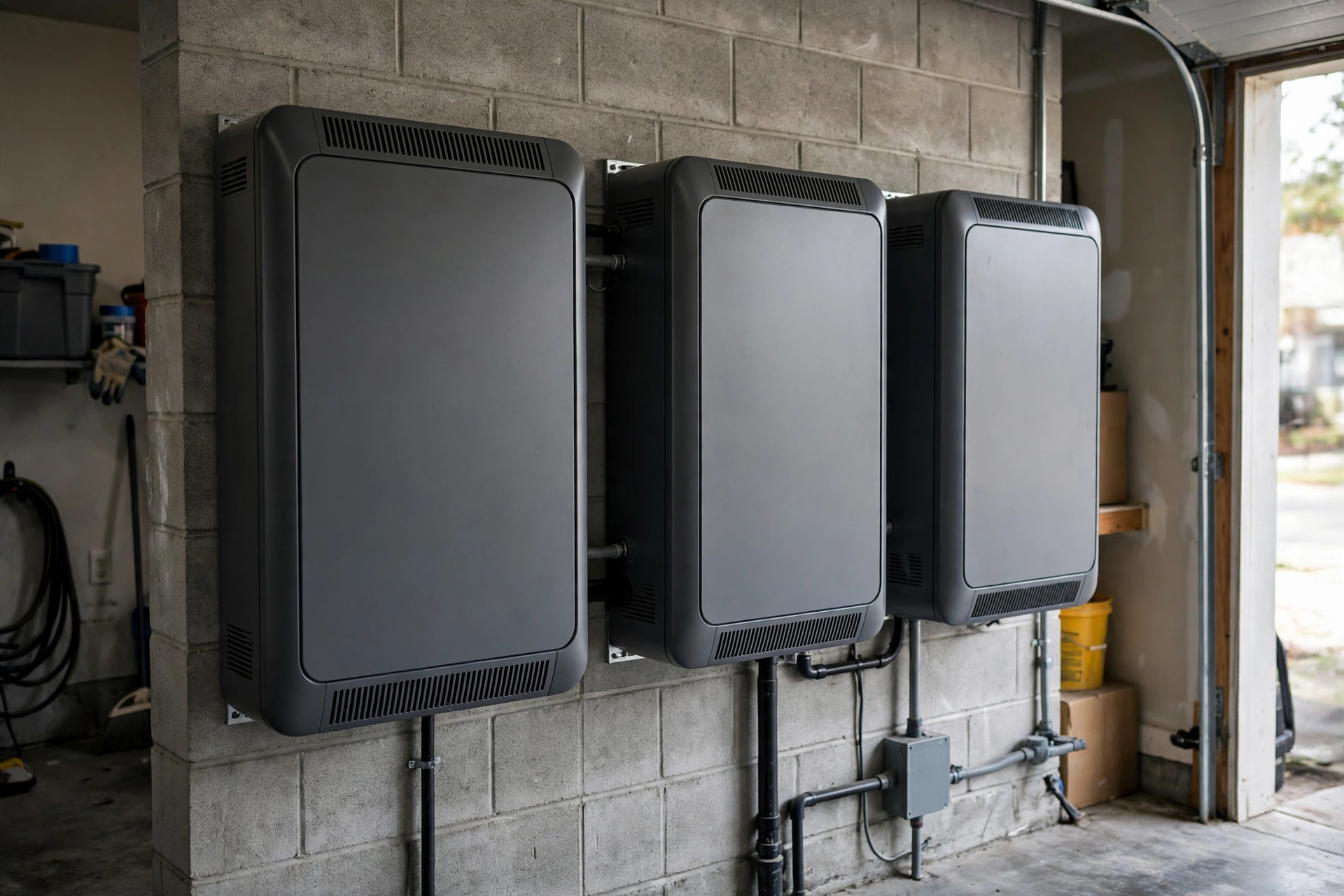
Sizing Home Batteries for All-Electric Homes: Heat Pumps, EVs & Induction
Sizing home batteries for all-electric homes takes different math: heat pumps, EVs, and induction change kW an…
Retrofit Guide
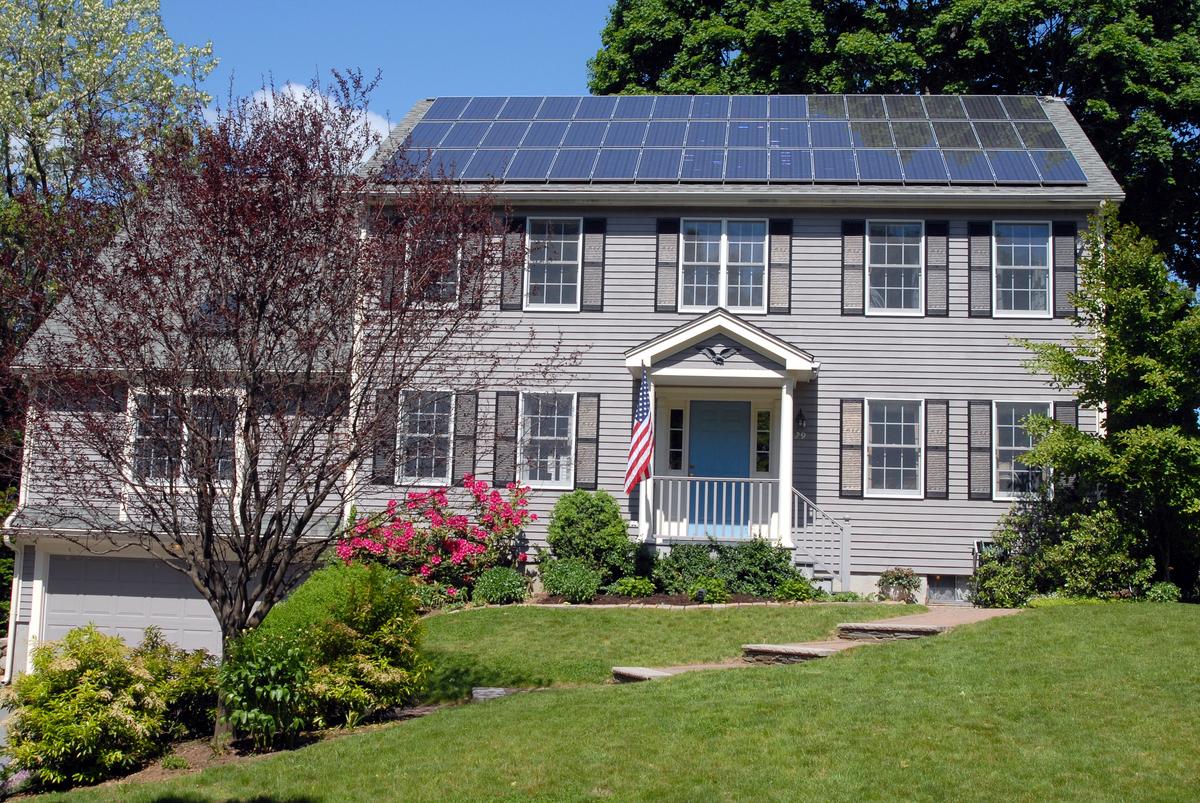
How to Add Battery to Existing Solar: 2026 Retrofit Guide
How to add battery to existing solar in 2026: AC vs DC coupling, inverter compatibility, net-metering impacts,…
Expansion
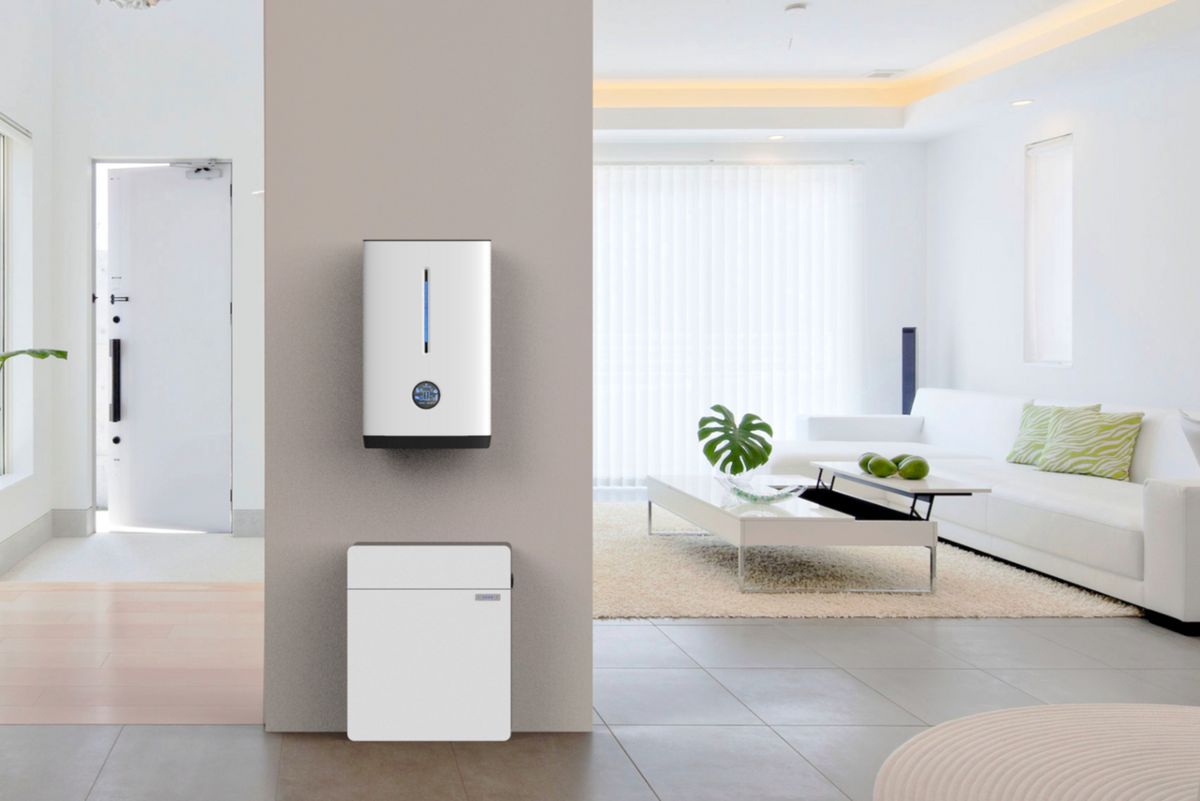
Adding a Second Home Battery: 2026 Guide
Adding a second home battery in 2026: modular vs add-a-box expansion, inverter headroom, rewiring, permits, an…
2026 Policy
Home Battery Rebates & Incentives: 2026 Guide
Home battery rebates and incentives for 2026: what survived the 25D end — SGIP, state rebates, utility BYOB pr…
Interactive Tool
Home Battery Size Calculator: What Size Do You Need?
How many kWh of battery storage do you need? Our free home battery size calculator estimates your backup need,…