Residential Greywater Systems: 2026 Guide
Residential greywater systems: laundry-to-landscape vs. whole-house designs, 2026 costs ($1,500-$12,000), treatment needs, and state code rules.
10 MIN READ · UPDATED 2026-09-22
Key takeaways
- Laundry-to-landscape systems ($1,500-$4,000) are the simplest entry point — no tank, no permit in many states.
- Whole-house greywater systems ($6,000-$12,000) capture showers and sinks too, but need filtration, permits, and maintenance.
- Match the system to the landscape: greywater irrigates ornamentals and trees, never vegetable gardens or spray irrigation.
- Code varies enormously by state — Arizona and California are permissive, many Eastern states are restrictive.
- Use plant-safe soaps and manage salts: greywater is irrigation water with chemistry you must respect.
Your washing machine sends 15 to 40 gallons of perfectly good irrigation water down the drain with every load — water you paid for twice, once to buy and once to sewer. Across a household, showers, bathroom sinks, and laundry produce 25 to 50 gallons of greywater per person per day, which is more than enough to keep an ornamental landscape thriving through a drought summer. Residential greywater systems capture that flow and put it to work, cutting water bills, drought-proofing landscaping, and reducing strain on septic systems and sewers. But greywater is regulated, chemistry-sensitive water — the difference between a great system and a smelly code violation is design, product choices, and knowing your state's rules. This 2026 guide covers it all.
What greywater is — and is not
Greywater is wastewater from showers, bathtubs, bathroom sinks, and clothes washers — flows that are dirty but free of serious pathogens. It is distinct from blackwater (toilets, bidets), which carries heavy pathogen loads and is universally sewer-or-septic only. Kitchen sinks occupy a gray area literally and legally: most codes exclude them from greywater because of food solids, grease, and the bacterial load they carry — though a few jurisdictions allow kitchen water with additional treatment.
What is actually in greywater? Mostly water, plus lint and fibers from laundry, skin cells and hair from showers, and whatever was in your soaps, shampoos, and detergents — surfactants, fragrances, and crucially salts (sodium, boron). The organic load is modest and biodegrades readily in soil, which is why subsurface irrigation works so well: the soil is the treatment plant. The salts are the long-term concern — they accumulate in soil over years, which is why product selection and occasional soil management matter.
The golden rule of greywater: use it or lose it within 24 hours. Stored greywater goes anaerobic quickly, developing odor and bacterial blooms. Every legitimate residential design either uses the water immediately (laundry-to-landscape, branched drain) or treats and disinfects it for storage (whole-house systems with filtration and UV). A tank of week-old greywater is not a water feature — it is a mistake. Design around immediacy and the system practically runs itself.
System types: from simple to sophisticated
Laundry-to-landscape (L2L) is the entry point and the most popular residential choice. The washing machine's drain hose routes through a diverter valve to 1-inch tubing that distributes water to mulch basins around the landscape — no tank, no pump (the washer's own pump does the work), no filter beyond a basic lint screen. It is a half-day install, costs $1,500 to $4,000 professionally done, and in permissive states like California requires no permit. Limitations: it only captures laundry water, and distribution is by gravity and zone valves, so flat or downhill landscapes work best.
Branched-drain systems extend the concept to showers and bathroom sinks, using gravity-fed branching pipes (no pumps, no filters) to mulch basins. They capture far more water — showers are the biggest greywater source in most homes — but require the plumbing to cooperate: fixtures need to be above the landscape grade, which suits raised homes and sloped lots and complicates slab-on-grade retrofits. Installed cost: $3,000 to $7,000 depending on plumbing access. Like L2L, the water must be used within 24 hours and applied subsurface or under mulch — never sprayed.
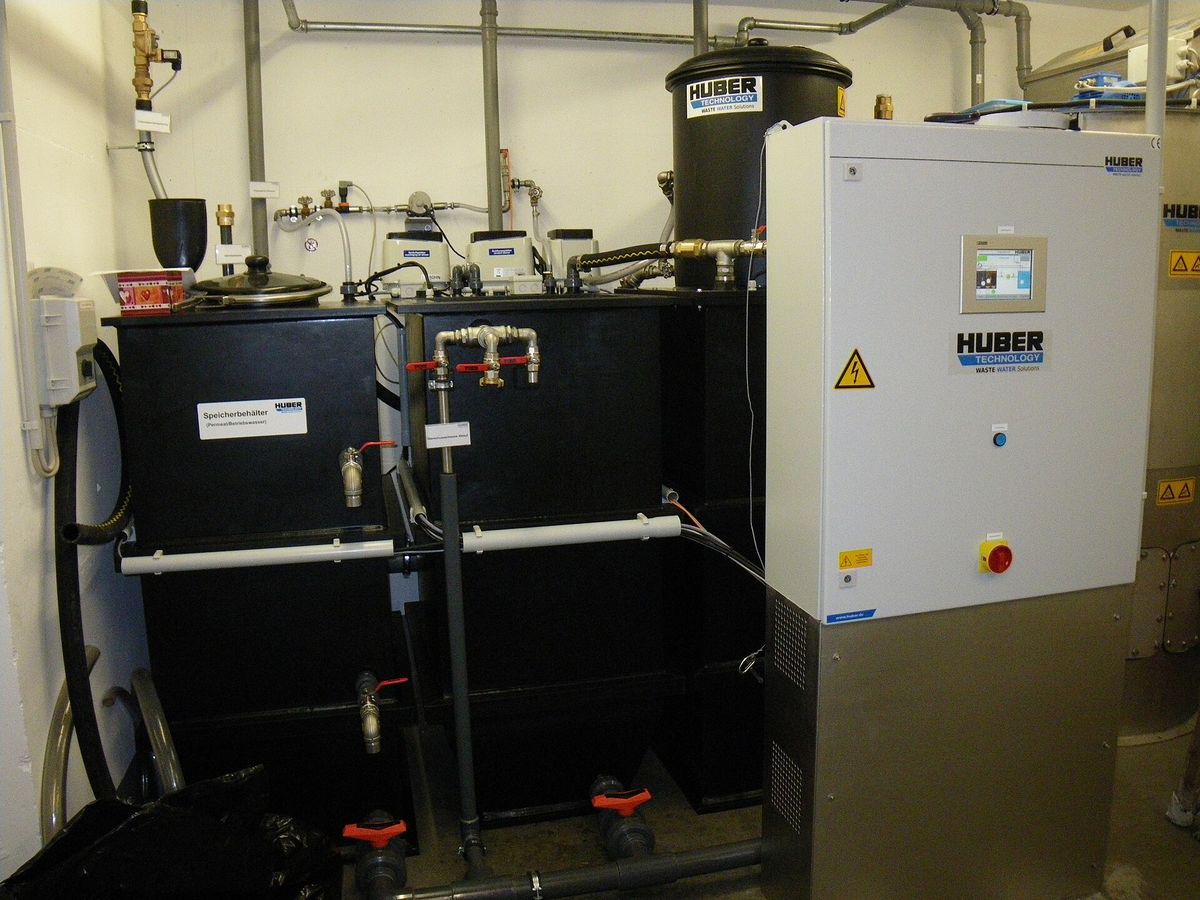
Whole-house treated systems are the premium tier: all greywater sources collected, filtered (typically down to 100+ microns with automatic backwash), sometimes biologically treated, disinfected with UV or chlorine, and stored in a tank for on-demand use through subsurface drip irrigation. These systems irrigate on a schedule like any smart irrigation system and handle any lot, but they cost $6,000 to $12,000+, need permits everywhere, and demand real maintenance — filter backwashing, UV lamp replacement, tank cleaning. Choose this tier when you want maximum capture with minimum daily attention and are comfortable with the maintenance contract that comes with it.
Code by state: the regulatory patchwork
Greywater regulation in the US is a patchwork, and it is the first thing to research — before design, before quotes. Arizona famously allows simple systems under 400 gallons per day with no permit provided you follow best practices. California's plumbing code permits laundry-to-landscape without a permit and larger systems with one. Texas, New Mexico, and Colorado have workable frameworks. Many other states permit simple systems while requiring permits, licensed installers, or health-department review for anything with storage or treatment — and a handful of jurisdictions remain effectively prohibitive for residential systems.
The universal prohibitions are worth knowing because they shape design everywhere: no surface ponding or runoff (greywater must infiltrate, not flow across the yard), no spray irrigation (subsurface drip or mulch-basin application only), no application on edible crops or where it can reach storm drains and waterways, and setbacks from wells, property lines, and foundations (commonly 5-10 feet, varying by jurisdiction). Cross-connection control is mandatory wherever greywater plumbing nears potable lines — a licensed plumber handles this, and inspectors check it.
Practical advice: call your local building or environmental health department before hiring a designer, and ask specifically what tier of system your jurisdiction allows by-right versus by-permit. Then hire an installer who has permitted greywater systems in your jurisdiction before — the learning curve is real, and a contractor's first greywater permit should not be yours. Get the permit determination in writing; verbal "should be fine" from a counter clerk is worth nothing at resale or in a neighbor dispute.
Designing for your landscape
Greywater and landscape design are one project, not two. Start with the water budget: estimate your greywater production (showers ~10-25 gallons per person per day, laundry ~15-40 per load, bathroom sinks ~5) and compare it to landscape demand. Most households produce enough greywater to irrigate 500-1,500 square feet of ornamental planting — plenty for foundation beds, privacy hedges, and specimen trees, rarely enough for a full acre of turf. Design the greywater zones around what the water can actually support.
Plant selection matters. Greywater suits ornamentals, fruit trees (with no water touching fruit), privacy hedges, and lawns — and is prohibited on root vegetables, leafy greens, and anything eaten raw. Some plants are salt-sensitive (azaleas, rhododendrons, citrus) and do poorly on long-term greywater; hardy natives, Mediterranean plants, and most shade trees thrive. Mulch basins — shallow depressions filled with wood chips around each plant — are the standard application point: they distribute water, filter it through biology, and hide the plumbing.
Soil is the other half of the design. Sandy, well-draining soils accept greywater beautifully; heavy clay needs larger mulch basins and careful loading rates to avoid surfacing. A simple percolation test (dig a hole, fill it, time the drain) tells you what you are working with. And plan for the rainy season: greywater systems do not shut off when it rains, so zones need enough capacity to absorb the flow even in wet months, or a diverter to send excess to the sewer/septic during storms. Year-round greywater on saturated soil is how surfacing violations happen.
Products, salts, and soil health
The products you wash with become the chemistry of your irrigation water, so the product switch is mandatory, not optional. Use biodegradable, low-sodium, boron-free detergents, shampoos, and soaps — look for explicit "greywater-safe" or "plant-safe" labeling. Conventional detergents are loaded with sodium salts that accumulate in soil, degrading structure and eventually killing plants; boron, common in some "eco" cleaners, is toxic to plants at low concentrations. This is the ongoing discipline of greywater ownership: every product in the house must pass the test, including guests' contributions.
Even with good products, salt management is a long-term task. Have the soil in greywater zones tested every couple of years ($30-$60 per test through your cooperative extension) watching sodium and pH. If salts creep up, the remedies are straightforward: periodic deep watering with fresh water to leach salts below the root zone (rain does this naturally in wet climates; arid regions need deliberate leaching), adding gypsum to displace sodium, and maintaining thick mulch to buffer the chemistry. None of this is onerous — it is an annual attention item, not a weekly chore.
Lint is the mechanical maintenance item. Washing machines shed astonishing amounts of fiber, and lint clogs drip emitters and mulch basins over time. A $30-$60 inline lint filter on the washer discharge, cleaned monthly, prevents 90% of clogging issues. For branched-drain systems, the mulch basins themselves need their wood chips refreshed every 1-2 years as they decompose — which is also when you inspect the distribution piping. Treated systems add filter backwashing and UV lamp replacement ($100-$200/year in consumables) to the routine.
2026 costs and payback reality
Installed 2026 ranges: laundry-to-landscape $1,500-$4,000; branched-drain shower systems $3,000-$7,000; whole-house treated systems with subsurface drip $6,000-$12,000+. New construction costs run 20-30% less than retrofits because the plumbing is accessible. Annual operating costs are modest: $100-$300 for filters, testing, and parts on treated systems; near zero for simple gravity systems beyond the product switch (greywater-safe detergents cost roughly the same as conventional).
The payback math: a household reusing 30 gallons per person per day at $10 per thousand gallons (water + sewer combined) saves roughly $110 per person per year — $440 for a family of four. On a $3,000 laundry-to-landscape system, that is a 7-year simple payback; on a $10,000 treated system, 20+ years. Greywater rarely pencils as a pure financial investment at average water rates — it pays in drought resilience (your landscape survives restrictions that kill neighbors' yards), septic-system relief (30-50% less flow extends drain-field life enormously), and sewer-charge reduction. Where water exceeds $15-$20 per thousand gallons, or where septic replacement ($15,000-$30,000) looms, the economics transform.
Costs are 2026 US market ranges; get itemized local quotes. And check incentives: a growing number of water utilities rebate greywater installations ($500-$2,000 is typical where offered), and some jurisdictions fast-track permits. Ask your water utility's conservation office before you buy — the rebate may cover a quarter of a simple system.
Hiring and living with the system
Hire a licensed plumber with greywater experience — not a landscaper who "can figure out the plumbing," and not a plumber who has never done one. Ask for two permitted greywater references in your jurisdiction and call them. The contract should specify the system type, sources captured, distribution design, permit responsibility, and a performance test (run every fixture, verify even distribution, confirm no surfacing) before final payment. For treated systems, insist on a written maintenance schedule and a service contract option.
Living with greywater is mostly invisible once the product switch is done: laundry runs, showers drain, the landscape gets watered. The visible routines are monthly lint-filter cleaning, seasonal mulch-basin checks, and the annual glance at soil-test-driven salt management. Teach the household the two rules that matter: only greywater-safe products go down the captured drains, and nothing but the designated fixtures feeds the system (no mop buckets of bleach, no paint rinse water). Put a small labeled sign at the laundry — guests and housesitters are the usual source of chemistry violations.
Finally, document the system: as-built drawings, product lists, the permit, and the maintenance log in a folder that stays with the house. Greywater systems are a selling feature in drought-conscious markets — but only if the buyer can see it is permitted, maintained, and legitimate. A documented system adds confidence; a mysterious tangle of pipes in the crawlspace adds questions. Build it right, keep the records, and the system pays its way for decades.
Frequently asked questions
Greywater is gently used household water from showers, bathroom sinks, and laundry — everything except toilet water (blackwater) and kitchen-sink water, which most codes classify separately due to food waste and grease. It is not potable, but it is perfectly good for landscape irrigation with basic precautions.
A simple laundry-to-landscape system runs $1,500-$4,000 installed. Branched-drain systems capturing showers run $3,000-$7,000. Fully treated whole-house systems with filtration and subsurface drip run $6,000-$12,000+. Costs are 2026 US ranges.
It depends heavily on where you live. Arizona, California, Texas, and New Mexico have clear permissive frameworks; many other states allow simple systems with minimal permitting while restricting complex ones. Always check current state and local rules — this is the first step, not an afterthought.
No — codes universally prohibit greywater on edible crops eaten raw, and it is poor practice regardless. Reserve greywater for ornamental landscaping, trees, and lawns; use rainwater or potable water for anything you eat.
Yes. Switch to biodegradable, low-sodium, boron-free detergents and soaps. Conventional products contain salts and chemicals that accumulate in soil and damage plants over time. The product switch is non-negotiable for system health.
Properly designed systems do not smell, because greywater is used within 24 hours — it never sits long enough to go anaerobic. Odor means the design is wrong (usually a tank that is too large or poor drainage), not that greywater inherently stinks.