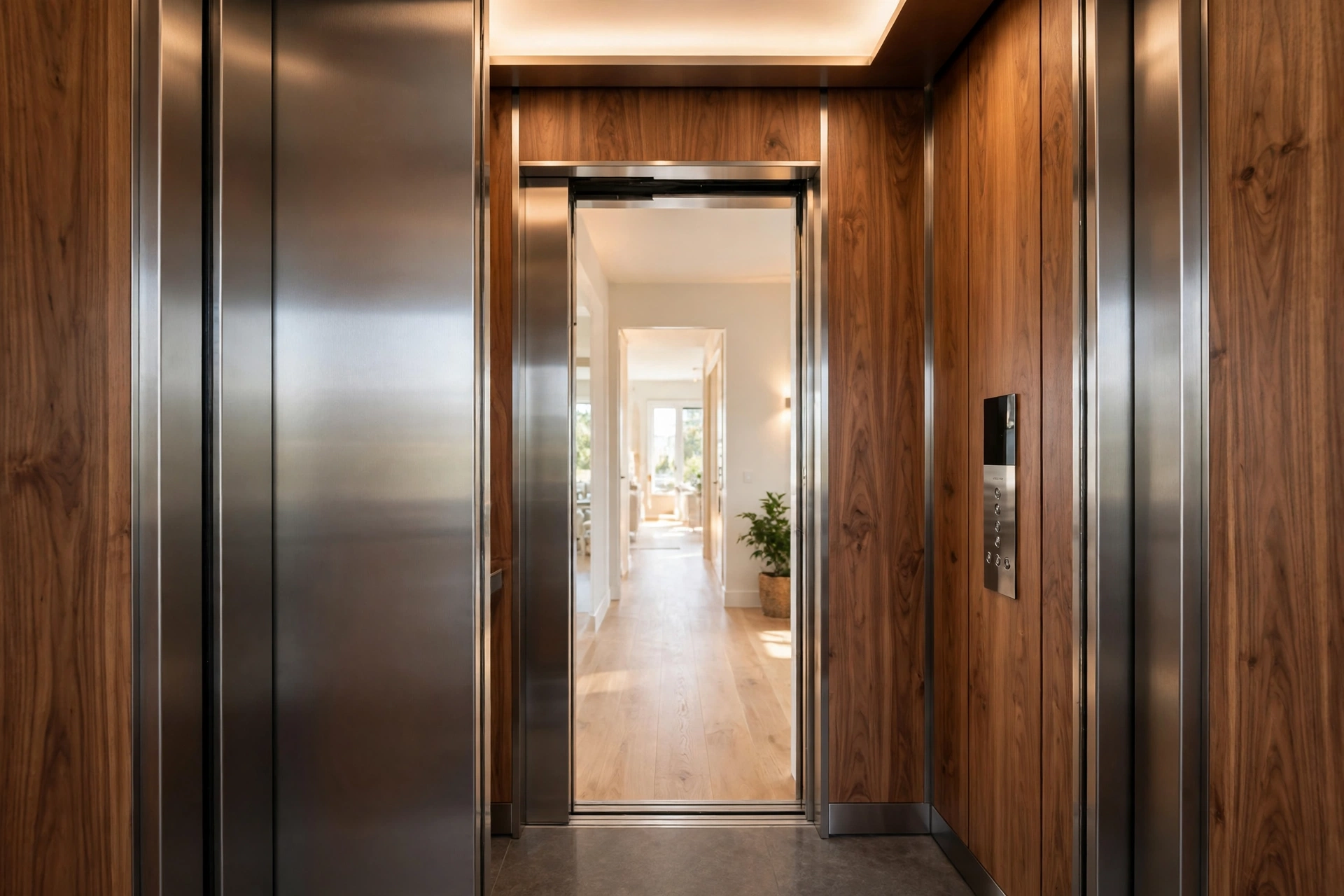
How Much Does a Home Elevator Cost to Maintain Per Year: 2026 Guide
Key takeaways
- Budget $300 to $760 per year for a standard annual maintenance contract — the single biggest recurring elevator expense.
- All-in, plan on $500 to $1,200 per year covering the service contract, mandatory inspections, electricity, and the emergency phone line.
- Hydraulic elevators cost the most to maintain ($300-$1,000/year); pneumatic and cable-driven traction units usually run $200-$700.
- Skipping annual service voids most manufacturer warranties and can turn a $400 tune-up into a $2,000+ emergency repair.
- Water intrusion in the pit is the most expensive preventable failure — a smart water leak detector is cheap insurance against a multi-thousand-dollar cleanup.
How much does a home elevator cost to maintain per year? Between $300 and $760 per year on a standard annual service contract, with most owners paying roughly $450 to $550 for one professional visit. All-in — service contract, state inspections, electricity, and the code-required emergency phone line — budget $500 to $1,200 per year to own and operate a residential elevator.
That is the short answer. But the number that matters for your budget depends on the drive system you own (or plan to buy), whether your state mandates inspections, and how you handle the phone line. Hydraulic elevators cost noticeably more to keep running than traction or pneumatic units, and the difference between a basic contract and a full-coverage plan can double your yearly spend.
Home Elevator Yearly Maintenance Costs at a Glance
Every recurring elevator expense fits into five buckets. The service contract dominates; everything else is comparatively small — until a major component fails, which is exactly why the contract exists.
These are national averages for 2026. Owners in high-labor-cost metros (New York, Boston, the Bay Area) should expect the top end of every range; owners in lower-cost regions often land near the bottom. Note how small the electricity bill is — modern elevators draw power almost exclusively while traveling upward, and traction systems with counterweights sip power compared to a hair dryer.
One of the cheapest insurance policies against a surprise four-figure bill is a smart water leak detector placed in the pit — water intrusion is the most expensive preventable elevator failure. Our recommended pick appears in the box below.
GoveeLife Upgraded Smart Water Leak Detector 1s with High Alarm, 3 Pack

Pit water intrusion is the most expensive preventable elevator failure ($1,000-$5,000 repairs); a smart leak detector in the pit gives owners early warning — the cheapest maintenance insurance in the article.
*Affiliate Disclosure: As an Amazon Associate, Elevate Home earns from qualifying purchases. Pricing and availability subject to change.
What an Annual Maintenance Contract Actually Covers
Manufacturers and the ASME A17.1/CSA B44 safety code recommend professional servicing at least once per year. A standard contract covers routine inspections, lubrication of guide rails and moving parts, door-operator adjustments, cable or belt tension checks, hydraulic fluid level checks (for hydraulic units), and testing of safety devices — emergency brakes, limit switches, door interlocks, and the alarm or emergency stop.
The warranty angle matters more than most buyers realize: nearly every manufacturer requires documented annual professional service to keep the warranty in force. Skipping a $400 visit to "save money" while your $45,000 elevator is under warranty is false economy — one uncovered controller board can cost $1,500 or more. If you bought your elevator recently, review the installation cost breakdown in our residential home elevator cost guide to see where the maintenance warranty sits in the total ownership picture.
Maintenance Cost by Elevator Drive Type
The drive system is the single biggest variable in yearly maintenance cost. Hydraulic systems have more fluids, seals, and heat-related wear; cable traction systems are mechanically simpler once installed; pneumatic (vacuum) elevators have the fewest moving parts of all.
Shopping for a through-floor elevator or comparing options? The drive type you choose locks in your maintenance bill for decades — a pneumatic unit's lower upkeep can offset a higher purchase price within five to seven years. For the full comparison of drive systems against stairlifts, see our home elevator vs stairlift cost guide, and for vacuum-specific economics, vacuum elevators for homes.
The Hidden Costs That Surprise Elevator Owners
The contract is predictable. These are the expenses that ambush owners who budget only for the contract:
Major repairs ($1,000-$3,000 each). Controllers, motors, and hydraulic pumps rarely fail — but when they do, parts and labor run four figures. This is the entire business case for a full-coverage contract on an aging unit: one covered controller replacement pays for years of the premium.
Emergency communication ($180-$480/year). Code requires a working two-way communication device in the car at all times. A dedicated landline runs $15-$40 per month; many owners now switch to cellular-based elevator gateways, which are often cheaper and keep working during power outages (battery backup sold separately).
Battery backup replacement ($150-$400 every 3-5 years). The emergency-lowering battery that brings the car down during an outage degrades like any battery and must be tested annually and replaced on schedule — your technician handles this during the service visit.
Hydraulic oil replacement ($300-$800 every 5-10 years). On hydraulic units, oil is topped up annually but fully replaced on a multi-year cycle. Contaminated oil from a leaking cylinder seal turns a routine service into a repair, which is why the technician checks fluid condition, not just level.
Pit water damage ($1,000-$5,000+). For hydraulic elevators with a pit below the lowest landing, groundwater intrusion is the nightmare scenario: it contaminates hydraulic fluid, corrodes the cylinder, and can require pumping plus component replacement. Because the pit is out of sight, a slow seep can sit for months. A smart water leak detector placed at the bottom of the pit sends a phone alert the moment water appears, turning a potential $3,000 cleanup into a $0 early warning. It is the cheapest maintenance insurance an elevator owner can buy.
How to Keep Your Yearly Elevator Costs Down
Maintenance costs are not fixed — owner behavior moves them by hundreds of dollars a year:
Keep the annual service — always. The contract is cheaper than any single emergency call, and it preserves your warranty. If cost is tight, a basic contract beats no contract by an enormous margin.
Use one licensed elevator contractor. Switching providers yearly means each tech re-learns your system; a contractor with history on your unit spots developing problems (a weeping seal, a door operator going out of adjustment) during routine visits instead of as emergency calls.
Test safety devices monthly. Run the alarm, check the emergency lighting, and confirm the phone line works. Catching a dead phone battery yourself avoids a failed inspection and a $150-$300 return visit.
Keep the pit and machine space clean and dry. Dust, paint fumes, and moisture all accelerate wear. For hydraulic units, a quick visual check of the pit for standing water between service visits is five minutes of prevention against a five-thousand-dollar problem.
Re-shop the phone line. If you are still paying $40/month for a legacy landline, a cellular elevator gateway often cuts that line item in half while improving reliability during outages.
What Happens During a Yearly Maintenance Visit
A professional service visit typically takes one to two hours for a standard two-stop home elevator. Knowing the checklist lets you confirm the work is actually done — and read the service report like an informed owner rather than guessing what was touched.
Mechanical inspection and lubrication. The technician walks the hoistway, checks guide rails and rollers for wear, lubricates rail surfaces and moving joints, and inspects the door operator — belts, rollers, and interlocks. Doors are the most-used moving part of the elevator and the most common source of callbacks, so this gets disproportionate attention.
Rope, belt, and sheave checks (traction units). Steel ropes are measured for stretch and checked against the manufacturer's discard criteria; sheaves are inspected for groove wear. On hydraulic units, the equivalent step is a fluid-level check plus a visual scan of the cylinder, hoses, and fittings for weeping oil — an early-warning sign of seal wear that costs little to watch and a lot to ignore.
Safety device testing. This is the non-negotiable core of the visit: emergency brakes, limit switches, door interlocks, and the alarm or emergency stop are all cycled and verified. The technician also tests the emergency communication device — pressing the car phone button and confirming it connects — and checks the battery backup's ability to drive the car to a landing during a simulated outage.
Pit and machine space inspection. The pit is checked for standing water, oil seepage, and debris. For hydraulic elevators this is where slow groundwater intrusion first shows up — the single most expensive preventable failure in the ownership cycle. A quick look for dampness between annual visits, backed by a leak detector, is the best five minutes an owner can spend.
Report and recommendations. A good technician leaves a written report noting measurements (rope tension, brake clearances), any parts approaching end of life, and a recommended replacement timeline. Keep these reports: they document warranty compliance and, when you eventually sell the home, they prove the elevator was maintained — a real selling point for buyers comparing homes with elevators.
The Bottom Line: Budgeting Year After Year
A realistic 2026 maintenance budget for a home elevator is $300-$760 per year for the service contract, plus $200-$500 for inspections, the emergency phone line, and electricity — for a total yearly ownership cost of roughly $500-$1,200. Hydraulic owners budget the top half of that range; pneumatic and traction owners budget the bottom half.
One final budgeting note: geography moves every number on this page. Owners in high-labor-cost metros — New York, Boston, the Bay Area, coastal California — routinely pay 30 to 50 percent more for the same service contract than owners in the Southeast or Midwest, and state inspection regimes add anywhere from nothing to $300. When you collect quotes, get at least two from licensed elevator contractors who service your drive type; ask each what the contract excludes, what an emergency call costs without a contract, and whether a full-coverage upgrade is available for older units. The cheapest contract is rarely the best one — what you are really buying is a technician who already knows your machine when something goes wrong at 9 p.m.
Compared to the upfront installed cost of a home elevator ($30,000-$80,000+), annual maintenance is about 1% of the purchase price — the same rule of thumb as most major home systems. The owners who get burned are the ones who stop paying attention after installation day. Treat the elevator like your car: one professional service a year, a watchful eye on the small stuff (phone line, pit water, battery), and the yearly cost stays boring. Boring is exactly what you want from an elevator.
Frequently asked questions
Is annual elevator maintenance required by law?
It depends on your state. Many jurisdictions require an annual inspection by a licensed elevator contractor under ASME A17.1/CSA B44 to keep the unit certified, and virtually all manufacturers require documented annual service to keep the warranty valid. Even where not legally mandated, skipping service is the fastest route to a multi-thousand-dollar emergency repair.
What is included in a home elevator maintenance contract?
A standard $300-$760/year contract covers one professional visit: lubrication of rails and moving parts, door-operator adjustment, cable or belt tension checks, hydraulic fluid level checks, and testing of safety devices like emergency brakes, limit switches, and door interlocks. Major parts (motors, controllers, pumps) are covered only under full-coverage contracts, which run $700-$1,200+ per year.
Which type of home elevator costs the least to maintain?
Pneumatic (vacuum) elevators typically cost the least at $200-$700 per year because they have the fewest moving parts. Cable traction elevators run $250-$700, and hydraulic elevators cost the most at $300-$1,000 due to oil changes, seal wear, and higher power consumption on ascent.
How much electricity does a home elevator use per year?
Very little — typically $20 to $80 per year. Modern elevators draw power almost exclusively while traveling upward (gravity assists the descent), and traction systems with counterweights are the most efficient. It is one of the smallest line items in the yearly ownership budget.
Keep reading
Mobility Pricing
Residential Home Elevator Cost: The 2026 Buyer's Guide
A residential home elevator costs $28,000 to $65,000 installed in 2026. Break down the true costs of shafts, m…
Mobility
Through-Floor Home Elevators: 2026 Cost Guide
Through floor lift cost home guide 2026: through-floor lifts vs full home elevators — shaft needs, permits, sp…
Comparison
Home Elevator Cost vs Stairlift: 2026 Comparison Guide
Home elevator cost vs stairlift: compare 2026 US cost ranges, space needs, aesthetics, maintenance, and resale…
True Cost of Ownership
Stairlift Maintenance & Repair: Annual Cost Guide
Stairlift maintenance and repair costs explained: service contracts, batteries, common repairs, and realistic …
Interactive Tool
Aging in Place Renovation Cost Estimator 2026 Guide
Budget your aging-in-place renovation with our interactive estimator. Price accessible bathrooms, kitchens, el…
Transfer Equipment
100A vs 200A Automatic Transfer Switch
100 amp vs 200 amp transfer switch: service-entrance vs subpanel topology, when each is required, costs, and l…