HVAC Settings for Wildfire Smoke: 2026 Guide
Wildfire smoke HVAC settings: the right filter strategy, recirculation mode, and pressurization steps to protect indoor air quality during smoke events.
10 MIN READ · UPDATED 2026-09-22
Key takeaways
- During smoke events, run your system on recirculate with the fan set to ON — not AUTO — to keep air moving through the filter.
- Upgrade to MERV-13 filtration (4-inch media cabinets are ideal) before fire season, not during it.
- Close fresh-air intakes and ERV/HRV dampers during heavy smoke; ventilate only when outdoor AQI drops below 100.
- Slight positive pressurization — a trickle of filtered makeup air — keeps smoke from infiltrating through cracks.
- Change filters after every major smoke event; a loaded filter chokes airflow and can freeze a coil.
When wildfire smoke blankets your neighborhood, your HVAC system becomes either your best defense or your biggest liability — and the difference is a handful of settings most homeowners never touch. The wrong configuration pulls smoky air straight through your ductwork; the right one turns your existing equipment into a whole-house air scrubber. With fire seasons growing longer across the West and smoke events now reaching the Midwest and Northeast, every homeowner in an affected region needs a smoke plan for their HVAC before the sky turns orange. This guide covers the filter strategy, the recirculation settings, and the pressurization tricks that keep indoor air breathable when outdoor air is not.
How smoke interacts with your HVAC system
Wildfire smoke is mostly fine particulate matter — PM2.5, particles smaller than 2.5 microns — plus gases like carbon monoxide and volatile organics. Your HVAC system does not create indoor smoke; it redistributes whatever is in the air it handles. Left on normal settings during a smoke event, a system with a fresh-air intake or an ERV keeps importing smoky outdoor air on schedule, while leaky ductwork and an open-building envelope let smoke infiltrate around the system entirely. The blower, meanwhile, is the most powerful air-moving device in your house — which makes it either a superb filter or a superb smoke distributor.
The goal during a smoke event is simple: recirculate indoor air through good filtration, minimize outdoor air intake, and keep the house slightly pressurized so smoke cannot push in through cracks. That is the opposite of normal shoulder-season operation, when fresh air is your friend. The transition between the two modes — smoke mode and normal mode — is the skill this guide teaches, and it is mostly a matter of knowing which dampers, settings, and habits to flip.
One caution up front: filtration handles particles, not gases. A MERV-13 filter captures the visible haze and most PM2.5, but smoky odors and some volatile compounds pass through. Activated-carbon pre-filters or standalone carbon units help with odor, but no residential setup makes a house smell pristine during a severe event. Manage expectations: the target is healthy air, not perfect air.
Filter strategy: your first line of defense
The single highest-leverage upgrade is filtration, and it must happen before fire season. MERV-13 is the target rating for smoke: it captures the great majority of PM2.5 while remaining within what most residential blowers can handle. MERV-8 builder-grade filters — the blue fiberglass or thin pleats in most homes — catch almost none of it. But do not just jam a 1-inch MERV-13 pleat into a system designed for MERV-8: the pressure drop can starve the blower, freeze the evaporator coil, and in heating season crack a heat exchanger from overheating.
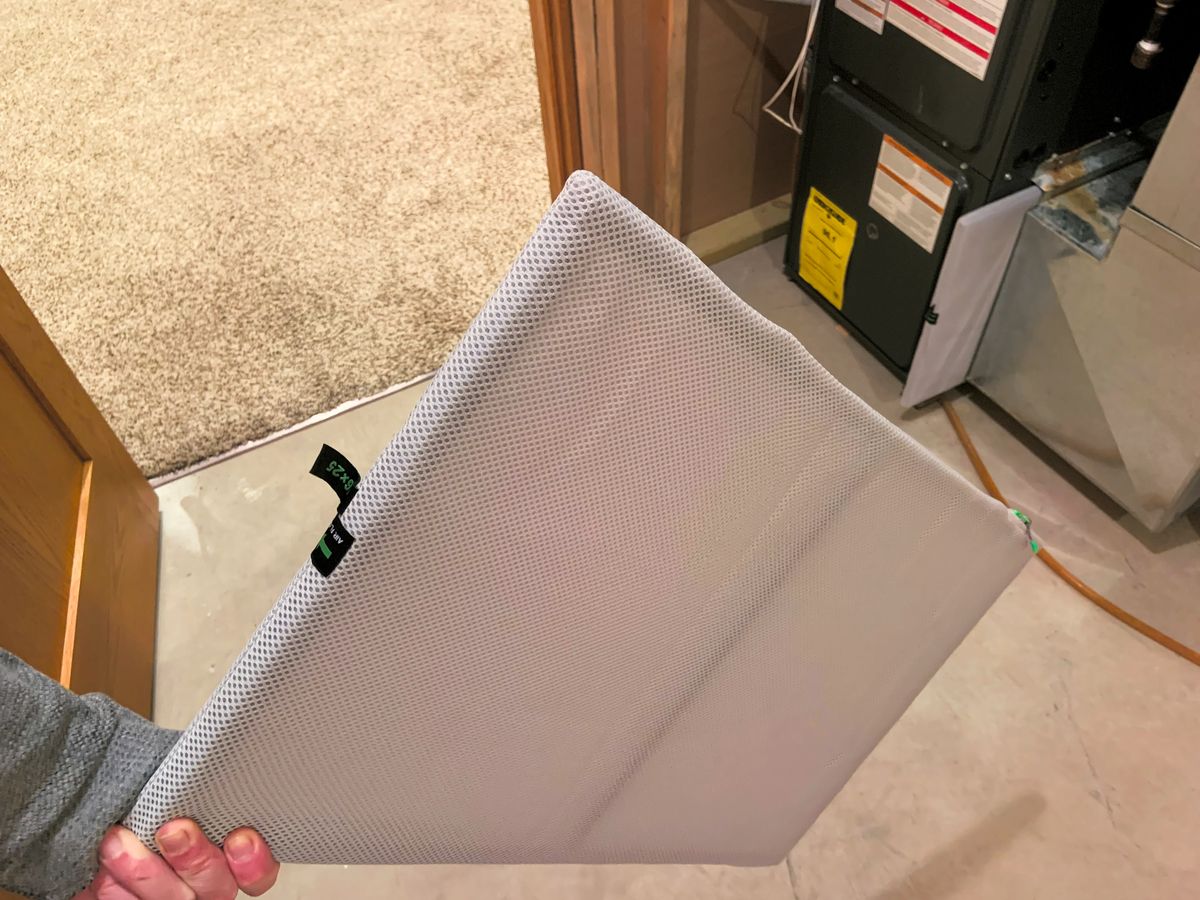
The right hardware is a 4-inch or 5-inch media filter cabinet, which delivers MERV-13 (or MERV-16) filtration with a fraction of the airflow restriction because of its huge surface area. Installed cost runs $400 to $900, and it is the best wildfire-preparedness money most homeowners can spend — it also improves everyday filtration for allergies and dust. If you cannot install a media cabinet before smoke arrives, use the highest MERV 1-inch filter your system tolerates (usually MERV-11 or 12) and change it frequently, watching for signs of strain like weak airflow or icing.
Stock up: buy a case of filters in May, not September. During major smoke events, filters that normally last three months can load up in two to three weeks, and local stores sell out fast. A loaded filter is worse than a mediocre clean one — it chokes airflow, raises energy use, and risks coil freeze. After every significant smoke event, change the filter regardless of schedule; the $20 to $60 is cheap insurance for the equipment.
Recirculation settings: run the fan, close the intakes
When smoke arrives, flip three settings. First, set the thermostat fan to ON instead of AUTO — continuous blower operation keeps air moving through the filter around the clock rather than only during heating or cooling calls. Yes, it uses more electricity (roughly $20 to $50 extra per month for a typical blower), but during a smoke week it is the difference between filtered and unfiltered air. Second, make sure the system is on recirculate: no economizer, no "fresh air" mode, no open outside-air damper on the return.
Third, close or damper down every dedicated fresh-air path: ERV/HRV units, fresh-air intake dampers, and whole-house fans (never run a whole-house fan during smoke — it is a smoke pump). Bathroom and kitchen exhaust fans are a judgment call: they depressurize the house and pull smoke in through cracks, so minimize their use during heavy smoke, running them only briefly when truly needed. Dryer vents are unavoidable but minor.
Do not forget the envelope. Close windows and doors obviously, but also check the less obvious infiltration paths: the fireplace damper, the attic hatch, and pet doors. A house at slight negative pressure from exhaust fans will find every crack; minimizing exhaust use is as important as any damper setting. If you have a smart thermostat with an AQI integration or a standalone indoor air-quality monitor, let data drive the transitions — flip to smoke mode when outdoor AQI crosses 100 to 150, and do not flip back until it is solidly below 100.
Pressurization: the pro trick most homes miss
Here is the concept that separates good smoke defense from great: a house held at slight positive pressure resists smoke infiltration because air leaks outward through cracks instead of inward. Normally, exhaust fans, stack effect, and wind put houses at negative pressure, literally sucking smoke through every gap in the envelope. Positive pressure reverses that flow.
The practical way to get it: supply a small amount of filtered outdoor air — through the media filter cabinet or a dedicated filtered makeup-air intake — while minimizing exhaust. Some high-end systems have a "pressurization" or "smoke" mode; for most homes the manual version works: fresh-air intake open just a crack through the MERV-13 filter, exhaust fans off, interior doors open so pressure equalizes. You are aiming for barely perceptible — enough that a tissue at a door crack flutters outward, not a wind tunnel.
This is also where envelope sealing pays off twice. Weatherstripping, sealed attic hatches, and caulked penetrations reduce the infiltration a smoke event can exploit, pressurized or not. A blower-door test ($300 to $500, often utility-subsidized) quantifies your leakage and tells you whether sealing work — typically $1,500 to $4,000 for a meaningful package — is worth prioritizing before next fire season. Tight house, good filter, slight positive pressure: that is the full recipe.
Portable purifiers and bedroom strategy
Central filtration is powerful but intermittent — even with the fan on ON, some rooms get less airflow than others, and bedrooms with closed doors can stagnate. The fix is a true-HEPA portable purifier in each bedroom, sized to the room (look for a CADR rating at least two-thirds of the room's square footage). During severe smoke, run them on high during the day with doors closed, then drop to a quieter setting at night.
Create one clean-air room — typically the primary bedroom — as your refuge during the worst days: portable HEPA running, door kept closed, towels at the door gap if smoke is severe, and minimal coming and going. This is also the room to sleep in with windows closed even on nights when the rest of the house feels okay. For households with asthma, COPD, or heart conditions, the clean-air room is not optional comfort — it is medical prudence, and it is worth discussing a plan with your doctor before fire season.
Avoid the common traps: ionizers and ozone generators marketed as "air purifiers" can irritate lungs and are counterproductive during smoke — the EPA and California Air Resources Board both advise against ozone-generating devices. Stick with mechanical HEPA plus activated carbon. And do not run portable purifiers with the windows open "for fresh air" during a smoke event; you are filtering the neighborhood.
After the smoke clears: recovery and maintenance
When the AQI drops and stays below 100, transition back deliberately. First, change the HVAC filter — it did the hard work and is loaded with ash. Then ventilate the house aggressively for a few hours: open windows on opposite sides for cross-ventilation, or run the ERV/HRV on high, to flush the stale, CO2-heavy indoor air that accumulated during sealed-up days. A house sealed for a week builds up indoor pollutants from cooking, cleaning products, and off-gassing; the post-smoke flush matters.
Then assess the equipment. Pull the blower compartment and look at the blower wheel — fine ash coats the blades, reducing efficiency and eventually balance. An evaporator coil inspection is worthwhile after severe or repeated events; a coated coil transfers heat poorly and grows mold happily on the ash-and-moisture film. A post-season service visit ($200 to $400) covering filter change, coil inspection, blower cleaning, and drain flush is cheap protection for a five-figure system. If you ran 1-inch high-MERV filters through the event, have the technician check static pressure to confirm the blower was not starved.
Finally, debrief while it is fresh. Note what worked: did the house stay comfortable, did odors stay manageable, did anyone have symptoms? Write down the filter size you need, the damper positions for smoke mode, and the AQI threshold you used — tape a one-page "smoke mode checklist" inside the air-handler closet or on the thermostat. Next year's event will arrive with less warning than you expect, and a checklist beats memory every time. Costs are 2026 US market ranges; get itemized local quotes for any hardware upgrades, and have a licensed HVAC contractor verify filter compatibility before upgrading MERV ratings.
Pre-season preparedness: build your smoke kit in spring
The worst time to shop for wildfire protection is the day the sky turns orange — filters sell out, contractors are booked, and purifiers triple in price on resale markets. Treat smoke preparedness like hurricane preparedness: assemble the kit in spring when everything is in stock and on sale. Your kit should include a full season's worth of replacement filters (at least three), one true-HEPA portable purifier per bedroom, a supply of N95 masks for the brief moments anyone must go outside, and a written one-page checklist of your smoke-mode settings taped inside the air-handler closet.
Schedule the HVAC tune-up for late spring and make wildfire readiness part of the visit: verify the system tolerates your target MERV rating by checking static pressure, confirm the fresh-air damper and ERV controls actually close, and have the technician show every household member where the dampers and thermostat settings are. If you are considering the 4-inch media cabinet upgrade, spring installation costs $400 to $900 and takes a couple of hours — the same job in September comes with a waiting list. Finally, sign up for air-quality alerts on your phone now: your weather app, your smart thermostat, or a dedicated AQI app. The alert that wakes you at 6 a.m. to close the house before the morning smoke inversion is worth more than any filter.
Frequently asked questions
Yes — cooling is fine and the blower is your best filtration tool. Set the thermostat fan to ON for continuous filtration, close windows and doors, and switch the system to recirculate so you are filtering indoor air rather than pulling in smoke.
MERV-13 is the practical sweet spot for residential systems — it captures most smoke particles (PM2.5) without the airflow penalty of HEPA. Confirm your blower can handle it; 4-inch-deep media filters give MERV-13 performance with far less restriction than 1-inch pleats.
During heavy smoke (AQI over 150), yes — close or damper down fresh-air intakes and ERVs to stop importing smoke. Resume ventilation when outdoor air clears, because a sealed house builds up CO2 and indoor pollutants quickly.
It can clog filters fast, coat evaporator coils and blower wheels with fine ash, and strain the blower if filters load up. After a bad event, change filters, consider a coil cleaning, and have the blower wheel inspected — a $200-$400 service that protects a $10,000 system.
Yes, especially in bedrooms. A central system filters the whole house but cycles; a portable HEPA unit in the bedroom runs continuously where you sleep. During severe smoke, use both — central on recirculate plus a portable in each bedroom.
Watch your local AQI, not the calendar. Below 100 is generally fine for normal ventilation; between 100 and 150, ventilate briefly at the coolest, clearest part of the day. Many smart thermostats and weather apps now push AQI alerts — set one up before fire season.