Moving HVAC Out of the Attic: Pros, Cons & Costs
Moving HVAC out of the attic can reclaim 15-30% lost efficiency. Learn relocation options, ductwork fixes, 2026 costs ($5,000-$25,000), and when it is worth it.
10 MIN READ · UPDATED 2026-09-22
Key takeaways
- Attic temperatures of 130-150°F can cut ducted-system efficiency 15-30% and shorten equipment life.
- Relocation typically costs $5,000-$25,000 depending on whether you move just the unit or redesign the whole duct system.
- Garages, basements, closets, and conditioned-attic conversions are the common destinations — each has trade-offs.
- Moving the unit without fixing leaky ducts leaves most of the savings on the table.
- Relocation is most worth it during a full system replacement, when labor overlaps anyway.
A huge share of American homes keep their most expensive appliance in the single worst spot in the house: a 140-degree attic, where leaky ducts bleed cooled air into the rafters and the equipment itself bakes between cycles. Moving HVAC out of the attic can recover 15 to 30 percent of lost efficiency — but it is a $5,000 to $25,000 project with real trade-offs, and done badly it trades one set of problems for another. Here is the honest breakdown of why attics kill efficiency, where the equipment can go instead, what it costs in 2026, and how to tell whether your house is a good candidate.
Why hot attics kill efficiency
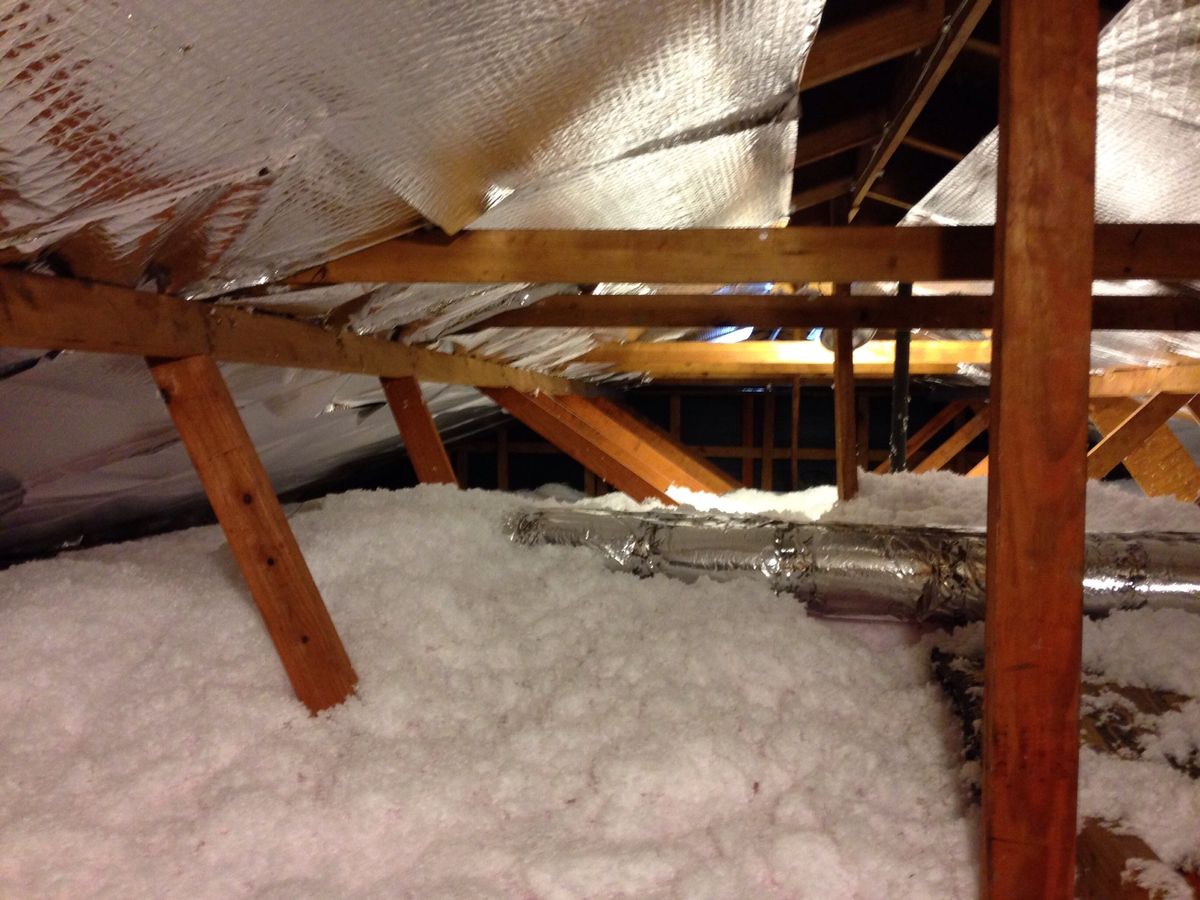
The problem is twofold, and both halves show up on your utility bill. First, the ducts. A typical attic duct system loses 15 to 30 percent of the air it carries through leaks at joints, boots, and connections — air you paid to cool, dumped into the attic. Second, heat gain: even sealed ducts sitting in a 130 to 150°F attic absorb heat through their walls all summer. R-6 or R-8 duct insulation slows this, but the temperature difference is so extreme that meaningful energy still migrates inward. The result is a system that must run longer to deliver the same cooling, which is exactly what your meter shows.
The equipment suffers too. Condensers and air handlers are rated for normal conditions, not for cycling in superheated air. Capacitors, contactors, and control boards fail faster in sustained heat, and condensate drains clogged by attic dust and algae overflow into ceilings — the classic "water stain on the upstairs ceiling" disaster. Service suffers as well: technicians working in a 140°F attic in July rush, and rushed work is sloppy work. Every maintenance visit on attic equipment is harder, hotter, and more expensive than the same service on a garage or closet unit.
None of this means every attic system is a disaster. A well-sealed duct system with R-8 insulation in a ventilated attic in a mild climate performs acceptably. The penalty grows with climate severity, duct leakage, and attic temperature. Before considering relocation, get a duct leakage test — many utilities subsidize them for $100 to $300. If your ducts leak under 5 percent of system airflow, the attic penalty is mostly heat gain and serviceability, and cheaper fixes may be the smarter play.
Where the equipment can go instead
The four realistic destinations each carry a profile. The garage is the most common: the air handler goes in a sealed, insulated closet with combustion-air provisions if there is a furnace, keeping refrigerant lines and drains short. Downsides include losing storage space and, in attached garages, code requirements for fire separation and sealed combustion. The basement is ideal where one exists — cool, accessible, and service-friendly — but homes built on slabs in the Sun Belt simply do not have one.
An interior mechanical closet — carved from a hallway, laundry room, or under-stair space — works well in remodels and additions, delivering the shortest duct runs of any option. The cost is floor space and noise: a closet next to a bedroom needs serious sound treatment. The fourth option is converting the attic itself into conditioned space by insulating the roofline with spray foam or rigid foam, which brings the ducts inside the thermal envelope without moving anything. This is often the most elegant fix, but roofline insulation on an existing home runs $8,000 to $20,000 and changes the roof assembly's moisture dynamics, so it needs a contractor who understands building science, not just HVAC.
Each option interacts with your duct layout. The cheapest relocations keep the existing duct trunk roughly where it is and move only the air handler a short distance — long horizontal duct runs to a far corner of the garage can erase the efficiency gain you are chasing. A good contractor sketches the new duct geometry before quoting, because the ductwork, not the equipment, determines whether the project succeeds.
What relocation actually involves
A relocation is a mini-remodel, not a simple equipment swap. The work typically includes building or modifying the new equipment platform or closet, extending or rerouting refrigerant lines, rerouting the condensate drain to a proper termination, running new electrical circuits and disconnects, modifying supply and return ductwork to reach the new location, sealing and insulating all affected ducts, and rebalancing airflow room by room. Gas furnaces add venting and combustion-air work; heat pumps need outdoor-unit placement that keeps line sets reasonable.
Permits are required in nearly every jurisdiction — mechanical, electrical, and plumbing inspections at minimum — and your contractor should handle them. Expect the house to be without heating or cooling for one to three days during the switchover, so schedule shoulder-season work when possible. One detail that gets missed: the old attic space. Abandoned duct chases and the old equipment platform need proper sealing and removal, or you inherit air leaks and a mold-friendly cavity where the air handler used to sweat.
The single biggest mistake is moving the box without fixing the ducts. If your ducts leak 20 percent in the attic and you move the air handler to the garage while leaving leaky ducts in a still-hot attic, you have spent five figures to relocate the smaller half of the problem. Any relocation quote should include duct sealing to under 5 percent leakage and insulation to at least R-8 on any ducts remaining outside conditioned space — verified with a post-installation leakage test, not a promise.
2026 cost ranges by approach
Costs vary with distance moved, ductwork extent, and local labor, but 2026 ranges look like this. Moving an existing air handler a short distance (attic to adjacent garage) with modest duct modifications: $5,000 to $10,000. A full relocation with significant duct redesign and a new equipment closet: $10,000 to $18,000. Relocation bundled with a complete system replacement — the smartest timing — typically adds $4,000 to $8,000 on top of the $8,000 to $18,000 system cost, since equipment-setting and much of the labor overlaps.
Converting the attic to conditioned space via roofline insulation, as an alternative to moving anything, runs $8,000 to $20,000 depending on roof area and foam type — and it improves the whole house envelope, not just the HVAC. Interior closet construction adds $2,000 to $6,000 for framing, drywall, doors, and sound treatment. Costs are 2026 US market ranges; get itemized local quotes, and make sure every bid separates equipment, ductwork, electrical, carpentry, and permits so you can compare apples to apples.
The payback question deserves honesty. Relocation rarely pays for itself on energy savings alone — saving 20 percent of a $2,400 annual HVAC bill is $480 a year, a 20-year payback on a $10,000 project. The real returns are comfort (even room temperatures), equipment longevity, eliminated ceiling-leak risk, and serviceability. Treat it as a comfort and risk project with an efficiency bonus, not an investment with a payback period, and the decision gets much clearer.
When relocation is — and isn't — worth it
Relocation is most worth it in three situations. First, when the system is being replaced anyway: the marginal cost of putting the new air handler in the garage instead of the attic is a fraction of a standalone move. Second, when you have suffered condensate damage or face a high-risk ceiling below the air handler — moving the equipment eliminates a failure mode that has already cost you once. Third, in hot climates with long, leaky duct runs where sealing alone cannot fix the geometry.
It is usually not worth moving a working system solely for efficiency. If the equipment has years of life left and the ducts can be sealed and insulated in place for $2,000 to $4,000, do that and revisit relocation at replacement time. Similarly, if the only practical destination is a distant corner requiring 60 feet of new duct, the cure may be worse than the disease — long duct runs add static pressure, noise, and their own losses.
The middle path works for most homes: seal ducts to under 5 percent leakage, upgrade duct insulation to R-8, add a secondary condensate drain pan with a float switch and an overflow shutoff, and make sure the attic has a proper service platform and lighting. That package often costs under $4,000, captures most of the available savings, and eliminates the catastrophic leak risk — which, for most owners, was the real reason to consider moving the system in the first place.
How to hire the job right
This is a design-build project, not a commodity equipment swap, so contractor selection matters more than brand selection. Look for a licensed HVAC contractor with explicit relocation experience — ask for photos and addresses of two similar completed jobs — and one who proposes a Manual J load calculation and a Manual D duct design for the new layout. Anyone willing to "just move the unit" without redesigning the ducts is not the contractor for this job.
Get three itemized quotes and compare the duct scope line by line; the cheapest bid on a relocation is usually the one that left out the ductwork. Verify licensing, insurance, and who pulls permits, and get the post-installation duct leakage test in writing with a target number. Ask about noise: an air handler in a garage closet adjacent to a bedroom needs a lined closet, vibration isolation, and possibly a variable-speed blower to stay quiet. Finally, schedule the work for spring or fall, keep the project to a contractor who warranties both equipment and the relocation workmanship for at least a year, and photograph everything before drywall closes — future service technicians will thank you.
Making an attic system you keep perform its best
If relocation does not pencil out, a targeted upgrade package gets you most of the benefit for a fraction of the cost. Start with a duct leakage test and professional duct sealing — mastic at every joint, sealed boots, and gasketed returns — targeting under 5 percent total leakage, verified by a post-sealing test. Then upgrade duct insulation to R-8 wherever accessible; the combination of sealed, well-insulated ducts in a ventilated attic performs far closer to an indoor system than most owners expect.
Next, eliminate the catastrophic risks. Install a secondary condensate drain pan under the air handler with a float switch wired to shut the system down on high water — a $200 to $400 addition that prevents the five-figure ceiling collapse. Make sure the primary drain has a cleanout and gets flushed annually, and confirm the attic has a proper service platform, lighting, and a pull-down stair that a technician can actually use. Finally, consider a radiant barrier or improved attic ventilation if attic temperatures regularly exceed 140°F; dropping peak attic temperature by 15 to 20 degrees directly reduces duct heat gain. This whole package typically runs $2,000 to $4,000 — and it is the right answer for most homes whose ducts can be sealed in place.
Frequently asked questions
Studies consistently show duct leakage and attic heat gain can waste 15-30% of heating and cooling energy. In a 140°F attic, every minute the system cycles, ducts are radiating hard-won cooling back into the hottest part of the house.
Common destinations include the garage (with a sealed closet), the basement, an interior mechanical closet, or a converted conditioned attic. The right choice depends on your floor plan, climate, and local code — a licensed contractor should evaluate all four.
Sometimes, and it is much cheaper — sealing ducts to under 5% leakage and upgrading to R-8 duct insulation can recover a large share of the losses. Full relocation is for cases where ducts cannot be adequately sealed or the equipment itself is suffering in the heat.
Yes. Relocation involves mechanical, electrical, and often plumbing (condensate) work, and most jurisdictions require permits and inspection. Your contractor should pull them as part of the job.
Yes, for different reasons — freezing condensate drains, ice-dam risk from heat loss, and miserable service conditions in winter. But the efficiency penalty is generally smaller than in hot climates where attic temperatures soar.
If the system is due for replacement anyway, relocation costs drop dramatically because equipment-setting labor overlaps. Moving a working system purely for efficiency rarely pencils out on energy savings alone — do it when the equipment is already being replaced.