UV Protection for Outdoor Kitchens: Covers, Sealants & Fade
UV protection for outdoor kitchens: how sun damages cabinets, counters, and fabrics — covers, sealants, shade strategies, and the annual prevention routine.
10 MIN READ · UPDATED 2026-09-22
Key takeaways
- UV destroys outdoor kitchens three ways: polymer breakdown, color bleaching, and acceleration of all other weathering — shade is the most effective defense.
- Fitted, breathable, strap-secured covers are the highest-ROI protection for grills and appliances; cover discipline matters more than cover price.
- Use penetrating sealers on stone and concrete in full sun, and reseal on schedule — incompatible sealer layering causes most blotchy failures.
- Wash powder-coated cabinets regularly, touch up chips promptly, and choose 316 stainless near salt water; UV degrades every protective coating over time.
- Fold UV care into an annual spring routine ($300–$800 hired out) — it is among the highest-ROI maintenance for a $40K–$100K asset.
Sunlight is the slowest, most expensive vandal your outdoor kitchen will ever meet. UV radiation chalks powder-coated cabinets, bleaches fabrics, crazes sealants, and quietly cooks the lifespan out of every polymer in the build. The good news: nearly all of it is preventable with the right covers, sealants, and material choices made at the right time. This guide covers how UV damages each part of an outdoor kitchen and the protection strategy that actually works in 2026.
How UV Actually Damages an Outdoor Kitchen
Ultraviolet radiation attacks outdoor kitchens through three mechanisms. First, photodegradation breaks down polymers — the plastics in cabinet components, the resins in composite decking and some countertops, wire insulation, and gasket materials. The visible signs are chalking (that powdery white film on powder-coated surfaces), fading, and eventually cracking and brittleness. Second, UV bleaches color: fabrics, stained woods, and even some stone sealers lose pigment as UV breaks dye molecules apart. Third, UV accelerates every other weathering process — heat cycling, moisture intrusion, and oxidation all move faster on UV-damaged surfaces because the damaged top layer no longer protects what is beneath it.
Geography sets the intensity. The UV index in Phoenix, Miami, or Denver is dramatically higher than in Seattle or Portland, and elevation adds roughly 4–5% more UV per thousand feet. But do not assume northern climates are safe: reflected UV off water, light-colored pavers, and snow is real, and south- and west-facing kitchens take the worst of it everywhere. A kitchen under a solid roof structure may see a fraction of the UV of an identical open-air kitchen ten feet away — shade is the single most effective UV protection ever invented, and it is free if you plan for it.
The damage timeline surprises most owners. Cheap fabrics can show visible fading in a single summer. Mid-grade powder coating typically chalks noticeably in 3–5 years of full sun without protection. Quality marine-grade finishes and solution-dyed fabrics hold color far longer but still degrade — the question is never whether UV wins, only how many years you get before it does. Your protection strategy should be calibrated to that timeline: preserve the expensive, hard-to-replace surfaces (cabinets, countertops, structures) aggressively, and treat soft goods as consumables with a planned replacement cycle.
Covers: The Highest-ROI Protection You Can Buy
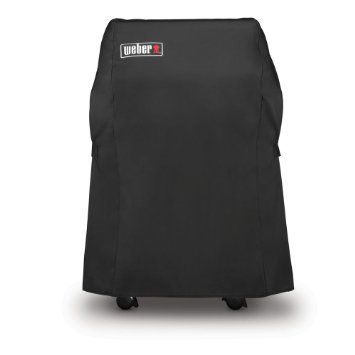
A fitted cover is the cheapest effective UV protection for grills, side burners, refrigerators, and freestanding pieces — typically $80–$300 per cover for quality fitted options. The key word is fitted: a cover that flaps in the wind abrades the finish it is supposed to protect and eventually tears free. Look for covers with adjustable straps or buckles (not just elastic hems, which fatigue in UV within a season or two), ventilation panels that prevent trapped-moisture mildew, and fabric rated for UV resistance rather than generic "weatherproof" vinyl.
Material choice in covers matters more than marketing suggests. Solution-dyed polyester and acrylic covers hold up far better than PVC/vinyl, which becomes brittle and cracks after a few seasons of sun. Breathability is the feature buyers undervalue: a waterproof-but-unvented cover traps condensation against stainless steel and painted surfaces, growing mold and, on lesser stainless grades, encouraging tea-staining corrosion. The best covers are water-shedding and vented, not hermetically sealed — you want rain to run off and humidity to escape.
Cover discipline is the real variable. A $250 cover left in the deck box protects nothing. Build the habit into the kitchen's design: a dedicated storage spot for covers within arm's reach of each appliance, covers sized so one person can fit them in under a minute, and a household rule that the grill gets covered when it cools. For island cabinetry and countertops that cannot be "covered" in the usual sense, fitted island covers exist for smaller builds; for larger kitchens, the protection strategy shifts to sealants, shade structures, and material selection.
Sealants for Stone, Concrete, and Masonry
Natural stone, concrete, and masonry are not UV-proof — they are UV-tolerant until their sealer fails, and then they are vulnerable. UV breaks down sealers over time: topical sealers (film-forming acrylics, epoxies) tend to yellow, haze, or peel under sustained UV, while penetrating sealers (silanes, siloxanes) are generally more UV-stable because they work below the surface rather than as a film on top. For outdoor kitchen countertops and coping in full sun, penetrating sealers are usually the better choice, reapplied on the schedule the manufacturer specifies for exterior exposure — typically every 1–3 years depending on product and climate.
The resealing schedule is the part owners skip, and it is the part that matters. Mark it on the maintenance calendar and treat it like an oil change: strip or clean the surface per the sealer manufacturer's instructions, apply in the right conditions (not in direct midday sun, not when rain is coming), and keep a record of which product was used so the next application is compatible. Incompatible sealer layering — a topical over a penetrating sealer, or two different chemistries — is a common cause of the hazy, blotchy finishes owners blame on "bad stone."
Concrete countertops deserve special mention because they are both popular and high-maintenance in UV. Unsealed or poorly sealed concrete absorbs everything — sunscreen, ketchup, red wine — and UV accelerates the breakdown of marginal sealers. If you have concrete counters in full sun, commit to the maintenance or commit to the patina; there is no third option. Grout lines in tile and stone installations need attention too: UV-stable grout sealers exist and are worth applying, since degraded grout becomes the entry point for the moisture that freezes, expands, and pops tiles in winter climates.
Cabinets, Metals, and Powder-Coat Care
Powder-coated aluminum and steel cabinets are the backbone of most outdoor kitchens, and their finish is a UV battleground. Quality powder coating with proper UV-stable topcoats resists chalking for years; budget coatings can chalk in two to three summers. You cannot easily change the factory finish, but you can dramatically extend it: wash cabinet exteriors a few times a year with mild soap and water (airborne pollutants and salt accelerate finish breakdown), touch up chips promptly with manufacturer-matched paint before bare metal is exposed, and keep the worst sun off with shade or covers where practical.
Stainless steel is often assumed to be maintenance-free, and it is not — especially near salt water. UV itself does not corrode stainless, but UV degrades the protective films, waxes, and clear coats owners apply, and sun-baked surfaces show water spots and tea staining more aggressively. In coastal zones, 316 marine-grade stainless is worth the premium over 304, and a routine washdown schedule (monthly in salt air, quarterly inland) matters more than any miracle coating. Never use chloride-based cleaners or steel wool on stainless; both destroy the passive layer that makes stainless stainless.
For wood elements — pergolas, privacy screens, cutting-board inserts — UV protection means exterior-rated finishes with UV inhibitors, reapplied before they fail rather than after. A transparent or semi-transparent exterior stain with UV blockers, maintained every 1–2 years in full sun, keeps wood sound far longer than letting it silver and then trying to rescue it. Once wood has grayed deeply and checked, no finish fully restores it; the maintenance is preventive, not curative. Budget the time or the service contract honestly when you choose wood in a sunny climate.
Fabrics, Shade Structures, and Planned Shade
Outdoor fabrics live or die by fiber and dye. Solution-dyed acrylic — where the color goes all the way through the fiber rather than sitting on the surface — is the standard for cushions, umbrellas, and shade sails that must hold color in sun, and it outperforms printed or piece-dyed fabrics by years. Even the best fabrics fade eventually; plan on a 5–8 year replacement cycle for cushions in full sun and treat it as normal operating cost rather than failure.
Shade structures are UV protection that pays for itself twice: a louvered pergola, shade sail, or retractable awning over the kitchen cuts UV exposure to cabinets and counters dramatically while making the space usable in summer heat. A fixed solid roof is the ultimate protection but changes the project into a structure with its own permits and costs. Retractable options — awnings or louvered roofs — give you sun when you want it and protection when you don't, though the mechanisms themselves need periodic service. Whatever you choose, verify wind ratings for your zone; a shade structure that becomes a sail in a storm is worse than none.
Do not forget the ground-level details: outdoor rugs fade and degrade, plastic storage bins become brittle, and even the labels on your grill's control panel can bleach unreadable. Store what you can, choose UV-stable materials for what you cannot, and accept that small consumables — thermometer probes left outside, plastic squeeze bottles, cheap grill tools — have a finite sunny life. The protection budget should prioritize the $8,000 cabinet run over the $40 accessories.
Electronics, Lighting, and the Small Stuff That Fails First
UV kills small components fastest because they have the least material to sacrifice. Outdoor-rated lighting fixtures, TV and speaker housings, smart controllers, and sensor housings all rely on UV-stabilized plastics — check that any electronics you add to the kitchen are actually rated for outdoor/UV exposure, not merely "weather-resistant." Wire insulation, zip ties, and cable jackets are classic silent failures: standard nylon zip ties become brittle and snap within a year or two of full sun; UV-stabilized black zip ties last far longer. It is a two-dollar detail that prevents a low-voltage lighting wire from dropping onto a hot surface.
Outdoor televisions deserve a note because they are both expensive and UV-sensitive. Even outdoor-rated TVs last longer with a cover when not in use or under a roof overhang; direct sun on the screen degrades the panel and overheats the electronics. If the TV must face afternoon sun, a shade hood or repositioning is worth more than any screen protector. The same logic applies to outdoor refrigerators' gaskets and control panels — shade and covers extend their service life measurably.
Building the Annual UV-Protection Routine
Fold UV protection into a simple annual routine and it stops being a project. Each spring: wash all cabinet exteriors and inspect the finish for chalking or chips; touch up paint; inspect and re-secure covers, replacing any with fatigued elastic or torn seams; check shade-structure hardware and fabric tension; inspect sealant on stone and concrete (the water-bead test — if water no longer beads, reseal); replace UV-degraded zip ties, gaskets, and small plastics; and clean and treat wood elements per their finish schedule.
Budget realistically: a comprehensive spring UV service on a mid-size outdoor kitchen runs $300–$800 if you hire it out, or a weekend if you DIY — plus $200–$500 in materials (sealer, touch-up paint, replacement covers, fabric guard). That annual spend protects a $40,000–$100,000 asset; it is among the highest-ROI maintenance in the entire home. Costs are 2026 US market ranges; get itemized local quotes.
The strategic insight is sequencing: the cheapest time to buy UV protection is during design. Orienting the kitchen to minimize western exposure, specifying solution-dyed fabrics and UV-stable finishes, adding a pergola to the original plan rather than retrofitting one, and choosing penetrating sealers from day one all cost less than remediation later. If you are reading this with an existing kitchen, start with covers and the resealing schedule this season — they deliver most of the benefit for a fraction of a rebuild. Sun damage is cumulative and mostly irreversible; every season of protection is a season of asset life preserved.
Frequently asked questions
Cheap fabrics can fade visibly in one summer; mid-grade powder coating typically chalks in 3–5 years of unprotected full sun. Quality marine-grade finishes and solution-dyed fabrics last far longer but still degrade. South- and west-facing kitchens and high-elevation or desert locations see the fastest damage. Protection does not stop UV aging — it stretches the timeline from years to decades.
Fitted covers made from solution-dyed polyester or acrylic with adjustable straps and ventilation panels. Avoid cheap vinyl, which cracks in a few seasons, and avoid unvented waterproof covers that trap condensation and grow mold. Replace covers when elastic fatigues or seams tear — a flapping cover abrades the finish it should protect.
Typically every 1–3 years for exterior exposure, depending on the sealer product and climate. Use penetrating sealers (silanes/siloxanes) rather than topical film-formers for full-sun stone and concrete — they are more UV-stable. Test with the water-bead test: if water no longer beads, it is time. Always apply a compatible product over what is already there.
Yes — shade is the single most effective UV protection available, and a louvered pergola, shade sail, or awning over the kitchen dramatically cuts exposure to cabinets, counters, and fabrics while making the space usable in summer heat. Verify wind ratings for your zone, and remember the shade mechanism itself needs periodic service.
You cannot stop it permanently, but you can slow it dramatically: wash cabinet exteriors a few times yearly with mild soap and water, touch up chips promptly with manufacturer-matched paint, and keep the worst sun off with shade or covers. Chalking in 3–5 years suggests a budget coating; quality UV-stable finishes last much longer with basic care.
A comprehensive spring service — washing, touch-ups, cover replacement, sealant check, shade hardware inspection — runs roughly $300–$800 hired out or a DIY weekend, plus $200–$500 in materials. Costs are 2026 US market ranges. Against a $40,000–$100,000 kitchen, it is some of the cheapest asset protection in the home.