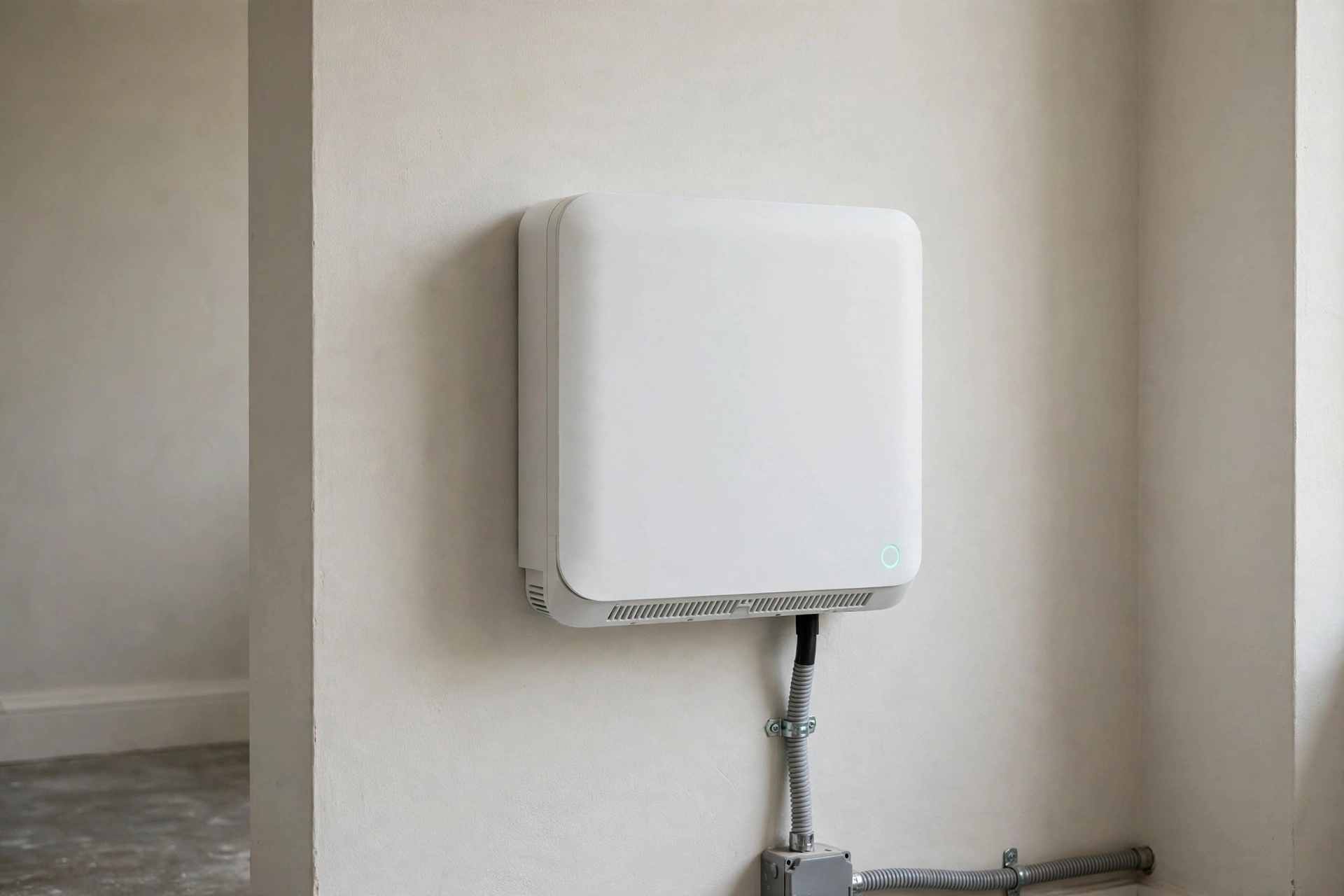
Tesla Powerwall Lease vs Buy: 2026 Math for Homeowners
Key takeaways
- Powerwall leases and subscriptions trade upfront cost for a monthly payment — the provider owns the equipment and usually claims the tax incentives.
- Buying outright typically costs $11,000–$16,000+ per unit installed, with ownership, incentive eligibility, and full control as the payoff.
- The fine print decides: escalators, buyout terms, transfer-on-sale clauses, and end-of-term removal costs matter more than the advertised monthly rate.
- Leasing suits shorter time horizons, cash-flow-first households, and hands-off owners; buying suits long-term owners who can use tax credits.
- Always compare total contract cost against a purchase quote, and verify installer licensing, permits, and utility interconnection approval.
For years, buying a Tesla Powerwall meant one thing: writing a large check. In 2026, that's no longer the only path. Third-party providers and energy retailers increasingly offer Powerwall systems as a lease or monthly subscription — the battery on your wall, backup in an outage, and a monthly payment instead of a five-figure outlay.
Which is the better deal? As with most lease-versus-buy questions, the honest answer is "it depends on your timeline, your taxes, and how long you'll stay in the house." This guide walks through how Powerwall leasing actually works in 2026, the real math of buying outright, and the questions that reveal which structure fits your household.
One important caveat up front: lease and subscription terms vary widely by provider and market, and offers change frequently. This guide compares the structures — not specific promotions — so you can evaluate whatever quote lands in your inbox. Verify current spec sheets and program terms directly before deciding.
What "leasing" a Powerwall means in 2026
Powerwall leases come in a few flavors, and they're worth distinguishing:
- Third-party equipment leases. An energy company installs a Powerwall (sometimes bundled with solar) that it owns; you pay a fixed monthly amount for a contract term, typically 10 years. The provider handles monitoring and often maintenance, and may enroll the battery in a virtual power plant program.
- Subscription models. Similar to a lease but marketed as a service — backup power as a monthly utility-like bill, sometimes with no money down and shorter commitment windows. The provider retains ownership throughout.
- Retailer-bundled offers. In some markets, electricity retailers bundle a Powerwall lease with a specific rate plan, sharing grid-services value (like VPP participation) through the plan pricing.
In every variant, the core trade is the same: you avoid the upfront capital cost, and in exchange you pay over time, don't own the asset, and typically don't claim any tax incentives attached to ownership — those generally flow to the system owner. Contract terms, buyout options, and transfer rules differ by provider, so the paperwork deserves the same scrutiny you'd give a car lease or a mortgage rider.
Buying outright: the 2026 math
Purchasing remains the straightforward path. A single Powerwall 3 installed typically falls in the $11,000–$16,000 range in 2026 US markets, with whole-home configurations stacking multiple units plus gateway, panel work, and permits — many installers report $18,000–$45,000+ all-in for large homes. Costs are 2026 US market ranges; get itemized local quotes.
The financial case for buying rests on three pillars. First, you own an asset with a 10-year-plus useful life and no monthly payment after payback. Second, ownership generally lets you claim applicable residential clean-energy tax incentives — the federal credit has been 30% through 2032 under current law, but tax law changes, so confirm current eligibility with a tax professional rather than treating any article as tax advice. Third, an owned battery typically adds more cleanly to home value and transfers simply at sale.
The case against buying is equally simple: it's a large check, the payback period is measured in years, and you're responsible for the equipment — including any out-of-warranty service down the road.
Lease vs buy: the structural comparison
| Factor | Leasing / subscription | Buying outright |
|---|---|---|
| Upfront cost | Little to none; monthly payments | $11,000–$16,000+ per unit installed |
| Tax incentives | Generally claimed by the system owner, not you | You may claim applicable credits; confirm with a tax professional |
| Monthly obligation | Fixed payment for the contract term | None after purchase (or loan payments if financed) |
| Maintenance responsibility | Usually the provider's | Yours after warranty coverage |
| Contract flexibility | Bound by term; early-exit fees common | Full control; sell or move the system with the house |
| End of term | Renew, return, or buy out per contract | You own it free and clear |
| VPP earnings | Often kept or shared by the provider | Yours, if you enroll |
The fine print that decides the deal
Lease offers live or die in the details most shoppers skim:
- Escalators. Some leases raise the monthly payment annually — a 2–3% yearly escalator compounds meaningfully over a decade. Model the total contract cost, not the month-one payment.
- Buyout terms. What can you purchase the system for at year 5 or year 10, if anything? Vague buyout language favors the provider.
- Transfer on home sale. This is the clause that surprises sellers. Some leases transfer cleanly to qualified buyers; others require a buyout or scare buyers off. In a luxury market where transactions are complex enough already, a non-transferable lease is a genuine liability.
- Performance guarantees. Does the contract guarantee a minimum backup capacity or uptime? Or are you paying monthly regardless of how the system performs?
- Who handles interconnection and permits. Reputable providers manage utility interconnection approval and permitting as part of the install — confirm it's in the contract, not your to-do list.
- End-of-term equipment. If you don't renew or buy out, who removes the battery, and who pays for wall restoration? Get it in writing.
A lease is a financing decision wearing a product's clothes. Evaluate it the way you'd evaluate any decade-long financial commitment: total cost, exit ramps, and what happens when life changes — not the attractiveness of month one.
Who leasing suits
- Cash-flow-first households. If you'd rather keep capital invested or deployed elsewhere, a monthly payment beats a $25,000+ outlay — provided the total contract cost is sane.
- Shorter time horizons. Planning to move in 5–7 years? A transferable lease can deliver backup during your tenure without a payback period you'll never reach. (Confirm transferability first.)
- Hands-off owners. Provider-handled monitoring, maintenance, and VPP enrollment appeal if you'd rather not manage energy hardware.
- Uncertain tax appetite. If you can't usefully claim clean-energy tax credits, letting the owner claim them while you pay a lower monthly rate can be efficient — the value still flows to you indirectly through pricing.
Who buying suits
- Long-term homeowners. Staying put for 10+ years? Ownership's math almost always wins over a full lease term, especially with incentives you can claim.
- Tax-credit-eligible buyers. If you can use the residential clean-energy credit, buying captures value a lease gives away.
- Control-minded owners. You choose the installer, the configuration, the VPP enrollment, and the reserve settings — no provider's dispatch rules overriding your preferences.
- Future sellers. An owned, paid-off battery is a clean asset at sale. A lease is a contract the buyer's lender and lawyer will scrutinize.
Questions to ask before you sign anything
- What is the total cost over the full contract term, including escalators — and how does that compare to an outright purchase quote for the same equipment?
- Who claims the tax incentives, and is that reflected in my monthly price?
- What are the exact transfer, buyout, and early-termination terms if I sell the house?
- Is the installer licensed, and does the provider handle permits, inspections, and utility interconnection approval?
- What backup capacity is guaranteed during an outage, and what are my reserve-setting controls?
- At end of term, what are my options — and what does removal cost if I walk away?
Whichever path you choose, the installation itself is licensed electrical work. Verify your installer's license, insist on permits and inspections, and confirm utility interconnection approval is handled. No battery project — leased or owned — is a DIY job.
Frequently asked questions
Why won't anyone quote me a typical Powerwall lease payment?
No — and that's deliberate. Lease and subscription terms vary widely by provider and market, and promotions change frequently. Any article quoting a specific monthly payment as typical would be misleading within months. Get competing quotes and compare total contract cost, not advertised monthly rates.
Do I lose the federal tax credit if I lease?
Generally, tax incentives flow to the system owner — which in a lease is the provider, not you. Providers typically price this into the monthly payment, so you benefit indirectly. If claiming credits yourself matters to you, buying is usually the better structure. Confirm current tax treatment with a tax professional.
What happens to a Powerwall lease when I sell my house?
It depends entirely on the contract. Some leases transfer to a qualified buyer cleanly; others require a buyout or can complicate the sale. This is one of the most important clauses to read before signing — ask the provider for the exact transfer language and discuss it with your real estate agent if a move is plausible.
Is leasing ever actually cheaper than buying?
A lease can be reasonable for shorter time horizons, cash-flow preferences, or hands-off ownership — but compare the total contract cost against an outright purchase. Add up every monthly payment including escalators, then stack that against a purchase quote minus any incentives you could claim. The cheaper total wins, adjusted for how much you value flexibility.
How do I vet a Powerwall lease provider?
Check three things: the installer's electrical license and insurance, that permits and inspections are included in the contract, and that utility interconnection approval is the provider's responsibility. Then read the transfer, buyout, escalator, and end-of-term clauses before anything else. If a provider rushes you past the paperwork, walk away.
Keep reading
Cost Guide
Whole Home Battery Backup Cost: 2026 US Price Guide
Whole home battery backup cost in 2026: realistic US price ranges for equipment, installation, panel upgrades …
Head-to-Head
Powerwall 3 vs Enphase IQ Battery 5P: Luxury Homes
Powerwall 3 vs Enphase IQ Battery 5P for large homes: power output, expandability, apps, aesthetics and warran…
System Sizing
How to Size a Home Battery Backup System: Partial vs Whole Home, Worked Math (2026)
Size a home battery step by step: critical loads, kWh math, surge checks, multi-day outages, and the partial v…
Explainer
Virtual Power Plant Home Battery: Earn Money in 2026
Can a virtual power plant home battery earn you money? We explain VPP programs, typical payments, battery leas…
Interactive Tool
Home Battery Size Calculator: What Size Do You Need?
How many kWh of battery storage do you need? Our free home battery size calculator estimates your backup need,…
Interactive Tool
Power Outage Cost Calculator: What Blackouts Cost You
What do blackouts really cost you? Our power outage cost calculator totals food loss, hotels, lost work, and f…