Renting a Whole-House Generator: Temporary Backup
Whole-house generator rental guide: when renting beats buying, sizing towable units, safe connection rules, 2026 costs, and rental logistics.
10 MIN READ · UPDATED 2026-09-23
Key takeaways
- Rent for emergencies, events, and construction — buy when outages are recurring, since 3-6 weeks of rental approaches purchase cost.
- Size from actual simultaneous loads plus 20-25% headroom; most home rentals land on 25-60 kW towable diesel units.
- Never backfeed through a dryer outlet — connect via a transfer switch or interlock kit installed by a licensed electrician.
- Budget $400-$900/day or $3,000-$6,000/month for 25-60 kW units, plus delivery, setup, fuel, and distribution gear.
- A rental is a paid sizing experiment — log real loads to buy a smaller, cheaper permanent unit later.
Not every backup-power need justifies a $15,000 permanent installation. The storm is coming Thursday and the electrician cannot install for six weeks. The wedding tent needs real power for catering and lighting. The home renovation has the panel de-energized for a month. In all three cases, renting a whole-house-scale generator buys exactly what you need — serious temporary power — for a fraction of the purchase price. But rental generators are a different animal from standby units: different sizing logic, different connection requirements, different logistics. Here is how to rent the right machine, connect it safely, and avoid the mistakes that turn a rental into a very expensive lesson.
When Renting Beats Buying (and When It Does Not)
Renting wins on three scenarios. First, the emergency bridge: an outage is forecast or underway and you need power now — rental fills the gap while you plan a permanent installation, or covers a single storm season. Second, the planned event: outdoor weddings, large parties, and film shoots need temporary power for catering equipment, lighting, sound, and climate control that the home's circuits were never designed to deliver. Third, construction: panel upgrades, service replacements, and major renovations can leave a home de-energized for days or weeks, and a rental keeps the household functional.
Renting loses when the need is recurring. The math turns at roughly 3–6 weeks of continuous rental for mid-size units — beyond that, the cumulative rental cost approaches the installed cost of a permanent standby generator, without leaving you any asset. If your area loses power multiple times a year, every year, stop renting and buy the standby unit. Rental is also wrong for medical-equipment backup as a long-term strategy: the logistics of securing a rental during a regional outage — when everyone else wants one too — are exactly backwards from what critical needs require.
There is also a middle path people miss: rent now, buy later, and let the rental inform the purchase. A month on a rental teaches you your real load profile — what you actually run simultaneously — better than any load calculation worksheet. That data makes the permanent sizing decision dramatically better informed.
Sizing a Rental: Different Logic From Standby
Rental sizing starts from the loads you will actually run, not the whole house. List everything the rental must power simultaneously: refrigerator and freezer, well pump or sump pump, furnace or boiler controls (not electric heat — that is a different conversation), lighting circuits, internet and communications, medical devices, and for events, catering equipment and lighting loads. Add the starting watts — motors like well pumps and compressors draw 2–3x their running watts at startup — and size the rental to cover the largest likely simultaneous combination plus 20–25% headroom.
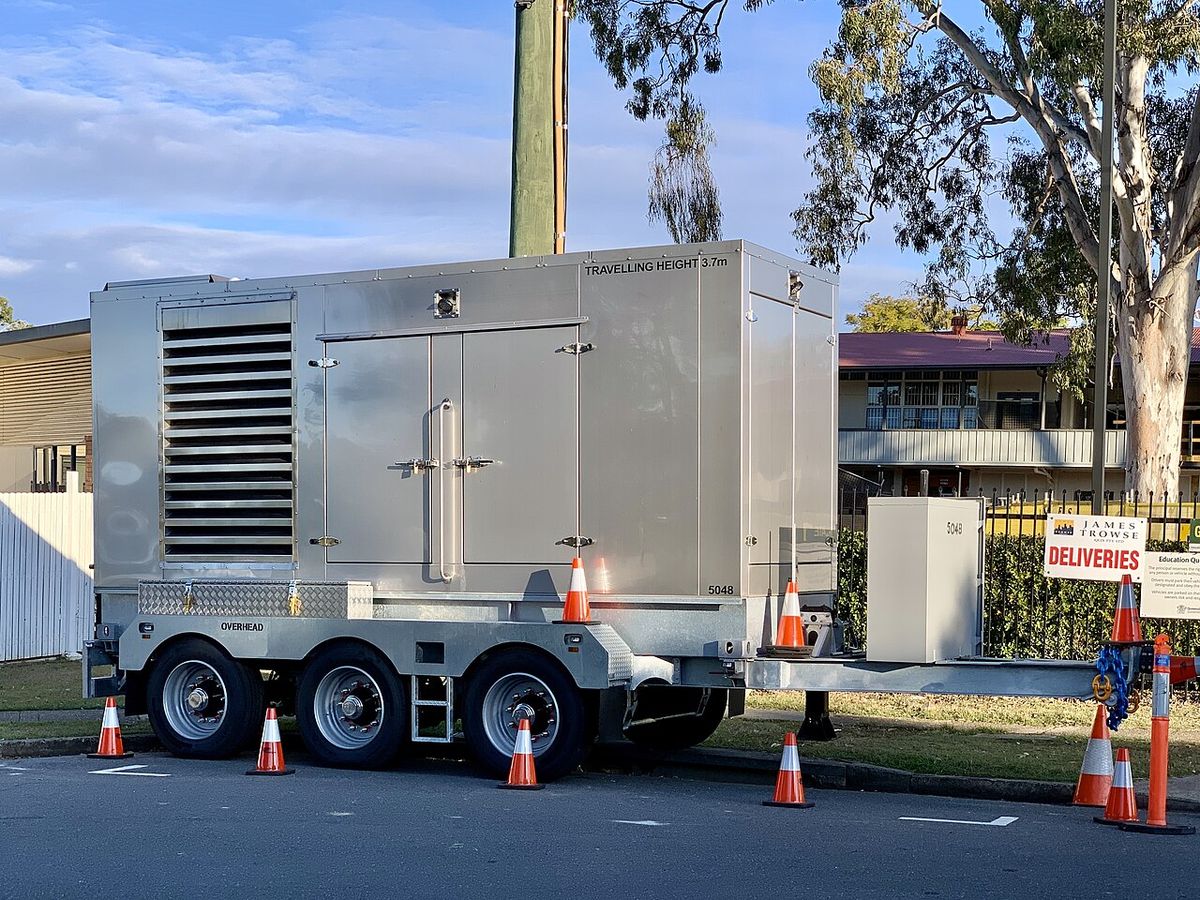
In practice, most whole-house rental scenarios land on towable diesel units in the 25–100 kW range — far larger than the 14–26 kW air-cooled standby units homes typically buy, because rentals are sized for commercial-duty headroom and the rental fleet stocks standard industrial sizes. A 25–45 kW towable handles a typical home's critical loads with room to spare; 60–100+ kW covers large homes, events with catering, or construction sites running tools alongside the house. The rental company will help size, but walk in with your load list — their incentive is to upsize you.
Fuel logistics scale with size. A 45 kW diesel rental at half load burns roughly 2–3 gallons per hour — 50–70 gallons a day. For multi-day outages, that means a fuel delivery plan, not a jerry can. Confirm with the rental company whether fuel is included (rarely), what the tank capacity gives you in runtime hours, and who refuels — some contracts include fueling service, others leave you calling the diesel supplier at midnight.
Connection: The Part You Must Not Improvise
This section contains the most important sentence in the rental guide: a rental generator must connect through a proper transfer switch or a listed generator interlock kit installed by a licensed electrician — never through a double-male "suicide cord" into a dryer outlet, never by backfeeding the panel. Backfeeding energizes the utility lines outside your home and can kill line workers restoring power. It is also illegal in virtually every jurisdiction and can void your homeowners insurance for any resulting damage.
For emergency home backup, the practical connection path is a manual transfer switch or interlock kit on the main panel, installed ahead of time by an electrician ($800–$2,000 installed). This is a permanent improvement that also serves a future standby generator — money spent once, useful forever. The rental then connects via a properly sized inlet box and cable, a 30-minute setup once the infrastructure exists. Without that infrastructure, the electrician's emergency visit during an outage — if you can get one — costs far more and takes far longer.
For events and construction, the rental company typically provides distribution: spider boxes, cable ramps, and GFCI-protected distribution panels that run power to where it is needed without touching the home's panel at all. This is the cleanest setup — the rental is a self-contained power station. Confirm cable lengths and routing in advance; a 100-foot cable run across a wedding lawn needs ramping and planning, not improvisation on the day.
2026 Rental Costs: What to Budget
Towable diesel generators in the 25–60 kW range typically rent for $400–$900 per day, $1,200–$2,500 per week, or $3,000–$6,000 per month in 2026 US markets. Larger 100+ kW units run $800–$1,500/day. Delivery and pickup add $200–$600 each way depending on distance; setup by the rental company's technician runs $300–$800. Fuel is almost always extra — budget diesel at market rates plus delivery fees.
The hidden costs live in the accessories and the electrical work. Distribution equipment (spider boxes, cables, ramps) rents for $150–$500 per event. The electrician's transfer-switch or interlock installation ($800–$2,000) is a one-time cost that pays across every future rental and the eventual standby purchase. During widespread outages, expect surge pricing and minimum rental periods — the week everyone needs a generator is the week they cost the most and are hardest to find.
Get the quote itemized: daily/weekly rate, delivery and pickup, setup and teardown labor, fuel policy (full-to-full? included hours?), damage waiver terms, and the overage rate if the rental extends. Ask about the unit's maintenance state — a rental that has not been load-bank tested recently is a gamble. Reputable companies test and document; the discount operator with the rusty unit is not a bargain at any price. Costs are 2026 US market ranges; get itemized local quotes.
Logistics: Delivery, Placement, Noise, and Neighbors
A towable rental is a trailer — it needs truck access, level ground, and clearances. Plan placement with the same seriousness as a permanent installation: exhaust directed away from the home, minimum clearances to structures per the rental company's spec sheet, and cable routing that does not cross walkways without ramps. Diesel rentals are loud — 70–85 dBA at 23 feet is typical for industrial towables — which matters enormously in a residential neighborhood during a multi-day outage.
Noise mitigation is part logistics, part diplomacy. Position the unit as far from bedrooms — yours and the neighbors' — as cable lengths allow. Some rental companies offer sound-attenuated units at a premium; ask. Run the unit only as needed rather than 24/7 if the load allows cycling (refrigeration and well pumps tolerate scheduled runs). And talk to the neighbors before the outage, not during: "we have a rental generator for the storm, here is our number if it is a problem" defuses most complaints before they form.
Permits for temporary generators vary wildly by jurisdiction. Many areas allow emergency temporary power without a permit; some require a temporary-use permit, especially for events or rentals exceeding a set duration. HOAs may have their own rules about equipment visibility and noise. Check before the truck arrives — a code officer shutting down your power source mid-outage is a special kind of misery.
From Rental to Permanent: Using the Trial Wisely
If the rental is a bridge to a purchase, treat it as a paid experiment and collect the data. Note which loads you actually ran simultaneously, the peak draw you observed, how the fuel consumption matched your estimates, and — honestly — how much of the house you really needed powered. Most households discover their critical load is 30–50% of what they assumed, which means the permanent standby unit can be smaller (and cheaper) than the initial estimate.
Keep the infrastructure. The transfer switch or interlock kit, the inlet box, and the electrician's panel work all transfer directly to permanent-generator duty. When you do buy the standby unit, the installation quote should be lower because the connection infrastructure already exists — get the installer to credit it explicitly rather than quoting the standard package.
And keep the rental company's number. Even with a permanent standby generator, there are scenarios — extended maintenance, a unit failure during storm season, a construction project — where a rental is the right backup to the backup. The household that has rented before, knows the sizing, and has the connection infrastructure in place can have temporary power running in hours instead of days. Resilience is a system, and the rental is a legitimate component of it.
Reading the Rental Contract: Fine Print That Matters
Rental contracts are written for the rental company's protection, and the clauses that bite are rarely the daily rate. The damage waiver — typically 10–15% of the rental fee — limits your liability for accidental damage to the unit, but read what it excludes: tires, theft, and damage from improper fuel are commonly carved out, and some waivers are void if the unit is operated outside the contract terms. If the waiver's exclusions swallow the coverage, your homeowners policy may or may not respond — a call to your agent before signing is cheaper than a $30,000 surprise.
Fuel policy is the second trap. "Full-to-full" sounds simple until you learn the unit burns 60 gallons a day and the return depot is 40 minutes away — clarify whether the company offers on-site refueling service and at what markup. Overage and holdover rates matter too: if the outage extends and you keep the unit three extra days, are you billed at the daily rate, a penalty rate, or a renegotiated weekly rate? Get the extension pricing in writing upfront, when you have leverage, not on day four of a blackout.
Finally, pin down the operational terms: who performs daily checks (oil, coolant) on multi-week rentals — you or their tech, and what happens if you miss one; the guaranteed delivery window versus "best effort" during storm demand; cancellation terms if the outage ends early; and the required notice period for pickup so you are not paying daily rate for a unit sitting idle waiting for their truck. A 20-minute contract review before signing beats a dispute after the power is back.
Frequently asked questions
Towable diesel units in the 25-60 kW range run $400-$900 per day, $1,200-$2,500 per week, or $3,000-$6,000 per month. Add $200-$600 each way for delivery, $300-$800 for setup, and fuel on top. Distribution gear for events adds $150-$500. During widespread outages, expect surge pricing and minimum rental periods.
List everything you will run simultaneously — fridge, freezer, well/sump pump, furnace controls, lighting, communications — add motor starting watts (2-3x running watts for pumps and compressors), and add 20-25% headroom. Most whole-house scenarios land on 25-45 kW towables. Bring your load list to the rental company, whose incentive is to upsize you.
Through a manual transfer switch or listed interlock kit on the main panel, installed by a licensed electrician ($800-$2,000), with the rental feeding a properly sized inlet box. Never use a double-male cord into a dryer outlet — backfeeding energizes utility lines, endangers line workers, is illegal almost everywhere, and can void insurance coverage.
For one-time or short needs, renting wins easily. The math turns at roughly 3-6 weeks of continuous rental for mid-size units — beyond that, cumulative rental cost approaches a permanent standby installation without leaving you an asset. If your area loses power multiple times yearly, buy the standby unit instead of renting repeatedly.
Industrial towable diesel units typically produce 70-85 dBA at 23 feet — loud enough to matter in a neighborhood during a multi-day outage. Place the unit as far from bedrooms as cables allow, ask about sound-attenuated units, cycle the run time if loads allow, and warn neighbors in advance with a contact number.
It varies widely. Many jurisdictions allow emergency temporary power without a permit; others require a temporary-use permit, especially for events or longer rentals. HOAs may impose their own noise and visibility rules. Check local requirements before the delivery truck arrives — a mid-outage shutdown order is avoidable with one phone call.