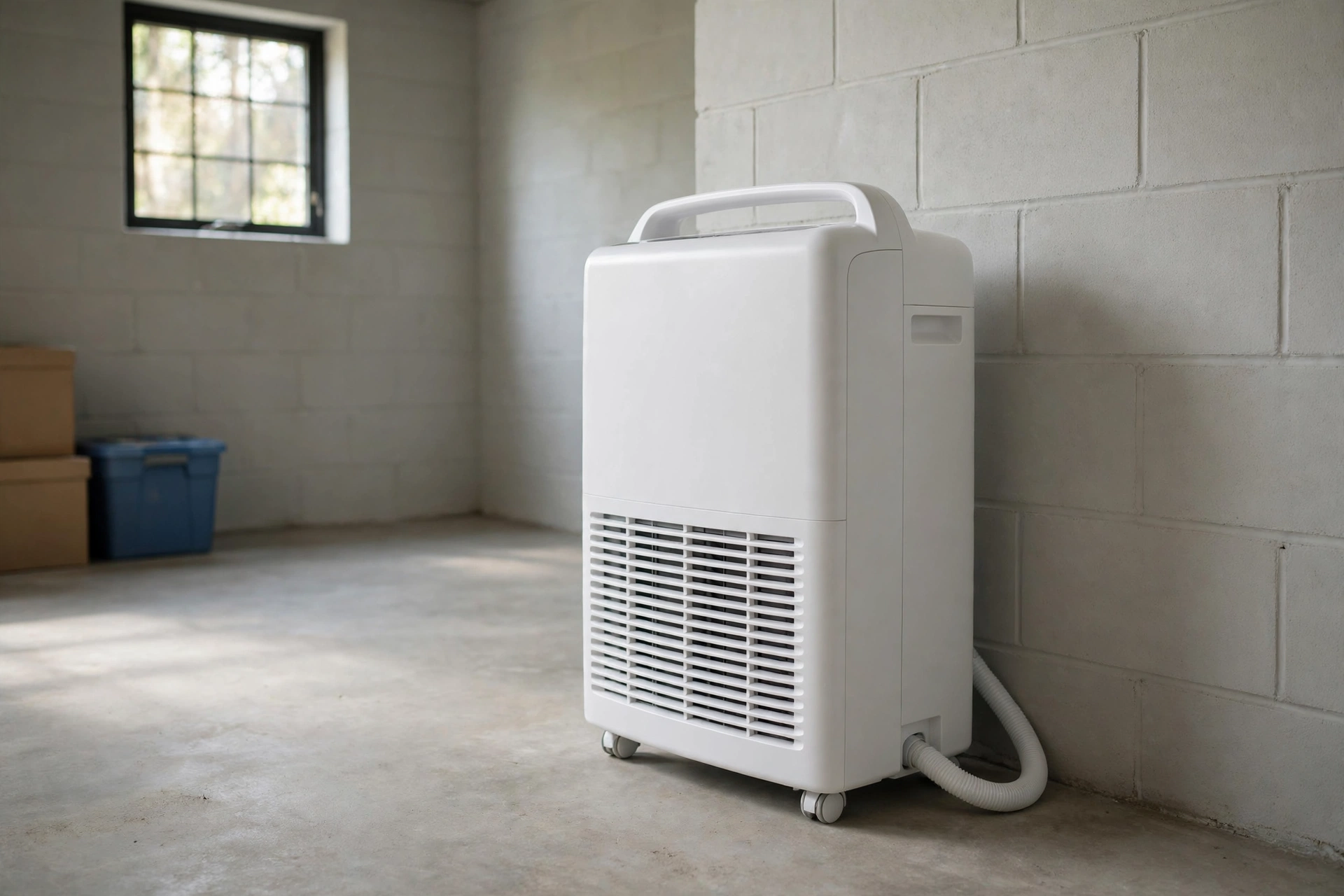
Why Does My Dehumidifier Freeze Up? Coil Frosting Causes & Fixes
Key takeaways
- Low ambient temperature is the #1 culprit: standard residential dehumidifiers freeze solid when room temperatures drop below 65°F (18°C) unless equipped with low-temp auto-defrost controls.
- Airflow restriction starves the evaporator: a clogged mesh filter or obstructed intake drops coil temperatures below 32°F, turning normal condensation into frost.
- Inspect the frost pattern: solid uniform frost across all coils indicates airflow or ambient temperature issues, whereas a thin localized strip of heavy ice signals sealed-system refrigerant loss.
- Automatic defrost operation: quality units cycle off the compressor while running the blower to melt frost before resuming moisture removal.
A dehumidifier freezes up when moisture condensing on the cold evaporator coils drops below 32°F (0°C) and turns to solid ice before it can drain into the water tank. In more than 80% of residential basements, coil frosting is caused by one of two preventable issues: ambient room temperature below 65°F (18°C) or a clogged air filter restricting airflow across the coils. If ambient air is warm (above 70°F) and the filter is spotless, coil freezing indicates a failed auto-defrost thermistor sensor or a sealed-system refrigerant leak. Diagnosing the exact frost pattern reveals immediately whether your unit requires a free 5-minute cleaning or complete replacement.
When ice forms across the aluminum coil fins, it creates an insulating thermal barrier that blocks air passage entirely. The compressor continues drawing 400 to 600 Watts of electricity while extracting zero pints of moisture from the air, running up your electric bill and risking compressor burnout. This diagnostic guide walks through the thermodynamic principles of dehumidifier operation, provides a 4-step troubleshooting flow, and explains how low-temperature auto-defrost cycles protect modern equipment.
The Thermodynamics: Why Coils Condense Water (and When They Freeze)
A residential dehumidifier operates on the exact same vapor-compression refrigeration cycle as a refrigerator or central air conditioner. Liquid refrigerant expands inside the aluminum tubing of the evaporator coil, causing its surface temperature to drop sharply—typically between 40°F and 48°F under normal 70°F room conditions.
The unit's blower fan draws humid room air across this cold coil. As the warm air chills, it crosses its dew point, forcing water vapor out of gaseous suspension into liquid droplets that drip down into the collection pan or continuous drain line (as detailed in our dehumidifier drain hose vs water tank guide). The dry air then passes over the warm condenser coil, where it is reheated slightly before blowing back into the basement.
Under balanced airflow and ambient temperatures above 65°F, the heat carried by incoming air prevents the coil surface from dropping to freezing. But if incoming air is cold, or if airflow is choked, the temperature of the refrigerant drops below 32°F. The liquid droplets freeze instantly into frost needles. As frost accumulates, it blocks airflow further, creating a runaway thermal feedback loop until the entire coil bank is entombed in solid ice.
Midea 50 Pint Cube Smart Dehumidifier with Built-in Pump

Engineered for cold basements down to 41 deg F with auto-defrost controls and 16ft pump lift
*Affiliate Disclosure: As an Amazon Associate, Elevate Home earns from qualifying purchases. Pricing and availability subject to change.
The 4 Primary Causes of Dehumidifier Coil Freezing
1. Low Ambient Basement Temperature
Standard residential dehumidifiers are engineered for living areas between 68°F and 85°F. When unheated basements drop below 65°F (18°C) during spring and autumn, incoming air lacks sufficient thermal energy to keep coil temperatures above 32°F.
2. Dirty Filter & Restricted Airflow
A dust-choked mesh filter or a unit pushed flush against a concrete foundation wall suffocates the intake fan. Without sufficient warm air sweeping across the evaporator, refrigerant temperatures plunge below freezing within 15 minutes.
3. Defective Auto-Defrost Thermistor
Modern units clip a temperature sensor (thermistor) directly to the evaporator tubing. When it detects frost (~30°F), it signals the control board to cut power to the compressor while keeping the fan running. If this sensor fails, the compressor runs relentlessly through ice.
4. Sealed-System Refrigerant Leak
A microscopic pinhole leak in the copper joints drops overall refrigerant pressure. Lower suction pressure causes the remaining R-410A or R-32 refrigerant to boil off prematurely at sub-freezing temperatures right at the coil inlet.
How to Read the Frost Pattern: Diagnostic Cheat Sheet
Before touching a screwdriver or calling a technician, unplug the unit, remove the front plastic grille, and inspect the physical appearance of the ice. The frost pattern tells you exactly what failed:
Step-by-Step Fix Protocol
- Unplug and Manually Thaw the Coils: Never use a knife, screwdriver, or metal scraper to chip ice off the coils. Aluminum fins bend under slight pressure, and piercing a copper tube destroys the unit instantly. Unplug the dehumidifier, place old towels beneath the cabinet, and let the ice melt naturally over 2 to 4 hours. A hair dryer on low heat can expedite melting if held at least 12 inches away.
- Wash the Mesh Filter with Warm Soapy Water: Remove lint, pet hair, and drywall dust. Rinse thoroughly, let dry completely, and reinstall. Vacuum the exterior intake louvers using a soft brush attachment.
- Verify 12 to 18 Inches of Wall Clearance: Ensure the dehumidifier is not shoved against concrete walls or trapped behind storage boxes. Adequate intake and exhaust circulation are mandatory for thermal equilibrium.
- Check Ambient Temperature with a Digital Thermometer: Basements frequently run 10°F colder near the concrete floor slab than at eye level. If floor-level temperature is below 62°F, raise the dehumidifier onto an elevated workbench or shelf. Warmer air near the ceiling helps prevent coil freezing.
For large finished basements or sub-grade crawlspaces that remain persistently below 60°F year-round, portable units will struggle continuously. In these environments, consider a commercial-grade central system as covered in our whole-house dehumidifier sizing guide and crawlspace encapsulation dehumidifier analysis.
Low-Temperature Operation: What to Look for in Modern Units
If your basement or workshop regularly experiences temperatures between 41°F and 60°F, standard summer-rated dehumidifiers will freeze repeatedly. You require a model equipped with dedicated Low-Temperature / Basement Auto-Defrost engineering.
Quality low-temperature dehumidifiers utilize two defrosting methods:
- Fan-Assisted Auto-Defrost (Off-Cycle): When the thermistor detects ice, the control board turns off the compressor but keeps the multi-speed blower fan spinning at high velocity. The ambient basement air melts the frost, draining the condensate into the tank within 5 to 10 minutes, after which the compressor automatically restarts.
- Hot-Gas Bypass Defrost (Commercial Units): High-end commercial units (such as Santa Fe or Quest) feature an electro-mechanical hot-gas bypass valve. When frost is detected, the valve routes superheated discharge refrigerant directly from the compressor into the frozen evaporator, melting ice in under 90 seconds without shutting down cooling operation.
The Repair vs. Replace Math
Portable residential dehumidifiers are mass-manufactured appliances. If your freezing problem is caused by a dirty filter or cold room temperature, the fix is 100% free. If a defrost thermistor is faulty, a replacement wiring harness costs $15 to $35 and can be installed by a handy homeowner.
However, if the freeze pattern indicates a refrigerant leak (uneven localized ice with compressor running hot), the unit must be replaced. Under EPA Section 608 regulations, reclaiming, brazing, evacuating, and recharging a sealed residential refrigeration system requires licensed HVAC labor costing $250 to $450—far exceeding the cost of a brand new Energy Star 50-pint dehumidifier with full manufacturer warranty.
hOmeLabs 50 Pint Dehumidifier with Pump and Wi-Fi

A strong alternative to our top pick — compare features and reviews before you buy.
*Affiliate Disclosure: As an Amazon Associate, Elevate Home earns from qualifying purchases. Pricing and availability subject to change.
Frequently asked questions
Can I scrape ice off my dehumidifier coils with a knife?
Never scrape coils with a metal tool. The aluminum tubing and fins are paper-thin; even a light scrape can puncture a pressurized refrigerant line, instantly releasing refrigerant gas and permanently ruining the unit. Let coils thaw naturally or use a hair dryer on gentle low heat.
At what temperature will a dehumidifier stop working in a basement?
Standard residential dehumidifiers begin frosting and lose moisture extraction efficiency below 65°F (18°C). Below 55°F, basic units without auto-defrost controls freeze into solid blocks of ice and stop dehumidifying entirely. For cold basements, select a unit certified for low-temperature operation down to 41°F.
Why is only half of my dehumidifier coil freezing?
When only the bottom two or three rows of coils freeze into a thick band while the upper coils remain completely warm and dry, your dehumidifier has suffered a sealed-system refrigerant leak. Low pressure causes refrigerant to boil off prematurely at sub-zero temperatures right at the evaporator inlet.
Does a frozen dehumidifier use more electricity?
Yes. When ice insulates the coils, the compressor continues drawing full electrical wattage (400 to 600W) but achieves zero dehumidification. The unit runs 24/7 without reaching the target humidity setpoint, drastically inflating your monthly electric bill while doing no work.
Keep reading
Drainage Setup
Dehumidifier Drain Hose vs. Water Tank: Continuous Drainage, Pumps, and Basements Without Drains
Drain hose or water tank? Compare continuous gravity drainage, built-in pumps, and manual buckets for basement…
Humidity
Whole-House Dehumidifier Sizing Guide: 2026
Whole-house dehumidifier sizing guide 2026: DOE vs marketed pints-per-day, sizing by square footage and dampne…

Humidity
Crawlspace Encapsulation Cost: 2026 Guide
Crawlspace encapsulation cost guide 2026: what's included, cost bands by size ($5,000–$15,000), dehumidifier p…
Energy Calculator
Appliance Electricity Cost Calculator & Formula: How to Calculate Your Electric Bill
Calculate how much any household appliance costs to run per hour, month, or year. Learn the exact kWh formula,…
Air Quality Engineering
What Size Air Purifier Do I Need? CADR vs Room Square Footage (2026)
Calculate the exact air purifier size you need using the ANSI/AHAM CADR 2/3 rule, Air Changes per Hour (ACH), …
Transfer Equipment
100A vs 200A Automatic Transfer Switch
100 amp vs 200 amp transfer switch: service-entrance vs subpanel topology, when each is required, costs, and l…