Wireless EV Charging at Home: 2026 Reality Check
Wireless EV charging at home in 2026: what's actually shipping, the 10-15% efficiency penalty, real costs, and whether you should wait.
10 MIN READ · UPDATED 2026-09-22
Key takeaways
- In 2026, wireless home EV charging is real but not a consumer product — limited aftermarket kits exist, while mainstream brands are still in the demo phase.
- Expect an 85-90% wall-to-battery efficiency versus 94-96% wired — a permanent physics tax on every kilowatt-hour, worth roughly $55-$100/year for typical drivers.
- Installed costs run $4,500-$8,000 all-in, five to ten times a wired install — the payback math doesn't work for typical homeowners yet.
- Real-world friction includes precise parking alignment, foreign-object shutdowns from debris on the pad, and snow or ground-clearance issues.
- The smart 2026 move: install a wired charger now and have the electrician run spare conduit plus breaker space so a future wireless pad is an afternoon upgrade.
Park over a pad, walk away, wake up charged — wireless EV charging promises to delete the most annoying part of owning an electric car: the nightly cable ritual in the rain. It's a seductive vision, and the demo videos look effortless. But in 2026, the gap between the demo and the driveway is still wide: real shipping products are scarce, the physics imposes a permanent efficiency tax, and the installed cost runs multiples of a wired charger. This is the honest reality check — what's actually available, what it costs, what you lose, and whether anyone should buy it yet.
How It Actually Works
Wireless EV charging uses resonant inductive power transfer — the same principle as your phone's charging pad, scaled up enormously. A ground pad in your garage floor or driveway contains a coil energized by a wall-mounted power unit; a matching receiver pad mounted under the car picks up the oscillating magnetic field and converts it back to DC for the battery. Park within the alignment tolerance, the system handshakes over a short-range radio link, and charging starts with no plug, no cable, no contact.
The engineering challenge is the air gap. Your phone sits millimeters from its charger; a car sits 4–8 inches above the ground pad, and that distance bleeds energy. Closing the gap requires larger coils, higher frequencies, precise alignment assistance, and sophisticated foreign-object detection (a forgotten wrench or a pile of leaves on the pad can't be allowed to heat up). Every one of those requirements adds cost, complexity, and efficiency loss compared to copper wire — which is, after all, a nearly perfect conductor. Wireless charging isn't fighting bad engineering; it's fighting physics, and physics doesn't negotiate.
What's Actually Shipping in 2026
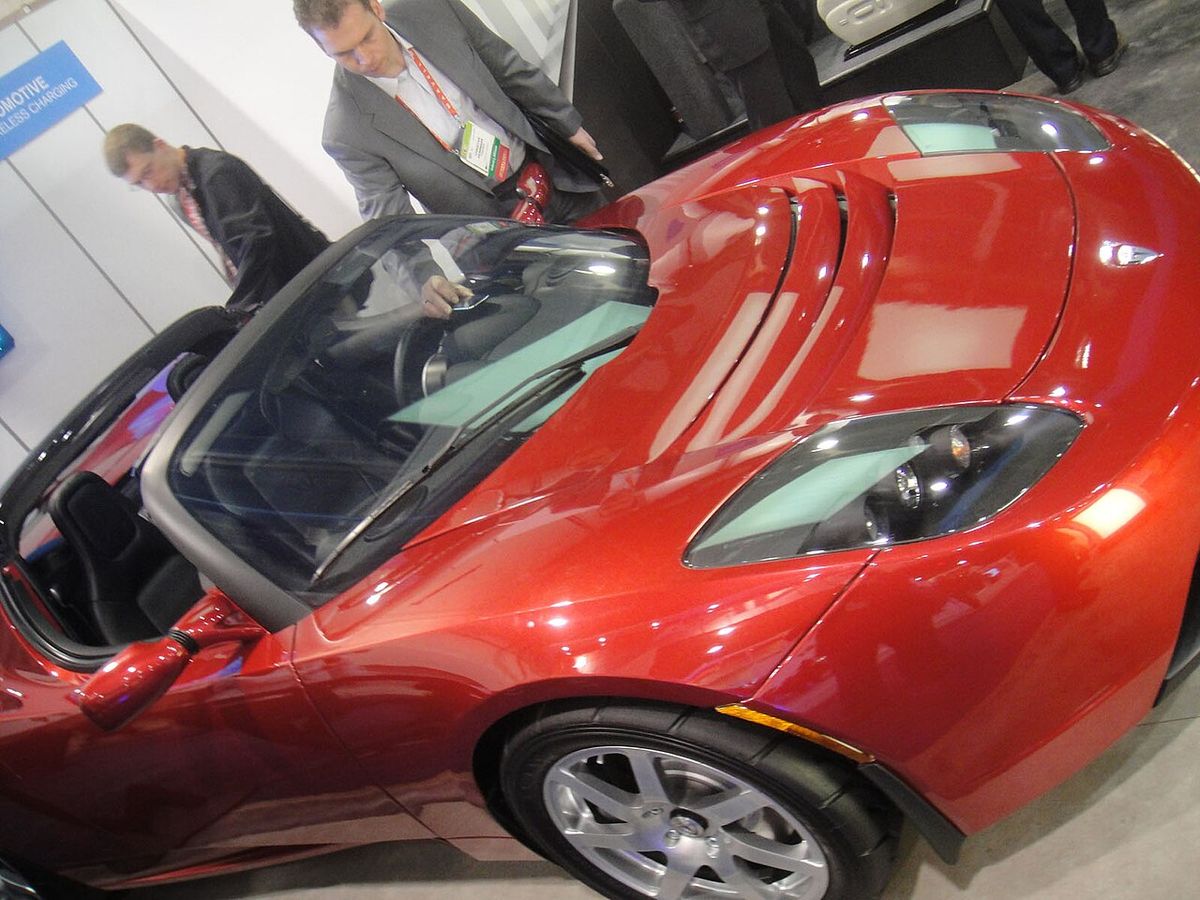
Here's the reality check in one sentence: you cannot walk into a store in 2026 and buy a mainstream wireless home EV charger the way you buy a wired one. What exists is a thin layer of early product above a deep base of pilots and announcements. Several automakers have demonstrated factory-integrated wireless charging on concept and low-volume vehicles, and a handful of fleet and taxi pilots run wireless pads in controlled depots where the economics of automated charging make sense.
The aftermarket tells the real story. A small number of specialist companies offer retrofit wireless charging kits — a vehicle receiver plus a ground pad and wall unit — typically in the 11 kW class, which matches a 48A wired charger on paper. But availability is limited, vehicle compatibility is narrow (the receiver must be fitted to your specific model, and not all models are supported), and you're buying from a small company whose long-term support is an open question. Mainstream charger brands — the names that dominate wired Level 2 — have shown prototypes and filed patents but have not shipped consumer wireless products at scale. When the big players are still in the demo phase, the category isn't ready.
The honest timeline: wireless home charging in 2026 is where wired home charging was a decade ago — real, demonstrably working, and not yet a consumer product. If you're building a garage today and want to be ready, the cheap move is running conduit and a spare circuit to the parking spot so a future pad has power waiting. The expensive move is buying into the first generation now.
The Efficiency Tax: Physics Takes Its Cut
This is the number that matters most, and it's the one marketing glosses over. A good wired Level 2 installation delivers 94–96% wall-to-battery efficiency — nearly every kilowatt-hour you pay for ends up in the car. Wireless systems, even well-engineered ones, typically land around 85–90% in real-world conditions, with the gap widening when alignment is imperfect, the air gap is large (SUVs and trucks sit higher), or temperatures are extreme.
Put that in money terms. A driver using 4,000 kWh a year for charging at $0.18/kWh spends $720 on electricity wired. At 88% wireless efficiency versus 95% wired, the same driving costs about $775 — roughly $55 a year in extra electricity. That sounds trivial, and for one car it is. But the tax is permanent — it applies to every kilowatt-hour for the life of the system — and it scales with electricity prices. In California or New England at $0.30+/kWh, the annual penalty approaches $100. It's not a dealbreaker on its own, but it's a cost that never goes away, unlike a purchase price you pay once.
There's also a thermal footnote: the lost energy becomes heat in and around the pad. In a garage that's harmless; embedded in a driveway in Phoenix in August, it adds thermal stress to components already living a hard life. Efficiency isn't just about the electric bill — it's about how hard the hardware works to deliver each mile.
What It Costs: The Early-Adopter Premium
Wireless home charging hardware in 2026 runs $3,000–$6,000+ for the pad, receiver, and wall unit before installation — roughly five to ten times the cost of a quality wired charger. Installation adds more: the ground pad needs a level, protected mounting location (garage floor embedment or a rugged surface mount), a dedicated circuit from the panel just like a wired charger, and in some cases concrete work. All-in installed costs of $4,500–$8,000 are realistic for the current generation. Costs are 2026 US market ranges; get itemized local quotes.
Compare that to $950–$1,450 all-in for a straightforward wired install, and the value proposition collapses for most buyers. You're paying $4,000+ extra to avoid plugging in a cable — a task that takes eight seconds. The payback math doesn't work on electricity savings (there are none — efficiency is worse), doesn't work on convenience pricing at any sane valuation of your time, and only starts to make sense in specific accessibility situations where handling a cable is genuinely difficult. For fleets with automated vehicles, the math is different; for your garage, it isn't.
Costs will fall as volumes rise — that's how every technology curve works — but volumes won't rise until automakers integrate receivers at the factory, which makes aftermarket pads unnecessary. We're waiting on the car companies, not the charger companies, and their timelines are measured in model cycles, not quarters.
Real-World Hassles the Demos Don't Show
Even if price were no object, daily wireless charging has friction the marketing skips. Alignment is the big one: the car must park within a few inches of the pad's sweet spot, every time. Systems include parking guidance — dashboard displays, app prompts, sometimes automated alignment — but anyone who's watched a household's parking precision knows "within a few inches, every time" is aspirational. Poor alignment doesn't just slow charging; it increases the efficiency loss and heat.
Foreign object detection is a genuine safety system, not a checkbox: metal objects on the pad can heat dramatically in the magnetic field. The system must detect a coin, a foil wrapper, or a cat's collar tag and refuse to charge until it's cleared. That's the correct behavior — and it means a leaf-covered pad in October or a garage floor that collects metal debris becomes a "charging unavailable" morning. Snow and ice over a driveway pad, ground clearance changes from a loaded trunk, and aftermarket skid plates interfering with the receiver are all real-world variables the lab demos don't face.
None of these are unsolvable — they're engineering problems with engineering answers. But they explain why the depot pilots (controlled vehicles, trained drivers, maintained pads) work fine while the consumer product stays elusive. Your garage is a much less controlled environment than a taxi depot.
The Standards Race: Why Your Pad Might Not Fit Your Next Car
There's a quieter risk beneath the price and efficiency numbers: interoperability. For wireless charging to work as a consumer product, any car's receiver must work with any pad — the way any NACS plug now fits any NACS port. That requires agreed standards for coil geometry, operating frequency, communication protocols, and safety behavior. The industry has been developing them for years, but in 2026 the consumer side of the standard is still settling, which means early hardware carries genuine stranded-asset risk.
Think about what happened with wired charging: early adopters bought CHAdeMO and CCS equipment that the market eventually standardized away from, and some of that hardware became obsolete within a few vehicle generations. Wireless is earlier in the same curve. An aftermarket receiver fitted to your 2026 EV is engineered for that vehicle and that pad as a matched pair; there's no guarantee it interoperates with a future pad from another vendor, or that a future vehicle you buy will talk to the pad you embedded in your garage floor. A $5,000 installation that only works with one car you might sell in four years is a very different proposition from a $500 wired charger that works with everything.
This is also why automaker integration matters more than aftermarket ingenuity. Factory-installed receivers — designed into the vehicle's thermal and structural systems, aligned to a standard pad geometry, covered by the vehicle warranty — solve the compatibility, safety-certification, and support problems in one stroke. Aftermarket kits, however clever, are bolting a high-power magnetic system onto a vehicle that wasn't designed for it, with warranty implications worth reading carefully. Until the standards lock and the factories build it in, wireless home charging remains a bet on a specific vendor's ecosystem, not an investment in infrastructure.
The 2026 Verdict: Who Should Actually Consider It
For the vast majority of homeowners in 2026, the answer is: buy a wired charger and run conduit for the future. A $400–$600 wired unit installed for under $1,500 total delivers 95% efficiency, universal compatibility, and a decade of proven reliability. Wireless can't match it on price, efficiency, or availability, and won't for several years.
The exceptions are narrow but real. If someone in the household has a mobility limitation that makes handling a heavy charging cable difficult or unsafe, wireless charging's value isn't convenience — it's independence, and the premium may be worth it. If you're building a showcase smart home where the invisible-tech aesthetic justifies the cost, that's a legitimate luxury purchase. And if you're a fleet operator with compatible vehicles running fixed routes from a depot, the automation economics can genuinely pencil out.
For everyone else, the right move is future-proofing, not early adoption. When you install your wired charger, have the electrician run an extra conduit and leave a spare breaker space for a future ground pad. The incremental cost is a couple hundred dollars. Then wait: when factory-integrated wireless charging ships on mainstream vehicles with standardized pads at consumer prices, your garage will be ready in an afternoon. The technology is real and it's coming — it's just not a 2026 purchase.
Frequently asked questions
Barely. A few specialist companies sell aftermarket retrofit kits (typically 11 kW class) with narrow vehicle compatibility, but no mainstream charger brand ships a consumer wireless product at scale. Most of what you see is automaker pilots, concepts, and fleet depot installations — not driveway-ready products.
Wired Level 2 charging delivers about 94-96% wall-to-battery efficiency; wireless systems typically achieve 85-90% in real conditions, worse with poor alignment or high-riding vehicles. The gap is physics — the 4-8 inch air gap bleeds energy — and it applies permanently to every kilowatt-hour you use.
Current-generation hardware runs $3,000-$6,000+ for the pad, vehicle receiver, and wall unit, with all-in installed costs of $4,500-$8,000 realistic once you add the dedicated circuit and pad mounting. That's roughly five to ten times a straightforward wired install. Costs are 2026 US market ranges; get itemized local quotes.
No — the car receives the same DC power its battery expects; only the delivery method changes. The receiver includes the same charge-control handshake as a wired connection. The relevant wear factors are heat and charge rate, which are comparable to wired Level 2 charging, not the wireless transfer itself.
Proper systems include foreign-object detection that senses metal on the pad and refuses to start (or stops) charging, since metal in the magnetic field can heat dangerously. That's correct safety behavior — but it means debris, leaves, or snow on the pad can cause 'charging unavailable' mornings.
No — install the wired charger now. Have your electrician run spare conduit and leave breaker space for a future ground pad (a couple hundred dollars extra). When factory-integrated wireless arrives on mainstream vehicles at consumer prices, your garage will be ready. Don't pay the early-adopter premium to skip an eight-second plug-in.