Adding a Second Tesla Powerwall Cost: What Changes and What It Adds (2026)
Key takeaways
- Adding a second Tesla Powerwall costs roughly $7,000 to $16,000 installed in 2026, with the expansion unit at the low end and a full second Powerwall 3 at the high end.
- Powerwall 3 owners should price the Expansion unit first: it adds the same 13.5 kWh as a full unit but skips the inverter and costs thousands less.
- A second unit doubles storage to 27 kWh and continuous output to 23 kW, which is what makes whole-home backup realistic for larger homes.
- The existing Gateway is usually reused; a second Gateway, panel work, or a new permit should be itemized and justified in the quote.
- The 30% federal battery tax credit ended after December 31, 2025, so budget at full cost and check state and utility rebates before signing.
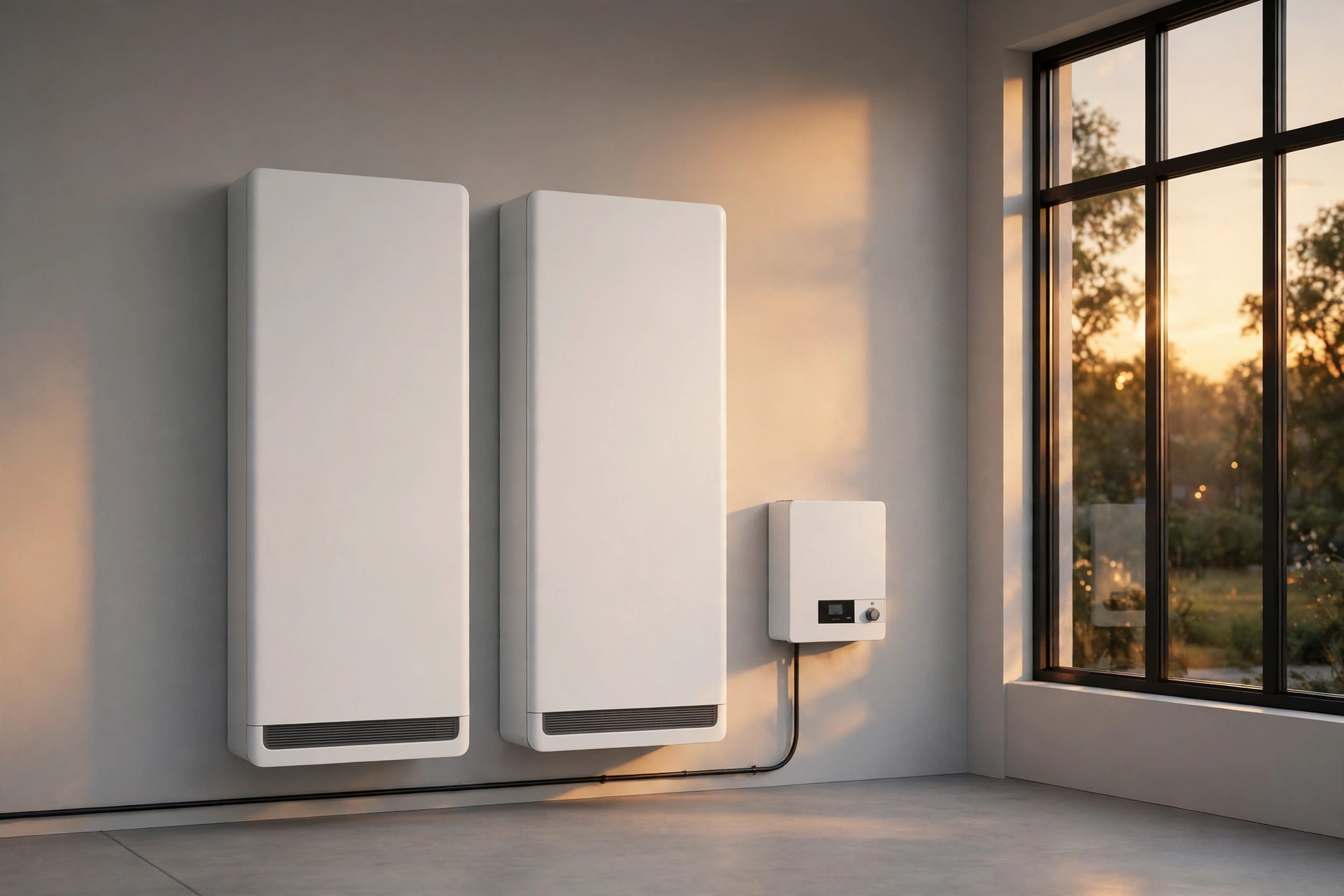
Adding a second Tesla Powerwall cost in 2026 typically lands between $7,000 and $16,000 installed, and the spread comes down to one decision: whether you add a cheaper expansion unit to an existing Powerwall 3 or install a second full Powerwall. A full second Powerwall 3 runs roughly $13,000 to $16,000 installed on its own, while an expansion unit paired with a Powerwall 3 you already own costs far less because it reuses the inverter, Gateway, and much of the electrical work.
If you already own a Powerwall and your lights still go out too soon during outages, or your solar array produces more than one battery can store, a second unit is the most straightforward fix. But it is not automatically the best spend. This guide breaks down the real installed cost, the expansion-versus-full-unit choice, what doubling your storage actually buys you in backup hours, and the cases where load management or a smaller addition makes more sense.
The Short Answer: What a Second Powerwall Costs in 2026
There is no single price for a second Powerwall because Tesla sells two different things that homeowners casually call a "second battery." The first is a full Powerwall 3, a complete battery with its own integrated solar inverter. The second is a Powerwall 3 Expansion unit, a battery-only add-on that works only alongside a Powerwall 3 and has no inverter of its own. Installer quotes collected across US markets in 2026 put a full Powerwall 3 at roughly $13,000 to $16,000 installed, while the expansion unit hardware alone is listed near $5,900, with total installed cost typically landing well below a full second unit because the site work is largely already done.
Homeowners adding a second unit to an existing system usually pay less than a first-time buyer. The Gateway, the main electrical work, the permits, and the installer relationship already exist, so the incremental job is mostly mounting, wiring, commissioning, and inspection. Reports from owners who added a battery during an already-scheduled service visit put the incremental labor as low as $700 to $1,000, though a standalone second-unit installation with its own site visit, permitting, and inspection will cost considerably more. Treat any quote at the very bottom of the range with suspicion unless it itemizes exactly what is included.
EF ECOFLOW 12kWh Power Station: DELTA Pro Ultra with Extra Battery, 120/240V 7200W AC Output, LiFePO4 Home Battery Backup Expandable to 90kWh

Expandable home battery that mirrors the article topic: adding storage capacity to an existing home backup system, with 12kWh in this bundle and expansion to 90kWh.
*Affiliate Disclosure: As an Amazon Associate, Elevate Home earns from qualifying purchases. Pricing and availability subject to change.
Full Second Powerwall vs Expansion Unit: The Decision That Changes the Price
This is the fork in the road, and getting it wrong is the most expensive mistake in this purchase. If your existing battery is a Powerwall 3, ask your installer specifically about the Powerwall 3 Expansion unit before accepting a quote for a full second Powerwall. The expansion unit adds the same 13.5 kWh of usable storage as a full Powerwall 3 but skips the inverter and much of the hardware, which is why it costs thousands less. It cannot work on its own and cannot be added to a Powerwall 2, so it is only an option for Powerwall 3 owners.
If your existing battery is a Powerwall 2, the picture is different. Powerwall 2 units have their own internal inverter and were designed as standalone AC-coupled batteries, so expanding that system generally means adding a full second unit rather than a battery-only expansion pack. Some installers will discuss adding a Powerwall 3 alongside an existing Powerwall 2, but mixed-generation systems involve compatibility checks on the Gateway, firmware, and metering that only a Tesla-certified installer can confirm for your specific setup. Do not assume a mix-and-match system will work until the installer confirms it in writing.
There is also a capacity ceiling to keep in mind. A single Powerwall 3 delivers 13.5 kWh of usable storage and 11.5 kW of continuous power output. A second unit doubles both figures to 27 kWh and 23 kW, which matters most for homes with large loads such as electric heat pumps, well pumps, or EV charging during an outage. If your only problem is that the battery runs out at 2 a.m., added capacity is the cure. If your problem is that the battery cannot start your air conditioner, added output power is the cure, and that points toward a full second unit rather than an expansion pack.
Cost Breakdown: Where the Money Goes
Understanding the line items helps you spot a padded quote. For a full second Powerwall 3, the battery hardware itself is the largest single cost, followed by labor for mounting, wiring, and commissioning. Electrical work is the wildcard: if your main panel has spare capacity and the new unit mounts beside the existing one, the electrical scope is small. If the panel needs rearranging, a subpanel, or a longer wire run to a garage or exterior wall, labor and materials climb quickly.
Permitting and inspection add a smaller but real cost that varies by jurisdiction, and some utilities require a new interconnection application or an updated one-line diagram when storage capacity changes. The existing Gateway is usually reused, which is one of the main reasons a second unit costs less than the first. If your installer says you need a second Gateway, ask them to explain why in writing, because for most residential expansions the existing Gateway handles multiple Powerwalls.
One cost homeowners forget is the solar side. A second battery stores more energy, but it does not generate any. If your solar array already fills one Powerwall by midday and exports the rest, the second unit captures that exported energy and is easy to justify. If your array barely fills the first battery on a good day, a second battery will sit partially empty and the money may be better spent on additional panels first. Check your Tesla app's solar production and self-consumption history for a few sunny weeks before deciding.
What a Second Powerwall Actually Adds: Runtime and Power
Doubling storage from 13.5 kWh to 27 kWh does not automatically double your outage survival time, because survival time depends on what you run. A home sipping 500 watts overnight for a fridge, router, lights, and a furnace blower will stretch 27 kWh across two full days. A home running electric cooking, laundry, and air conditioning at once can drain the same 27 kWh in a single afternoon. The honest way to size this is to look at your overnight baseline load in the Tesla app, then divide.
The output gain matters just as much. A single Powerwall 3 sustains 11.5 kW, which covers most homes but can struggle with simultaneous large motor starts, such as a well pump kicking on while the air conditioner is already running. Two units deliver 23 kW of continuous output, which is why whole-home backup, rather than backed-up-subpanel backup, becomes realistic for larger homes with a second battery. If your current system already backs up your whole home without tripping, you are buying runtime, not capability, and the expansion unit is usually the right tool.
For readers comparing the concept of expansion generally, our guides on expanding home battery storage and 10 kWh vs 13.5 kWh vs 20 kWh sizing walk through the same math for other battery brands, and AC-coupled retrofit costs cover what changes when you add storage to an existing solar system rather than expanding a Tesla system.
Do You Need Another Gateway, Panel Upgrade, or Permit?
In most cases, no new Gateway is needed. Tesla's Gateway manages multiple Powerwalls as a single system, and the expansion is registered and commissioned through the existing hardware and the Tesla app. What can trigger extra work is the main service panel: every additional battery adds a breaker and a backfeed, and the panel's busbar and the utility's rules set a limit on total backfed current. Installers handle this with load calculations under the National Electrical Code, and in tight panels the fix may be a subpanel or a supply-side connection rather than a full panel replacement.
Permitting is jurisdiction-dependent but rarely a reason to avoid the project. Many installers treat a same-brand expansion as a modification to an existing permitted system, which can be simpler than the original permit. Still, budget for an inspection visit and confirm whether your utility requires notification when you change your storage capacity, because some net-metering and interconnection agreements are written around the system's original size. A reputable installer handles this paperwork as part of the quote, so confirm it is included rather than billed separately.
Incentives in 2026: What Is Gone and What Remains
The biggest incentive change for 2026 is the end of the 30% federal tax credit for home batteries. The credit does not apply to expenditures made after December 31, 2025, so a second Powerwall installed in 2026 should be budgeted at full cost unless another incentive applies. That change alone makes the expansion unit's lower price more attractive, since the total outlay is smaller to begin with.
State, local, and utility incentives still exist in many markets and can change the math substantially. California's SGIP program, various utility battery rebates, and time-of-use arbitrage programs that pay you for discharging during peak hours all remain in play in some territories. Tesla has also run limited-time rebates on multi-unit systems. Check your utility's current battery program before signing, and read our battery tax credit guide for 2026 for the current landscape, since programs open and close during the year.
When a Second Powerwall Pays Off, and When It Does Not
A second Powerwall pays off fastest in three situations. First, frequent or long outages: if your area loses power for a day or more several times a year, the extra runtime is the difference between riding it out and running a gas generator. Second, solar self-consumption: if your array regularly exports power your single battery cannot hold, the second unit captures energy you already own. Third, high peak-rate arbitrage: if your utility charges far more during evening peak hours, discharging a bigger battery through the peak window saves more each day.
It pays off slowest when outages are rare and short, when your solar array is small relative to your usage, or when your real problem is a single large load rather than total energy. In that last case, a soft starter for the air conditioner, a load-shedding device, or a critical-loads subpanel may solve the problem for a fraction of the cost. And if your goal is backup for a few essential circuits rather than the whole home, compare the expansion route against a modular portable power station approach, covered in our adding battery storage to existing solar guide, before committing five figures.
Also weigh the alternative of waiting. Battery prices have trended down for a decade, and Tesla's expansion hardware is already cheaper per kilowatt-hour than a full unit. If your current system covers 90% of your outages and the shortfall is a few hours a year, the financially patient move is to wait for the next price drop or rebate window rather than buying capacity you rarely use.
The Verdict
Adding a second Tesla Powerwall in 2026 costs roughly $7,000 to $16,000 installed, and the single most important step is confirming whether you qualify for the cheaper Powerwall 3 Expansion unit. Powerwall 3 owners usually do, and that choice can cut thousands from the project while delivering the same 13.5 kWh of extra storage. Powerwall 2 owners face a full-unit purchase and should get the compatibility of any mixed system confirmed in writing.
Get two or three itemized quotes, confirm Gateway reuse, verify whether your utility needs notification, and check your solar export data before you sign. If your array already overflows one battery and your outages last longer than a single charge, the second unit is a sound buy. If not, fix the real bottleneck first. For a brand comparison before you commit to staying in the Tesla ecosystem, see our FranklinWH vs Tesla Powerwall 3 breakdown.
Frequently asked questions
How much does it cost to add a second Tesla Powerwall?
A full second Powerwall 3 typically costs roughly $13,000 to $16,000 installed in 2026. If you already own a Powerwall 3, the cheaper Powerwall 3 Expansion unit adds the same 13.5 kWh for far less, since it reuses the inverter, Gateway, and much of the electrical work.
Can I add a Powerwall 3 Expansion unit to any Powerwall?
Only if your existing battery is a Powerwall 3. The expansion unit is a battery-only add-on with no inverter of its own, so it cannot work standalone and cannot be added to a Powerwall 2. Powerwall 2 owners generally need a full second unit.
Do I need a second Tesla Gateway for a second Powerwall?
In most residential expansions, no. Tesla's Gateway is designed to manage multiple Powerwalls as one system, so it is usually reused. If an installer says you need a second Gateway, ask for the technical reason in writing.
How long will two Powerwalls power my house?
It depends on your loads. A single Powerwall 3 holds 13.5 kWh, so two hold 27 kWh. A home drawing 500 watts overnight could stretch that across two days, while a home running air conditioning, cooking, and laundry at once could drain it in an afternoon.
Is there still a tax credit for a second Powerwall in 2026?
Not usually. The 30% federal tax credit for home batteries does not apply to expenditures made after December 31, 2025. State, utility, and manufacturer rebate programs still exist in some markets, so check your utility's current battery incentives before signing.
Should I add a second Powerwall or more solar panels first?
Only if your solar array regularly produces more than one battery can store, or if you need the extra 11.5 kW of output for large loads. If your array barely fills the first battery, adding panels usually delivers more value than adding storage.
Keep reading
Expansion
Adding a Second Home Battery: 2026 Guide
Adding a second home battery in 2026: modular vs add-a-box expansion, inverter headroom, rewiring, permits, an…
Pillar 01 · Energy Resilience
10kWh vs 13.5kWh vs 20kWh Home Battery: Which Size Is Right? (2026)
10kWh vs 13.5kWh vs 20kWh home battery compared: usable capacity, backup runtime, solar pairing, and which tie…

Pillar 01 · Energy Resilience
AC Coupled Battery Retrofit Cost 2026: What Adding Storage Really Costs
AC coupled battery retrofit cost in 2026: installed price ranges, what drives them up, and how AC coupling com…
Battery Comparisons
FranklinWH aPower 2 vs Tesla Powerwall 3: 2026 Guide
FranklinWH aPower 2 vs Tesla Powerwall 3 compared: continuous power, capacity, expansion, aGate vs integrated …
Interactive Tool
Home Battery Size Calculator: What Size Do You Need?
How many kWh of battery storage do you need? Our free home battery size calculator estimates your backup need,…
Interactive Tool
Power Outage Cost Calculator: What Blackouts Cost You
What do blackouts really cost you? Our power outage cost calculator totals food loss, hotels, lost work, and f…