Aquarium Electrical Safety: GFCI Outlets, Drip Loops & Power Near Water
Key takeaways
- Every outlet serving aquarium equipment must be GFCI-protected — a GFCI cuts power within milliseconds on a 4-6 milliamp ground fault, the difference between a scare and a tragedy.
- A drip loop (each cord hanging below outlet level before rising to the plug) stops water from wicking down a cord into the outlet — it costs nothing and takes five minutes.
- A typical 55-gallon setup draws 300-500 watts; at 120 volts that's under 5 amps, so most tanks don't need a new circuit, but they do need to be off the circuit feeding your space heater or microwave.
- Salt water conducts electricity far better than fresh — reef and brackish tanks deserve extra caution with grounding probes and GFCI breakers, not just adapters.
- Test the GFCI monthly with its TEST/RESET buttons, inspect cords for salt creep and bite damage, and never plug a tank into a two-prong ungrounded outlet.
Every outlet serving your aquarium must be GFCI-protected, every cord must form a drip loop below outlet level, and the whole setup should be planned like the wet-location electrical installation it actually is. An aquarium is one of the few places in a home where water, salt, and 120-volt current share a few square feet of floor space every hour of every day — and unlike a bathroom outlet, tank equipment stays plugged in and unattended for years. This guide covers the National Electrical Code rules that apply, the cheap devices that close the gaps, and the maintenance habits that keep a beautiful tank from becoming a shock or fire hazard.
Start with the mental model electricians use: water finds electricity's path of least resistance, and your body is an excellent conductor. A cracked heater seal, a splash during a water change, or condensation inside a light fixture can put voltage into the tank water or onto a cord. Ground-fault protection exists precisely for these moments — it detects current leaking where it shouldn't (as little as 4 to 6 milliamps) and cuts power in a fraction of a second, far faster than a standard breaker, which may never trip on a ground fault at all.
GFCI Protection: The Non-Negotiable
A ground-fault circuit interrupter monitors the current going out on the hot wire and coming back on the neutral. When the difference exceeds roughly 5 milliamps — current leaking through water, a wet hand, or a damaged cord — it trips. The NEC has required GFCI protection for outlets near water for decades (NEC 2023, Article 210.8 covers wet locations like bathrooms, kitchens, garages, and outdoors), and while the code's letter targets specific room types, the physics doesn't care what room your tank is in. A fish tank is a permanent wet location. Treat it as one.
There are three practical ways to get GFCI protection to a tank, and the right choice depends on what your room already has:
- GFCI receptacle: the outlet with TEST/RESET buttons. Best option for a permanent setup — replace the outlet nearest the tank with a GFCI (about a fifteen-minute job for an electrician, or a careful DIYer with the breaker off and a non-contact voltage tester).
- GFCI breaker: protects the entire circuit from the panel. Ideal when several tank outlets share one circuit, and the cleanest option for a dedicated aquarium circuit.
- Portable GFCI adapter: a plug-in device that adds GFCI protection to any grounded outlet. The fastest route when you can't or won't change the wiring — renters, older homes, or a tank that's already running.
ELEGRP Single Outlet GFCI Adapter, 15 AMP Grounded 3-Prong, UL Listed (1 Pack)
Live-verified 2026-10-23: 4.6-star rating, Amazon Best Seller badge, In Stock, Prime-eligible. Portable GFCI adapter is the exact retrofit the article recommends for tanks in rooms without GFCI outlets.
*Affiliate Disclosure: As an Amazon Associate, Elevate Home earns from qualifying purchases. Pricing and availability subject to change.
GFCI Options Compared
All three provide the same life-safety protection. The differences are cost, permanence, and what happens when one trips:
A critical caveat: a GFCI adapter or receptacle plugged into an ungrounded outlet (the old two-prong type) still provides shock protection — the GFCI function doesn't need a ground wire to work — but the equipment ground it offers is fake, and surge protection becomes meaningless. For a tank, a real ground matters: heaters and pumps with three-prong plugs expect one. If your room has two-prong outlets, have an electrician run a proper grounded circuit rather than stacking adapters.
The Drip Loop: Five Minutes, Zero Dollars
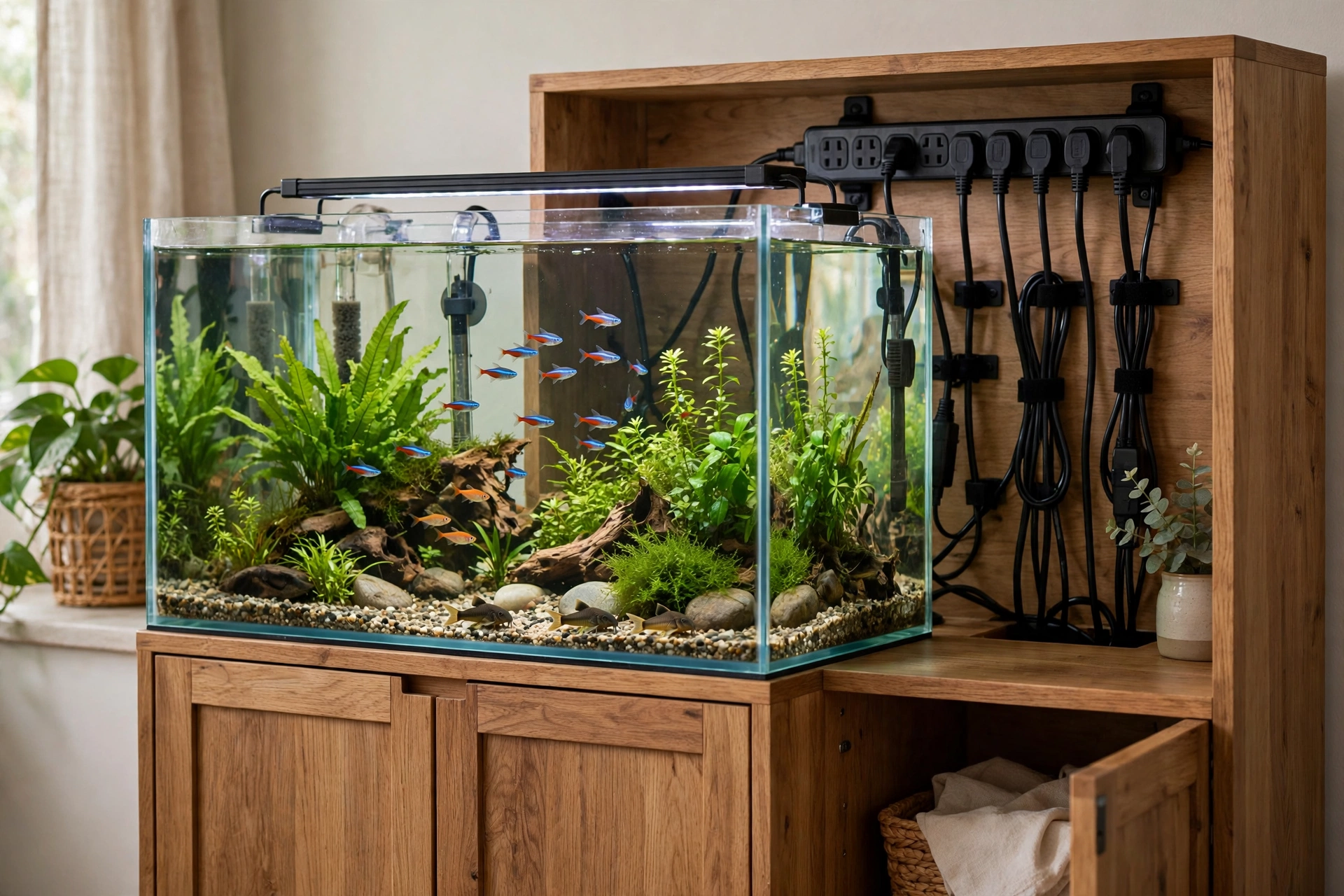
A drip loop is simply a U-shaped sag in each power cord, positioned so the lowest point of the cord hangs below the outlet it plugs into. Water running down a cord — condensation from a lid, splash from a filter, a spill during a water change — follows gravity. With a drip loop, it drips harmlessly off the bottom of the U onto the floor. Without one, it runs straight down the cord and into the outlet or power strip, where it can short, arc, or trip the breaker.
To set them up: mount your power strip above the level of the tank's rim if possible (the back of the stand's upper section is ideal), then route each cord down past the strip's level and back up to plug in. Give every cord its own loop — bundling several cords into one loop creates a water bridge between them. Use adhesive cable clips or zip-tie mounts to hold the shape, and keep the loops off the floor where mop water and spills collect.
How Much Power an Aquarium Actually Draws
Aquarium equipment is low-draw by household standards, but it runs 24/7, which is why the math still matters. Use the basic formula \(I = P / V\): current in amps equals watts divided by volts (120 V in US homes). Here's a realistic 55-gallon freshwater setup:
Two conclusions follow. First, you almost certainly don't need a new circuit for the tank itself — a 15-amp circuit delivers 1,800 watts, and your tank uses a fraction of that. Second, the tank should not share a circuit with heavy intermittent loads like a space heater, microwave, or hair dryer. A tripped breaker on a shared circuit kills your filter and heater silently — and a tank without filtration for eight hours while you're at work is a dead tank. If the room's outlets share a circuit with the kitchen or a home office full of equipment, a dedicated 15-amp run for the aquarium is cheap insurance and a straightforward electrician job.
Beyond the breaker, consider surge protection. Aquariums contain hundreds of dollars of electronics — LED controllers, DC pump drivers, smart dosers — and a nearby lightning strike or utility switching transient can fry them all at once. A quality surge-protective power strip is the minimum; a whole-home surge protector at the panel covers the tank along with everything else in the house.
Where to Put the Tank, the Strip, and the Cords
Electrical planning starts before the tank is filled — ideally before it's even placed. The outlet layout, cord routing, and drip-loop geometry all depend on where the stand sits relative to the wall, so finalize the location with the wiring in mind, not as an afterthought. If you haven't settled the spot yet, this companion guide to where to place a planted tank at home walks through sunlight, temperature, and floor strength in one pass — all three shape where your power strip and cords can sensibly go.
Once the spot is set, follow these layout rules:
- Power strip above tank-rim height. Mount it to the wall or the back of the stand's upper frame so water physically cannot run uphill into it.
- One drip loop per cord, loops off the floor. Clip them to the stand or wall so they keep their shape.
- No extension cords as permanent wiring. An extension cord is for temporary use; a tank runs for years. If the outlet is too far, have a new outlet installed — or reposition the tank.
- Keep the strip dry-side. Route cords so the strip sits on the dry side of the stand, away from the filter and the water-change bucket zone.
- Label every plug. When the GFCI trips at 2 a.m. or a breaker pops, you want to know which plug is the heater and which is the filter without tracing cords by flashlight.
And remember the structural half of placement: a filled tank is extraordinarily heavy, and the electrical plan is moot if the floor can't carry the load. Our guide to how much a large aquarium weighs and what your floor needs to hold covers the weight math and the joist rules that decide safe placement.
Salt Water Changes the Equation
Freshwater is a poor conductor; salt water is an excellent one. That single fact makes reef and brackish tanks meaningfully more dangerous electrically than freshwater setups at the same voltage. Salt creep — the crusty residue that migrates along cords, into plugs, and across power strips — creates conductive paths that freshwater tanks never develop. In salt setups:
- Inspect cords and plugs monthly for salt creep and corrosion; clean it off before it bridges terminals.
- Consider a titanium grounding probe in the sump or tank, bonded to the equipment ground. It gives stray voltage a path to ground that isn't you — and it makes the GFCI trip faster on a fault.
- Prefer a GFCI breaker over an adapter for reef systems, since the higher conductivity means faults develop faster and protection should be as close to the panel as practical.
Maintenance Habits That Keep the System Safe
Most aquarium electrical incidents aren't installation failures — they're maintenance failures, years later. Build these into your routine:
- Test the GFCI monthly. Press TEST (it should trip), then RESET. A GFCI that doesn't trip when tested is a GFCI that won't trip when it matters — replace it.
- Unplug before hands go in. Heaters and filters come out of the water or get unplugged before your hands go in for aquascaping or deep cleaning. Every time, no exceptions.
- Inspect cords at every water change. Look for cracked insulation, chew marks from pets, salt creep, and plugs that feel warm — warmth means resistance, and resistance means a future failure point.
- Replace aging heaters proactively. Submersible heaters are the most common failure point in the hobby; a cracked seal puts line voltage directly in the water. Most manufacturers suggest replacement every 2-3 years of continuous use.
- Keep a fire extinguisher nearby — but the right kind. Water on an electrical fire makes it worse. A small ABC-rated extinguisher within reach of the tank room is the correct tool.
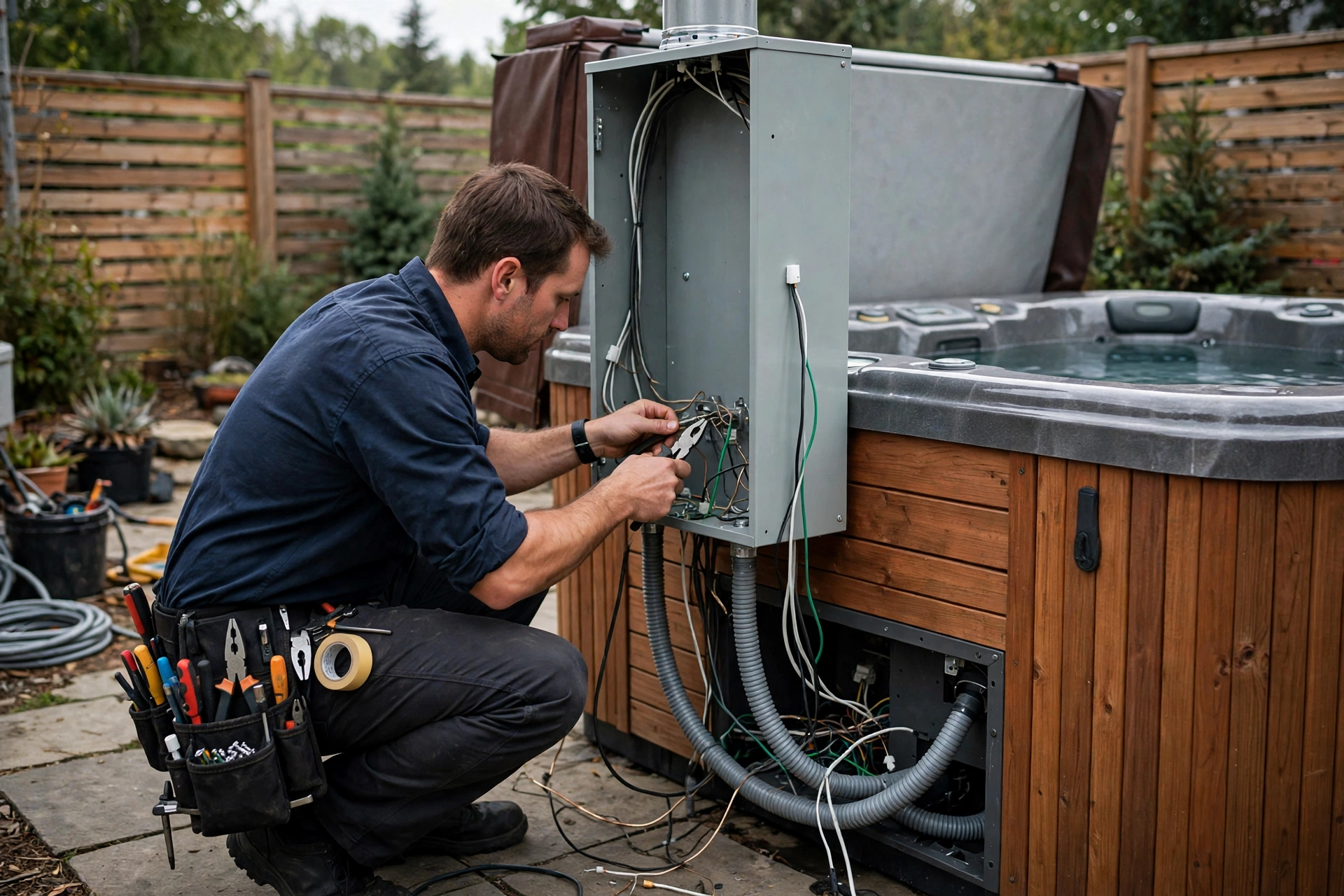
Water and electricity share the tank room by design, so treat leaks as an electrical issue too: a slow seam leak dripping onto a power strip is how a plumbing problem becomes an electrical one. Leak sensors with automatic shutoff under the stand catch the slow failures long before they reach your wiring. The same GFCI logic applies to other wet-location equipment in the home — our guide to hot tub wiring and electrical code covers how the NEC treats spas and pools, which face the same water-meets-voltage problem at larger scale.
Aquarium Electrical Safety Checklist
- Every tank outlet is GFCI-protected (receptacle, breaker, or verified adapter on a grounded outlet).
- Each power cord forms a drip loop hanging below outlet level.
- Power strip mounted above the tank's rim height, on the dry side of the stand.
- No extension cords in permanent use; no two-prong ungrounded outlets feeding the tank.
- Tank load calculated (watts / 120 = amps) and confirmed well under the circuit's capacity, with no heavy intermittent loads sharing the circuit.
- Surge protection on the tank's power strip (or whole-home protector at the panel).
- GFCI tested monthly; cords inspected for damage, warmth, and salt creep.
- Heaters unplugged before hands enter the water; aging heaters replaced on schedule.
- ABC fire extinguisher accessible in the tank room; leak sensor under the stand.
None of this is expensive or complicated — a GFCI adapter, a power strip mounted in the right place, and honest cord routing cover the vast majority of the risk. The dangerous aquarium is the one where the electrical plan was never made at all: cords draped straight down into a floor-level strip, plugged into whatever outlet was closest, never tested. Spend the hour, and the tank becomes what it should be — the safest high-voltage water feature in your home, because it's the only one you engineered on purpose.
Frequently asked questions
Does an aquarium need a GFCI outlet by code?
The NEC requires GFCI protection for outlets in defined wet locations (bathrooms, kitchens, garages, outdoors — Article 210.8), and most living rooms aren't on that list by name. But an aquarium is functionally a permanent wet location, and every major aquarium equipment manufacturer recommends GFCI protection. Treat it as required regardless of the room: a GFCI receptacle, breaker, or plug-in adapter all satisfy the safety need.
What is a drip loop and why does it matter?
A drip loop is a U-shaped sag in a power cord positioned so the lowest point hangs below the outlet. Water traveling down the cord follows gravity and drips off the bottom of the loop instead of running into the outlet or power strip. It's the cheapest electrical safety measure in the hobby — free, five minutes per cord — and it prevents the most common failure mode: water wicking into a plug.
Can I plug my fish tank into a regular power strip?
Yes, provided the strip is surge-protective, rated for the load, mounted above the tank's rim height, and fed from a GFCI-protected outlet. What you must not do is plug a tank into a cheap unprotected strip sitting on the floor below the tank with cords running straight down into it — that's the exact geometry that turns a splash into a short circuit.
How many watts does a 55-gallon aquarium use?
A typical 55-gallon freshwater setup draws 300 to 500 watts total: 200-300 W for the heater (the biggest draw), 30-60 W for the LED light, and 10-30 W each for filtration and air pumps. At 120 volts that's roughly 2.5 to 4.2 amps — well under a standard 15-amp circuit's 1,800-watt capacity. The risk isn't overloading the circuit; it's sharing that circuit with a space heater or microwave that trips the breaker and silently kills your filtration.
Is a saltwater aquarium more dangerous electrically?
Yes, meaningfully. Salt water conducts electricity far better than freshwater, and salt creep migrates along cords into plugs and power strips, creating conductive paths. Reef keepers should inspect cords monthly for salt buildup, consider a titanium grounding probe bonded to the equipment ground, and prefer a GFCI breaker over a plug-in adapter since faults can develop faster in high-conductivity water.
Keep reading
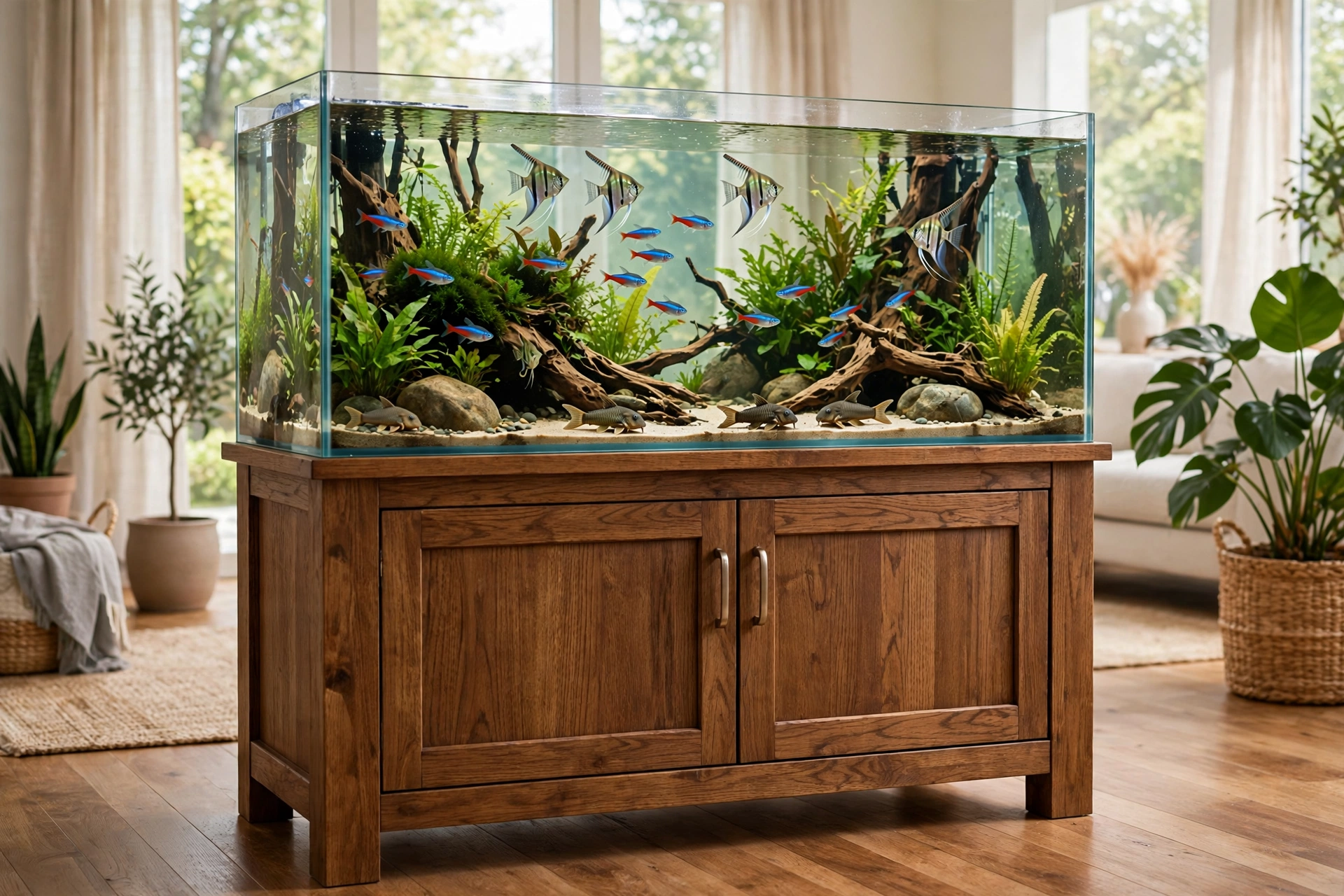
Structural Safety
How Much Does a Large Aquarium Weigh? Floor Load Guide for Homeowners
A filled 55-gallon aquarium weighs 550-650 lbs. Tank weight table, IRC floor-load rules, and placement checkli…
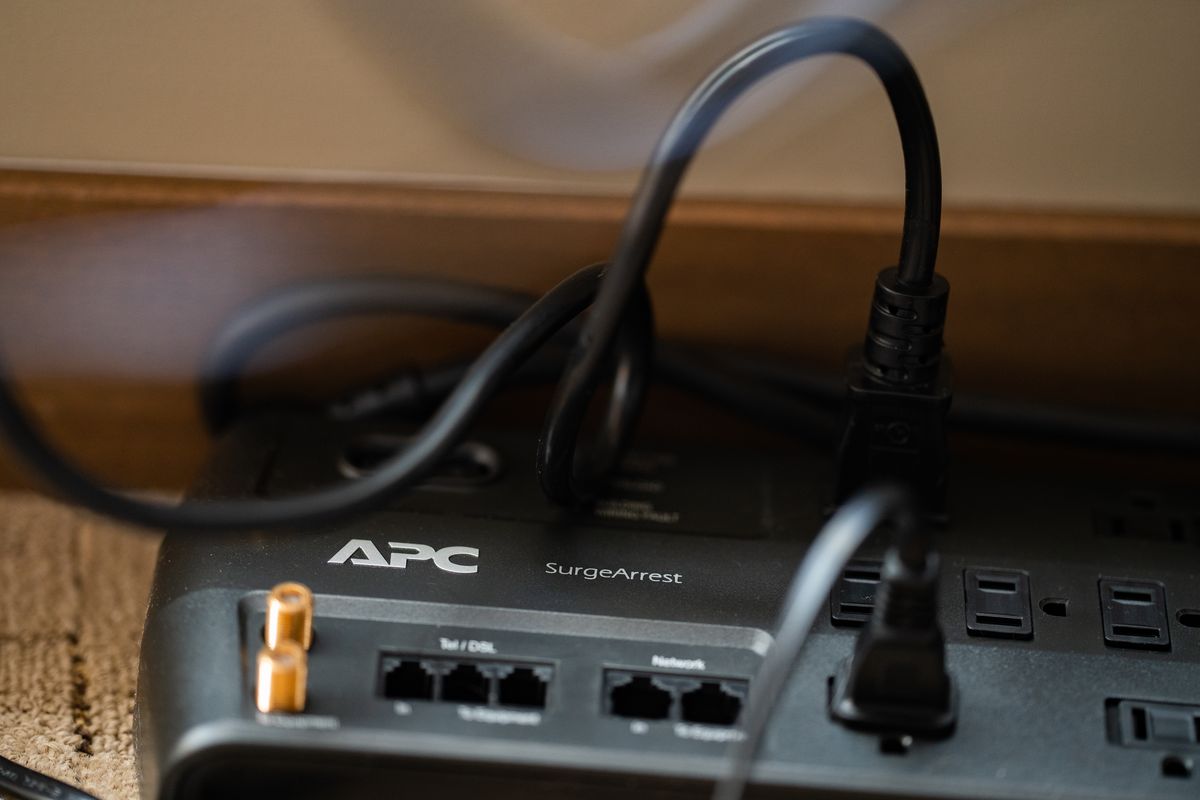
Electrical
Whole-Home Surge Protection Guide: 2026
Whole home surge protector cost for 2026: Type 1 vs Type 2 SPDs, layered protection strategy, what they do and…
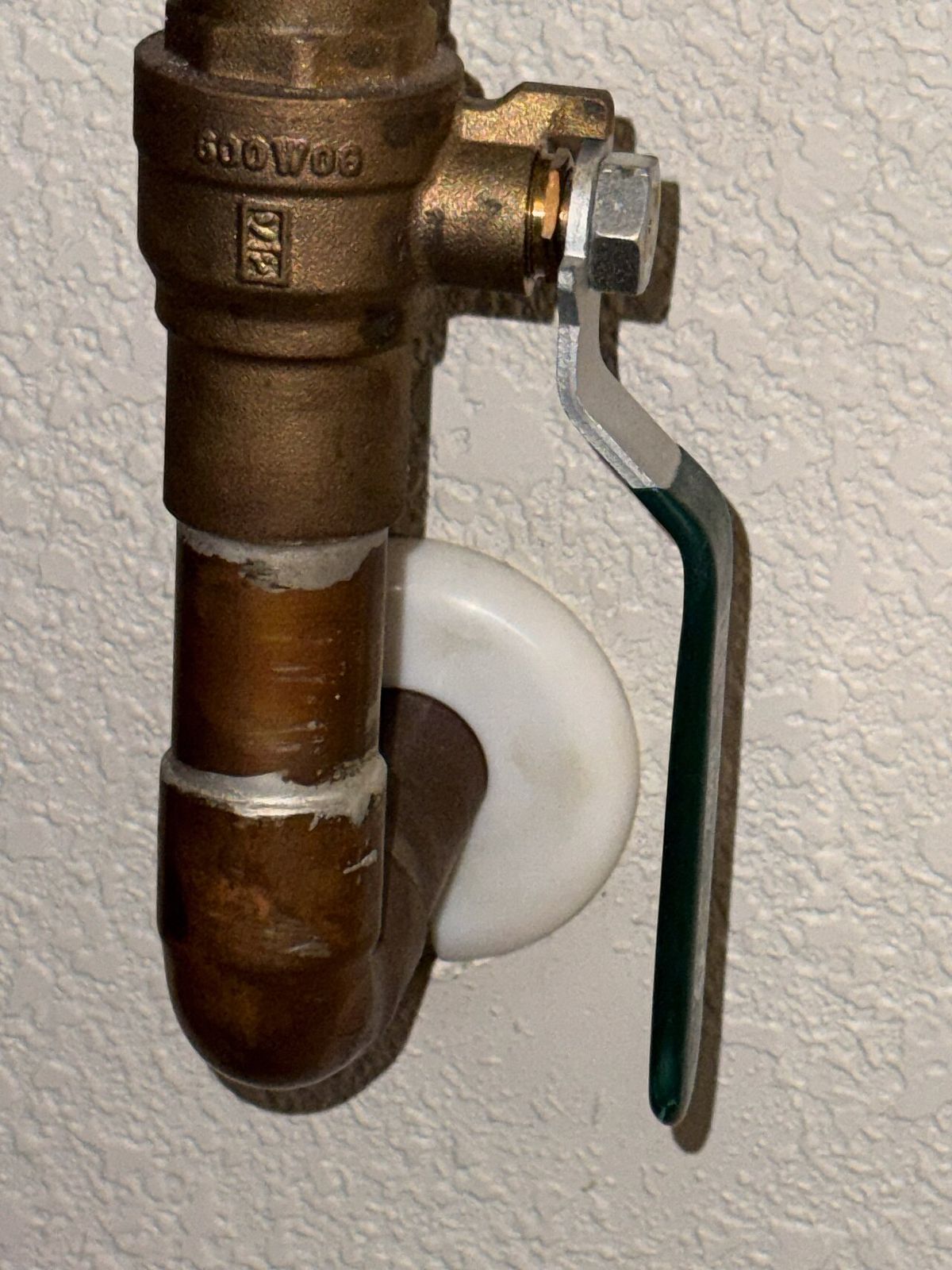
Leak Protection
Leak Detection & Auto Shutoff: 2026 Guide
Compare automatic water shutoff valves vs leak sensors for 2026: how flow detection works, installed costs, in…
Hot Tubs
Hot Tub Wiring & Electrical: 2026 Guide
Hot tub electrical requirements: the 220–240V GFCI circuit, disconnect placement, panel capacity, 2026 costs, …
Transfer Equipment
100A vs 200A Automatic Transfer Switch
100 amp vs 200 amp transfer switch: service-entrance vs subpanel topology, when each is required, costs, and l…
Pillar 01 · Energy Resilience
10kWh vs 13.5kWh vs 20kWh Home Battery: Which Size Is Right? (2026)
10kWh vs 13.5kWh vs 20kWh home battery compared: usable capacity, backup runtime, solar pairing, and which tie…