Best Home Battery for Outage Prone Areas 2026: Picks for Every Outage
Key takeaways
- Size to your outage profile first: short blips need fast automatic transfer, multi-day outages need expandable capacity plus a recharge plan.
- A realistic essentials load is 200–400 watts continuous, or roughly 5–10 kWh per day — that is why 10–15 kWh covers most homes for a full day.
- Installed 13.5–15 kWh LFP systems are the best whole-home answer for owners; large expandable portables are the best fast, no-permit answer for renters and urgent buyers.
- Surge capacity matters as much as capacity: AC compressors and well pumps draw several times their running wattage at startup.
- Solar recharge during the outage is what turns a countdown timer into indefinite resilience — confirm islanding behavior before you buy.
The best home battery for outage prone areas 2026 depends less on brand than on how long your outages last: short, frequent blips need fast transfer and enough capacity for an evening, while multi-day storm outages need expandable capacity, solar recharging, and a transfer setup that can run your critical loads without babysitting.
Outage-prone is not one condition. A Florida home facing hurricane season, a California home facing wildfire shutoffs, and a rural home at the end of a long feeder line all lose power differently — different durations, different warning times, and different loads that matter. This guide sorts home batteries by outage profile, explains the sizing math in plain terms, and ends with a clear verdict for each profile.
Start With Your Outage Profile, Not a Brand
Before comparing batteries, write down three facts about your outages. First, typical duration: under 4 hours, 4 to 24 hours, or multi-day. Second, frequency: a few times a year or a few times a month. Third, warning: do you usually get hours of notice (storm forecasts, shutoff warnings) or does power simply vanish (equipment failure, vehicle strikes)? Each answer pushes you toward a different system.
Short, frequent outages reward transfer speed and automation. A battery with a sub-20-millisecond transfer keeps computers, routers, and medical devices running without a blink, and automatic islanding means nobody has to be home to flip a switch. Multi-day outages reward capacity and recharge: a battery that cannot recharge from solar or a generator is a countdown timer, not a resilience plan. For a deeper look at sizing by load rather than by headline capacity, see how to size a home battery for an all-electric home and how to expand home battery storage later.
EF ECOFLOW 12kWh Power Station: DELTA Pro Ultra with Extra Battery, 120/240V 7200W AC Output, LiFePO4 Home Battery Backup Expandable to 90kWh

Expandable 12kWh LFP home battery (7200W 120/240V, expandable to 90kWh) — the portable, no-permit pick for outage-prone homes; verified live via browser fallback render 2026-10-25
*Affiliate Disclosure: As an Amazon Associate, Elevate Home earns from qualifying purchases. Pricing and availability subject to change.
Installed Whole-Home Batteries vs Portable Power Stations
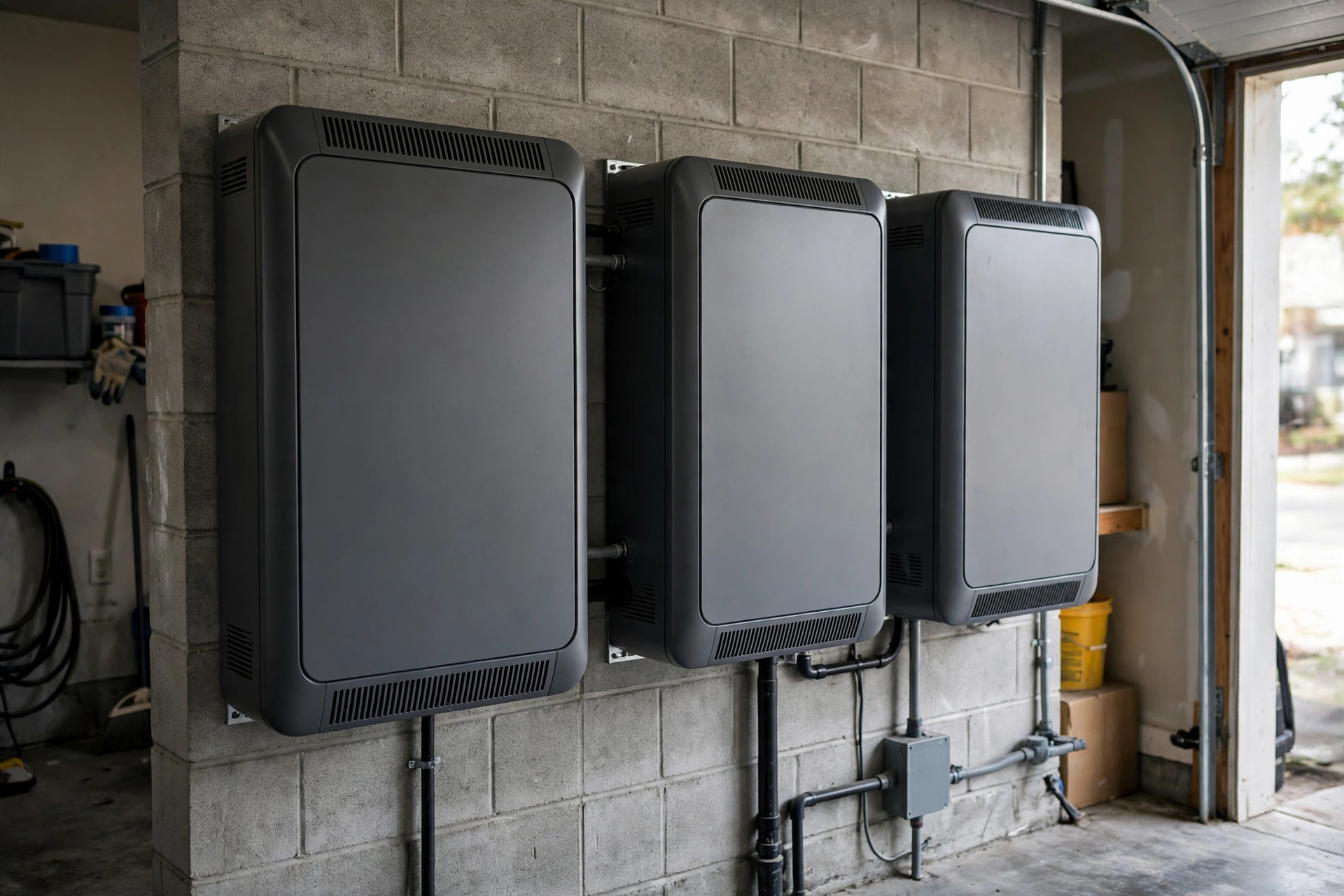
Installed systems — wall-mounted batteries wired through a backup panel or smart panel — are the right answer when outages are frequent, long, or affect the whole house. They switch automatically, can run 240-volt loads like well pumps and electric ranges, and recharge from rooftop solar during the day. Their trade-offs are real: professional installation, permits, and a fixed location.
Portable power stations are the right answer when you rent, when you need backup within days rather than months, or when your critical loads are modest: refrigerator, lights, router, phones, and a medical device. Modern large portables deliver several kilowatt-hours, 120-volt and 240-volt output, and expansion batteries that stretch runtime across days. They cannot match an installed system for whole-home loads, but they beat owning nothing by an enormous margin — and for many outage-prone homes, a large portable plus a transfer switch kit is the pragmatic middle ground. Compare the two approaches in detail in home battery vs generator costs.
Best Home Batteries for Outage-Prone Areas Compared
The table below compares the systems that make the most sense for outage-prone homes, organized by the outage profile each one serves best. Capacity figures are usable capacity, not headline nameplate numbers, and output figures are continuous AC output — the two numbers that actually determine what runs and for how long.
How to Size a Battery for Your Outage
Size to your critical loads, not your whole house. List what must stay on: refrigerator, freezer, lights, router, phones, and any medical equipment. A modern refrigerator draws roughly 100 to 200 watts while running and averages far less across a day; LED lighting for a home is tens of watts; a router and modem together are under 30 watts. A realistic essentials load for a family home is 200 to 400 watts continuous, which is roughly 5 to 10 kWh per day.
That math explains the tiers. A 4 kWh portable covers an overnight essentials outage with margin. A 10 to 15 kWh system covers a full day of essentials plus some comfort loads, or two to three days if you ration. A 20 kWh-plus system covers whole-home use through a day, or essentials through a multi-day outage with solar topping it up each afternoon. Air conditioning changes everything: a central AC can draw 3,000 watts or more, so if running the AC through an outage is non-negotiable, you need the top tier and a system with the surge capacity to start the compressor. Our 10 kWh vs 13.5 kWh vs 20 kWh comparison walks through the runtime math tier by tier.
What Matters Most in Outage-Prone Areas
Five features separate batteries that merely survive outages from batteries built for them. First, automatic transfer: the system must island itself without human action, because outages often strike when nobody is home or everyone is asleep. Second, surge capacity: motors in refrigerators, well pumps, and AC compressors draw several times their running wattage at startup, and a battery that trips on a compressor start is useless in a heat wave.
Third, recharge during the outage. Solar input matters more than headline capacity for multi-day events: a battery that gains several kilowatt-hours each sunny afternoon can stretch indefinitely, while a bigger battery with no recharge path simply runs out later. Fourth, chemistry and warranty: lithium iron phosphate (LFP) chemistry dominates current home batteries for good reason — longer cycle life and better thermal stability than older chemistries — and warranties of a decade or more are now standard on installed systems. Fifth, storm modes: several installed systems automatically top up from the grid when a storm warning is issued, so you enter the outage at full charge instead of whatever the battery happened to hold.
Solar Pairing, Transfer Switches, and Storm Prep
A battery without a recharge plan is a one-shot device. If you have rooftop solar, confirm the battery can charge from solar while the grid is down — not every pairing can, and islanding behavior depends on the inverter architecture. If you do not have solar, a portable station with solar input lets you add panels later, and a generator can recharge any battery indirectly through its AC input during extended events.
Transfer equipment decides what the battery can actually power. A critical-loads subpanel is the standard installed approach: an electrician moves your essential circuits onto a backed-up panel, and everything else goes dark during an outage. Whole-home backup skips the triage but demands a larger battery and higher output. Portable stations use a manual transfer switch or an inlet box to feed selected circuits, which is a far smaller electrical job. Before storm season, run the checklist in home battery storm preparedness and, for hurricane regions, the hurricane battery backup guide.
How the Right Battery Changes by Region
Outage-prone means something different in every region, and the battery that wins in one climate can be the wrong buy in another. Hurricane regions face the longest outages — days, not hours — with heavy rain, flooding risk, and a real chance that roads stay closed after the storm. Here, capacity and recharge dominate: a battery that can run essentials for two days and then recharge from solar each afternoon is worth more than a bigger battery with no recharge path. Elevation matters too; a portable station kept on an upper floor or in a garage above flood level is a practical detail that installed wall units handle differently, since installed batteries are typically mounted in garages that can flood. Check local flood guidance before choosing a mounting location.
Wildfire shutoff regions face a different pattern: outages announced a day or two ahead, lasting one to three days, repeated several times per fire season. Advance warning is an advantage — a battery with a storm-watch mode can charge to full from the grid before the shutoff begins, and daytime solar can carry the home through repeated cycles. Because these outages recur, cycle life matters more here than in regions that lose power once a decade: an LFP battery rated for thousands of cycles will still be healthy after years of shutoff seasons, while a battery cycled hard every week ages faster. This is also where daily self-consumption pays back: a battery that earns its keep shifting solar energy every day, rather than sitting idle waiting for an outage, is easier to justify.
Ice-storm and winter regions add temperature to the equation. Lithium batteries charge more slowly in extreme cold, and some systems derate output below freezing, so a garage-kept battery in a northern climate needs a model rated for cold-weather operation — or a heated, insulated location. Winter outages also coincide with heating demand, which is the largest load in most homes; electric resistance heat is effectively un-backable on battery power, so winter resilience planning usually means backing up essentials and a gas or wood heat source, not the whole heating system. Rural homes at the end of long feeder lines face the longest restoration times of all, because crews restore dense areas first; for these homes, pairing a battery with a generator is often the honest answer, with the battery covering the quiet hours and the generator covering heavy loads and recharging.
The Verdict: Which Battery for Which Outage-Prone Home
For most outage-prone homeowners who own their home and can wait for installation, an installed 13.5 to 15 kWh LFP system — Powerwall 3 or FranklinWH aPower 2, sized to your loads — is the best home battery for outage prone areas 2026. It is automatic, whole-home capable, storm-aware, and it recharges from solar. Add a second unit if your outages run multi-day and you have no generator.
For renters, fast movers, and anyone who needs backup before the next storm rather than next quarter, a large expandable portable station is the right call. The EcoFlow DELTA Pro Ultra is the strongest portable pick for outage-prone homes: 12 kWh in the two-battery bundle, 7.2 kW of 120/240-volt output, expansion to 90 kWh, and solar input for multi-day resilience — all without permits or an electrician. Check incentives before you buy: battery tax credits and rebates for 2026 can change the effective cost of an installed system substantially.
Whatever you choose, buy for the outage you actually get, not the one you fear. A right-sized battery that is installed, charged, and automatic beats a bigger system that is still on a quote, still awaiting permits, or still sitting in a box when the lights go out.
Frequently asked questions
How many kWh do I need for outages in my area?
For most homes, 10 to 15 kWh covers a full day of essential loads (refrigerator, lights, router, phones, medical devices). Multi-day outages need either 20 kWh or more, solar recharging during the outage, or a generator to top up the battery.
Can a portable power station really back up a house?
Yes, with caveats. A large portable station with 240-volt output and expansion batteries can run essential circuits and, with a transfer switch, selected home circuits. It will not match an installed whole-home system for central AC or electric ranges, but it is a genuine home backup solution, not just a camping battery.
Will my home battery recharge from solar during an outage?
If you have rooftop solar, yes — but confirm islanding behavior first. The battery must be able to charge from solar while disconnected from the grid; this depends on the inverter and battery pairing, not just the panel brand. Without solar, a generator or grid power between outages is your recharge path.
Does a home battery power my whole house during an outage?
Not always. A critical-loads subpanel backs up only the circuits an electrician moves onto it, so non-essential circuits go dark. Whole-home backup requires a larger battery and higher continuous output, and even then, running a central AC through a multi-day outage demands the top capacity tier.
How fast can I get backup before the next storm?
Installed systems typically need weeks to months including permits and installer scheduling, so start before storm season. Portable stations ship in days and need no permits, which makes them the right choice when the next outage may arrive before an installer could.
Keep reading
Battery Sizing
Sizing Home Batteries for All-Electric Homes: Heat Pumps, EVs & Induction
Sizing home batteries for all-electric homes takes different math: heat pumps, EVs, and induction change kW an…
Expansion
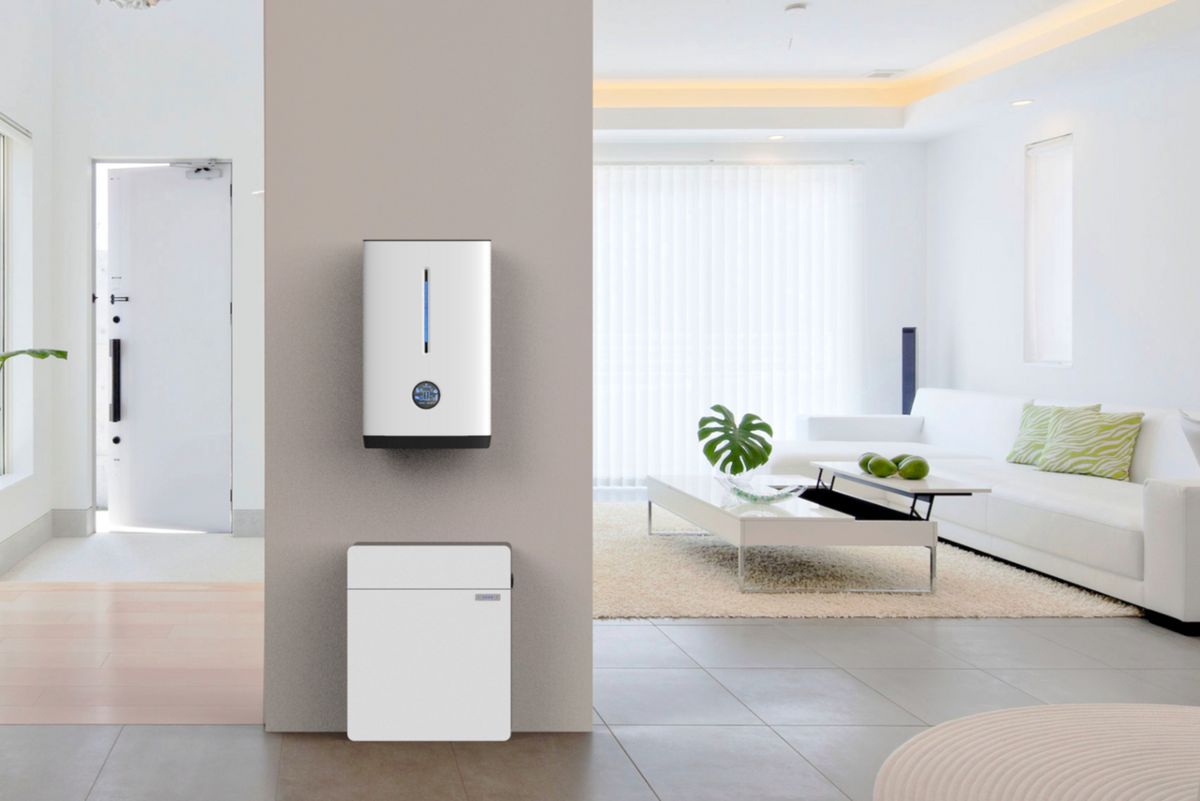
Adding a Second Home Battery: 2026 Guide
Adding a second home battery in 2026: modular vs add-a-box expansion, inverter headroom, rewiring, permits, an…
Pillar 01 · Energy Resilience
10kWh vs 13.5kWh vs 20kWh Home Battery: Which Size Is Right? (2026)
10kWh vs 13.5kWh vs 20kWh home battery compared: usable capacity, backup runtime, solar pairing, and which tie…

Storm Readiness
Home Battery Storm Preparedness Checklist (2026)
Home battery storm preparedness checklist for 2026: size critical loads, pre-storm charging, storm-mode settin…
Storm Resilience
Florida Hurricane Battery Backup Guide: 2026
Florida hurricane battery backup guide for 2026: realistic outage design, storm-safe installation, battery vs …
Decision Guide
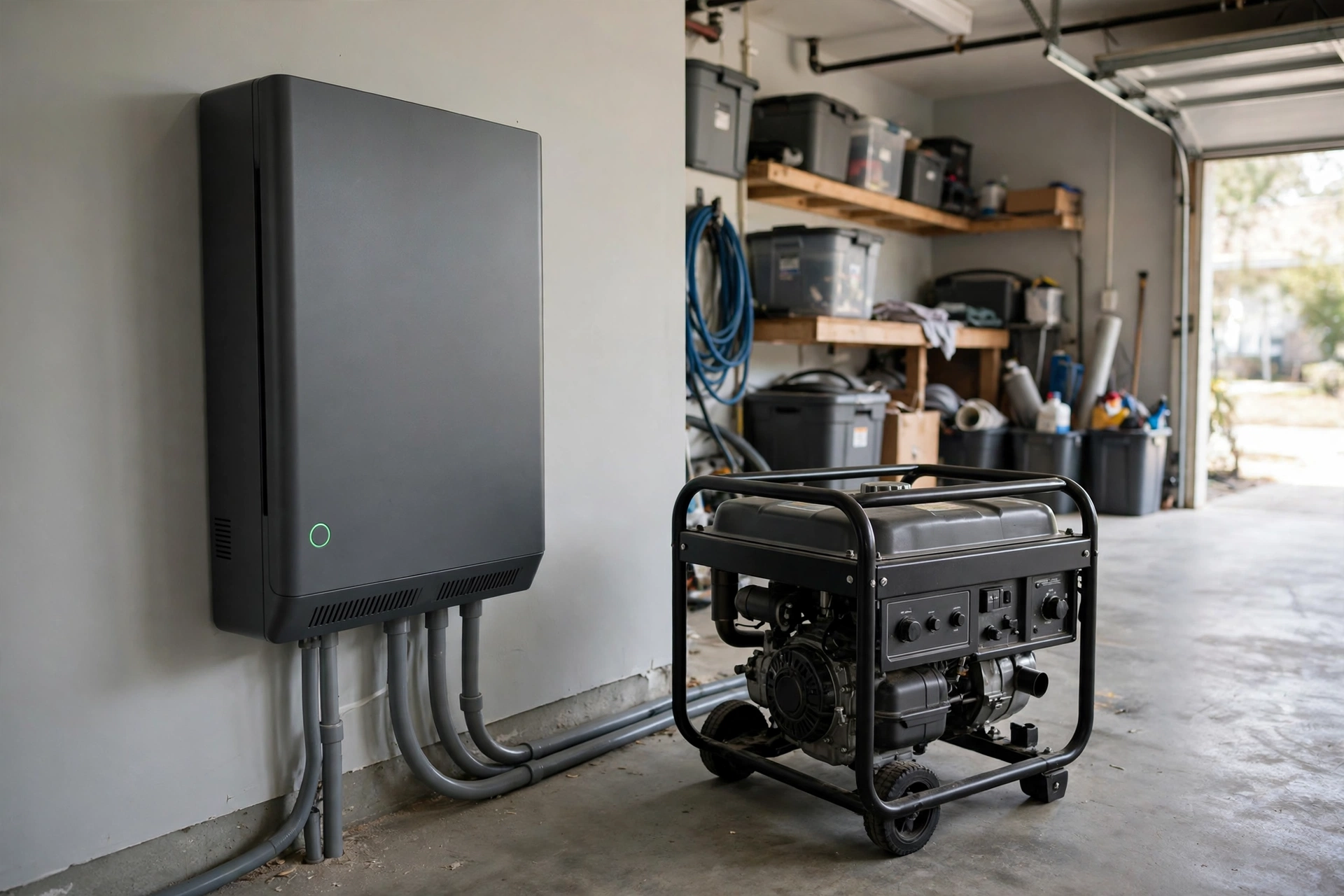
Home Battery vs Generator: True Costs and Which to Choose
Home battery vs generator: compare 2026 installed costs, 10-year fuel and maintenance, outage runtime, noise, …