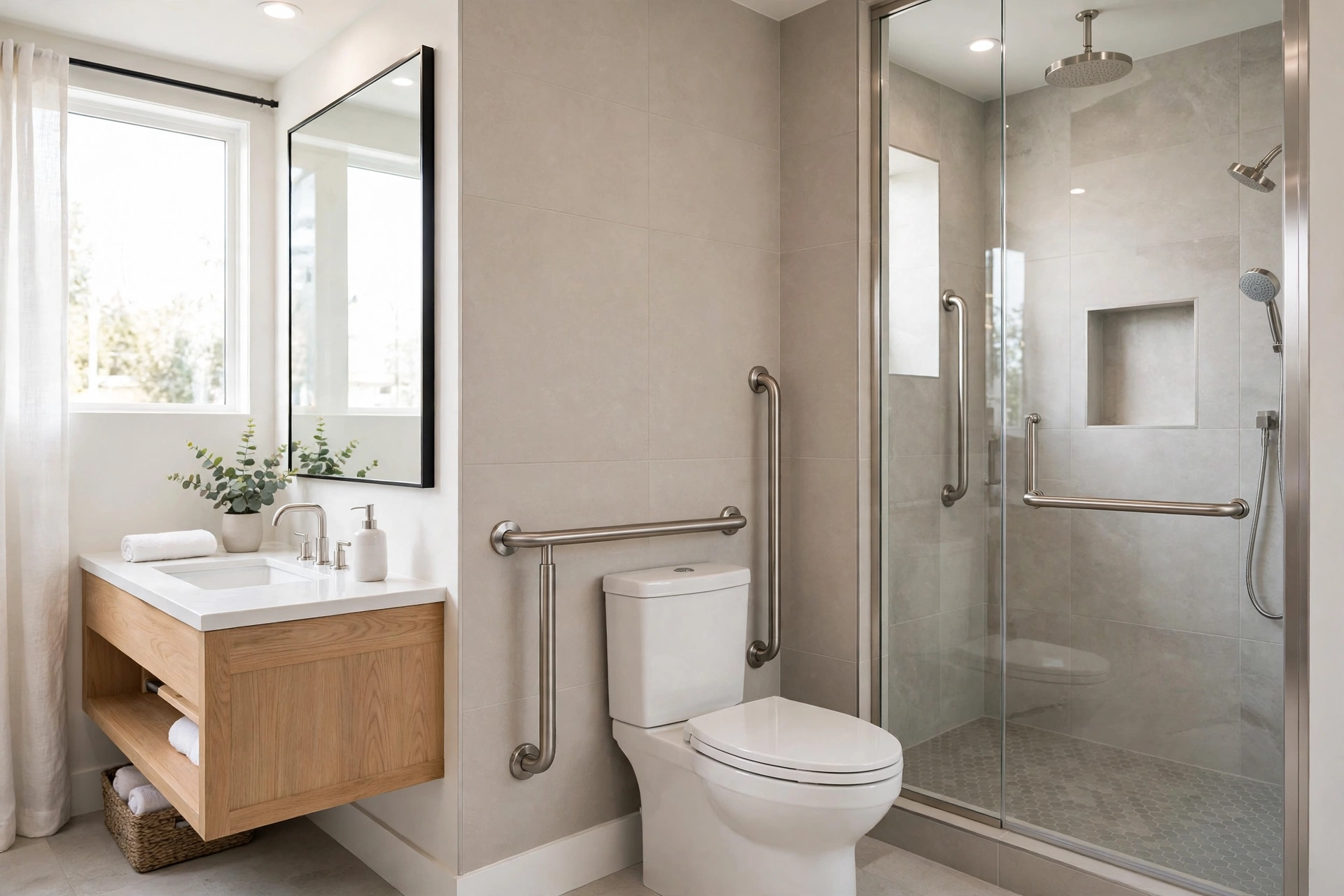
Best Raised Toilet Seat for Seniors 2026: 7 Picks That Make Standing Safe
Key takeaways
- The best raised toilet seat for seniors is one that adds the right height (3–5 in), locks to the bowl without tools, and carries a real weight rating — our top pick is the Drive Medical 2-in-1 with removable padded arms.
- Standard toilets are only 14–15 in high; an ideal transfer height is 17–19 in, matching a dining chair — measure your bowl and match round vs elongated geometry exactly.
- Bolted risers are significantly more stable under lateral load than clamp-on designs; choose a bolted model for seniors with genuine balance impairment or users over 250 lbs.
- A riser handles vertical height but not lateral stability — pair it with wall-mounted grab bars on both sides of the toilet for a genuinely safe transfer environment.
- Re-tighten the clamp monthly and inspect for cracked plastic: every friction attachment in a bathroom loosens silently with vibration and humidity.
The best raised toilet seat for seniors in 2026 is the Drive Medical 2-in-1 Raised Toilet Seat with Removable Padded Arms: it adds 5 inches of seat height, locks onto the bowl without tools, carries a 300-lb rating, and its armrests remove in seconds once recovery or balance improves. We compared seven risers across height added, attachment security, weight capacity, and armrest design — because a riser is only safer than a low toilet if it cannot shift, wobble, or tip under a real sit-to-stand load.
Why Seat Height Matters More Than You Think
Most standard toilets sit just 14 to 15 inches off the finished floor. For someone with knee arthritis, a recent hip replacement, or declining leg strength, that is a deep squat — and the effort required to stand back up is exactly the kind of strain that produces falls. Bathrooms are where falls do the most damage: hard surfaces, no soft landing, and often nobody nearby to hear the call.
An elevated or "comfort height" toilet brings the sitting surface to 17–19 inches, which matches the height of a standard dining chair. Raising a standard bowl by 3 to 5 inches with a riser closes most of that gap for a fraction of the cost of replacing the toilet. Every extra inch reduces the knee-flexion angle and the quadriceps force needed to rise. For post-surgical patients, many surgeons specifically require the seat to be at least 18 inches from the floor — a number a low bowl only reaches with a riser installed.
Height alone is not the whole story, though. A raised seat that slides sideways during a transfer is worse than no seat at all, because it invites a user to commit their full weight to something that then moves. That is why this guide weights attachment security and weight capacity as heavily as height, and why we put an honest safety disclaimer before any pick.
Drive Medical 2-in-1 Raised Toilet Seat with Removable Padded Arms

Top pick riser: 5 in rise, tool-free locking clamp, 300 lb rating, removable padded arms — high-intent buyer query
*Affiliate Disclosure: As an Amazon Associate, Elevate Home earns from qualifying purchases. Pricing and availability subject to change.
The Honest Safety Disclaimer First
Raised toilet seats are transfer aids, not fall-arrest devices. Clip-on risers that sit on the bowl rim with a friction clamp can shift laterally under uneven pressure, and every model in this category is designed for sit-to-stand leverage in a straight, controlled motion — not for catching a sideways stumble. Bolted models that attach to the toilet's standard hinge points (like the Bemis Assurance below) are significantly more stable under lateral load than clip-on designs, which is the correct choice for a senior with real balance impairment.
The other half of the safety equation is beside the toilet, not on it. Occupational therapists pair a riser with wall-mounted grab bars on both sides of the toilet: the riser handles vertical height, the bars handle lateral stability. Using both costs well under $200 total and creates a genuinely safe transfer environment. Our grab bar placement guide maps the exact heights and angles that therapists recommend — get that geometry right and the riser choice becomes easy.
Comparison: The 7 Best Raised Toilet Seats for Seniors
Best Overall: Drive Medical 2-in-1 with Removable Padded Arms
The Drive Medical 2-in-1 (model RTL12027RA) is the senior-living workhorse for a reason: it adds a full 5 inches of height, locks onto the bowl with a tool-free worm-screw clamp, and the padded arms remove with push pins — no tools, no fiddling — so a user recovering from surgery can graduate from arms to a plain riser without buying a second device. The heavy-duty molded plastic construction is rated to 300 lbs, it fits most standard toilets, and it is one of the most-reviewed risers in its category, which means replacement parts and accessories stay available.
The design details that matter for daily use: the locking plate distributes clamp force across the bowl rim rather than pinching one spot, which reduces the creep that makes cheap risers drift over time. The arms' receivers are metal, not plastic, so they do not crack at the joint after months of full-weight push-ups. Installation is lift the lid, set the riser, tighten the clamp by hand — genuinely a two-minute job. Re-tighten the clamp monthly, because vibration and humidity slowly loosen every friction attachment in a bathroom, and this model is no exception.
The limitation is shared with every clamp-on riser: under a hard lateral load, a friction attachment can shift where a bolted seat cannot. For a senior who leans heavily sideways during transfers, the Bemis Assurance below is the correct answer. For the mainstream case — someone who needs height plus straight up-and-down leverage — the Drive Medical 2-in-1 is the pick with the longest track record.
Most Secure Clamp-On: Carex E-Z Lock
Carex's E-Z Lock mechanism is the best answer to the riser's central weakness: it uses a lever that pulls the riser down onto the bowl with a cam action, producing a tighter, more repeatable seating than screw clamps that depend on how hard you turned them. It adds 5 inches, carries a 300-lb rating, ships with removable padded handles, and fits both round and elongated bowls — the widest compatibility in this price tier.
Buy the Carex over the Drive when your priority is "set it and forget it" security on a clamp-on: the lever lock gives tactile confirmation that the seat is fully seated, which matters for a caregiver installing it once and leaving it for months. The trade-off is cost — it typically runs higher than the Drive — and the lever adds a small bump of width on one side, so check clearance against tight cabinet runs.
Maximum Stability: Bemis Assurance 3" with Handles
If balance is the core problem, skip the clamp-ons entirely. The Bemis Assurance bolts to the toilet bowl's standard hinge points — the same mounts the seat itself uses — making it functionally part of the toilet rather than an accessory sitting on top of it. The result is a riser that does not shift under lateral pressure, rated to 1,000 lbs, with an optional arm system that bolts on with supports instead of clamping.
What you give up: height (3 inches instead of 5) and price (it costs several times what a clamp-on does). But for a household member above 250 lbs, or anyone with Parkinson's, neuropathy, or severe balance impairment, stability dominates every other variable. The Clean Shield hygiene guard and optional bidet attachment are genuine pluses for long-term daily use. This is the only riser on this list an occupational therapist would specify for a high-fall-risk patient.
Best for Post-Surgery Recovery: Vive Toilet Seat Riser
Vive's riser adds the full 5 inches and ships with extra-wide handles that give a broader, more forgiving push-off surface than the narrow arms on most competitors. For hip-replacement recovery — where sitting low is painful and the operated leg cannot bear eccentric load — that wide grip surface is exactly what makes a riser usable in the first two weeks. It fits round and elongated bowls and carries a 300-lb rating.
The bulkier appearance is the trade-off; this is not the prettiest option for a master bathroom that will be used by the whole family. But during a defined recovery window, function beats form, and the wide handles are meaningfully easier on post-surgical hands and wrists than narrow rails.
Best Padded Comfort: Medline Locking Elevated Seat
Medline's locking elevated seat is the pick for users with low pain tolerance: padded armrests that remove without tools, a positive locking mechanism, and the highest weight rating in the mainstream tier at 350 lbs. The padding matters more than it sounds — bony sit bones on hard plastic discourage long sits and encourage rushed, unsafe standing. A padded rim keeps the user seated long enough to transfer carefully.
Check one thing before ordering: Medline sells several similar-looking elevated seats with and without arms, and listings sometimes mix them. Confirm the exact model includes the padded armrests and the locking base before you check out.
Simplest Round-Bowl Pick: HealthSmart 5" Riser
Some buyers do not want arms, locks, or levers — just height. HealthSmart's 5-inch round riser slips under the existing toilet seat, grips with slip-resistant pads, needs no assembly, and is rated to 300 lbs. It is the simplest possible solution and one of the few risers purpose-built for round bowls rather than a compromise fit. The obvious constraint: round bowls only. It will not sit correctly on an elongated toilet.
Low-Profile Budget: Vaunn Medical Elevated Riser
Vaunn's 3.5-inch riser is the value pick: no arms, minimal profile, tool-free clamp, 300-lb rating, and consistently one of the lowest prices in the category. The 3.5-inch rise is the right dose for a shorter senior who does not need a full 5 inches — overshooting the target height forces the feet to dangle, which ruins seated stability. Choose the Vaunn when the user is under 5'4" and has decent balance but tired knees.
How to Measure: Round vs Elongated, and the One Mistake to Avoid
Measure your bowl before ordering. A round bowl measures roughly 16.5 inches front to back from the seat bolt holes; an elongated bowl measures about 18.5 inches. Mismatched geometry is the single most common cause of a wobbly riser: an elongated riser on a round bowl overhangs the front and rocks; a round riser on an elongated bowl sits back and leaves an unsupported lip. Most quality risers are sold in round or elongated variants — match them.
Three compatibility traps to check: first, bidet seats occupy the same hinge hardware a bolted riser needs, so confirm fit or look for a bidet-compatible riser — our guide to bidets and smart toilets for aging in place covers the pairing. Second, comfort-height bowls (17+ inches from the factory) need only a 3-inch riser to reach the ideal range; adding 5 inches to an already-tall bowl overshoots. Third, wall-hung toilets with concealed carriers do not always accept clamp-on risers well — a bolted riser attached to the bowl itself is the safer route there.
The Verdict: Which Raised Toilet Seat Should You Buy?
For most seniors, the answer is the Drive Medical 2-in-1 with removable padded arms: 5 inches of height, a tool-free locking clamp, a 300-lb rating, and arms that detach in seconds as recovery progresses. It is the highest-rated balance of height, security, and adaptability in the category.
Upgrade to the Bemis Assurance when stability is the whole problem — bolted beats clamped for anyone with genuine balance impairment or a user over 250 lbs. Choose the Carex E-Z Lock when a caregiver is installing once and leaving it. And whichever riser you buy, pair it with properly placed grab bars: the riser gives you height, the bars give you lateral security, and the combination is what actually prevents falls. For a full bathroom safety audit before you buy anything, walk through our aging-in-place fall-proofing checklist — and if a full remodel ever enters the picture, our bathroom remodel cost guide prices the whole project.
Frequently asked questions
How many inches should a raised toilet seat add for a senior?
A standard toilet is 14–15 inches high; the ideal seated transfer height is 17–19 inches, similar to a dining chair. A 3-inch riser is usually enough for a shorter senior or an already-tall comfort-height bowl, while a 5-inch riser suits a taller user or a post-surgical patient who cannot bend. Avoid overshooting — feet should rest flat on the floor, not dangle.
Are raised toilet seats stable enough for seniors with balance problems?
They are very stable when installed correctly and matched to the right bowl shape, but no clamp-on riser is as stable as a bolted one. Re-tighten the locking clamp monthly, match round/elongated geometry exactly, and replace the riser if the plastic cracks or the clamp mechanism wears. For seniors with significant balance problems, a bolted model like the Bemis Assurance or wall-mounted grab bars on both sides add the lateral stability a riser alone cannot provide.
Can you clean a raised toilet seat while it is installed?
Yes, provided it is removed and the underlying seat is cleaned with a non-abrasive disinfectant. Plastic risers develop biofilm in the crevices around clamps and hinges — areas a toilet brush never reaches. During daily cleaning, wipe the rim contact surfaces too. If staining becomes permanent on white plastic, a gentle non-abrasive cleaner restores most of it.
Can a raised toilet seat be used with a bidet seat?
Standard bidet seats occupy the same hinge hardware a bolted riser needs, so the two conflict on most bowls. Either remove the bidet seat first, or choose a riser explicitly designed to pair with a bidet — Bemis sells a bidet accessory made for its Assurance riser line. Clip-on risers sometimes fit over low-profile bidet plates, but verify measurements before buying.
Is a raised toilet seat enough to prevent falls in the bathroom?
No — not from a seat alone. A raised toilet seat gives vertical height and up-and-down leverage, but lateral support comes from handles, armrests, or wall-mounted grab bars. Pair the riser with bars beside the toilet for a genuinely safe transfer environment; that combination costs well under $200 and is what occupational therapists actually recommend.
Keep reading
Safety Guide
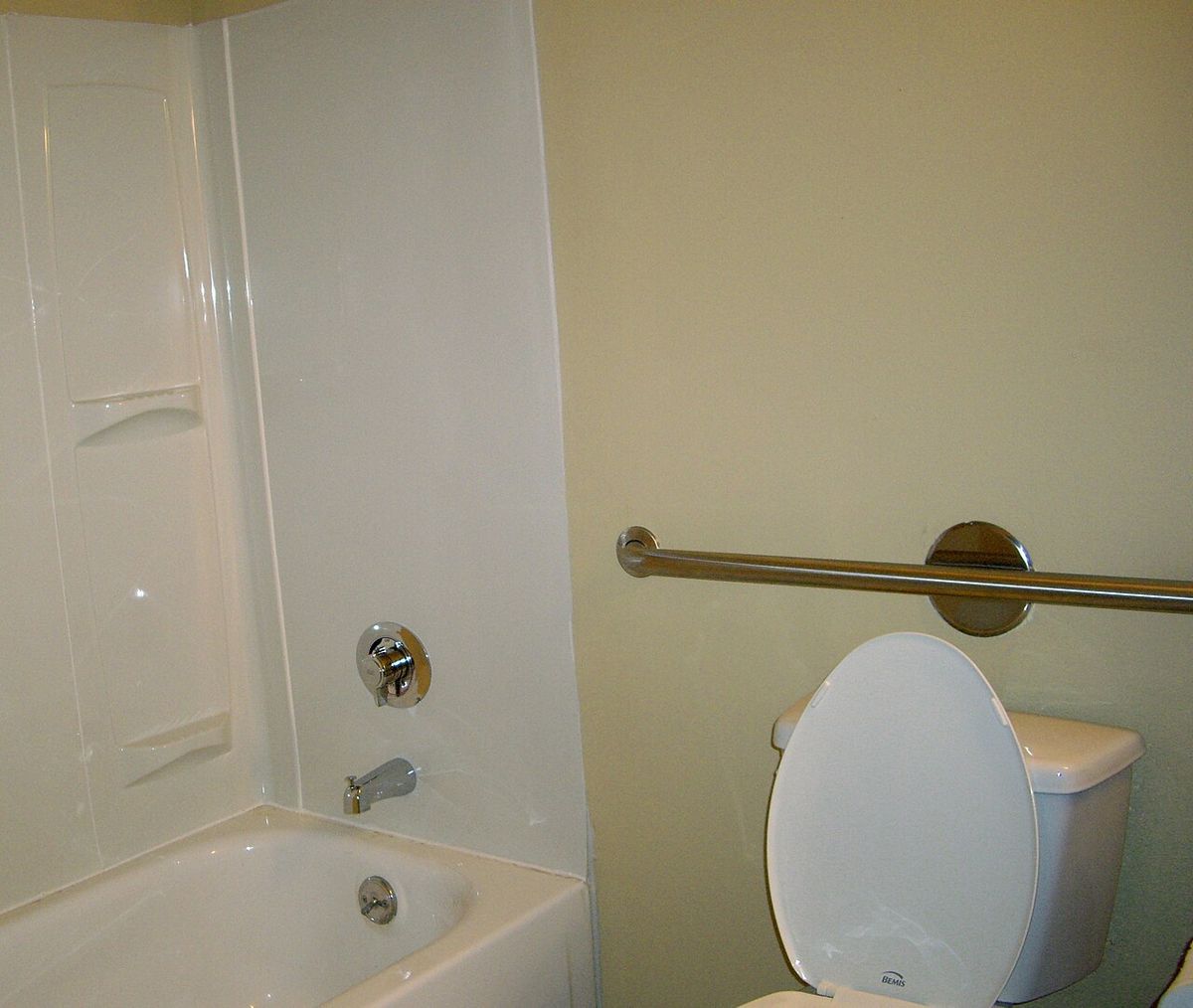
Grab Bar Placement Guide: Safe, Elegant Bathroom Layouts
Grab bar placement guide: shower, toilet, hallway, and stair positioning—plus mounting, heights, designer fini…
Safety
Fall-Proofing Your Home: Room-by-Room Checklist
Fall-proofing your home room by room: prevention-focused fixes for stairs, bathrooms, kitchens, and outdoors. …
Hygiene Independence
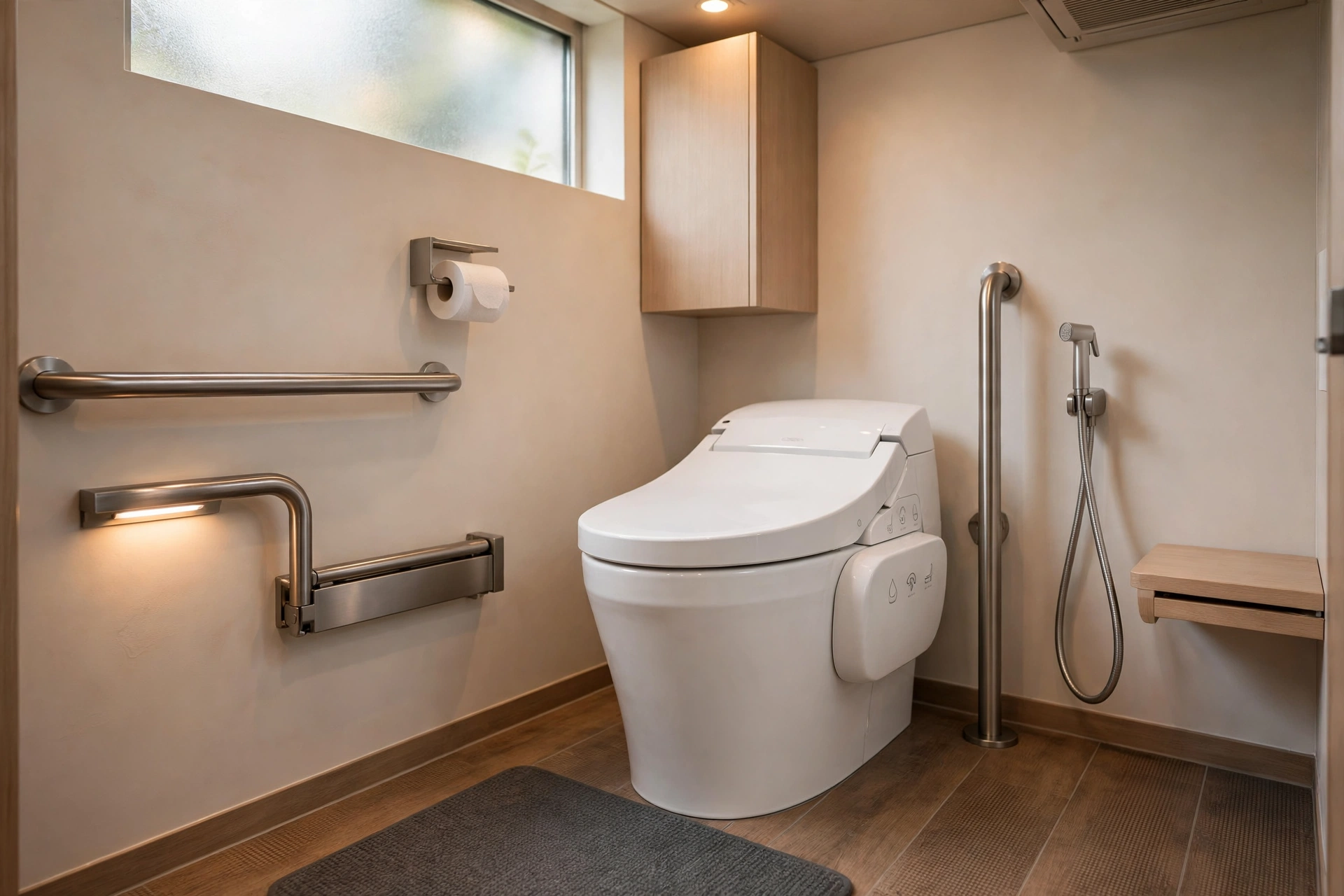
Best Smart Toilets & Bidets for Aging in Place: 2026 Guide
Smart toilets and bidets for aging in place: the features that preserve hygiene independence, 2026 costs, inst…
Renter Safety
Best Grab Bar Alternatives for Renters: No-Drill Safety That Protects Your Deposit (2026)
Renting and need bathroom safety? The best grab bar alternatives for renters that need no drilling, ranked by …
Interactive Tool
Aging in Place Renovation Cost Estimator 2026 Guide
Budget your aging-in-place renovation with our interactive estimator. Price accessible bathrooms, kitchens, el…
Transfer Equipment
100A vs 200A Automatic Transfer Switch
100 amp vs 200 amp transfer switch: service-entrance vs subpanel topology, when each is required, costs, and l…