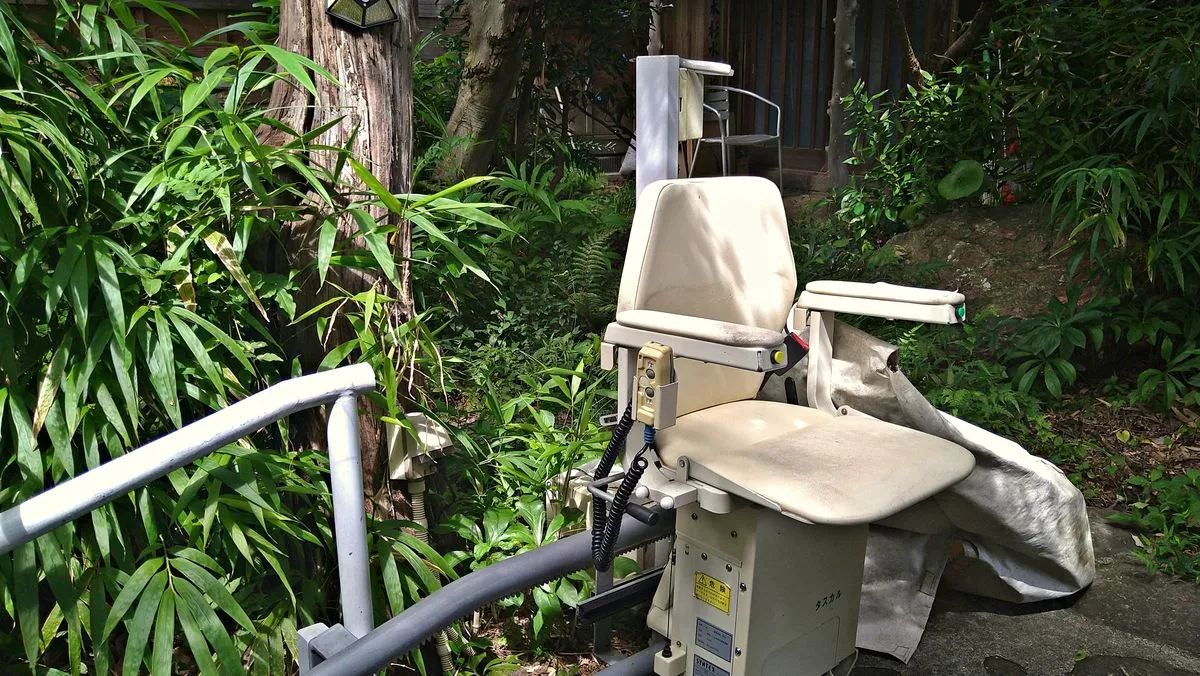
Best Stair Lift Brands 2026 Acorn vs Bruno vs Stannah: Which Is Worth Your Money?
Key takeaways
- Bruno wins on durability and warranty: US-made, enclosed rack-and-pinion drive, and a limited-lifetime warranty on indoor models — the strongest long-term value.
- Acorn is the budget entry at roughly $4,000-$8,000 installed for straight stairs, but its 1-year warranty and factory-direct service model are the industry's thinnest.
- Stannah leads on ergonomic design — one-handed seatbelt, armrest controls, A+ BBB rating and 4.8/5 US Trustpilot reviews — at mid-premium pricing.
- Curved stairs cost $11,000-$15,000+ regardless of brand, because every curved rail is custom-fabricated to your staircase.
- Medicare does not cover stair lifts, so protect your out-of-pocket investment with the brand that has technicians within an hour of your home.
- All three brands run on two replaceable 12V 7Ah sealed batteries (2-5 year life); keeping them fresh is the cheapest reliability upgrade you can make.
The best stair lift brands in 2026 are Bruno, Stannah, and Acorn — in that order for most buyers. Bruno wins on durability and warranty: family-owned, made in the USA, with an enclosed rack-and-pinion drive and a limited-lifetime warranty on indoor models that no competitor matches. Stannah is the ergonomic pick, with the easiest controls for arthritic hands and the strongest customer reviews (A+ BBB rating, 4.8/5 from roughly 1,500 US Trustpilot reviews). Acorn is the budget entry, roughly $4,000-$8,000 installed for straight stairs, but its 1-year warranty and factory-direct service model are the thinnest of the three. Below is the full head-to-head, with real cost ranges, warranty terms, and how to match each brand to your staircase.
Acorn, Bruno, and Stannah account for the vast majority of residential stair lift sales in the US, and each sells a fundamentally different proposition: Acorn sells speed and price (direct sales, factory technicians, fast installation), Bruno sells durability and service depth (certified dealer network, US manufacturing), and Stannah sells refined, user-friendly design (British engineering, famously easy controls). None of the three is a bad machine in isolation — the expensive mistakes come from buying the wrong brand for your stairs, your body, and your service area.
The Quick Verdict: Best Stair Lift Brand for Each Buyer
If you only read one section, read this. We have mapped each brand to the buyer it actually serves best, based on independent 2026 brand roundups, warranty terms, and dealer-network structure:
AJC Battery Compatible with Acorn 130 Straight 12V 7Ah Stairlift Battery

Exact-fit replacement battery for the Acorn 130 — the consumable every stair lift owner replaces every 2-5 years; high-intent accessory purchase tied directly to the article's battery/maintenance section.
*Affiliate Disclosure: As an Amazon Associate, Elevate Home earns from qualifying purchases. Pricing and availability subject to change.
Acorn vs Bruno vs Stannah: Head-to-Head Spec Comparison
This is the table most comparison pages bury three screens down. Here it is up front, with the numbers that actually determine ownership cost over a decade:
Acorn Stair Lifts: The Budget Option, With Real Tradeoffs
Acorn's pitch is simple: the lowest price and the fastest installation. For a straight staircase, an Acorn lift installed for $4,000-$8,000 is often $1,500-$3,000 less than the equivalent Bruno. The factory-direct model means the same company that sells you the lift sends the technician, and installs routinely happen within days of the survey.
The tradeoff is equally simple. Acorn's standard warranty is roughly one year — dramatically shorter than Bruno's limited-lifetime coverage on indoor models. Independent comparisons consistently flag three risk factors: aggressive sales tactics during the in-home survey, slower service response in regions far from factory support, and proprietary parts that make independent repair harder. None of this makes every Acorn lift a poor machine — on a straight staircase it is mechanically a perfectly competent rack-and-pinion lift — but the total cost of ownership math gets worse the longer you plan to live with the lift.
Acorn is the right call when: the staircase is straight, the budget is genuinely tight, the homeowner's expected tenure is under 7-8 years, and there is verified local service. Look elsewhere when: the staircase is curved (the savings shrink relative to a $12,000+ job), the user needs heavy-duty capacity, or local Acorn service is thin — read the service and cancellation terms closely before signing anything.
Bruno Stair Lifts: The Durability Pick and the Strongest Warranty
Bruno is the brand independent mobility dealers recommend most often, and the reason is structural, not sentimental. The company is family-owned, manufactures in Wisconsin under ISO 9001 certification, and sells through a trained, certified dealer network. That distributed model matters: when a mobility device fails, a local dealer with parts on the shelf gets you moving again far faster than a factory team dispatched from Florida.
The flagship straight-rail model, the Bruno Elan SRE-3050, is a consistent best-seller: its slim rail sits only about 5 inches from the wall (genuinely useful on narrow stairs), and its enclosed rack-and-pinion gearing produces the quietest, smoothest ride in most head-to-head tests. The Elite line raises capacity to 400 pounds. The headline differentiator is the warranty — limited lifetime on indoor models — which is unmatched among the big three and transforms the ownership-cost calculation: that $1,500-$3,000 premium over Acorn buys insurance against the $800-$1,200 typical repair bills that start arriving in years 6-10 on shorter-warranty machines.
Bruno's one real requirement: professional installation is needed to keep the warranty valid, so factor dealer install cost into the quote comparison honestly. And for curved stairs, Bruno's advantage narrows — the custom rail fabrication quality depends on the local dealer, as with every brand.
Stannah Stair Lifts: Best Ergonomics and the Easiest Controls
Stannah is the oldest of the three — a British family company making lifts since 1867 — and it shows in the user-interface details. The signature features are genuinely differentiated for users with arthritis, Parkinson's, or limited hand strength: a seatbelt you can fasten with one hand, easy armrest-mounted controls, and supportive, well-padded seating. If the person using the lift struggles with fine motor control, Stannah's ergonomics are worth more than any warranty clause.
The review record is the strongest of the three on paper: A+ Better Business Bureau rating, 4.8 out of 5 from roughly 1,500 US Trustpilot reviews, and 4.7 from over 2,000 ConsumerAffairs ratings, with installation and ride quality drawing the most praise. US sales and service run through Stannah Stairlifts, Inc. in Franklin, Massachusetts, plus independent distributors — smaller than Bruno's dealer network, so confirming local service coverage is more important with Stannah than with either competitor.
Two honest caveats. Some Stannah models use exposed gears rather than Bruno's enclosed drive, and can run slightly louder. And Stannah publishes starting prices (a transparency plus), but mid-tier warranty terms vary by model and dealer — get the written warranty before you compare quotes. Stannah rents directly in some regions, which is a real option for post-surgery recovery or other temporary needs; ask, because dealers do not always volunteer it.
Stair Lift Costs in 2026: What Each Brand Really Costs Installed
Stair lift pricing is deliberately opaque — most brands quote only after an in-home survey — but 2026 market data from independent roundups gives reliable ranges. Use these to sanity-check any quote that lands on your table:
Three pricing truths that apply to every brand. First, curved rails erase brand price differences — the custom fabrication dominates the cost, so choose the best local dealer, not the cheapest brand. Second, Medicare does not cover stair lifts: it classifies them as home modifications rather than durable medical equipment, so the full cost falls on the homeowner (Medicaid waivers and VA benefits sometimes help — check both). Third, always get at least two written quotes; the stair lift industry's survey-and-quote model creates wide price dispersion for identical hardware.
Warranty and Service: The Deciding Factor Nobody Compares
Here is the ownership math that decides the real "best" brand. A stair lift is a daily-use machine with a 10-15 year expected life, and the failure modes cluster in years 6-12: batteries ($60-$150 DIY), rollers and track wear, motor brushes, and control boards ($800-$1,200 typical repair bills). The warranty table is therefore not a footnote — it is the price table for the second half of the lift's life:
The practical takeaway: a wrong choice costs not just the repair bill but the stress of lost mobility while waiting for service. Bruno's distributed dealer model typically means faster service response — the critical factor when a daily-use mobility device fails. Acorn's factory-direct approach can create bottlenecks in regions far from support hubs. Before signing with any brand, ask the dealer two questions and get both answers in writing: what is the warranty term on the motor, gearbox, and electronics separately? and what is your guaranteed service response time in my zip code?
If you are comparing a stair lift against other ways to solve the stairs problem, see our stairlift vs home elevator cost breakdown and the home elevator vs stairlift installed-cost comparison — for some two-story homes, the math surprises people.
Sizing Your Staircase: Straight vs Curved, Capacity, and Fit
Brand selection is step two. Step one is your staircase, because it constrains everything. Straight staircases — one unbroken run, no landings, no turns — accept modular rails from any brand and install in days. Anything else (a landing, a 90-degree turn, a spiral, or a fanned bottom step) needs a curved rail that is laser-measured and custom-fabricated: add 4-8 weeks and roughly $7,000+ to the project regardless of brand.
Three fit checks to do before the survey. Weight capacity: standard lifts carry 280-300 pounds; Bruno's Elite models go to 400, and for 600-pound capacity you need a bariatric unit such as Harmar's SL600HD. Stair width: most rails need 28-30 inches of clear stair width; Bruno's slim rail (~5 inches from the wall) is the best option for narrow stairs. Parked footprint: a folded lift intrudes 12-16 inches into the stairway — on the only staircase in the house, confirm other users can still pass safely, and consider a powered folding rail or swivel seat for tight top landings.
For the full cost picture on custom rails, read our curved stairlift cost guide, and for the long-term side of ownership, the stairlift maintenance and repair cost guide breaks down what years 5-12 actually cost.
Batteries: The Cheapest Reliability Upgrade on Any Stair Lift
Every modern stair lift — Acorn, Bruno, and Stannah alike — runs on two sealed 12V 7Ah rechargeable batteries driving a 24V DC motor. The lift charges whenever it is parked at a charging point (or continuously along the rail on some models), and a full charge covers roughly 15-20 trips — which is why the lift keeps working during a power outage. It is an elegant design, but it has one consumable: those batteries last 2-5 years, and as they weaken the symptoms are unmistakable — the lift slows on the rail, stops mid-travel, or beeps at the charging point.
Here is what most owners learn too late: a dead-battery service call costs $150-$300, but the batteries themselves are a standard, replaceable size. Swapping in a fresh pair of exact-fit 12V 7Ah sealed lead-acid batteries — the same specification Acorn, Bruno, and Stannah all use — restores full performance for a fraction of a service visit. Keep the charging point clean, leave the lift parked on charge, and replace the batteries proactively at the first sign of slowdown rather than waiting for a mid-stair stall. It is the single highest-value maintenance action on any brand's lift.
Broader fall-safety context matters too: a stair lift solves the staircase, but the rest of the home still needs attention. Our aging-in-place fall-proofing checklist and the stair handrails vs grab bars guide cover the other half of stair safety.
The Final Verdict: Which Stair Lift Brand Should You Buy?
For most US buyers in 2026, Bruno is the best stair lift brand overall: US-made construction, the quietest drive in the category, a certified local dealer network, and a limited-lifetime indoor warranty that no competitor matches. The $1,500-$3,000 premium over Acorn is the cheapest long-term insurance in the category.
Choose Stannah if the user has arthritis, Parkinson's, or limited hand strength — its one-handed seatbelt and armrest controls are genuinely the easiest in the industry — provided you can confirm strong local service. Choose Acorn if the staircase is straight, the budget is genuinely constrained, and the planning horizon is under 8 years; just go in with eyes open about the 1-year warranty and verify local service before the survey visit.
And whichever brand you choose, protect the investment the boring way: keep the lift parked on its charging point, replace the 12V 7Ah batteries at the first sign of weakness, schedule the annual service, and keep your dealer's emergency number on the refrigerator. A stair lift is a decade-long relationship with a service company that happens to include a machine — buy the service network first, and the brand second.
Frequently asked questions
Which stair lift brand is best in 2026?
There is no single best stair lift brand for every home. For straight staircases on a budget, Acorn is usually the lowest-cost option, though its 1-year warranty and factory-direct service model are thinner than competitors. For durability, US-made construction and the strongest warranty, Bruno is the most-recommended premium choice among independent mobility dealers. For ergonomic design and easy controls, especially for users with arthritis or limited dexterity, Stannah's seatbelt-fastens-with-one-hand design is genuinely differentiated. The 'best' brand is the one whose service network actually covers your zip code.
How much does each stair lift brand cost installed?
For comparable straight-rail models, expect roughly $4,000-$8,000 installed for Acorn, $5,500-$10,000+ for Bruno, and $4,500-$9,000+ for Stannah. Curved rails are custom-fabricated to your staircase and typically cost $11,000-$15,000+ installed from any of the three. Medicare does not cover stair lifts, so these are out-of-pocket costs, and financing through a dealer is common.
Is Stannah a reliable stair lift brand?
Yes — with one important caveat. Stannah has an A+ Better Business Bureau rating, 4.8 out of 5 from roughly 1,500 US Trustpilot reviews, and 4.7 from over 2,000 ConsumerAffairs ratings, with praise for installation and ride quality. Its US service runs through Stannah Stairlifts, Inc. in Franklin, Massachusetts plus independent distributors. Confirm a local service presence in your area before signing — a great product with a thin local service network is a bad deal.
What are good alternatives to Acorn stair lifts?
The top three alternatives are Bruno (family-owned, US-made, limited-lifetime indoor warranty, strongest independent-dealer network), Stannah (British manufacturer, best ergonomic design, strong reviews), and Bruno again for heavy-duty use — its Elite models carry up to 400 pounds. For maximum capacity, Harmar's SL600HD handles up to 600 pounds. Always compare written quotes and warranty terms rather than deciding on the brand's advertising alone.
Do stair lifts run on batteries, and how long do they last?
Almost all modern stair lifts — including Acorn, Bruno, and Stannah — run on two sealed 12V 7Ah rechargeable batteries driving a 24V DC motor. A full charge covers roughly 15-20 trips, which is why the lift can still move during a power outage. Batteries last about 2-5 years and are a standard, replaceable size: when they weaken, an exact-fit 12V 7Ah sealed lead-acid replacement restores full performance for a fraction of a service call's cost.
How do I choose between Acorn, Bruno, and Stannah for my stairs?
Start with your staircase shape: straight staircases accept modular rails from any of the three brands and install in days; curved, spiral, or multi-landing stairs need a custom-fabricated rail (add weeks and $7,000+). Then check weight capacity, rail intrusiveness (Bruno's slim rail sits about 5 inches from the wall), warranty length, and — most important — which brands have technicians within an hour of your home. Get at least two written quotes; the brand with fast local service usually beats the 'better' brand with no local presence.
Keep reading
Decision Guide
Stairlift vs Home Elevator: Which Lift Is Right for You?
Stairlift vs home elevator compared: 2026 costs, space needs, installation timelines, and resale impact to hel…
Comparison
Home Elevator Cost vs Stairlift: 2026 Comparison Guide
Home elevator cost vs stairlift: compare 2026 US cost ranges, space needs, aesthetics, maintenance, and resale…
Mobility
Curved Stairlift Cost Guide: 2026
Curved stairlift cost guide for 2026: why custom rails cost more, lead times, new vs refurbished math, rentals…
True Cost of Ownership
Stairlift Maintenance & Repair: Annual Cost Guide
Stairlift maintenance and repair costs explained: service contracts, batteries, common repairs, and realistic …
Interactive Tool
Aging in Place Renovation Cost Estimator 2026 Guide
Budget your aging-in-place renovation with our interactive estimator. Price accessible bathrooms, kitchens, el…
Transfer Equipment
100A vs 200A Automatic Transfer Switch
100 amp vs 200 amp transfer switch: service-entrance vs subpanel topology, when each is required, costs, and l…