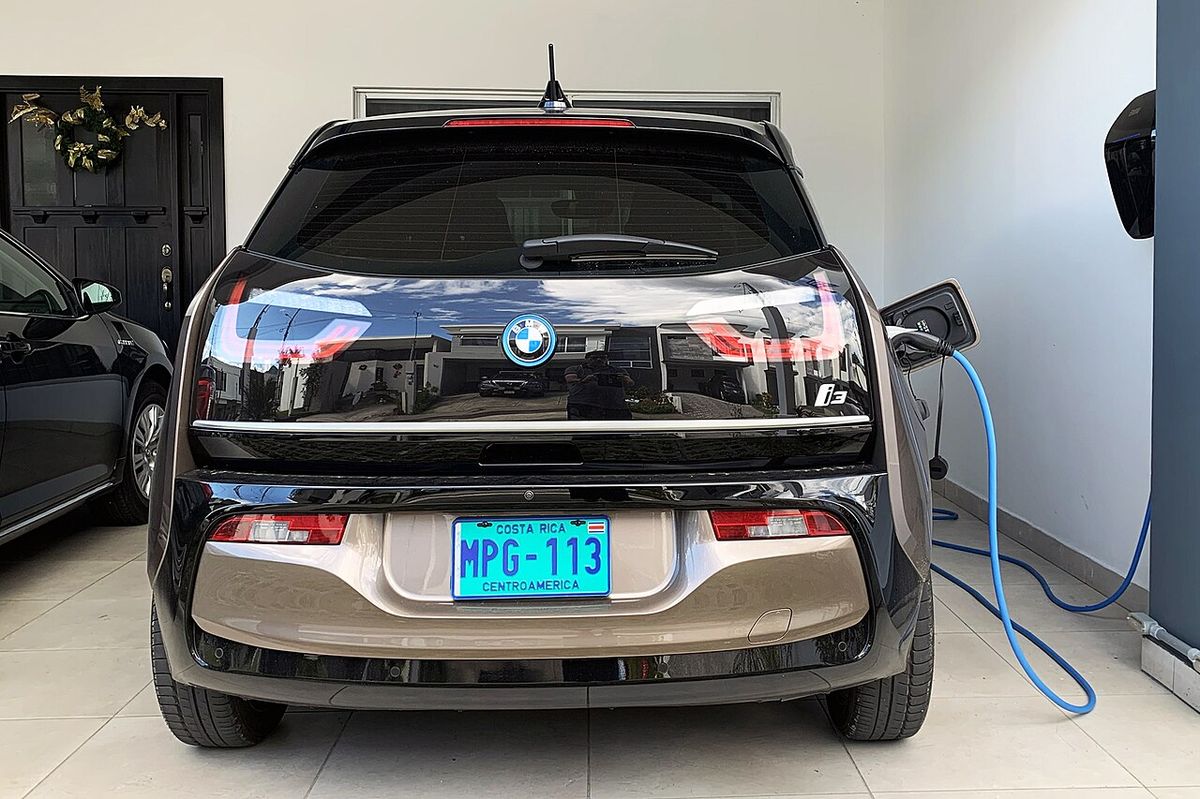
CCS Home Charging Guide: J1772, 48A Circuits and Every Model (2026)
Key takeaways
- CCS EVs charge at home on AC through the J1772 inlet — the car's onboard charger sets the speed, and it is 11 kW (11.5 kW Rivian) on nearly every model here.
- The sweet spot is a 48-amp hardwired Level 2 charger on a 60-amp dedicated circuit; the NEC continuous-load rule sizes the breaker at 125% of the draw.
- Only two exceptions can use more: the Lucid Air (up to 19.2 kW/80A) and 2020–2023 Taycans with the rare optional 19.2 kW charger — verify the Taycan build sheet.
- 800V architecture (Ioniq 5, Q6 e-tron, Taycan) is a DC road-trip feature only; it does not change home AC charging speed.
- Typical 2026 all-in cost is $1,000–$3,000 without a panel upgrade; the federal 30C credit expired June 30, 2026, so budget around utility rebates and off-peak rates.
- NACS adapters are DC-only road-trip tools — home AC charging uses J1772 on every CCS car in this guide, regardless of the port transition.
CCS-port EVs charge at home on AC power through the J1772 inlet at the top of the CCS connector, and for almost every model in this guide a 48-amp Level 2 charger on a 60-amp circuit is the fastest setup the car can use — because the onboard charger, not the wall station, sets the ceiling at 11 kW (11.5 kW on Rivian).
This hub consolidates our per-model CCS charging guides into one place: the shared electrical rules every CCS EV follows, a master comparison table, and a compact section for each model with its verified battery size, onboard charger, and overnight math. The models covered are the Audi Q6 e-tron, BMW iX, Hyundai Ioniq 5, Jeep Wagoneer S, Lucid Air, Mercedes EQS and EQE, Ford Mustang Mach-E, Polestar 3, Porsche Taycan, Rivian R1T and R1S, Volvo EX90, and VW ID.4. Two models break the 48-amp pattern — the Lucid Air, which can accept up to 19.2 kW, and older Porsche Taycans with the rare optional 19.2 kW charger — and both are flagged in their sections.
What every CCS EV needs at home
Every CCS EV in this guide charges at home the same way. The CCS1 port combines a J1772 AC inlet with two DC fast-charging pins below it. At home you only use the J1772 part: the wall station delivers 240V AC, and the car’s onboard charger converts it to DC for the battery. That is why DC figures — 270 kW on the Q6 e-tron, 800-volt architecture on the Ioniq 5 and Taycan — do not change home charging speed at all. A 400V car and an 800V car with the same 11 kW onboard charger refill at identical speeds on the same station.
The shared shopping rule follows from that: buy the station that matches the car’s onboard ceiling, confirm the figure on the manufacturer’s current spec sheet for your model year, and choose between brands on scheduling app quality, cable length, utility-rebate eligibility, and load-sharing for a second EV — not on brand matching. Every model below works at full speed with any quality UL- or ETL-listed Level 2 station. Set one scheduler only — the car’s or the station’s, never both — set a daily charge limit around 80% (90% on the Mach-E’s NCM packs per Ford guidance in its guide), and use departure-time preconditioning in winter so the cabin and battery warm on wall power instead of range.
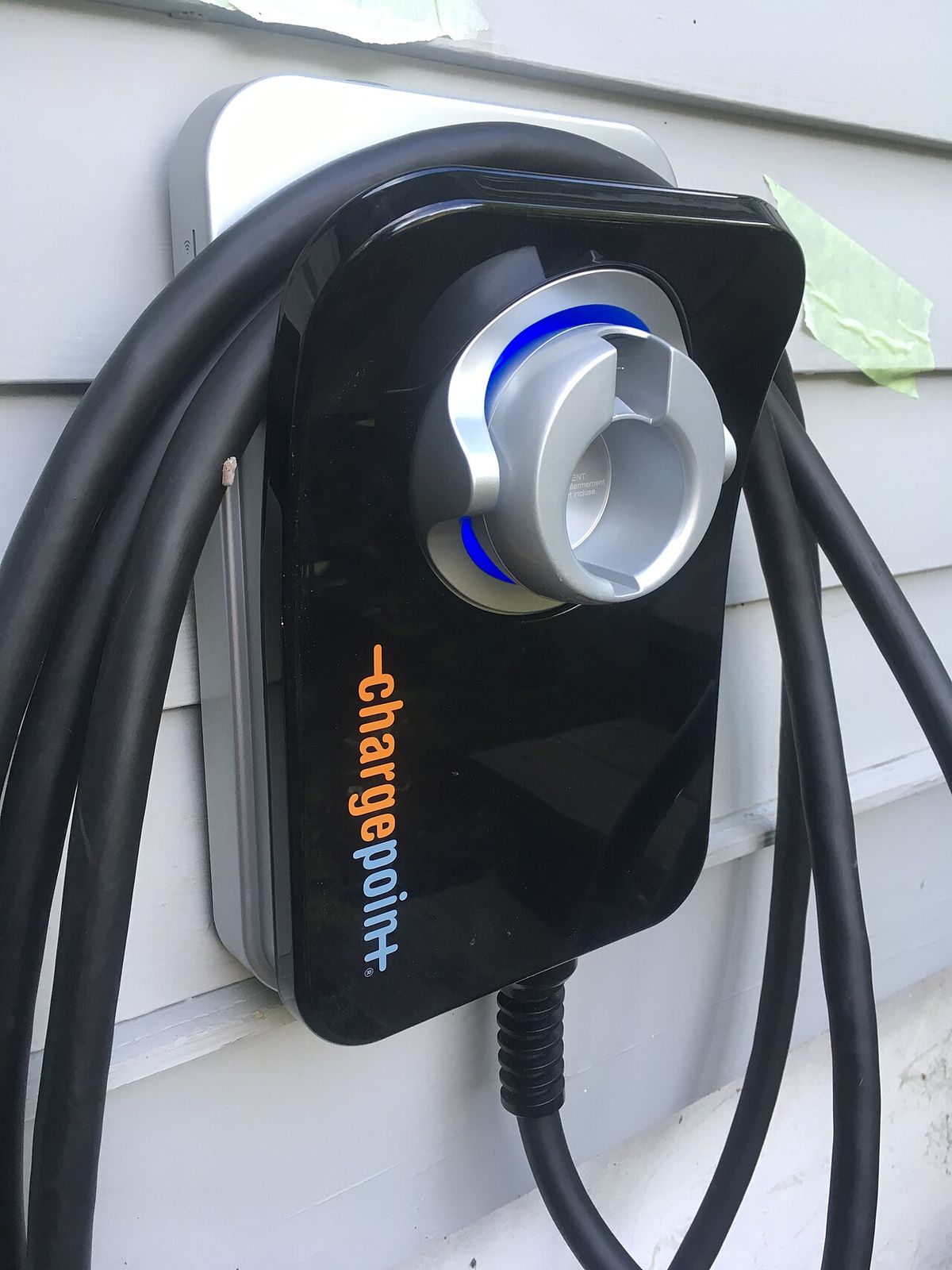
ChargePoint HomeFlex Level 2 EV Charger J1772 (NEMA 6-50 Plug)

J1772 is the AC inlet on every CCS car in this hub; audit-verified fit on the source guides.
*Affiliate Disclosure: As an Amazon Associate, Elevate Home earns from qualifying purchases. Pricing and availability subject to change.
Circuit sizing, hardwired vs. plug-in, and NEC notes
The National Electrical Code treats EV charging as a continuous load, so the breaker must be rated at 125% of the charger’s draw. That produces the sizing ladder used throughout this guide: 48 amps of charging needs a 60-amp dedicated circuit, 40 amps needs a 50-amp circuit, and 32 amps needs a 40-amp circuit. The 80-amp exceptions need a 100-amp circuit with heavy-gauge wiring. A licensed electrician should start every project with a load calculation: most 200-amp services absorb a 60-amp EV circuit without drama, while 100-amp services — common in older homes — may need a panel upgrade, a service upgrade, or a load-management device that throttles charging when the house is busy.
At 48 amps, hardwired installation is the right call across these guides: it runs cooler and more reliably than a plug-in arrangement, avoids the GFCI-breaker nuisance trips that plague some NEMA 14-50 plug-in installs, and avoids receptacle wear on a continuous load this large. Plug-in 40-amp stations remain a legitimate budget step-down when the panel is tight. Permits and inspections apply in most jurisdictions — your electrician pulls them — and HOA or condo approval should be secured in writing before work starts. If a second EV is plausible, run conduit or oversize the circuit during the first install; doing the trenching and drywall work twice costs double.
Master comparison: battery, onboard charger, and circuit
Figures are as reported in each model’s guide in this series; confirm your trim on the manufacturer’s current spec sheet before buying hardware.
Audi Q6 e-tron: 11 kW on the PPE platform
The Q6 e-tron’s 800-volt PPE architecture accepts up to about 270 kW at a DC fast charger, but at home the governing number is its 11 kW onboard AC charger, confirmed across spec sheets for US models. The quattro carries about 94.9 kWh of usable energy, with a smaller-pack RWD variant around 75.8 kWh. At 11 kW the car adds roughly 30–36 miles of range per hour: a full 0–100% refill takes about 9–10 hours, while a typical 20–30 kWh nightly top-up finishes in 2–3 hours. A 48-amp station on a 60-amp circuit hits the ceiling exactly; a 40-amp station is a reasonable step down on a tight panel. US cars ship with a CCS1 port, OEM CCS-to-NACS DC adapters unlock Tesla Superchargers on the road, and home AC charging uses J1772 either way. Measure cable reach to the left-rear charge port — 20–25 foot cables cover most layouts — and note the heat-pump thermal management makes scheduled departure preconditioning work as advertised in winter.
BMW iX: 11 kW and a rear passenger-side port
The iX carries an approximately 11 kW onboard charger (48A), so a 48-amp hardwired charger on a 60-amp circuit delivers the full rate — roughly 28–32 miles of range per hour, or 10–80% in about 7–8 hours. The iX xDrive50 carries roughly 111 kWh of usable battery; at a residential rate around $0.17 per kWh a full charge costs on the order of $19, and real-world efficiency near 2.5 miles per kWh works out to roughly 7 cents per mile at home. Its DC fast-charging capability, around 195–200 kW peak, is a road-trip figure only. Two iX specifics matter before the electrician drills: the charge port sits on the rear passenger-side fender, so mount the charger on that side and plan parking geometry for a vehicle over 6.5 feet wide; and recent model years moved to a native NACS port, so verify your build’s port type on the window sticker or in the BMW app before ordering, and keep an adapter for the other standard in the car.
Hyundai Ioniq 5: 800V is DC-only
The Ioniq 5’s famous charging figure — up to 350 kW on an 800-volt DC fast charger, 10–80% in about 18 minutes — has almost nothing to do with the garage. At home its onboard charger accepts roughly 10.5–11 kW, so a 48-amp charger on a 60-amp circuit delivers everything the car can take, at about 37–42 miles of range per hour; a 10–80% charge on the long-range battery (~77–84 kWh depending on model year) takes about 5–6 hours. The car’s efficiency, roughly 3.3–3.7 miles per kWh, makes every home kilowatt stretch. US models from 2025 gained a native NACS port — verify your car’s port before ordering and keep an adapter for the other standard. The V2L adapter (about 1.8 kW in US specification, plus an interior outlet on equipped trims) can run a refrigerator, phones, laptops, and lamps for days during an outage, but it cannot power the home’s panel: it is an extension cord, not a generator.
Jeep Wagoneer S: 11 kW, and take the included charger
The Wagoneer S pairs an 11 kW onboard AC charger with a 100.5 kWh total battery (about 93.9 kWh usable) on a 400-volt architecture. At 11 kW it adds roughly 28–34 miles of range per hour: 0–100% takes about 9–10 hours, 10–80% roughly 7 hours, and a typical 15–25 kWh day finishes in 1.5–2.5 hours. A 48-amp station on a 60-amp circuit is the exact match. One offer matters here: Jeep includes a 48-amp Level 2 home charger, or public charging credits of equivalent value through Free2move Charge, with purchase or lease — take the charger unless home installation is genuinely impossible, and still have it hardwired by a licensed electrician with a permit. The car ships with CCS1; Stellantis’s NACS transition means adapter-based Supercharger access, while home AC charging uses J1772 regardless. On an overnight rate around $0.08/kWh, a full refill costs under $8. Because the model is new, confirm the 11 kW figure on Jeep’s current spec sheet for your model year.
Lucid Air: the 19.2 kW exception
The Air is the one car in this hub that can genuinely use an 80-amp home charger: its onboard hardware accepts up to 19.2 kW (80A), rated at up to roughly 80 miles of range per hour, feeding batteries of roughly 88–118 kWh usable depending on trim. Unlocking the full rate requires a 100-amp dedicated circuit with heavy-gauge wiring, and a service upgrade to 320/400 amps — a $3,000–$8,000+ project — is sometimes needed alongside it. The honest math, though, favors restraint: at 48 amps (~11.5 kW) the Air gains roughly 44–50 miles per hour, a 100-mile day is replaced in about two hours, and even the largest battery refills 0–100% in roughly 10 hours. Reserve the 100-amp circuit for 200+ mile days with 5–6 hour parking windows. Lucid’s Connected Home Charging Station is the natural 80-amp match, but its bidirectional capability is future hardware that has not fully shipped — never buy for an unshipped feature. For 48-amp charging, universal chargers deliver identical speed for less.
Mercedes EQS and EQE: 11 kW for 100+ kWh packs
Both the EQS and EQE carry an 11 kW onboard AC charger, manufacturer-reported across the lineup, so a 48-amp station on a 60-amp circuit is the sweet spot and anything bigger buys nothing at home. The EQS carries approximately 108–122 kWh depending on model and trim; the EQE sits around 89–96 kWh usable. At 11 kW an EQS refills 0–100% in roughly 11–12 hours and an EQE in about 9–10 hours, but real routines are top-ups of 20–40 kWh that finish in 2–4 hours — at roughly $0.15–$0.20 per kWh, about $6–$8 for 250–300 miles of EQS range. A 22 kW three-phase option exists in some markets but is academic on US single-phase service. Most US Mercedes EVs still ship with a CCS1 port; a Mercedes-approved NACS DC adapter unlocks Tesla Superchargers on the road, while home AC charging uses a J1772 plug either way. Confirm your specific car’s port rather than assuming by model year.
Ford Mustang Mach-E: 48 amps, two battery sizes
The Mach-E accepts up to 48 amps of AC power and delivers about 11 kW into the battery in practice — the gap between the 48-amp draw and the ~11 kW delivered is conversion loss in the onboard charger. That is roughly 28–34 miles of range per hour. The standard-range pack is about 72–73 kWh usable and refills 0–100% in roughly 7 hours; the extended-range pack, about 91 kWh usable, takes about 8.5–9 hours. Daily 10–20 kWh top-ups finish in 1–2 hours. Ford’s Connected Charge Station matches the ceiling exactly, but universal 48-amp stations deliver identical power through the same J1772 inlet — compare scheduling, utility-program eligibility, warranty, and price. Mach-E owners have had Tesla Supercharger access via a Ford-approved NACS DC adapter since 2024; the adapter is DC-only and changes nothing at home. Set the daily limit to 90% per Ford’s guidance for the NCM batteries in most trims (the LFP standard-range battery is more tolerant of 100%), and use navigation-based preconditioning before DC fast-charging stops.
Polestar 3: 11 kW, including the 800V refresh
The Polestar 3’s onboard AC charger is 11 kW, confirmed across spec sources — about 48 amps at 240V, delivering roughly 28–34 miles of range per hour. That figure holds across the lineup, including refreshed models that moved to an 800-volt architecture for faster DC charging: the AC onboard charger remains 11 kW. The roughly 107 kWh usable pack refills 0–100% in about 10–11 hours, a 10–80% refill takes roughly 7 hours, and typical 15–25 kWh nightly top-ups finish in 1.5–2.5 hours. A 48-amp station on a 60-amp circuit is the exact match; a 40-amp station is the sensible step down on a tight panel. Polestar 3s ship with CCS1, and a $230 NACS DC adapter available through Polestar Service Points unlocks Tesla Superchargers on road trips, while home AC charging uses J1772 either way. The charge port is on the left rear — plan a 20–25 foot cable, a holster-coiled cable off the floor, and concealed wire runs if you want the install to match the car’s restrained design.
Porsche Taycan: check the build sheet on used cars
Current Taycans charge at 11 kW standard, so a 48-amp hardwired charger on a 60-amp circuit is the ceiling for 2024+ cars, at roughly 30–35 miles of range per hour; a 10–80% charge on the larger Performance Battery Plus (~97 kWh usable on facelift cars) takes about 7–8 hours. The complication is historical: Porsche offered an optional 19.2 kW (80A) onboard charger on 2020–2023 cars only. It was never standard, most used Taycans do not have it, and Porsche dropped it with the 2024 facelift. Used buyers must verify the option on the build sheet before planning electrical work, because it decides between a 60-amp and a 100-amp circuit. Note also that Porsche’s North American mobile chargers are limited to 9.6 kW on a NEMA 14-50 — a travel backup, not a full-rate home solution. The Taycan has AC charge ports on both front fenders, which makes placement flexible. Supercharger access via approved adapters arrived in September 2025; home charging stays J1772.
Rivian R1T and R1S: an 11.5 kW ceiling
Every R1T and R1S has an 11.5 kW onboard charger (48A), confirmed by Rivian, and that is the ceiling no matter how powerful the wall unit is: Rivian’s own Wall Charger adds up to about 25 miles of range per hour at that rate. A 48-amp hardwired charger on a 60-amp circuit delivers the full 11.5 kW; a 40-amp charger on a 50-amp circuit delivers about 9.6 kW (~20 miles per hour) and still refills most owners overnight; anything above 48 amps is wasted money on a Rivian. A typical 40–60 mile day needs roughly two to three hours at full rate, and even a near-empty large pack (around 135 kWh in early builds) refills in about 12 hours. Real-world efficiency around 2 miles per kWh, cold-weather range losses of 20–30%, and towing that can roughly halve range are why the 48-amp setup matters for this truck. The Rivian Wall Charger wins on ecosystem simplicity; universal 48-amp chargers charge just as fast and suit two-EV households better.
Volvo EX90: 11 kW for family duty
The EX90’s onboard AC charger is approximately 11 kW (manufacturer-reported), refilling its roughly 107 kWh usable pack 0–100% in about 10–11 hours. Family reality is kinder: most days use 15–30% of the pack, about 16–32 kWh, which an 11 kW station replaces in roughly 1.5–3 hours. A 48-amp station on a 60-amp circuit is the right match; a 40-amp station on a 50-amp circuit loses roughly 15–20% of charging speed and still works overnight. US models ship with a CCS1 port, and Volvo includes a NACS DC adapter as standard with model-year 2025 EX90s for Tesla Supercharger road trips; home AC charging uses J1772 regardless. The charge port is on the left rear, so plan 20–25 feet of cable and a wall holster that keeps the loop off the floor. On bidirectional charging, be precise: the hardware is bidirectional-capable and Volvo has run V2G pilots, but as of 2026 there is no turnkey US home-backup product — install clean, documented circuits now and treat V2H as a future upgrade.
VW ID.4: 11 kW, two packs, right-rear port
The ID.4’s onboard AC charger is approximately 11 kW (manufacturer-reported), delivering about 30–36 miles of range per hour, so a 48-amp station on a 60-amp circuit is the natural match and a 40-amp station is the budget alternative. Battery size varies by model year: roughly 62 kWh on standard-range versions and about 77–82 kWh usable on longer-range cars. At ~11 kW the standard pack refills 0–100% in about 6 hours and the long-range pack in about 7.5–8 hours; a typical 12 kWh daily top-up finishes in roughly an hour, costing about $1.80–$2.40 at $0.15–$0.20 per kWh. ID.4s still ship with CCS1; VW’s approved $200 NACS DC adapter (standard on model-year 2026) unlocks Tesla Superchargers, is DC-only, and does not work with AC equipment — home charging uses J1772. The charge port is on the right rear: plan placement and a 20–25 foot cable around it, and specify a genuine outdoor rating (NEMA 3R/4 or equivalent) for driveway installs.
Scheduling, preconditioning, and planning for a second EV
Three habits recur in every model guide in this hub. First, use one scheduler: the car’s or the station’s, never both, because two competing schedules are the classic cause of the “car didn’t charge” morning. Set the session to finish inside your utility’s cheapest window, shortly before departure — a battery that finishes charging just before you leave is warm and efficient for the first miles. Second, use departure-time preconditioning in winter: warming the cabin and battery on wall power preserves range, and several cars here (Q6 e-tron, Wagoneer S, EQS/EQE, Mach-E) also precondition the battery en route when you navigate to a DC fast charger, which is the difference between a 25-minute stop and a much longer one in cold weather. Keep the car plugged in during cold snaps so thermal management draws from the wall rather than the pack.
Third, plan the second EV now. Several leading stations support load sharing — two chargers on one circuit dynamically splitting capacity, each car at full speed when it charges alone — which can avoid a second circuit run and sometimes a panel upgrade. Having the electrician run conduit or oversize the circuit during the first install costs little; retrofitting later costs a lot. Ask each electrician to note the panel’s remaining spare capacity on the quote: it is useful documentation for resale and for any future project, from a second EV to a heat pump.
What CCS home charging costs in 2026
Costs are 2026 US market ranges; get itemized local quotes. The 80-amp exceptions cost more: a Lucid Air 100-amp circuit realistically runs $2,500–$6,000+ before any service upgrade. On incentives, one fact shapes every budget in this hub: the federal Section 30C charger credit (30%, up to $1,000 residential) expired for property placed in service after June 30, 2026. What replaces it is a patchwork of state and utility programs — equipment rebates of a few hundred dollars, EV time-of-use rates, and managed-charging credits — so check your utility’s EV page and your state energy office before you buy, and make sure any station you shortlist appears on the program’s approved-equipment list.
Operating costs are where home charging wins. Across these guides, typical residential rates of roughly $0.15–$0.20 per kWh put nightly top-ups at a few dollars, overnight EV rates around $0.08–$0.12 per kWh can roughly halve that, and public DC fast charging at $0.40–$0.60 per kWh costs roughly what a gasoline mile costs. Enroll in your utility’s cheapest overnight rate plan, set one scheduler so charging finishes inside the cheap window shortly before departure, and verify on the first bill that the cheap rate actually applied.
The verdict for CCS owners
For eleven of the twelve model lines in this hub, the answer is identical: a 48-amp hardwired Level 2 charger on a 60-amp dedicated circuit, installed by a licensed electrician after a load calculation, with one scheduler set to your utility’s cheapest overnight hours. The exceptions are deliberate ones — a Lucid Air or a 2020–2023 Taycan with the 19.2 kW option, and only when your daily mileage and parking window genuinely defeat 48 amps. Get two to three itemized quotes (charger, circuit and wire run, panel work, permit, and inspection as separate lines), confirm your car’s port type and onboard figure before ordering, and plan conduit for a second EV while the walls are open. Done once, a CCS garage quietly refills the car every night — which is the entire point of home charging.
Frequently asked questions
How do CCS EVs charge at home?
Through the J1772 AC inlet at the top of the CCS1 port. The wall station delivers 240V AC and the car's onboard charger converts it to DC — 11 kW on most models in this guide, 11.5 kW on Rivian, and up to 19.2 kW only on the Lucid Air and optioned 2020–2023 Taycans. The DC pins in the CCS port are not used at home.
What size charger and circuit do most CCS EVs need?
A 48-amp Level 2 charger on a 60-amp dedicated circuit. The NEC treats EV charging as a continuous load, so the breaker is sized at 125% of the draw. A 40-amp charger on a 50-amp circuit is a legitimate step down on a tight panel and still refills every car in this guide overnight.
Does 800V architecture make home charging faster?
No. The 800V systems on the Ioniq 5, Q6 e-tron, and Taycan enable very fast DC charging on road trips, but home charging runs through the onboard AC charger — about 11 kW on all three. A 400V car with the same onboard charger refills at the same speed on the same wall station.
Which CCS EVs can charge faster than 11 kW at home?
Only the Lucid Air, which accepts up to 19.2 kW (80A) and needs a 100-amp circuit to use it, and 2020–2023 Porsche Taycans ordered with the optional 19.2 kW onboard charger — an option that was never standard and was dropped for 2024. Every other model here caps at 11–11.5 kW.
Do I need a NACS charger for a CCS car?
No. Home AC charging uses J1772 on CCS cars. NACS adapters from Audi, Ford, VW, Polestar, Volvo, and others are DC-fast-charging tools for Tesla Superchargers on road trips. Note two exceptions in this hub: recent BMW iX builds and 2025+ Ioniq 5s have native NACS ports — verify your car's actual port before ordering.
How much does CCS home charging installation cost in 2026?
Typically $1,000–$3,000 all-in without a panel upgrade: hardware $400–$800, standard installation $800–$1,800. Panel upgrades run $2,000–$5,000 and load-management devices $500–$1,500 installed. The federal 30C credit expired for property placed in service after June 30, 2026; check state and utility rebates instead. Costs are 2026 US market ranges; get itemized local quotes.
Keep reading
EV Model Guides
NACS Home Charging Guide: Tesla Model 3, Model Y & Kia EV9 Setup (2026)
Charge any NACS EV at home: Model 3, Model Y and Kia EV9 onboard limits, 60A circuit setup, NACS vs CCS explai…
EV Model Guides
Electric Truck Home Charging Guide: Silverado EV, Hummer EV & Escalade IQ (2026)
Electric truck home charging explained: 200+ kWh packs, 19.2 kW onboard chargers, 100A circuits, panel load ca…
Cost Guide
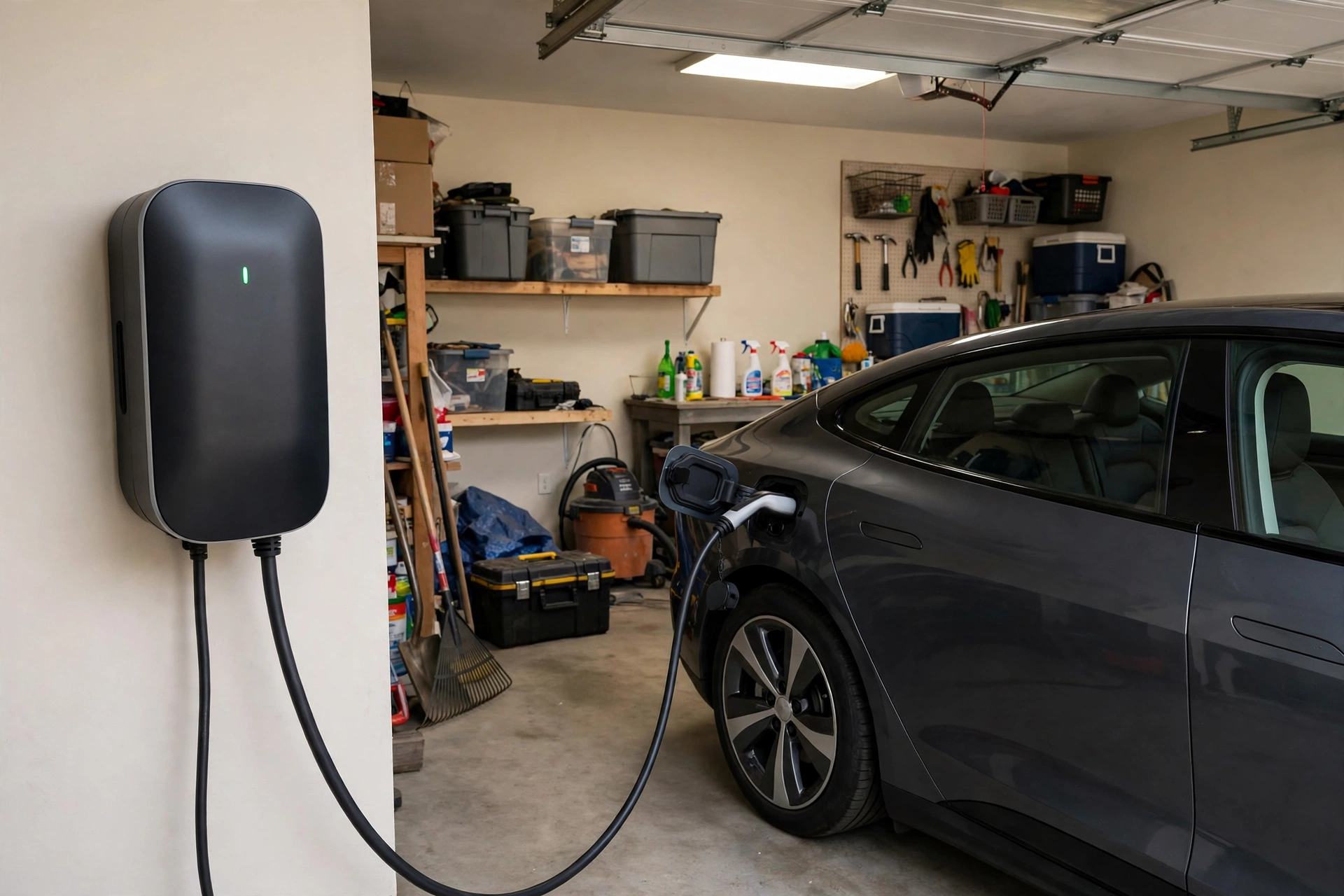
Home EV Charger Installation Cost in 2026: Full Breakdown
How much does home EV charger installation cost in 2026? Hardware, labor, panel upgrades, trenching, and rebat…
Comparison
hardwired vs plug-in EV charger: Which Setup Wins in 2026?
Hardwired or plug-in EV charger? Compare installation costs, GFCI code rules, charging speed, theft protection…
Right-Size Power
What Amperage EV Charger Do You Need? 40A vs 48A vs 80A
40A vs 48A vs 80A EV charger: how to match amperage to your driving, your panel capacity, and your budget — th…
Interactive Tool
EV Charger Installation Cost Estimator: 2026 Prices
Estimate your EV charger installation cost in seconds. 2026 pricing for hardware, labor, panel upgrades, trenc…