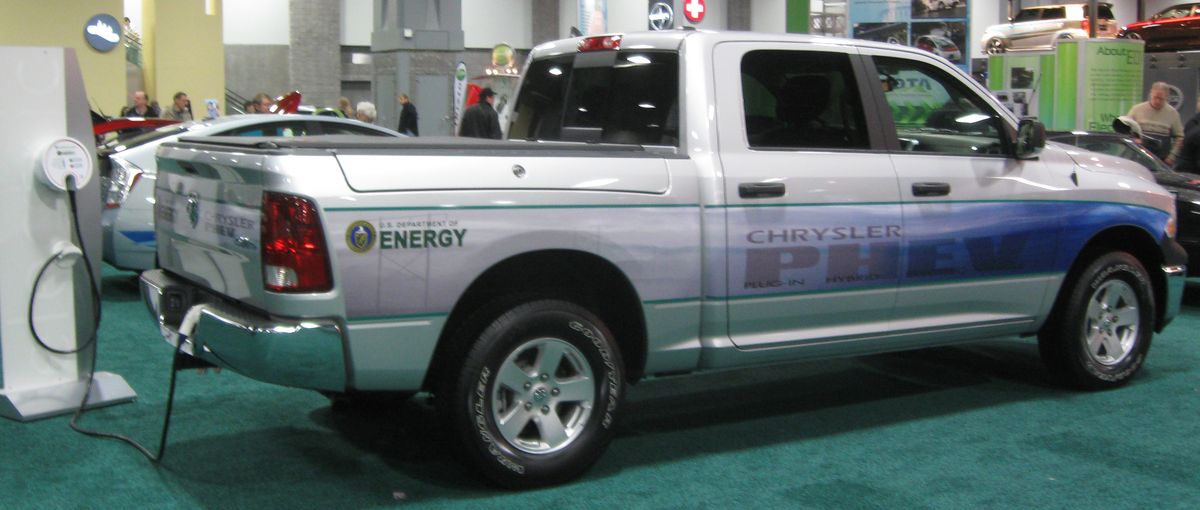
Electric Truck Home Charging Guide: Silverado EV, Hummer EV & Escalade IQ (2026)
Key takeaways
- All three trucks (Silverado EV, Hummer EV, Escalade IQ) carry 200+ kWh batteries and 19.2 kW onboard chargers — full power needs an 80-amp station on a 100-amp dedicated circuit.
- At 48 amps, a 10–80% refill takes ~13–14 hours — longer than a night; at 19.2 kW it drops to about 8 hours, and a Hummer EV 0–100% refill takes ~11 hours instead of ~18–19.
- A 100-amp EV circuit is half a typical 200-amp service: a licensed electrician's load calculation decides between a clean install, a load-managed station, a panel upgrade, or a 320/400A service upgrade.
- The Escalade IQ's 19.2 kW is standard across trims (~37 miles per hour); the Silverado EV adds GM Energy PowerShift V2H — 19.2 kW in, up to 9.6 kW out to the home.
- Budget $1,000–$3,000 for a 48-amp install, $2,500–$6,000+ for the 80-amp circuit project, and quote V2H hardware (~$7,300 previously announced) as a separate complete project.
Electric trucks are a different home-charging problem because their batteries hold 200+ kWh — roughly double a typical electric SUV — and the fastest of them accept 19.2 kW of AC power, which means an 80-amp station on a 100-amp dedicated circuit, a serious load calculation, and refill times measured in half-days rather than hours. The Chevrolet Silverado EV, GMC Hummer EV, and Cadillac Escalade IQ all share that math; this guide works through each truck’s verified specs, the panel-capacity question that decides the project, and what the installation really costs in 2026.
The framing that keeps these projects sane: you are installing infrastructure for a vehicle that stores as much energy as several home batteries. Size the electrical work like the asset it is, decide the 48-amp versus 80-amp question with real quotes, and the truck pays you back in overnight readiness — and, for the GM trucks, a genuine vehicle-to-home backup option.
Why electric trucks break the usual home-charging rules
Most EV home-charging advice assumes a 60–100 kWh battery and an 11.5 kW onboard charger, where a 48-amp station refills the car overnight with hours to spare. The trucks in this guide invalidate both assumptions. Their packs run from just over 200 kWh (Silverado EV, Escalade IQ) to roughly 210–212 kWh (Hummer EV), and all three carry a 19.2 kW onboard AC charger — 80 amps at 240V, roughly double the onboard capacity of most EVs on the road. The National Electrical Code treats EV charging as a continuous load, so breakers are sized at 125% of the draw: 80 amps of charging needs a 100-amp dedicated circuit with heavy-gauge wiring (3 AWG copper is typical).
The consequences cascade. At 48 amps (~11.5 kW), a 10–80% refill on these trucks takes roughly 13–14 hours — longer than a normal overnight window — while the full 19.2 kW cuts it to about 8 hours. A 100-amp EV circuit is half of a typical 200-amp residential service, so the panel question stops being a formality and becomes the project. And efficiency runs low — roughly 2–2.4 miles per kWh for the Silverado EV, around 1.5–1.7 for the Hummer EV — so miles-per-hour figures look modest next to a sedan’s even at high power. Plan these installs in kWh and hours, not miles per hour, and size the circuit for your hardest regular week, not your easiest.
Chevrolet Silverado EV: the working truck, and the V2H option
The Silverado EV RST carries one of the largest batteries in any production EV — widely reported at just over 200 kWh usable (check your trim’s spec sheet; WT work-truck trims vary). The truck supports up to 19.2 kW AC charging — 80 amps — which adds roughly 60–75 miles of range per hour depending on efficiency and cuts a 10–80% charge to about 8 hours, versus roughly 13–14 hours at 48 amps.
Recommended setup: the 80-amp station on a 100-amp circuit is worth it more often here than on a sedan — specifically when the truck works for a living (towing, hauling, or long daily routes that return it home late and send it out early) or when you want meaningful vehicle-to-home backup capacity restored quickly after an outage. On a 200+ kWh battery, the gap between 48 and 80 amps is the gap between “ready tomorrow” and “ready tonight.” For typical personal use — commuting, weekend projects, the boat tow twice a summer — 48 amps at 11.5 kW suffices, and overnight is long enough for most of those patterns. Budget the 80-amp circuit as a $2,500–$6,000+ project before hardware, more if the utility must upsize the service.
The standout feature is GM Energy’s vehicle-to-home system, built around the PowerShift bidirectional charger and a V2H Enablement Kit. The PowerShift charger delivers up to 19.2 kW to the truck and can send up to 9.6 kW from the truck to the home during an outage when paired with the Enablement Kit, which includes the inverter, a grid-disconnect mechanism, and a “dark start” battery that lets the system island your home from the grid safely. With 200+ kWh behind it, that combination can carry an average home’s essentials — refrigeration, well pump, lights, devices, internet — for an extended multi-day outage; GM has suggested up to around three weeks at modest consumption, though your results depend entirely on your loads. The honest caveats: it is a real electrical project (permits, inspections, utility interconnection approval), GM previously priced the bundle hardware around $7,300 before installation, availability has been phased by state and model year, the truck must be home to be a generator, and you should review how GM treats V2H usage under the battery warranty in writing before committing.
Rural ownership adds its own chapter. Long conduit runs to a detached garage, barn, or equipment shed mean voltage drop — the electrician must upsize conductors for the distance, which gets expensive fast at 80–100-amp capacity. Where there is no structure to mount to, a pedestal-mounted charger is the standard answer. Older farm services are often 100–200 amps already feeding house, barn, well pump, and shop equipment, so a 100-amp EV circuit frequently requires a service upgrade — coordinate with the utility early, because rural service upgrades involve lead times measured in weeks to months. On running costs: a full charge at around $0.17 per kWh costs roughly $35, but at real-world efficiency near 2.0 miles per kWh, home charging costs about 8 to 9 cents per mile versus about 22 cents per mile for a gas Silverado at 16 mpg and $3.50-a-gallon fuel — approaching $2,000 a year in fuel savings over a 15,000-mile year. Shifting a 150 kWh weekly recharge from $0.30 peak power to $0.10 overnight power saves around $30 a week, which is why the charging schedule is the single most valuable setting on the truck.
GMC Hummer EV: 212 kWh and the honest 48A vs. 80A decision
The Hummer EV is the heavyweight of the group: a battery holding roughly 210–212 kWh, about three times the energy of a typical electric crossover, and a 19.2 kW onboard AC charger to match. At the full 19.2 kW, charging adds roughly 55–65 miles of range per hour and refills the enormous pack from empty in about 11 hours. At a standard 48-amp station delivering ~11.5 kW, the same 0–100% refill takes roughly 18–19 hours: more than a night, which means a deeply depleted Hummer on a 48-amp charger needs a day and a night, or two nights of scheduled top-ups, to get back to full.
The realistic band is kinder. A 10–80% refill is about 147 kWh, taking roughly 8 hours at 19.2 kW and about 13 hours at 11.5 kW. A typical day of 40–60 miles burns 25–40 kWh (efficiency is around 1.5–1.7 miles per kWh in real driving), replaced in 1.5–2 hours at 19.2 kW or 2.5–3.5 hours at 11.5 kW. So daily driving is easy on either station — both finish long before morning — and the 80-amp advantage only shows itself after big-mileage days or when you need a genuinely full battery by morning.
Recommended setup: choose the 80-amp setup if you regularly return with a deeply depleted battery and need it full by morning, if your panel has the capacity (or you are already planning a service upgrade), or if you simply want the Hummer’s headline capability unlocked — it is the only way to use the 19.2 kW onboard charger. Choose the standard 48-amp setup if your panel is tight or your daily driving is modest: a 48-amp station on a 60-amp circuit is a far simpler electrical project that most 200-amp homes absorb without drama. One shopping caution: the 80-amp station market is much thinner than the 48-amp market, and only a short list of major-brand stations are actually rated for 80 amps continuous — confirm the 80A continuous rating explicitly on the spec sheet rather than trusting a “high-power” marketing label. On routine: plug in whenever the truck is home, set a daily charge limit around 80% (100% before long trips), let one scheduler finish inside the cheapest window, and note that at roughly $0.15–$0.20 per kWh, 1,000 miles of Hummer driving costs about $90–$130 in electricity — still far cheaper than gasoline for a vehicle this size, and worth putting on an EV time-of-use rate where overnight power can cost roughly half.
Cadillac Escalade IQ: 19.2 kW standard, ~37 miles per hour
The Escalade IQ’s 24-module Ultium battery holds over 200 kWh of usable energy — the largest in its class — and GM’s published specifications list a 19.2 kW-capable onboard charging module delivering roughly 37 miles of range per hour. Unlike some EVs where high-power AC charging is a trim-level option, the IQ carries this capability as standard equipment across its trims, which simplifies the buying decision: the car is ready for 19.2 kW, and the only question is whether your house is. To deliver the full rate, GM specifies a professionally installed 100-amp dedicated circuit feeding an 80-amp charge station, sold separately. The IQ also ships with a dual-level charge cord capable of 7.7 kW on 240V for interim or travel use — a backup plan, not a home-charging strategy for a 200+ kWh battery.
The refill math: at the full 19.2 kW, a 0–100% refill takes roughly 11–13 hours — Cadillac’s own figure of ~37 miles per hour implies about 12 hours for the rated ~450-mile range — while a standard 48-amp station (~11.5 kW) stretches the same refill to roughly 18–20 hours. A 10–80% refill is roughly 140–150 kWh: about 8 hours at 19.2 kW, about 13 hours at 11.5 kW. A typical day of family driving — 40–60 miles in a vehicle this size burns 25–40 kWh — is replaced in 1.5–2 hours at full power or 2.5–3.5 hours on a 48-amp station. For road trips, the IQ’s 800-volt-class architecture supports up to ~350 kW DC fast charging — about 100 miles in 10 minutes on a capable charger — which is the long-distance strategy; home charging is the overnight foundation.
Recommended setup: treat the IQ as a two-phase project. Phase one is the 19.2 kW installation: an 80-amp station on a 100-amp dedicated circuit, quoted with the electrical work itemized separately from the charging equipment, plus a quoted 48-amp fallback path so you can see exactly what the full-power setup costs versus the simpler one. Phase two is the vehicle-to-home evaluation: the IQ’s hardware supports bidirectional charging, and GM Energy sells the Powershift Charger plus V2H Enablement Kit to power essential home circuits during an outage — a 200+ kWh battery is, in energy terms, several days of essential-load backup for a typical home. But V2H requires utility interconnection approval in most jurisdictions, capabilities vary by market, and using the car as a battery means the car isn’t fully charged when the power returns — so decide with real quotes and your utility’s requirements in hand, not brochure promises. On operating costs, 1,000 miles costs roughly $90–$140 in electricity at typical residential rates, which makes an EV time-of-use rate plan a meaningful line item rather than a nice-to-have: enroll before the charger goes live.
Electric trucks compared: battery, onboard power, circuit, refill time
The pattern across all three rows is the story of this hub: identical onboard ceilings, identical circuit requirements, and refill times that only work overnight if you actually build the 80-amp setup. The differences are in the details — the Silverado’s work-truck duty cycle and V2H hardware, the Hummer’s sheer pack size, the Escalade IQ’s standard-equipment 19.2 kW and ~37 miles per hour — not in the electrical recipe.
Panel capacity and the load calculation: the step that decides everything
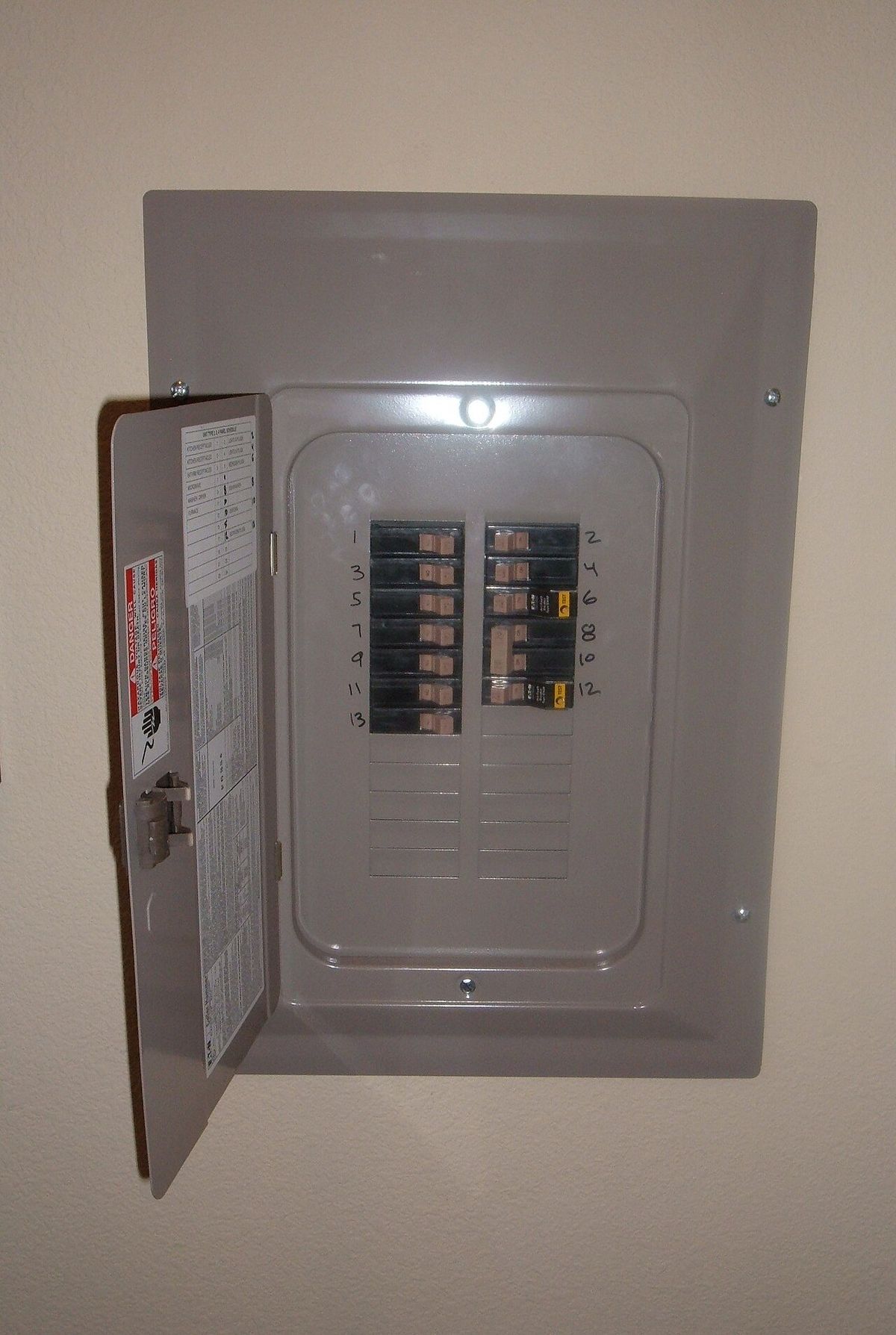
A 100-amp dedicated circuit is half of a typical 200-amp residential service. In many homes — especially those with electric cooking, electric water heating, a pool, or a workshop — a licensed electrician’s load calculation will show that the panel cannot safely host it alongside everything else. This assessment must happen before you buy any hardware, and the possible outcomes, in ascending order of cost, are the same for all three trucks:
- The panel cooperates: many 200-amp homes absorb even a 100-amp EV circuit with capacity to spare once the calculation is actually run — never assume either way without the numbers.
- A load-managed station: an 80-amp-capable station configured to throttle when the house’s other loads spike can sometimes fit a borderline panel without a full service upgrade. It is a legitimate engineering option, not a compromise, when the electrician designs it properly — but it is not a substitute for a proper load calculation.
- A panel upgrade: replacing a smaller or full panel to create capacity and breaker space for the new circuit.
- A full service upgrade to 320/400 amps: the top of the ladder, and frequently the answer on rural properties with older 100–200-amp services already feeding house, barn, well pump, and shop equipment. Coordinate with the utility early — rural service upgrades involve lead times measured in weeks to months, not days.
Ask the electrician to quote both paths — the 48-amp install and the 80-amp install — with the panel work itemized separately, so you can see exactly what the extra 7.7 kW costs. Charger placement matters to the quote: an 80-amp circuit over a long distance needs heavy, expensive copper, so a charger close to the panel saves real money, and long rural runs need conductors upsized for voltage drop, measured rather than guessed. All of this work — trenching, service upgrades, pedestal wiring — belongs to licensed electricians with permits and inspections; the inspector is your quality assurance.
What an electric-truck charging install costs in 2026
Planning figures from the three model guides: a standard 48-amp charger install runs the familiar $1,000–$3,000 all-in when the panel cooperates. The 80-amp path costs more at every line: the Silverado EV guide budgets the 80-amp circuit project at $2,500–$6,000+ before any service upgrade, and the Hummer and Escalade IQ guides both put the charging equipment and circuit alone for an 80-amp setup at several thousand dollars before panel work, with a service upgrade climbing much higher. Vehicle-to-home is a separate budget entirely: GM previously priced the PowerShift plus V2H Enablement Kit bundle hardware around $7,300 before installation, with installation varying widely by property — get it quoted as a complete project (hardware, install, interconnection), not hardware alone.
On incentives: the federal Section 30C charger credit expired for property placed in service after June 30, 2026 — do not include it in any 2026 budget. The active incentives are state and utility programs: equipment rebates, EV time-of-use rates, managed-charging credits, and emerging utility programs around bidirectional charging or backup power. Confirm any tax treatment with a tax professional. The operating-cost side repays the discipline: beyond the Silverado’s roughly $2,000-a-year fuel saving, the Hummer’s 1,000-mile electricity cost of about $90–$130 and the Escalade IQ’s roughly $90–$140 are both far below gasoline for vehicles this size — and public charging a truck this size is punishing (a 10-to-80-percent session moves roughly 140 kWh, which at $0.50 per kWh costs $70), so the economic case for getting the home setup right the first time is overwhelming.
The verdict: build the 100-amp circuit if the truck works hard, and quote both paths either way
Decide the duty cycle first, because it determines the entire electrical plan. If the truck tows, hauls, runs long daily routes, or must be genuinely full by morning after big-mileage days, build the 80-amp station on the 100-amp circuit — on a 200+ kWh pack, that is the only setup that makes a full refill an overnight event. If the truck’s life is commuting and weekend projects, a 48-amp station covers every normal routine for thousands less, and sizing conduit with a future upgrade in mind keeps the bigger option open. Either way, get two to three itemized quotes from licensed electricians — load calculation, measured wire runs, panel or service work, permit, and inspection as separate lines — enroll in your utility’s EV or time-of-use rate before the first charge, and treat vehicle-to-home as a separately quoted second phase with utility interconnection approval. Done in this order, even the heaviest electric truck becomes what it should be: full every morning, and — when the grid falters — the most capable battery at the property. Costs are 2026 US market ranges; get itemized local quotes.
Frequently asked questions
What is the Silverado EV's maximum home charging speed?
Up to 19.2 kW AC — 80 amps on a 100-amp dedicated circuit, adding roughly 60–75 miles of range per hour. The truck's ~200+ kWh battery makes the 80-amp circuit more justifiable here than on smaller EVs: at 48 amps, a 10–80% charge takes ~13–14 hours; at 80 amps, about 8. Check your trim's spec sheet for exact figures.
How long does it take to charge a Hummer EV at home?
At 19.2 kW, about 11 hours 0–100% for the ~212 kWh pack; at a standard 48-amp station (~11.5 kW), about 18–19 hours. A 10–80% refill takes roughly 8 hours at 19.2 kW versus ~13 hours at 11.5 kW. Daily top-ups of 25–40 kWh finish in a few hours on either station.
What is the Cadillac Escalade IQ's onboard AC charging limit?
Up to 19.2 kW AC — standard equipment across trims, per GM's published specifications — delivering roughly 37 miles of range per hour. It requires an 80-amp charge station on a professionally installed 100-amp dedicated circuit.
Will I need a panel or service upgrade for an electric truck?
Often, but not always. A 100-amp dedicated circuit is half a typical 200-amp service, so many homes need a panel upgrade, a service upgrade to 320/400 amps, or a load-managed station that throttles when the house is busy. A licensed electrician's load calculation — done during quoting, before you buy hardware — gives the definitive answer.
How does the GM Energy PowerShift V2H system work?
GM Energy's PowerShift bidirectional charger plus V2H Enablement Kit lets the truck send up to 9.6 kW to the home during an outage (while charging at up to 19.2 kW normally). The kit includes the inverter, grid-disconnect hardware, and a 'dark start' battery for safe islanding. Confirm current pricing, model-year compatibility, and your state's availability before planning around it.
Is a 48-amp charger enough for an electric truck?
For personal-use duty — commuting, weekend projects — yes: 11.5 kW refills typical daily driving overnight on all three trucks. Step up to 80 amps if the truck works hard (towing, long routes, late returns), if you need a genuinely full 200+ kWh battery by morning, or if you want V2H backup restored quickly after outages.
Keep reading
EV Model Guides
NACS Home Charging Guide: Tesla Model 3, Model Y & Kia EV9 Setup (2026)
Charge any NACS EV at home: Model 3, Model Y and Kia EV9 onboard limits, 60A circuit setup, NACS vs CCS explai…
Home EV Charging
CCS Home Charging Guide: J1772, 48A Circuits and Every Model (2026)
How CCS EVs charge at home: the 11 kW onboard limit, 48A/60A circuit sizing, and per-model battery and charger…
Right-Size Power
What Amperage EV Charger Do You Need? 40A vs 48A vs 80A
40A vs 48A vs 80A EV charger: how to match amperage to your driving, your panel capacity, and your budget — th…
Explainer
Do You Need a Panel Upgrade for an EV Charger? Load Calculation, Worked Examples & 2026 Costs
Run the NEC load calculation yourself with two worked examples (100A and 200A panels), see what a panel upgrad…
Cost Guide
Home EV Charger Installation Cost in 2026: Full Breakdown
How much does home EV charger installation cost in 2026? Hardware, labor, panel upgrades, trenching, and rebat…
Interactive Tool
EV Charger Installation Cost Estimator: 2026 Prices
Estimate your EV charger installation cost in seconds. 2026 pricing for hardware, labor, panel upgrades, trenc…