NACS Home Charging Guide: Tesla Model 3, Model Y & Kia EV9 Setup (2026)
Key takeaways
- Every 48-amp car in this guide (Model 3 Long Range/Performance, Model Y, Kia EV9) lands on the same install: a 48-amp hardwired station on a 60-amp dedicated circuit.
- Model 3 Long Range/Performance charges at 11.5 kW (48A); the standard-range LFP car is limited to 32A (~7.7 kW) — confirm your trim before sizing the circuit.
- For home AC charging, NACS vs CCS changes nothing about speed — the onboard charger and circuit amperage set the rate; the plug is purely a fitment question.
- The EV9's ~100 kWh battery and ~10.9–11 kW onboard charger make 48A the sweet spot: ~33–38 miles per hour, 10–80% in roughly 7 hours.
- Typical 2026 all-in install is $1,000–$3,000 when the panel cooperates; the Section 30C credit expired June 30, 2026, so budget around utility rebates and EV rate plans.
To charge a NACS-port EV at home, install a hardwired 240V Level 2 station matched to your car’s onboard charger — a 48-amp station on a 60-amp dedicated circuit for most Tesla Model 3, Model Y, and Kia EV9 trims — have a licensed electrician run a load calculation and pull the permit, and let the car’s scheduler finish the charge inside your utility’s cheapest overnight window. That single setup covers every model in this guide; what changes per car is the onboard limit, the battery size, and how long a full refill actually takes.
This hub consolidates our per-model NACS guides into one place. It explains what NACS versus CCS (and J1772) really means for a garage, then works through the Tesla Model 3, Tesla Model Y, and Kia EV9 one at a time with each car’s verified charging specs, the charger and circuit we recommend for it, the overnight refill math, and the 2026 install costs drawn from the individual guides.
NACS vs. CCS at home: what actually changes in your garage
Both NACS and CCS are simply plug shapes — physical connector standards for getting electricity into the car. CCS (Combined Charging System), often called CCS1 in North America, was the standard adopted by most non-Tesla automakers through the early 2020s. NACS (North American Charging Standard) began as Tesla’s proprietary connector and has since been standardized as SAE J3400, with nearly every major automaker committing to it for new models. Kia moved the EV9 to a native NACS charge port starting with the 2025 model year, and every Tesla Model 3 and Model Y sold in North America uses NACS natively.
The important technical nuance: for AC charging — which is what all home Level 2 charging is — the connector delivers power to the car’s onboard charger, which does the actual conversion. The plug shape does not determine your home charging speed; the car’s onboard charger and the circuit amperage do. A CCS car and a NACS car on equivalent home setups charge at identical rates. The connector wars were really fought over DC fast charging on road trips, where plug compatibility determines which networks you can use. At home, you are plugging into your own wall — the only question is whether the plug fits your car, which is solved with the right charger or a simple adapter.
At home, the connector debate is a fitment question, not a performance question. Your overnight charge speed is set by amperage and the car’s onboard charger — never by the shape of the plug.
Where J1772 fits in: legacy non-Tesla EVs charge on AC through a J1772 connection, which is why J1772 still matters in a NACS world. Tesla’s Universal Wall Connector carries an integrated J1772 adapter that docks into the same holster, so one station charges a NACS car today and a J1772 car tomorrow with no dongle to lose. A Tesla can also use a third-party J1772 station with the small adapter that comes with the car. Who needs what, in practice:
- NACS-native cars (Model 3, Model Y, 2025+ EV9): a NACS-native station is the cleanest fit — no adapter in the daily routine at all.
- Mixed-brand households: a universal-connector station, or a NACS station plus a certified adapter for the other car, covers both bays.
- Households keeping an older CCS/J1772 car: keep the existing charger if it works — it will serve that car for its full lifespan — and add NACS when a NACS vehicle arrives.
Adapter rules are simple but non-negotiable. Buy certified, manufacturer-approved adapters only — for home AC charging, use adapters listed by a recognized testing laboratory and approved by your vehicle or charger manufacturer, because uncertified adapters are a genuine fire risk. Never daisy-chain adapters or use homemade modifications. Expect to pay $150–$350 for a quality certified AC adapter in 2026. And note the distinction: adapters for home AC charging and adapters for DC fast charging are different products with different ratings — do not use a DC fast-charge adapter on your home charger or vice versa. Finally, the electrical requirements are identical regardless of connector: circuit amperage, wiring, breaker sizing, and the NEC load calculation are the same whether the plug on the end is NACS or J1772. A 48-amp charger needs a 60-amp circuit, full stop.
Tesla Wall Connector Level 2 Hardwired EV Charger (48A)

Native NACS 48A wall connector; audit-verified GOOD best-match for the Tesla/EV9 guides folded into this hub.
*Affiliate Disclosure: As an Amazon Associate, Elevate Home earns from qualifying purchases. Pricing and availability subject to change.
Tesla Model 3: two onboard chargers, 48A vs. 32A
Not all Model 3s charge the same at home. Long Range and Performance trims carry an 11.5 kW onboard charger — 48 amps at 240V — while the standard-range rear-wheel-drive car is limited to 32 amps, about 7.7 kW. This is a car-side limit, documented in Tesla’s own specifications: the wall unit cannot push either trim past its onboard ceiling. Know which car you own before you size the circuit, because the right answer differs. If you are buying used, confirm the trim rather than the badge — a 2024 standard-range car and a 2024 Long Range car look nearly identical but charge at different speeds at home.
Recommended setup: for a 48-amp car, the exact match is a 48-amp wall connector on a 60-amp dedicated circuit — roughly 44 miles of range per hour. For the 32-amp standard-range car, a 40-amp station on a 50-amp circuit is already more than the car can use, and many owners happily run a 32-amp setup on a 40-amp circuit at about 30 miles per hour. Either way, an overnight window refills far more than a day’s driving. If a future Tesla (or a second EV) might want 48 amps, having the electrician run wire sized for a 60-amp circuit costs little extra during the initial job.
The overnight math is generous. A Long Range Model 3’s roughly 75–82 kWh pack (depending on model year and battery) refills 0–100% in about 7–8 hours at 11.5 kW. The standard-range car’s roughly 57–60 kWh LFP pack takes about 8 hours at 7.7 kW. Daily reality is a fraction of that: a 40-mile commute burns about 10 kWh, replaced in under an hour at 48 amps and in about 80 minutes at 32 amps. The LFP battery deserves a special note: unlike the NCM packs in the Long Range trims, Tesla recommends charging the LFP pack to 100% at least weekly (it prefers a full charge for calibration), and it tolerates daily 100% charging far better. So standard-range owners can set the limit to 100% and forget it, while Long Range owners should hold the daily limit around 80% and raise it for trips.
Charger choice comes down to the standard Wall Connector versus the Universal Wall Connector. Both deliver up to 48 amps, both support power sharing between up to six units on one circuit, and both integrate with the Tesla app. Single-Tesla household with no plans for a second brand? The standard Wall Connector is the cleanest, cheapest fit. Any chance of a non-Tesla EV in the next five years? The Universal’s small premium buys genuine flexibility, and it is cheaper than replacing the whole station later. Installation-wise, both units want a hardwired connection at 48 amps; place the unit where the 24-foot cable comfortably reaches the car’s left-rear port with the car parked normally.
Tesla Model Y: the 60-amp default, with honest alternatives
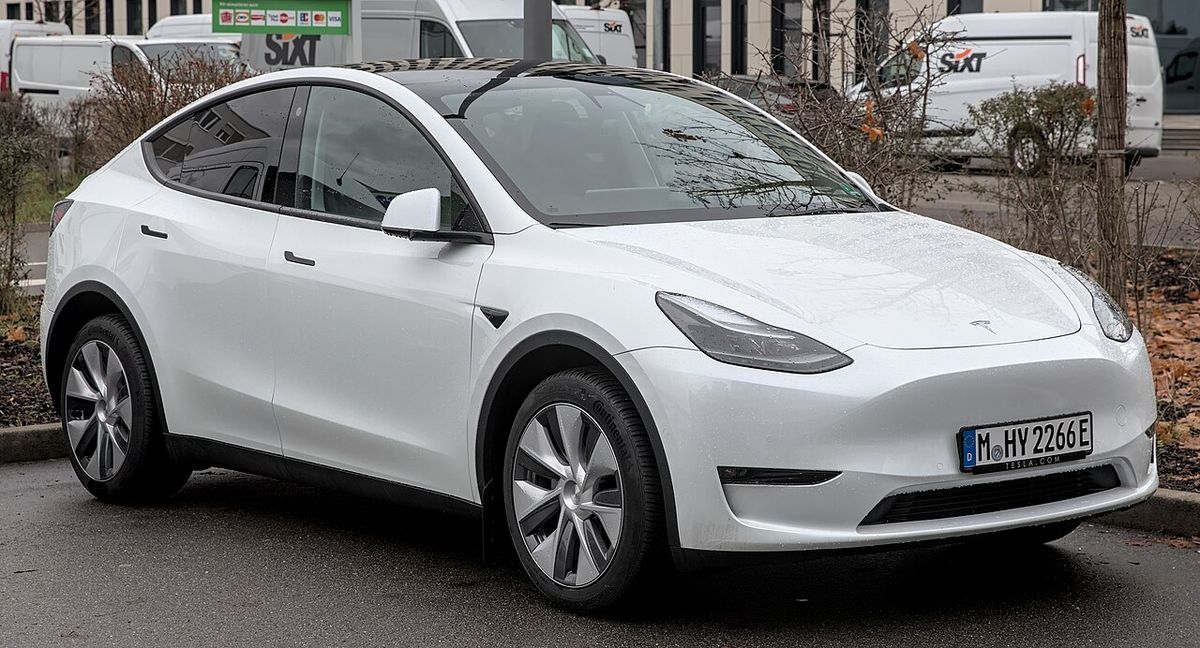
Every Model Y sold in North America uses Tesla’s NACS connector, and its onboard AC charger typically accepts up to around 11–12 kW from a Level 2 setup — an approximate figure, so check Tesla’s current spec sheet for your model year and trim. On a full-rate 48-amp setup that translates to roughly 40 miles of range per hour: more than enough to recover a full day of driving in a few hours overnight. Level 1 charging from a standard 120V outlet adds only a few miles of range per hour — an emergency backup, not a primary strategy — and DC fast charging at Superchargers is for road trips, not daily use.
Recommended setup: a hardwired Wall Connector on a 60-amp circuit (48A charging) is the fastest home setup and the default pick — best for high-mileage drivers, households that will add a second EV, or anyone future-proofing. The Universal Wall Connector is the smarter buy if your household, or your likely next car, includes a non-Tesla EV. The Mobile Connector is the budget path: have an electrician install a NEMA 14-50 outlet and plug in; it tops out at a lower amperage on outlet installs (typically 32 amps), but that is still plenty for overnight charging, and the unit travels with you. Right-size honestly: a 50-amp circuit at 40 amps is the common middle ground, a 40-amp circuit at 32 amps adds roughly 25–30 miles of range per hour, and eight to ten hours overnight at 32 amps recovers roughly 200–300 miles — far more than the average American drives in a day (under 40 miles). Paying for a 60-amp circuit you don’t need, on a panel that can’t comfortably support it, is the most common overspend in home EV charging.
In practical hours: a daily commute top-up of ~40 miles takes ~1 hour at 48A, ~1.5 hours at 32A, and ~2 hours at 24A; a ~100-mile weekend day takes ~2.5, ~3.5, and ~5 hours respectively; a ~200-mile post-road-trip recharge takes ~5, ~7, and ~10 hours. For daily habits, keep the charge limit around 80%, charge overnight on off-peak rates, and save 100% for road trips. Keep the car plugged in when parked at home — the battery management system uses shore power for thermal conditioning instead of draining the battery, which is particularly valuable in very hot or cold climates — and don’t overthink partial charges: shallow nightly top-ups beat deep weekly ones.
Kia EV9: the big-battery family case for 48 amps
The EV9 is the family hauler of this group — three rows, a battery nudging 100 kWh, and school-run duty cycles that punish improvised charging setups. Its onboard AC charger accepts roughly 10.9–11 kW, meaning a 48-amp Level 2 charger on a 60-amp circuit is the sweet spot: about 33–38 miles of range per hour, or a 10–80% refill in roughly 7 hours. The 800V architecture only affects DC fast charging on road trips; it changes nothing about the home setup.
Recommended setup: the 48-amp hardwired charger on a 60-amp circuit. The EV9’s size is the argument for 48 amps rather than 40: at 40 amps on a 50-amp circuit (~9.6 kW) you get ~28–33 miles per hour, and at 32 amps on a 40-amp circuit (~7.7 kW) roughly ~22–27 miles per hour — workable for light use, but the difference between 9.6 and 11 kW is the difference between “ready by 6 a.m.” and “ready by 8 a.m.” after a big weekend. Buy the headroom once. If your panel only supports 40 amps now, buy a 48-amp-capable charger and have the electrician commission it at 40 amps — the hardware headroom costs little now versus replacing the charger later.
Family-proof the routine. Schedule by departure time (say, 7 a.m.) in the Kia app or the car rather than by start time, so late plug-ins still finish by morning, and keep a practiced “immediate charge” override for the unexpected early airport run. Mount the charger on the charge-port side — the EV9’s port is on the right rear — with a holster that makes “plug in when you park” a one-motion habit. Plan for the second EV from day one: power-sharing chargers let two 48-amp-capable units split a single circuit dynamically, and running conduit for the second location during the first job costs a fraction of doing it as a separate project later. The EV9 also offers Vehicle-to-Load: an adapter in the charge port provides roughly 3.6 kW of system capacity, with the exterior adapter delivering about 1.8–1.9 kW at 120V in US specification (approximate; check your trim’s spec sheet), plus an interior outlet on equipped trims — enough to run a refrigerator, phones, lamps, and the Wi-Fi router for days during an outage, though it cannot power the home’s panel or 240V appliances. Port note: Kia moved the EV9 to a native NACS port starting with the 2025 model year — verify your build’s port type before ordering, match the charger connector to the car, and keep an adapter for the other standard in the vehicle.
NACS models compared: battery, onboard charger, circuit, refill time
Read the table the way an electrician does: the onboard charger column is a ceiling the car imposes, the circuit column is what your panel must supply, and the refill column is what you actually feel. All three 48-amp cars land on the same electrical answer — a 60-amp dedicated circuit — which is why one well-planned installation can serve any of them, and why power sharing makes a second NACS car a modest addition rather than a second project.
What NACS home charging costs in 2026
The ranges converge across the three model guides. A typical all-in install runs roughly $1,000–$3,000 when the panel cooperates (the Model Y guide puts a standard Wall Connector install at $1,200–$2,500 before rebates), with the panel-to-charger distance as the main variable: a charger mounted beside the panel is a short, cheap run, while a detached garage can mean trenching, conduit, and a subpanel that pushes costs higher. Hardware anchors: Tesla Wall Connector typically $400–$550, Universal Wall Connector $500–$650, Mobile Connector $200–$300 plus outlet install ($400–$1,000 for a NEMA 14-50); EV9-class third-party chargers run $400–$800 with standard install labor of $800–$1,800. Standard electrician labor on a short run with spare panel capacity is typically $500–$1,200, and permit and inspection typically $100–$500.
The wildcard is the panel. Most 200-amp homes take a 60-amp EV circuit without comment; 100-amp services may need a panel upgrade — $2,000–$4,500+ in the Model Y guide’s range, $2,000–$5,000 in the EV9 guide’s — or a load-management device at roughly $500–$1,500. Only a licensed electrician’s load calculation settles which case you are in. On incentives: the federal Section 30C charger credit expired for property placed in service after June 30, 2026, so price the project on state and utility incentives instead — many utilities offer $300–$1,000+ rebates for Level 2 installs, plus EV time-of-use rate plans that can price overnight power at half the daytime rate or less. Confirm any tax treatment with a tax professional.
Running costs reward the home setup. The EV9’s roughly 100 kWh pack makes the math vivid: at around $0.17 per kWh, a full charge costs roughly $17, versus $36 to $56 for the same energy at public DC fast chargers billing $0.36 to $0.56 per kWh. A family driving 15,000 miles a year at real-world efficiency near 2.8 miles per kWh uses about 5,350 kWh — roughly $900 on home electricity versus $1,900 to $3,000 on public charging — and time-of-use rates at $0.08 to $0.12 per kWh overnight drop that toward $500 to $650. For the Model 3, the same discipline applies at smaller scale: one scheduler must own the routine (car or wall connector, never both — two competing schedules are the classic cause of the “car didn’t charge” morning), and scheduled departure finishes the charge just before you leave, inside the cheapest hours, with a warm, efficient battery for the first miles.
The verdict: one circuit answer for every NACS car in this guide
For the Model 3 Long Range or Performance, the Model Y, and the EV9, buy the same installation: a 48-amp hardwired station on a 60-amp dedicated circuit, sized by a load calculation, permitted, and scheduled to finish inside the off-peak window. The standard-range Model 3 is the one exception that can save money with a 32–40-amp setup — but run wire sized for 60 amps while the electrician is there if a faster car is ever plausible. On the connector question, anchor the permanent installation to NACS (it is the SAE J3400 industry direction and every car in this guide uses it natively), choose the Universal Wall Connector or a universal-connector station if a J1772 car might ever share the garage, and keep one certified adapter in any car that needs one. Get two to three itemized quotes — station, circuit, wire run, any panel work, permit, and inspection as separate lines — enroll in your utility’s EV rate before the first charge, and the result is the routine all three guides promise: full every morning, cheap to run, and never something you have to think about. Costs are 2026 US market ranges; get itemized local quotes.
ChargePoint HomeFlex Level 2 EV Charger J1772 (NEMA 6-50 Plug)

Audit-verified alternative on the source guides; J1772 unit suits mixed-fleet garages with an adapter.
*Affiliate Disclosure: As an Amazon Associate, Elevate Home earns from qualifying purchases. Pricing and availability subject to change.
Frequently asked questions
Is NACS better than CCS for home charging speed?
No — for home Level 2 AC charging, the connector makes zero difference to charging speed. Both deliver AC power to the car's onboard charger, which determines the actual charge rate along with your circuit's amperage. The NACS-vs-CCS debate matters for DC fast charging on road trips, not for overnight charging in your garage.
How fast can a Tesla Model 3 charge at home?
Long Range and Performance trims carry an 11.5 kW (48A) onboard charger; the standard-range rear-wheel-drive car is limited to 32A (~7.7 kW). The wall unit can't push either past its onboard ceiling — a Long Range refills 0–100% in about 7–8 hours, the standard-range car in about 8 hours.
What is the Kia EV9's maximum home charging speed?
Roughly 10.9–11 kW — the onboard AC charger's rated capacity. A 48-amp hardwired charger on a 60-amp circuit delivers it: about 33–38 miles of range per hour, or 10–80% in roughly 7 hours. The 800V architecture only affects DC fast charging on road trips.
Should I get the Wall Connector or the Universal Wall Connector?
For a Tesla-only garage, the standard Wall Connector is the simplest pick. If your household has — or will soon add — a non-Tesla EV, the Universal Wall Connector's built-in J1772 adapter is worth the small premium. Both deliver up to 48 amps and support power sharing.
Do I need a different circuit for NACS vs CCS chargers?
No. The electrical requirements — circuit amperage, wiring, breaker sizing, and the NEC load calculation — are identical regardless of connector type. A 48-amp charger needs a 60-amp circuit whether the plug on the end is NACS or J1772.
Does the EV9 use NACS or J1772?
Kia moved the EV9 to a native NACS port starting with the 2025 model year. Match the charger connector to your build's port — verify visually before ordering — and keep an adapter for the other standard in the car for public charging.
Keep reading
Home EV Charging
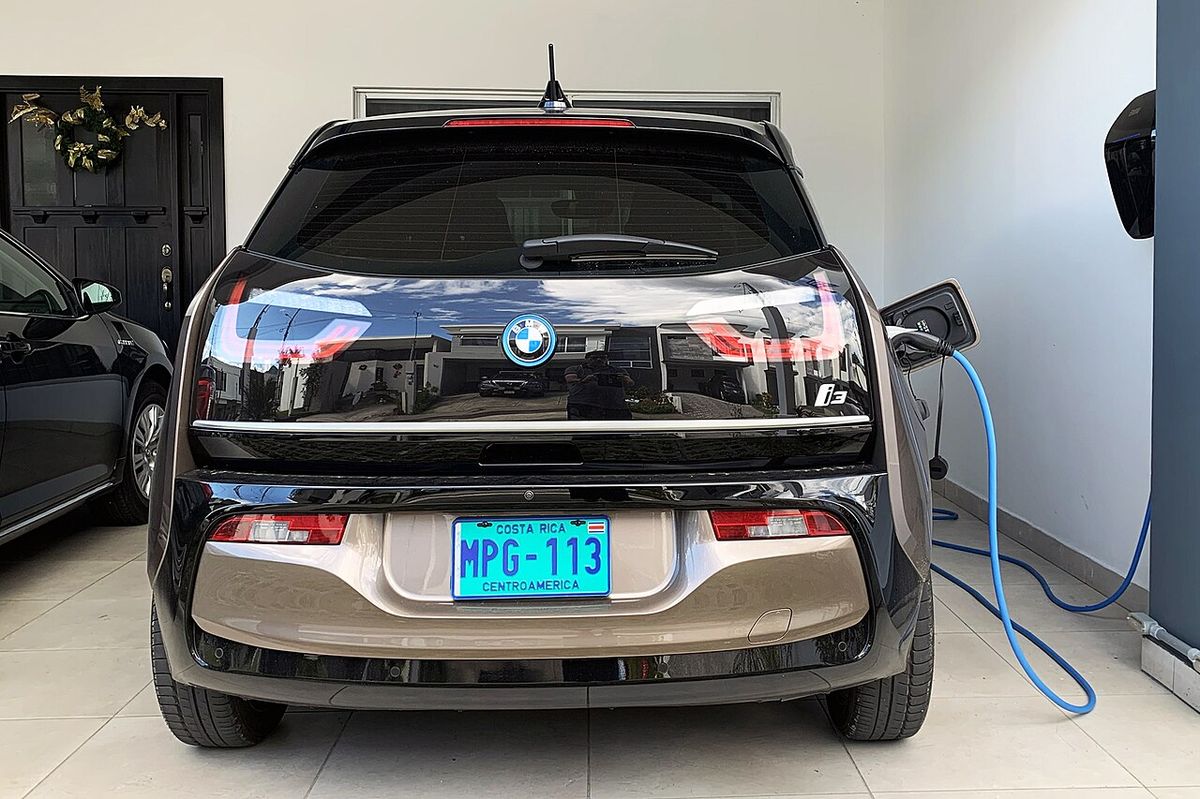
CCS Home Charging Guide: J1772, 48A Circuits and Every Model (2026)
How CCS EVs charge at home: the 11 kW onboard limit, 48A/60A circuit sizing, and per-model battery and charger…
EV Model Guides
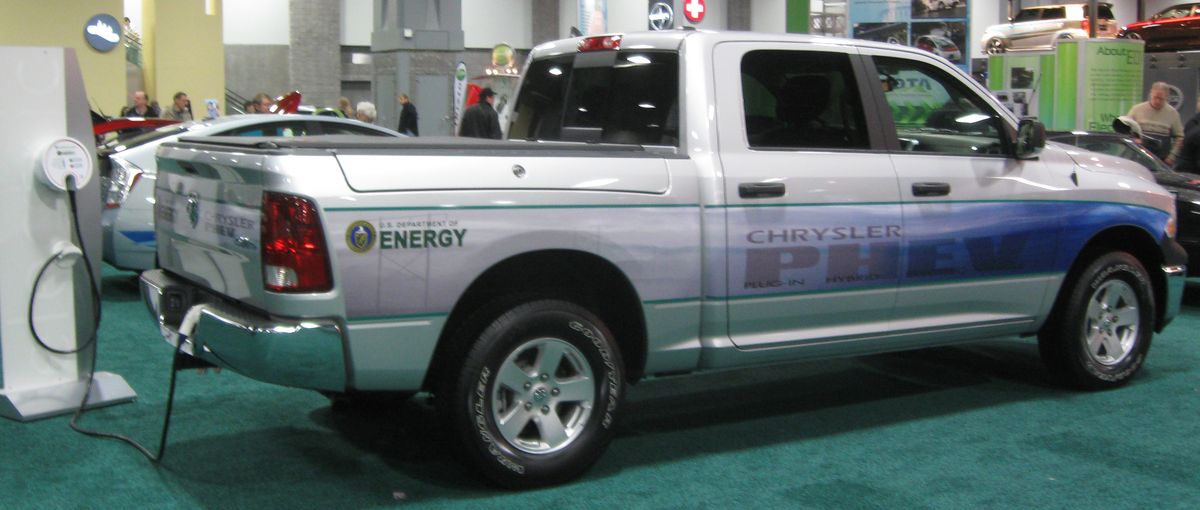
Electric Truck Home Charging Guide: Silverado EV, Hummer EV & Escalade IQ (2026)
Electric truck home charging explained: 200+ kWh packs, 19.2 kW onboard chargers, 100A circuits, panel load ca…
Cost Guide
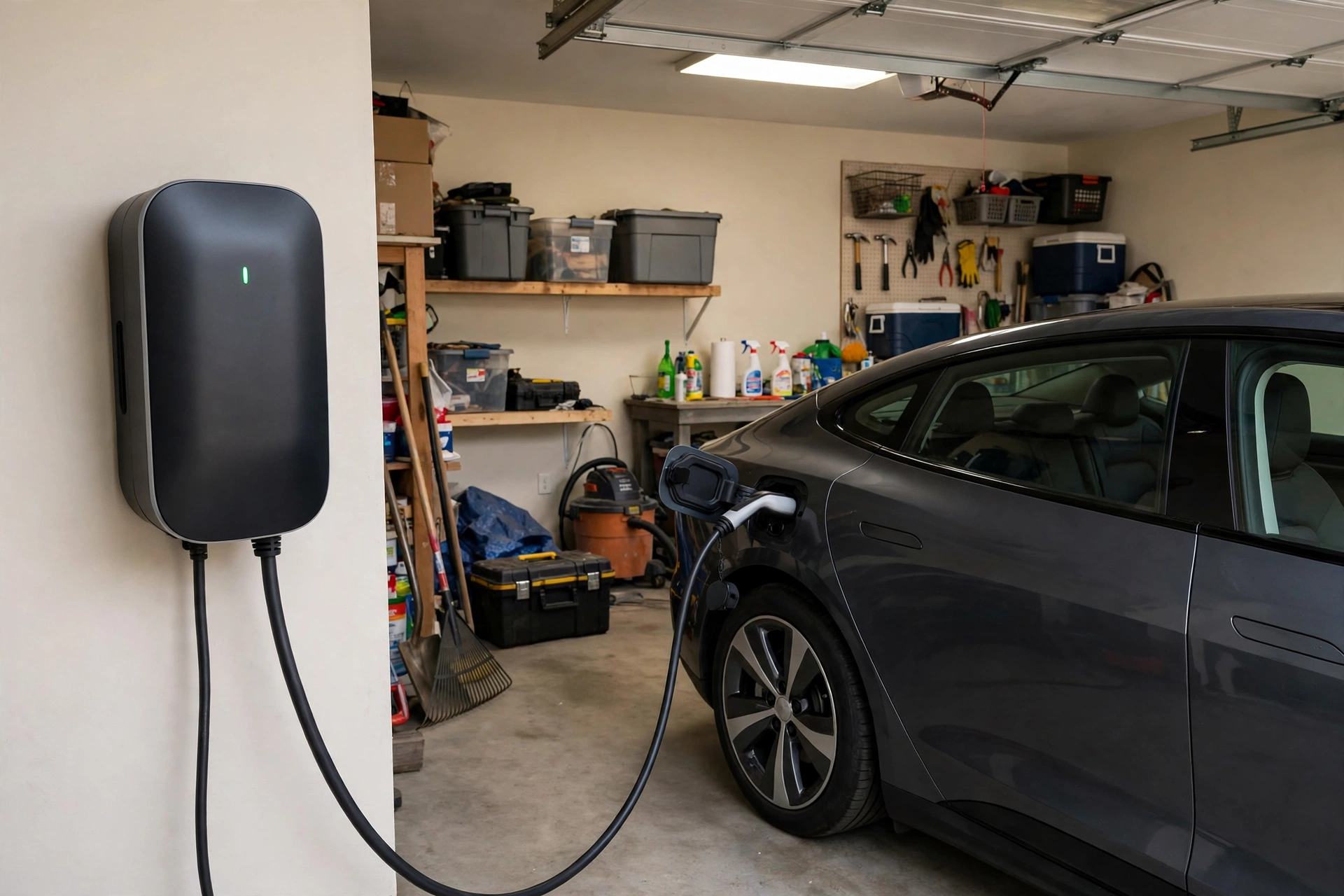
Home EV Charger Installation Cost in 2026: Full Breakdown
How much does home EV charger installation cost in 2026? Hardware, labor, panel upgrades, trenching, and rebat…
Comparison
hardwired vs plug-in EV charger: Which Setup Wins in 2026?
Hardwired or plug-in EV charger? Compare installation costs, GFCI code rules, charging speed, theft protection…
2026 Shift
NACS Transition Guide for Homeowners: 2026
NACS transition homeowners guide: what changes for CCS cars, adapter guidance, which charger to buy in 2026, a…
Interactive Tool
EV Charger Installation Cost Estimator: 2026 Prices
Estimate your EV charger installation cost in seconds. 2026 pricing for hardware, labor, panel upgrades, trenc…