ChargePoint Home Flex vs Wallbox Pulsar Plus: 2026 Comparison
Key takeaways
- Wallbox Pulsar Plus wins for homes with multiple EVs due to its native load-sharing capability.
- ChargePoint Home Flex remains the gold standard for app experience, integrating your home charging with public network data seamlessly.
- Both units support 48-amp hardwired charging, delivering up to 46 miles of range per hour to compatible EVs.
When upgrading to a Level 2 home EV charger in 2026, the decision almost always comes down to two undisputed market leaders: the ChargePoint Home Flex and the Wallbox Pulsar Plus. Both are premium, Wi-Fi-enabled smart chargers capable of delivering up to 48 amps of power. Both are UL-listed and backed by reputable companies. Yet, under the hood, they serve very different types of EV owners.
After testing both units across winter freezes and summer heatwaves, the distinction is clear. ChargePoint is a software-first titan designed for the single-EV owner who wants a flawless app experience. Wallbox is a hardware-first powerhouse designed for cramped garages, load management, and multi-EV households.
Here is the definitive 2026 breakdown of where your money should go based on your electrical panel, your garage, and your driving habits.
Power and Performance (The 48-Amp Baseline)
Let's clear the air on charging speeds: if you hardwire either of these units to a 60-amp dedicated breaker, they will both deliver 48 amps (11.5 kW) to your vehicle. For most modern EVs, that translates to adding roughly 35 to 46 miles of range per hour. In terms of raw power delivery, this is a dead tie.
Both units also offer adjustable amperage. If your home's electrical panel cannot support a 60-amp breaker, you can configure both the ChargePoint and the Wallbox during installation to run at lower amperages (such as 40A, 32A, or 16A) to safely match your home's available capacity.
However, the plug-in options differ. The ChargePoint Home Flex can be purchased with either a NEMA 14-50 or 6-50 plug, maxing out at 40 amps (as per the National Electrical Code for plug-in chargers). The Wallbox Pulsar Plus is traditionally sold as a hardwired unit for its 48-amp version, though a 40-amp plug-in version is available. In 2026, we strongly recommend hardwiring either unit to eliminate the risk of melting cheap 14-50 receptacles—a widespread industry issue.
ChargePoint Home Flex Level 2 WiFi Enabled EV Charger (50A)

Ultra-flexible cold-weather cable and best-in-class utility app
*Affiliate Disclosure: As an Amazon Associate, Elevate Home earns from qualifying purchases. Pricing and availability subject to change.
Design, Footprint, and Cable Management
This is where the two chargers diverge dramatically.
Wallbox Pulsar Plus: The Compact Brawler
The Wallbox Pulsar Plus is astonishingly small. Measuring roughly 7.8 x 7.9 x 3.9 inches, it is essentially a square block that takes up almost zero visual real estate on your wall. This makes it the absolute best choice for tight garages, carports, or installations where you don't want a massive plastic appliance dominating the space.
The trade-off for this compact size is cable management. The Wallbox relies on you looping the 25-foot cable around the unit itself or using a separate holster (included). The cable is noticeably thicker and stiffer in extreme cold compared to the ChargePoint, which can make wrapping it a chore in sub-zero winters.
ChargePoint Home Flex: The Elegant Appliance
The ChargePoint is a much larger, teardrop-shaped unit. It is undeniably sleeker and feels more like a premium consumer electronic device. Its larger footprint serves a distinct purpose: native cable management. The top of the unit is designed with a deep lip, allowing you to easily drape the ultra-flexible 23-foot cable over it. The connector dock is backlit and swivels, making holstering the plug incredibly satisfying.
Furthermore, ChargePoint's cable is legendary in the EV space. It remains pliable and easy to maneuver even in freezing temperatures, a massive advantage if you live in the Northeast or Midwest and charge outdoors.
The App Experience and Smart Features
A smart charger is only as good as its software. Both connect via Wi-Fi and Bluetooth, allowing you to set charging schedules to capitalize on off-peak electricity rates. But the ecosystems differ.
ChargePoint's app is a masterpiece of integration. If you use ChargePoint stations in public (at work, grocery stores, or highway stops), the home charger integrates into the exact same app. You get one unified dashboard showing your total energy cost and charging history across both public and home sessions. You can input your exact utility rate plan, and the app will calculate your home charging costs to the penny. It is flawless.
The Wallbox app is highly functional but more utilitarian. It tracks sessions, sets schedules, and allows remote locking. Where Wallbox shines is its Bluetooth connectivity fallback. If your garage has spotty Wi-Fi, the Wallbox can still be controlled locally via Bluetooth. The ChargePoint, conversely, struggles if it drops its Wi-Fi connection.
The Multi-EV Advantage: Wallbox Power Sharing
If you have two electric vehicles, or plan to buy a second one in the future, the Wallbox Pulsar Plus wins this comparison outright.
Wallbox features native "Power Sharing." You can install two Wallbox units on the same dedicated electrical circuit. The two chargers communicate with each other locally. If one car is plugged in, it gets the full 48 amps. If you plug in a second car, the chargers instantly negotiate and split the power (24 amps each). When one car finishes, the other ramps back up to 48 amps.
ChargePoint does not offer native residential load sharing. To charge two cars with ChargePoint, you need two separate heavy-duty circuits pulled to your garage, which often triggers an expensive $3,000+ electrical panel upgrade. Wallbox's Power Sharing bypasses this entirely.
Pricing and Value Comparison (2026)
Price points fluctuate, but in 2026, the competitive landscape looks like this:
- ChargePoint Home Flex: Retails around $599 to $649.
- Wallbox Pulsar Plus (48A): Retails around $649 to $699.
Both qualify for local utility rebates and the federal alternative fuel infrastructure tax credit (if you live in an eligible census tract). Because the prices are nearly identical, the decision should not be based on upfront cost, but rather on which feature set matches your infrastructure.
The Verdict: Which Should You Buy?
Neither of these chargers is a bad choice. They are both Tier 1 products. However, they solve different problems.
Buy the ChargePoint Home Flex if:
- You own one EV and have no plans to buy a second.
- You charge outdoors in a cold climate (you will appreciate the flexible cable).
- You already use the ChargePoint app for public charging.
- You value a sleek, integrated design with easy cable draping.
Buy the Wallbox Pulsar Plus if:
- You own two EVs or plan to buy a second one soon.
- Your electrical panel is nearly full (Power Sharing is a lifesaver).
- Your garage has terrible Wi-Fi (Bluetooth local control).
- You have limited wall space and want an ultra-compact installation.
For the average single-EV homeowner, the ChargePoint Home Flex edges out a victory purely on the strength of its app ecosystem and physical usability. But for the forward-thinking, multi-EV household, Wallbox is the smartest investment you can make in your garage.
Frequently asked questions
Can I install the ChargePoint or Wallbox outside?
Yes. Both the ChargePoint Home Flex and the Wallbox Pulsar Plus are NEMA 4 rated, meaning they are fully weatherproof and safe for uncovered outdoor installation in rain, snow, and extreme temperatures.
Do I need Wi-Fi for a smart EV charger to work?
No. If Wi-Fi goes down, both chargers act as 'dumb' chargers and will immediately supply power to the car when plugged in. However, you will lose the ability to track costs, receive firmware updates, and change schedules remotely.
Should I hardwire my EV charger or use a plug?
In 2026, hardwiring is highly recommended. Hardwiring allows you to unlock the full 48-amp charging speed, eliminates the risk of a melted NEMA 14-50 receptacle (a common failure point), and often removes the requirement for an expensive GFCI breaker.
Keep reading
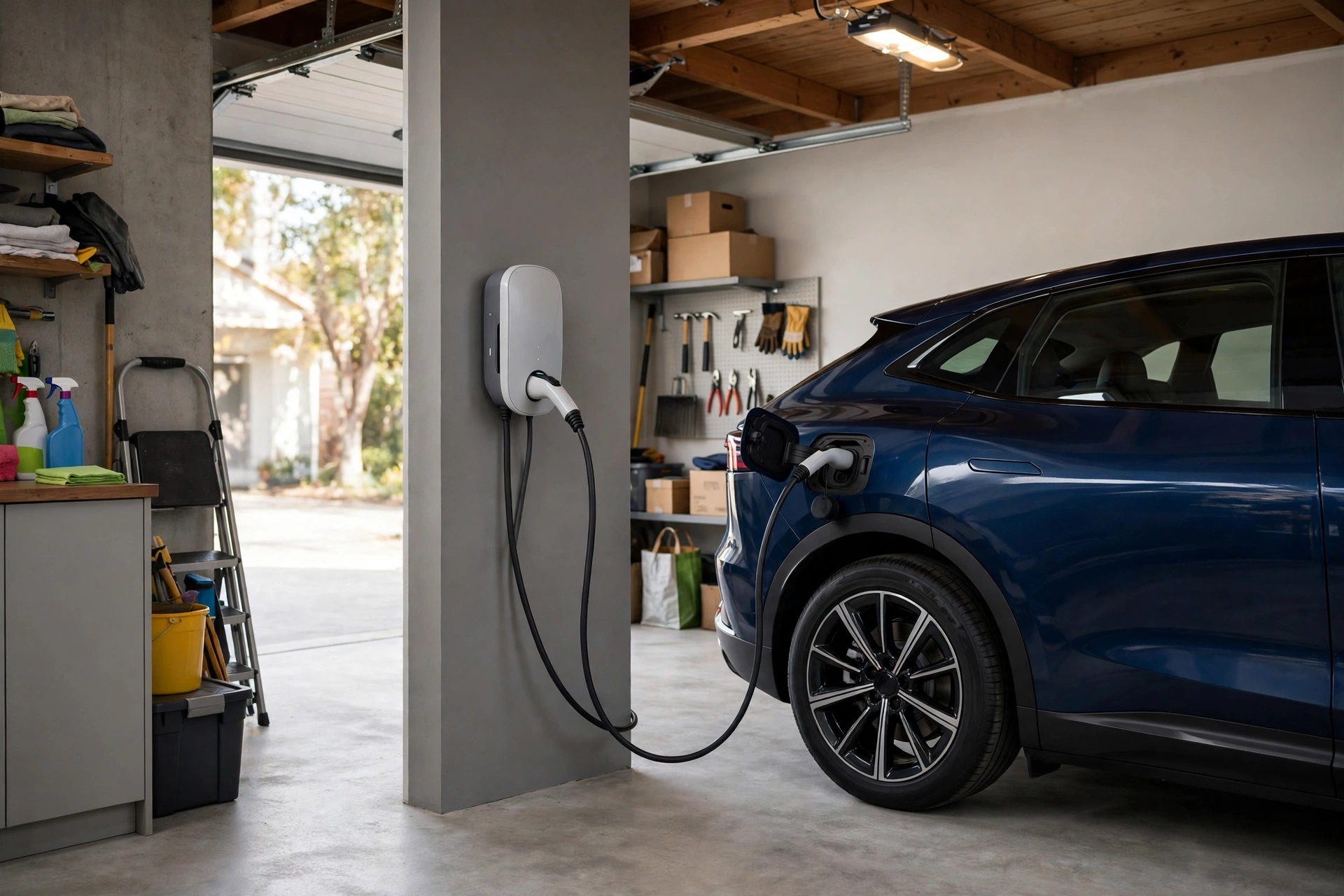
Value Picks
Best Budget Home EV Chargers Under $600: 2026 Picks
Best budget home EV chargers under $600 in 2026: what each price tier buys, hardwired vs plug-in, and the safe…
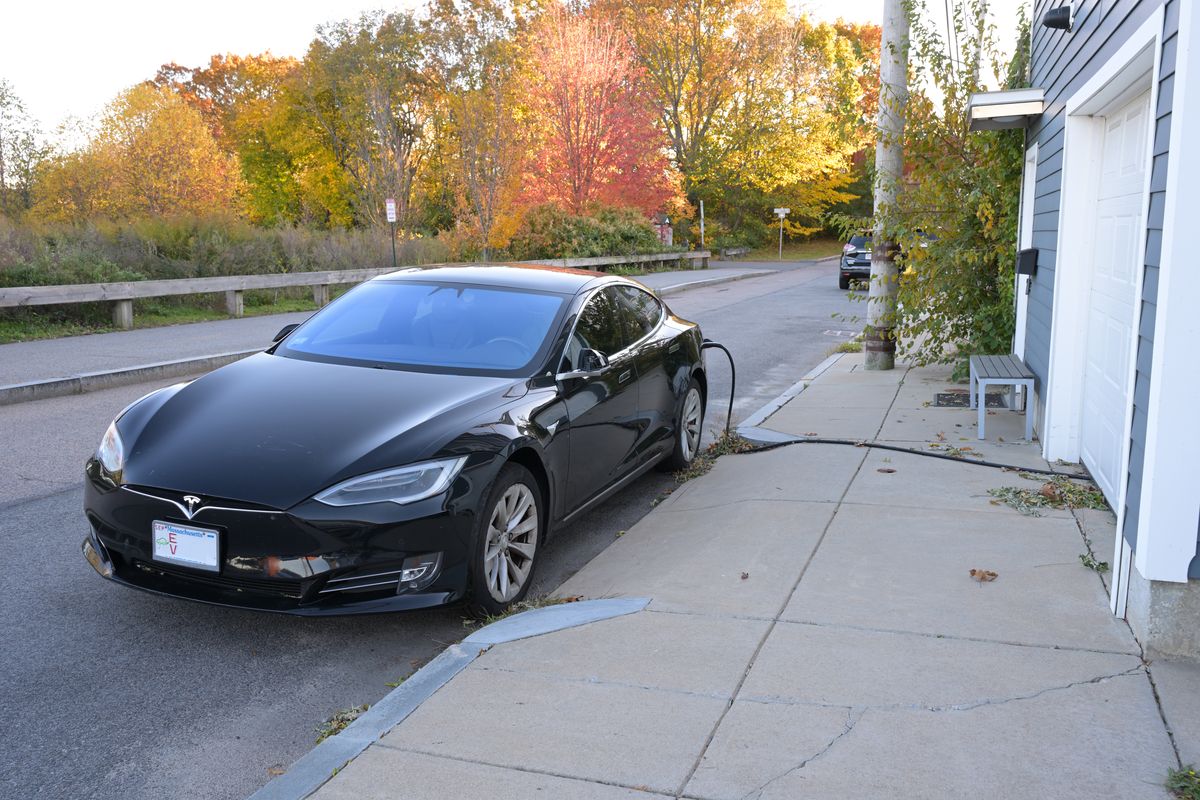
Buyer's Guide
Best Home EV Charger for Multi-Car Households (2026 Guide)
The best home EV chargers for multi-car households in 2026: power sharing, NACS/J1772 compatibility, smart fea…
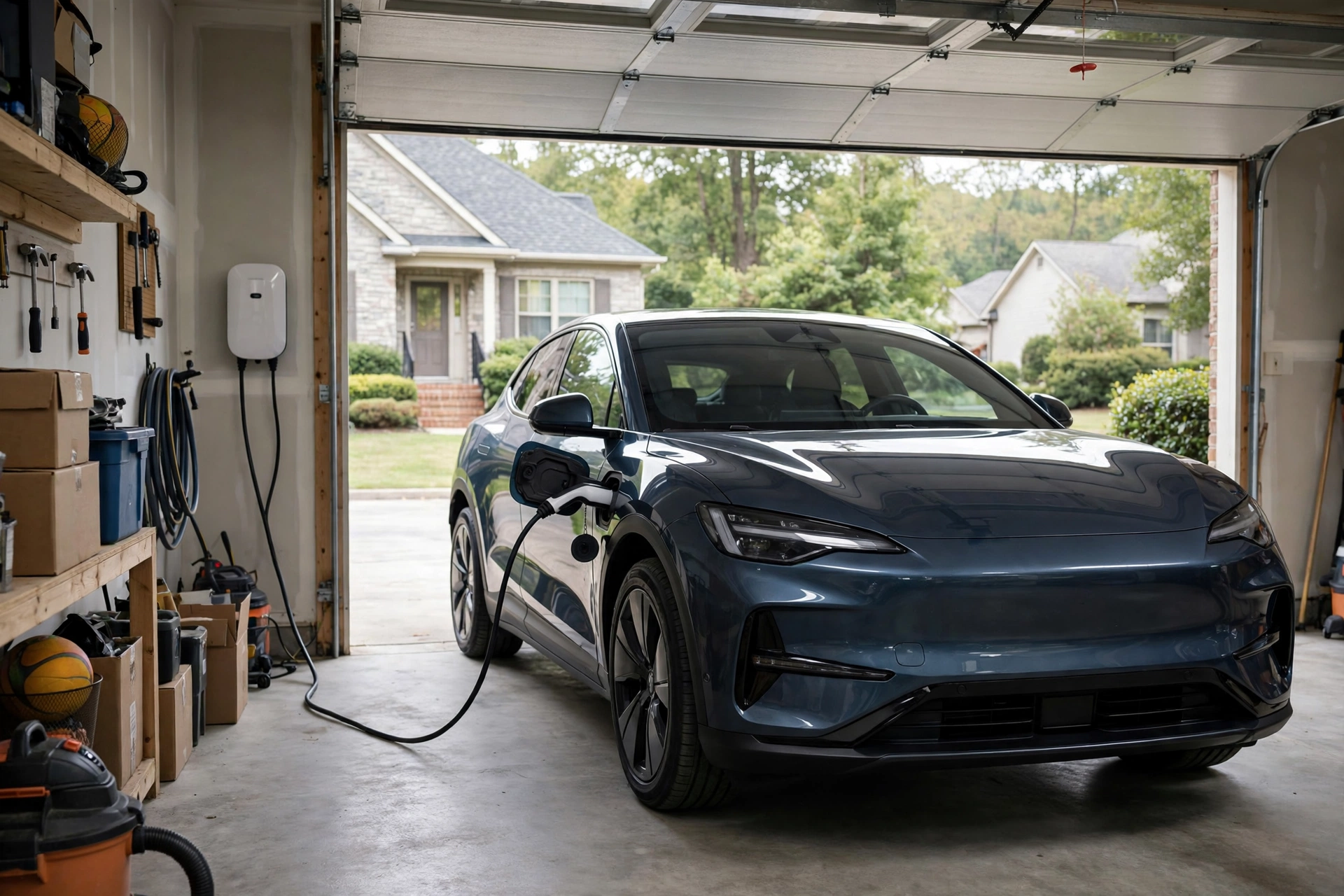
2026 Guide
Bidirectional Charging Home: 2026 V2H Guide & Costs
Can your EV power your house? Our 2026 vehicle-to-home guide covers how bidirectional charging works, hardware…
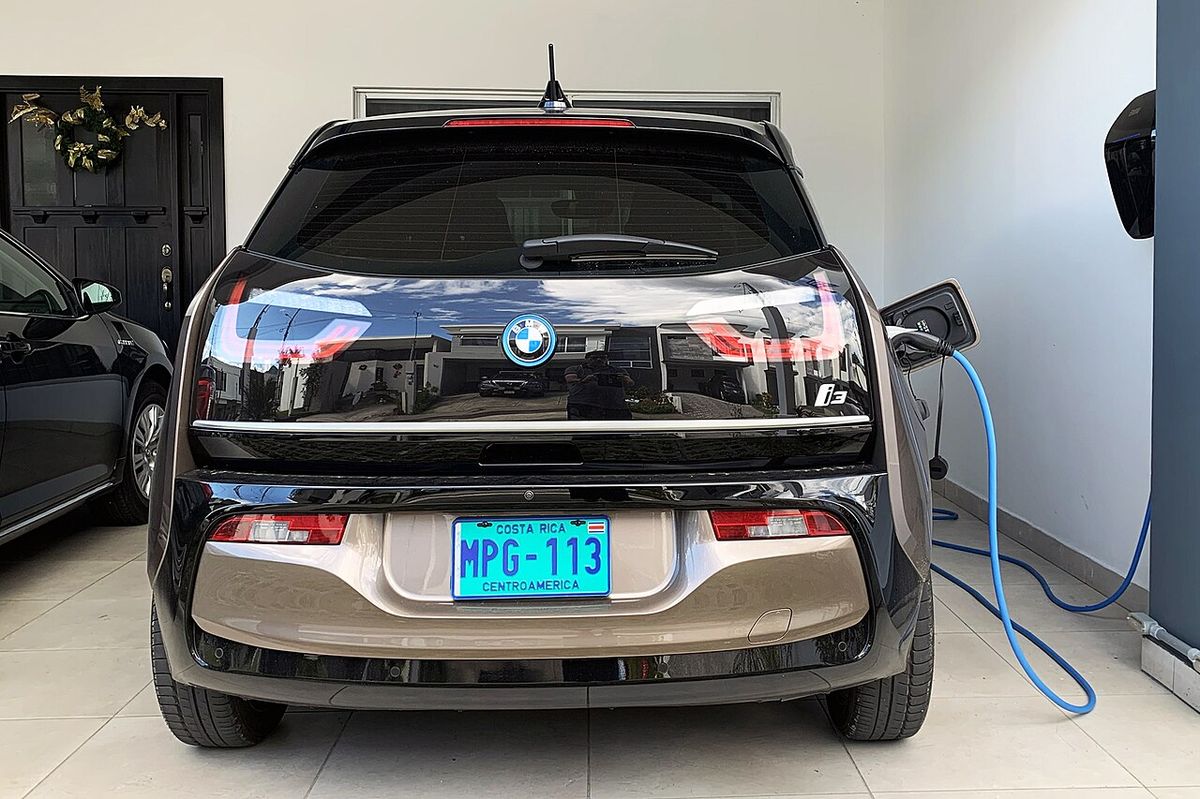
Home EV Charging
CCS Home Charging Guide: J1772, 48A Circuits and Every Model (2026)
How CCS EVs charge at home: the 11 kW onboard limit, 48A/60A circuit sizing, and per-model battery and charger…
Interactive Tool
EV Charger Installation Cost Estimator: 2026 Prices
Estimate your EV charger installation cost in seconds. 2026 pricing for hardware, labor, panel upgrades, trenc…
Interactive Tool
EV vs Gas Savings Calculator: Fuel Costs Compared 2026
EV vs gas: which is cheaper to fuel? Compare your car's real gasoline cost against home EV charging and see yo…