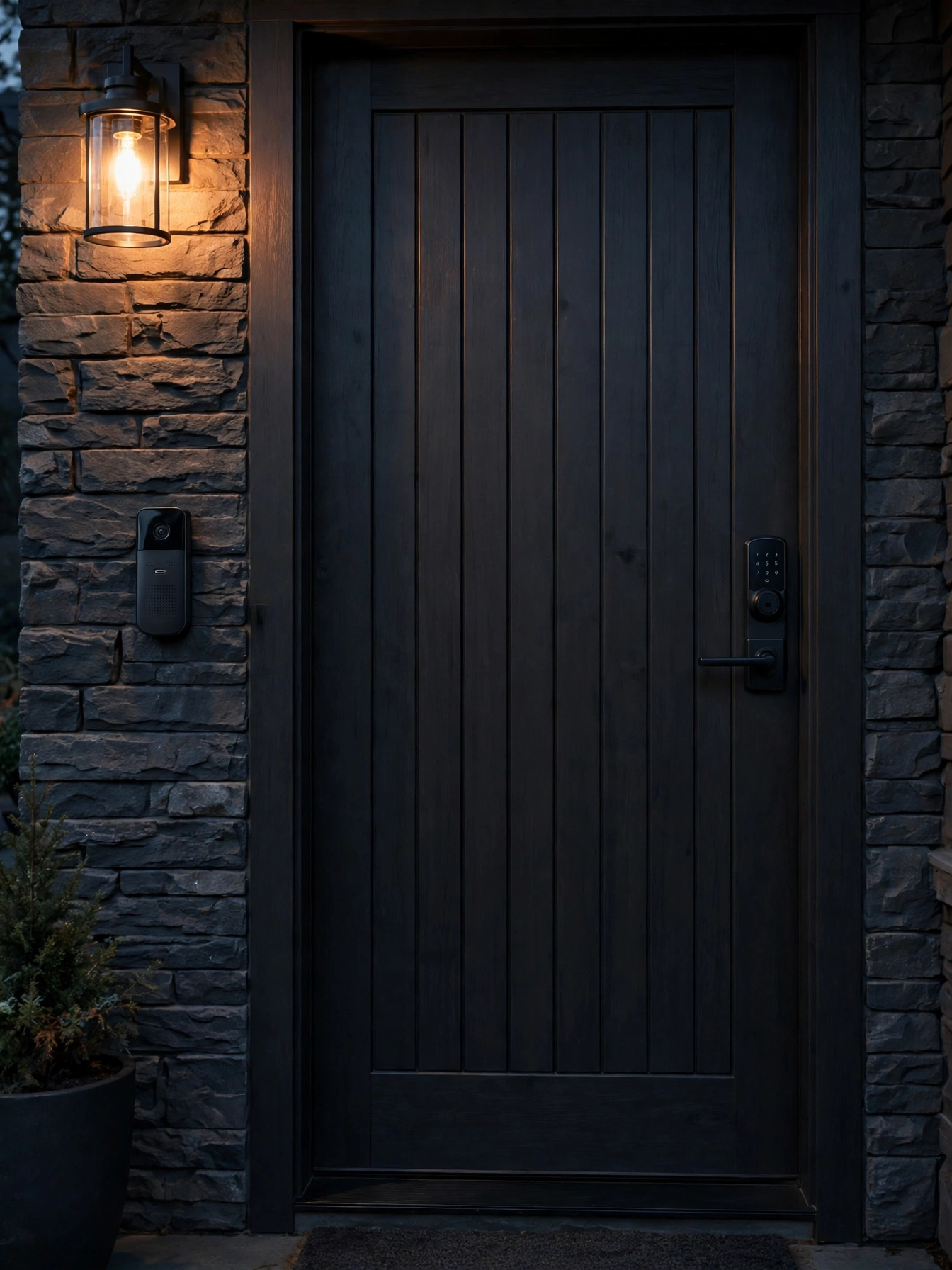
Doorbell Camera for Seniors With Hearing Loss: What Actually Works in 2026
Key takeaways
- A doorbell camera alone doesn't solve hearing loss — the alert has to be visual (flashing light) or tactile (vibration), because the chime is sound the senior can't hear.
- Dedicated hearing-impaired doorbell kits are the best overall pick for 2026: the CallToU kit (4.6 stars, 2,300+ reviews) offers a true flashing-light-only mode, vibration, and 1,000-ft range with four portable receivers.
- A video doorbell works as a second-best option only when the senior reliably carries a charged smartphone or smartwatch — the camera's visual push alert replaces the chime they can't hear.
- Buy on alert modes and range first: you need at least a flashing-light-only mode, and real-world indoor range is roughly half the advertised open-air figure once walls and floors intervene.
- Size the system to the senior's day, not the floor plan: one portable receiver on their person, one per floor, one in the bedroom, and one button per entrance visitors actually use.
The best doorbell camera for seniors with hearing loss isn't really about the camera at all — it's about how the senior gets the alert. A video doorbell's two-way audio means nothing to someone who can't hear the chime, so the products that actually work for hearing loss lead with visual and tactile alerts: flashing strobe lights and vibration. The strongest all-around option in 2026 is a dedicated hearing-impaired doorbell kit like the CallToU Wireless Hearing Impaired Doorbell, which holds a 4.6-star average across more than 2,300 verified reviews, offers four alert modes including flashing-light-only, and reaches up to 1,000 feet wirelessly. If the senior reliably carries a smartphone or wears a smartwatch, a video doorbell that pushes visual alerts is a strong second choice. This guide compares all three approaches on alert modes, range, power, and installation, and ends with a sizing worksheet so you buy the right number of receivers for the house.
Hearing loss turns a standard doorbell into decoration. The numbers explain why this deserves a dedicated solution rather than a louder chime: roughly one in three adults over 65 has meaningful hearing loss, and a traditional doorbell chime sits squarely in the frequency range that age-related hearing loss erases first. Cranking the volume helps only at the margins — and it annoys everyone else in the house. What works is a different sense entirely: light you can see from across the room, or vibration you can feel in your pocket.
Why a Standard Doorbell Fails Seniors With Hearing Loss
A conventional doorbell was designed for normal hearing, and every one of its design choices works against a senior with hearing loss:
- Single fixed location. The chime box hangs in one hallway. A senior in the backyard, the bedroom, or the basement never hears it — and missed visitors become missed deliveries, missed caregivers, and missed emergencies.
- One sense only. Sound is the entire alert. There is no light, no vibration, no phone notification — nothing for a second sense to fall back on.
- Wrong frequencies. Age-related hearing loss (presbycusis) typically starts in the high frequencies, which is exactly where most electronic chimes put their "ding-dong" clarity. The result is a muffled thump the senior can't distinguish from the refrigerator humming.
- No escalation. If the first ring is missed, nothing changes. The visitor presses again, the senior hears nothing again, and the visitor leaves.
This is why "just buy a louder doorbell" is the most common bad advice in this category. Volume helps mild cases. For moderate-to-severe hearing loss — the kind that makes a senior ask "what?" three times at the dinner table — the answer has to be visual or tactile.
CallToU Wireless Hearing Impaired Doorbell, 2 Buttons, 4 Portable Receivers

Hearing-loss-specific doorbell kit; 4.6 stars / 2,388 verified reviews, flashing-light-only + vibration modes are the accessibility features this buyer query demands
*Affiliate Disclosure: As an Amazon Associate, Elevate Home earns from qualifying purchases. Pricing and availability subject to change.
The 3 Approaches That Actually Work for Hearing Loss
Every product that genuinely serves this buyer falls into one of three buckets. Understanding the buckets matters more than memorizing brand names, because each one makes a different bet about how the senior lives.
1. Dedicated hearing-impaired doorbell kits (best overall)
These are wireless doorbell kits designed from the ground up for people who can't rely on sound: a battery-powered outdoor button paired with portable receivers that flash, vibrate, ring — or any combination. The receivers are the key: most clip to a belt or sit on a nightstand, so the alert follows the senior instead of waiting in the hallway.
The category leader is the CallToU Wireless Hearing Impaired Doorbell (4.6 stars, 2,300+ verified reviews), which ships with two outdoor buttons and four portable receivers, four alert modes (ring + vibration, ring + flashing light, ring + vibration + flashing, flashing light only), five volume levels up to 110 dB, and a stated 1,000-foot wireless range. What makes it the right flagship for this guide: the flashing-light-only mode. A senior with profound hearing loss can silence the chime entirely and rely on light and vibration, which is exactly the correct design for this buyer.
2. Video doorbells with visual phone alerts (best for tech-comfortable seniors)
A video doorbell doesn't fix the chime problem by itself — its speaker is still sound. What it adds is a phone in the senior's pocket that buzzes, lights up, and shows a live picture of who's at the door. For a senior who already carries a smartphone or wears a smartwatch all day, that visual push notification is a genuine accessibility feature: they see the visitor's face without needing to hear anything.
The catch is the dependency chain. The alert only works if the phone is charged, nearby, unmuted in the right way, and running the app — four things that fail regularly for many 75+ users. If the senior leaves the phone in the kitchen charger, the video doorbell's camera is watching an empty porch. For that reason, treat the video doorbell as a complement to an alert kit, not a replacement — and see our video doorbell comparison for 2026 and our senior-friendly smart lock and doorbell guide before buying one.
3. Plug-in strobe chime kits (best add-on to an existing doorbell)
The third bucket is for the senior who already has a working wired doorbell and just needs the alert made visible. Plug-in strobe receivers — the Safeguard Supply WC180-SS is the best-known — pair with the existing doorbell wiring and add a bright flashing strobe (typically 12–15 flashes per press) plus an adjustable chime. Installation is a plug-in receiver and a paired button; no phone, no app, no batteries in the receiver.
The limitation is coverage: one plug-in receiver covers the room it's in. For a multi-floor house you end up buying multiple receivers, at which point the cost approaches a dedicated kit while remaining less portable. But for a small single-story home with one main living area, a strobe kit is the simplest upgrade that exists.
Doorbell Options for Hearing Loss Compared
| Approach | Alert types | Phone required? | Stated wireless range | Power | Installation | Best for |
|---|---|---|---|---|---|---|
| Dedicated alert kit (e.g., CallToU) | Flashing light, vibration, chime — combinable | No | ~1,000 ft open air | Battery (button + receivers) | Minutes, no wiring | Seniors who don't reliably carry a phone; multi-room coverage |
| Video doorbell + phone alerts | Phone buzz/light, live video; chime is sound-only | Yes — phone must be charged and nearby | Wi-Fi dependent | Wired or battery doorbell; phone battery | Wiring or battery mount + app setup | Tech-comfortable seniors who always carry their phone |
| Plug-in strobe kit | Bright strobe flash + adjustable chime | No | ~600 ft open air | Plug-in receiver; battery button | Plug in, pair, done | Small single-story homes; upgrading an existing wired doorbell |
What to Look For: The 6 Features That Actually Matter
Strip away the marketing and every hearing-loss doorbell is judged on the same six criteria, in this order of importance:
1. A true flashing-light-only mode. This is the single most important feature and the one most cheap doorbells skip. You want a receiver that can go completely silent and still alert via light (and vibration). If the only "visual" feature is a tiny LED that blinks while the chime rings, the product is not designed for hearing loss — it's a regular doorbell with a decoration.
2. Multiple alert modes, combinable. The CallToU's four modes (ring + vibration, ring + flash, all three, flash only) are the template. Different times of day call for different modes: vibration + flash at night so the household isn't woken, full chime + flash during the day. A kit locked to one mode will frustrate the senior within a week.
3. Real-world range, not box range. Advertised range is measured in open air with no walls. The rule of thumb: through two interior walls and one floor, expect roughly 40–50% of the stated figure. A 1,000-foot kit gives you a reliable 400–500 feet inside a typical home — plenty for most houses, but marginal for a detached garage or a large lot. For outbuildings, look at the long-range specialist kits (some reach 3/4 mile) rather than stretching a standard kit.
4. Portable receivers with clips. Wall-plugged receivers stay in one room; portable battery receivers travel with the senior. The belt clip or pocket form factor is what makes the alert work in the garden, the garage, and the bedroom alike. If the kit includes only plug-in receivers, add a portable one — it's the difference between an alert system and a hallway decoration.
5. Volume that goes to zero AND to genuinely loud. Paradoxically, the best kits for hearing loss need both extremes: true mute for the flashing-only senior, and 100+ dB for the senior with residual hearing who shares the house with a hearing spouse. Five or more volume levels is the mark of a well-designed kit; three is a compromise.
6. Expandability. Buy a kit into an ecosystem, not a dead end. You want to be able to add a second button for the back door, an extra receiver for the bedroom, or a motion-sensor transmitter for the driveway later — all paired to the same receivers. Systems capped at one button and one receiver get outgrown fast.
Sizing Guide: How Many Receivers (and Where)
The most common mistake buyers make is ordering the base kit and assuming one receiver is enough. It isn't. Size the system to the senior's actual day, not the floor plan:
- One portable receiver for the senior's person. Clipped to a belt or in a pocket, this is the primary alert. If the budget allows only one receiver, this is the one.
- One receiver per floor the senior uses. A two-story home needs at least two stationary receivers, because the portable one will inevitably be left charging on the nightstand when the doorbell rings downstairs.
- One receiver where they sleep. Nighttime is when missed alerts matter most — a caregiver arriving late, an emergency. A bedroom receiver in flashing + vibration mode wakes without startling the whole house.
- One button per entrance visitors actually use. Front door plus back door at minimum; add the side gate if deliveries come that way. Every unbuttoned entrance is an entrance where visitors give up and leave.
For a typical two-story home, that means the common "2 buttons + 4 receivers" bundle — one portable, one per floor, one in the bedroom — is almost exactly right. It is no coincidence that this is the most popular configuration in the category.
Setup and Placement Tips That Reviews Get Wrong
Test before you mount. Pair everything at the kitchen table first, walk each receiver to its planned spot, and press the button. If a receiver misses rings from the far bedroom, move it closer or add another — don't discover the dead zone after you've drilled holes. This five-minute test is the difference between a system that works and a system that gets returned.
Strobes need line of sight. A flashing receiver tucked behind the TV does nothing. Place strobe receivers where the senior's eyes naturally land: facing the couch, the kitchen counter, the bed. One well-placed receiver beats three hidden ones.
Mind the metal. Mounting the outdoor button directly on a metal door or metal frame can cut wireless range dramatically. A small wooden or plastic standoff block — even a half-inch — usually fixes it.
Batteries are a maintenance item, not a flaw. Portable receivers and outdoor buttons run on batteries, and the reviews that complain about "constantly replacing batteries" almost always come from kits left on full-volume chime mode. Flashing-light-only mode sips power by comparison. Put a six-month battery-check reminder on the calendar (or pair it with the smoke-detector battery check), and treat it as routine.
If you're wiring anything, kill the breaker. Most of these kits are fully wireless and need no electrical work. But if you go the plug-in strobe route on an existing wired doorbell and need to touch the transformer or chime wiring, turn off the breaker first and confirm with a non-contact tester — or read our smart doorbell wiring guide before you start.
The Honest Verdict
For a senior with hearing loss, buy the alert kit first and consider the camera second. The CallToU Wireless Hearing Impaired Doorbell kit is the right default: flashing-light-only mode for profound hearing loss, vibration for the pocket, real volume for residual hearing, 1,000-foot range that covers a house and yard, and four receivers so the alert actually reaches every room. It's the rare product in this category designed for the buyer's actual disability rather than adapted from a mainstream gadget.
Add a video doorbell only if the senior already lives on their smartphone — then the camera's visual push alerts become a genuinely useful second layer (seeing the visitor's face without hearing a thing). For help choosing one, see our 2026 video doorbell comparison and our senior-friendly smart lock and doorbell guide.
And remember the broader picture: a doorbell is one node in a safer home. If you're systematically adapting a house for hearing loss, our hearing-loss home design guide covers visual smoke alarms, vibrating alarm clocks, and captioned phones — and our no-monthly-fee medical alert guide pairs well with any doorbell upgrade for seniors living alone.
Frequently asked questions
Can a senior with hearing loss use a regular video doorbell?
Only as a partial solution. A video doorbell's chime and two-way audio are sound-based, so they don't help directly — but its smartphone push alerts (buzz, screen light-up, live video) do work as visual alerts. The catch: the phone must be charged, nearby, and running the app. For most seniors, pair the video doorbell with a dedicated flashing/vibrating alert kit rather than relying on the camera alone.
What is the difference between a strobe doorbell and a flashing-light doorbell?
A strobe uses a high-intensity xenon or LED flash — typically 12 to 15 bright flashes per press — designed to be seen across a room or in daylight. A flashing-light doorbell usually means a smaller LED indicator that blinks with the chime. For moderate-to-severe hearing loss, the true strobe is meaningfully more noticeable; the small LED is a nice-to-have, not an accessibility feature.
Do wireless doorbells for hearing loss work during a power outage?
Battery-powered kits do — the outdoor button and portable receivers run on their own batteries, so a blackout doesn't silence them. Plug-in strobe receivers stop working when the outlet dies (though the outdoor button keeps transmitting). If outage resilience matters, choose a fully battery-powered kit or keep one portable receiver charged as backup.
How far apart can the doorbell button and receiver be?
Advertised ranges (typically 600 to 1,000 feet) are measured in open air. Inside a house, count on roughly 40 to 50% of that figure once the signal passes through two walls and a floor — so a 1,000-foot kit reliably covers 400 to 500 feet indoors, which handles most homes. For detached garages or large lots, test before mounting, and consider long-range specialist kits.
Will a flashing doorbell disturb other people in the house?
That's exactly what the multiple alert modes are for. Set the bedroom or shared-living-room receivers to flashing-light-only or vibration mode, and keep the full chime on the portable receiver the senior carries. Each receiver can usually run its own mode, so the hearing spouse gets sound and the senior gets light — no compromises needed.
Keep reading
Senior Tech
Smart Locks & Doorbells for Seniors: Guide
Smart locks for seniors compared: keypad vs fingerprint vs voice, video doorbells with large displays, package…
Security & Cameras
Video Doorbell Comparison: 2026
Best video doorbell 2026 compared: Ring vs Nest vs Eufy vs UniFi on subscriptions, chime compatibility, night …
Security & Cameras
Smart Doorbell Wiring: Existing Chime Guide
Video doorbell existing chime wiring: transformer specs, mechanical vs digital chime compatibility, upgrades, …
Sensory Design
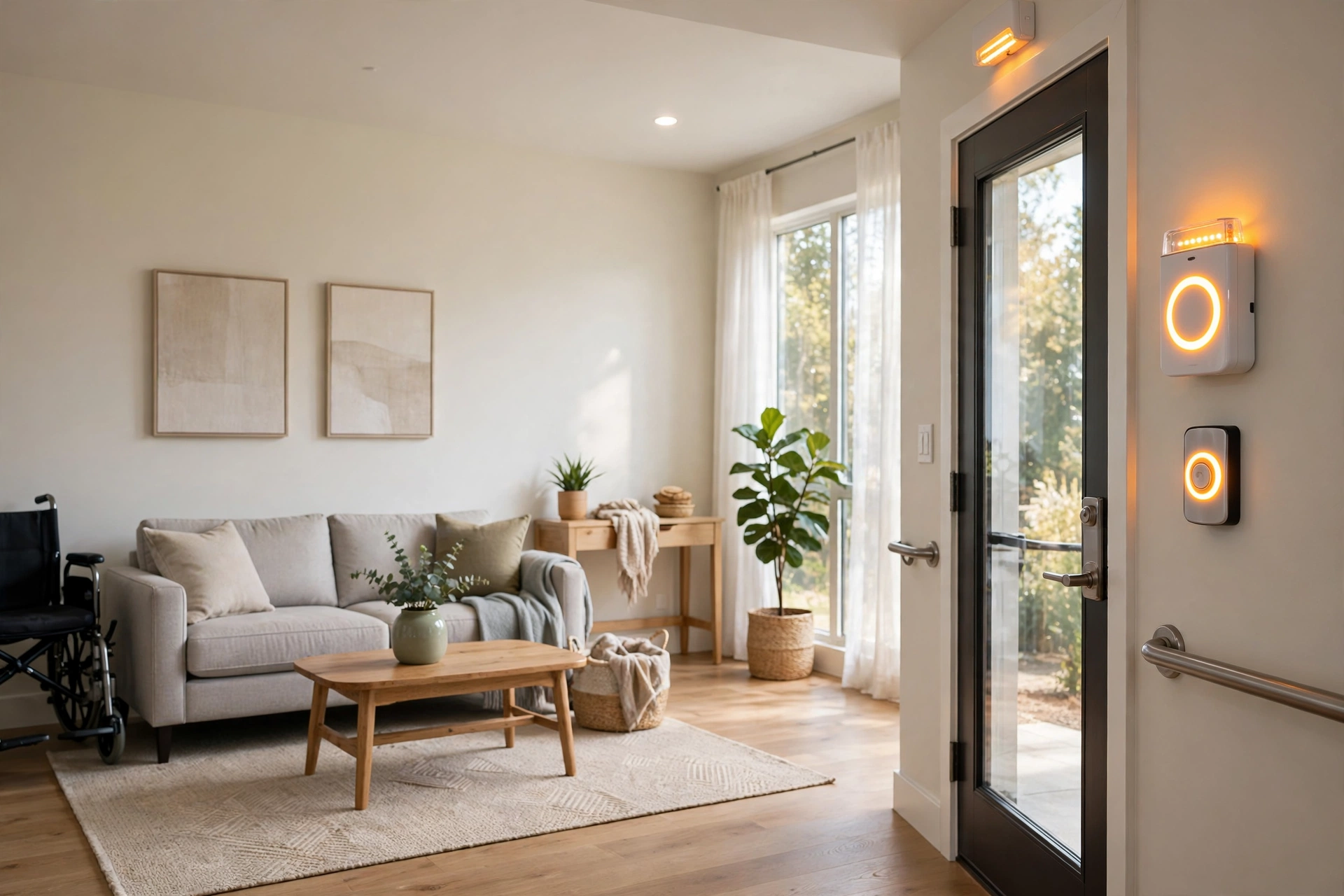
Home Design for Hearing Loss: 2026 Guide
Home modifications for hearing loss: visual alert systems, hearing-loop installation, acoustic treatment, capt…
Interactive Tool
Aging in Place Renovation Cost Estimator 2026 Guide
Budget your aging-in-place renovation with our interactive estimator. Price accessible bathrooms, kitchens, el…
Transfer Equipment
100A vs 200A Automatic Transfer Switch
100 amp vs 200 amp transfer switch: service-entrance vs subpanel topology, when each is required, costs, and l…