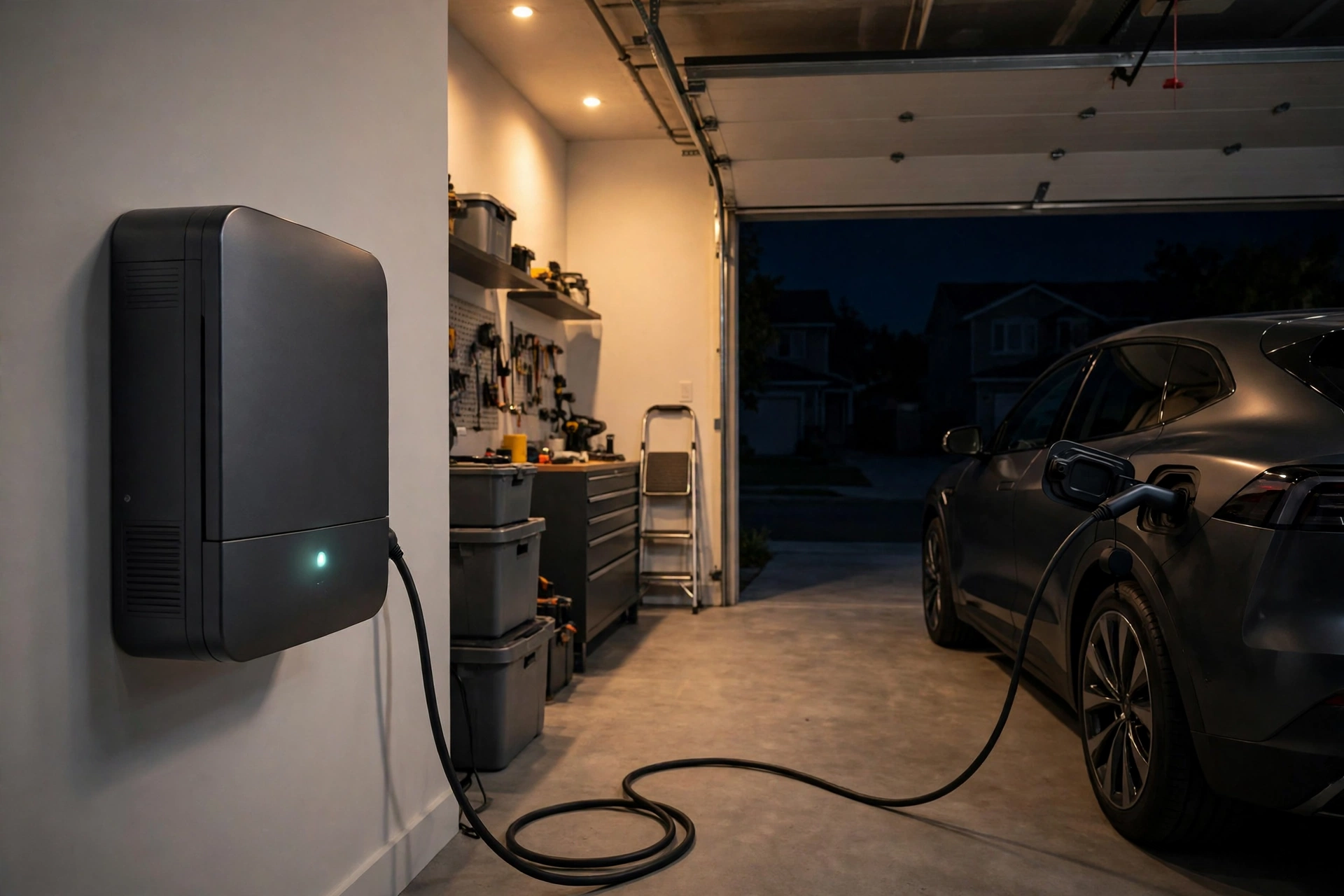
Home Battery for EV Charging During Power Outage: What Actually Works (2026)
Key takeaways
- Yes, a home battery can charge an EV during a power outage — but only if the charger sits on a backed-up circuit and the battery's continuous output can carry the charger's draw.
- A single 13.5 kWh wall battery, kept partly in reserve for the house, typically adds roughly 30 to 40 miles of range — emergency miles, not a full charge.
- Level 2 charging at 7 to 11 kW can drain a home battery in about an hour; throttling to a lower rate is usually the smarter outage strategy.
- A 240V-capable battery with at least 7.2 kW of continuous output is the practical minimum for Level 2 outage charging; smaller units are Level 1 only.
- Never backfeed through an outlet or extension cord: outage EV charging needs a proper islanding setup, a transfer switch or smart panel, and a qualified electrician.
A home battery for EV charging during power outage events works, but with a hard limit most buyers miss: a typical wall battery holds enough energy for roughly 30 to 40 miles of emergency range once you keep a reserve for the house, not a full charge, and only if your EV charger is wired onto a circuit the battery actually backs up.
That distinction matters because a standard grid-tied EV charger goes dead the moment the grid does. Solar panels alone do not fix it either: without storage and an islanding inverter, a grid-tied solar system shuts down during an outage for utility-worker safety. The battery is what lets your home form its own little island grid, and whether your car can drink from that island depends on power, energy, and wiring — three different things buyers routinely confuse.
How Home Battery EV Charging Works in an Outage
During normal operation, your home battery charges from the grid or solar and discharges to the house when rates peak or the grid fails. When an outage hits, the system disconnects from the grid — a process called islanding — and powers a backed-up panel. Only the circuits on that panel stay live. If your EV charger is on the main panel and not the backed-up panel, it stays dark no matter how big your battery is. This is the single most common reason outage EV charging plans fail, and it is a wiring decision made at installation, not something you can fix with an app setting on outage day.
Two numbers then decide what happens next. Continuous output, measured in kilowatts (kW), is how fast the battery can deliver power at any moment. Usable capacity, measured in kilowatt-hours (kWh), is how much total energy it stores. A battery can have a large capacity but a modest output, or vice versa, and EV charging stresses both at once: a Level 2 charger is one of the largest single loads in a home, comparable to an electric range or a central air conditioner.
Level 1 charging, from an ordinary 120V outlet, draws about 1.4 kW and adds roughly 3 to 5 miles of range per hour. Level 2 charging, from a 240V circuit, draws roughly 7.2 kW at 32 amps up to about 11.5 kW at 48 amps, and adds roughly 25 to 40 miles per hour. That speed is exactly why Level 2 is tempting in an outage — and exactly why it empties a battery so fast. A battery delivering 7.2 kW continuously drains 7.2 kWh every hour, before counting the house loads still running and roughly 10 percent charging losses between the battery, the charger, and the car.
There is also a direction question worth clearing up. Charging your EV from a home battery is different from vehicle-to-home (V2H), where the EV powers the house. V2H needs a bidirectional-capable EV and a bidirectional charger, and only a limited set of models supports it today. This guide covers the more common setup: a stationary home battery feeding your existing EV charger during an outage. If your car also supports V2H, that is a separate capability layered on top, covered in our bidirectional charging guide.
EF ECOFLOW 12kWh Power Station: DELTA Pro Ultra with Extra Battery, 120/240V 7200W AC Output, LiFePO4 Home Battery Backup Expandable to 90kWh

240V 7200W LFP unit is the purchasable match for the outage EV-charging angle: it can feed a Level 2 charger from stored energy, unlike 120V-only stations
*Affiliate Disclosure: As an Amazon Associate, Elevate Home earns from qualifying purchases. Pricing and availability subject to change.
Home Battery EV Charging: Sizing Math and Realistic Range
Start with usable capacity, not the headline number. A battery marketed at 13.5 kWh may offer close to that in usable energy, but you should not spend all of it on the car. Keep a reserve for the fridge, lights, router, and medical or security loads — the whole reason you bought backup power. A 20 to 30 percent household reserve is a sensible planning figure, and many systems let you set a reserve level in the app so the car cannot drain the battery to zero.
Next, convert energy to miles. Most efficient EVs travel roughly 3 to 4 miles per kWh; larger trucks and SUVs sit closer to 2 to 2.5 miles per kWh. Multiply the energy you are willing to spend on the car by your car's efficiency, then knock off about 10 percent for charging losses. The table below runs that math for common battery sizes, assuming a 25 percent household reserve and an efficient EV at about 3.5 miles per kWh.
Read that table as a planning tool, not a promise. Cold weather cuts EV efficiency, a truck or large SUV needs more energy per mile, and every kilowatt-hour the house uses while you charge is a kilowatt-hour the car does not get. If your outage plan is "charge the car to full," you need a battery bank sized like a small fleet depot, or a generator. If your plan is "add enough range to reach a working fast charger, get to work, or handle tomorrow's essential trip," a single wall battery or a 12 kWh portable station genuinely delivers — provided you charge at a sane rate.
Choosing a Setup: Wall Battery, Portable Station, or Generator
Three setups can charge an EV during an outage, and they suit different homes. A permanently installed wall battery with a backup panel is the most seamless: it switches automatically, powers the house and the charger together, and recharges from solar if you have it. It is also the most expensive and the most installation-dependent, since the charger must be on the backed-up panel and the panel must be sized for the charger's draw alongside everything else.
A large portable power station with 240V output is the flexible alternative, and it is the right comparison for renters, homes that cannot take a wall battery yet, or buyers who want backup they can move. The catch is output: many portable stations are 120V-only or top out below Level 2 power, which limits them to slow Level 1 charging. For outage EV charging, 240V output and at least 7.2 kW continuous are the specs that matter; capacity decides how many miles you get, output decides how fast you get them. A station that pairs with a smart home panel can also back up wired circuits, bridging the gap toward a wall-battery setup. Our battery expansion guide explains how modular stations scale from a single unit to a whole-home bank.
A generator is the third option, and it has a different failure mode. Most portable generators cannot sustain a Level 2 charger's draw cleanly, and a standby generator sized for the whole house can — but then you are buying a fuel-burning system with its own maintenance, noise, and permitting story. Generators and batteries are not mutually exclusive; some homes pair a battery for silent overnight coverage with a generator for multi-day events. Compare the two honestly in our generator-for-EV-charging guide before committing to either.
The Outage Charging Playbook: Throttle, Schedule, and Protect the Reserve
Speed is the enemy in an outage. Charging at full Level 2 power feels productive, but it concentrates all your stored energy into the car in about an hour or two and leaves the house exposed if the outage drags on. The better playbook is to throttle the charger down — many EV chargers and cars let you set a lower amperage — and charge only to the range you actually need, not to full.
A practical sequence looks like this. First, when the outage starts, confirm the charger is live on backup power and check the battery's state of charge. Second, set a household reserve in the battery app and do not let the car eat into it. Third, drop the charger to a modest rate — Level 1, or a throttled Level 2 at 16 amps (about 3.8 kW) — and charge during the hours the house load is lowest, typically overnight, when the fridge cycles less and no cooking or laundry is running. Fourth, if you have solar, charge the car from midday solar surplus rather than from stored energy whenever possible; solar refills the battery while the car charges, stretching both. Fifth, stop at the range you need for the next essential trip and keep the rest in reserve. An EV at 50 percent with a house still powered beats an EV at 90 percent with a dead fridge.
Also plan around the charger itself. Some smart chargers need Wi-Fi or cloud connectivity to start a session, and your home network may be down even if the charger has power. Keep the router and modem on the backed-up panel — a small load that buys you control over everything else — and know how to start a charge from the car's own controls or the charger's local button, not only from an app. Test this before an outage, not during one: run a short backup-mode charge on a calm weekend and confirm the charger, the reserve setting, and the app all behave as expected. For the amperage and circuit details behind that test, see our EV charger amperage guide.
What to Check Before You Buy
Ask your installer five questions, in writing, before you sign. One: is the EV charger circuit on the backed-up panel, and is that panel rated for the charger's full draw plus the other backed-up loads running at the same time? Two: does the battery back up 240V circuits, or only 120V circuits — some systems need a specific configuration or a second unit for 240V backup. Three: what is the battery's continuous output in kilowatts, not its peak or surge rating, and what happens when the charger plus the air conditioner start together? Four: can the system throttle or schedule the charger automatically during an outage, or will you manage amperage manually? Five: what clearances, ventilation, and fire-code rules apply to the battery's location — garage installations have specific requirements, covered in our garage battery fire-code guide.
On the product side, prioritize LFP (lithium iron phosphate) chemistry for a home battery: it tolerates daily cycling and heat better than older nickel-based chemistries, which matters when the same battery serves daily solar shifting and occasional outage duty. Check the warranty's retained-capacity guarantee and cycle rating rather than the headline year count, and confirm the unit is certified to UL 9540 for residential storage. If you are sizing a whole-home system from scratch rather than adding outage charging to an existing setup, work through the load math in our all-electric home battery sizing guide first — an EV charger changes the answer more than almost any other single load.
Finally, be honest about the use case. If outages in your area last hours, a single battery with throttled charging is a genuinely good answer. If they last days, you need either a much larger bank, solar to refill it daily, or a generator in the mix — and the car should be the last load you fully charge, not the first. The battery earns its keep by keeping the house safe and livable; the EV miles are a bonus that a well-sized system provides, not a promise every battery can keep.
The Verdict
A home battery for EV charging during a power outage is worth it when three conditions hold: the charger is on the backed-up panel, the battery delivers at least 7.2 kW continuous at 240V for Level 2 (or you accept slower Level 1 charging), and you charge throttled, to the range you need, with a household reserve protected. Miss any one of those and the plan quietly fails — the charger stays dark, the battery drains in an hour, or the house goes dark so the car can charge. Get all three right, and a single battery turns an outage from a stranded-car problem into a manageable overnight top-up, with solar refilling the tank the next day.
Frequently asked questions
Can a home battery charge an EV during a power outage?
Yes, if the EV charger is wired onto the battery's backed-up panel and the battery's continuous output can carry the charger's draw. A typical single wall battery adds roughly 30 to 40 miles of emergency range after keeping a household reserve — enough for essential trips, not a full charge.
How many miles can a home battery add to an EV in an outage?
It depends on usable capacity, your car's efficiency, and the reserve you keep for the house. As a planning rule, a 13.5 kWh battery with a 25 percent household reserve leaves about 10 kWh for the car, which is roughly 32 miles in an efficient EV after charging losses. Larger EVs and trucks get fewer miles per kWh.
Do I need a 240V battery to charge my EV in an outage?
For Level 2 charging, yes: the battery system must supply 240V at the charger's amperage, and the charger circuit must be on the backed-up panel. A 120V-only battery or station can only Level 1 charge at about 1.4 kW, adding roughly 3 to 5 miles per hour.
Why does my EV charger not work during a power outage even though I have a battery?
The most common cause is wiring: the charger sits on the main panel, not the backed-up panel, so it loses power with the grid. Other causes include a battery that backs up only 120V circuits, a charger that needs cloud connectivity that is down, or a system that sheds the charger load to protect the battery. Check the backed-up panel list with your installer.
Should I charge my EV at full speed during an outage?
Usually no. Full Level 2 charging can drain a home battery in about an hour or two. Throttle the charger to a lower amperage, charge only to the range you need, and keep a household reserve for the fridge, lights, and router. If you have solar, charge from midday solar surplus when possible.
Keep reading
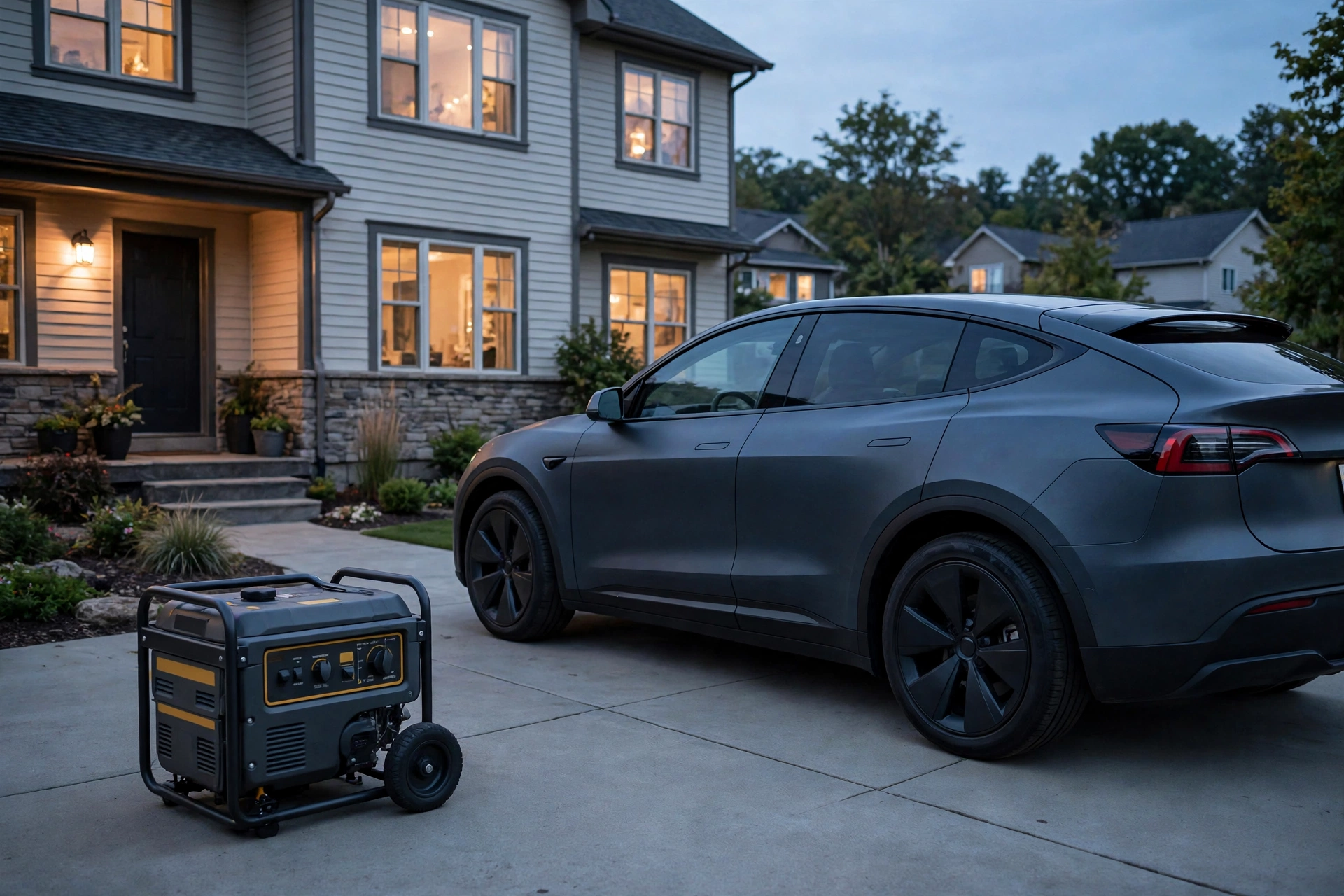
Generator Use Cases
Charging an EV During a Power Outage
Can a generator charge an electric car? Level 1 vs Level 2 load math, the neutral-ground gotcha, and when char…
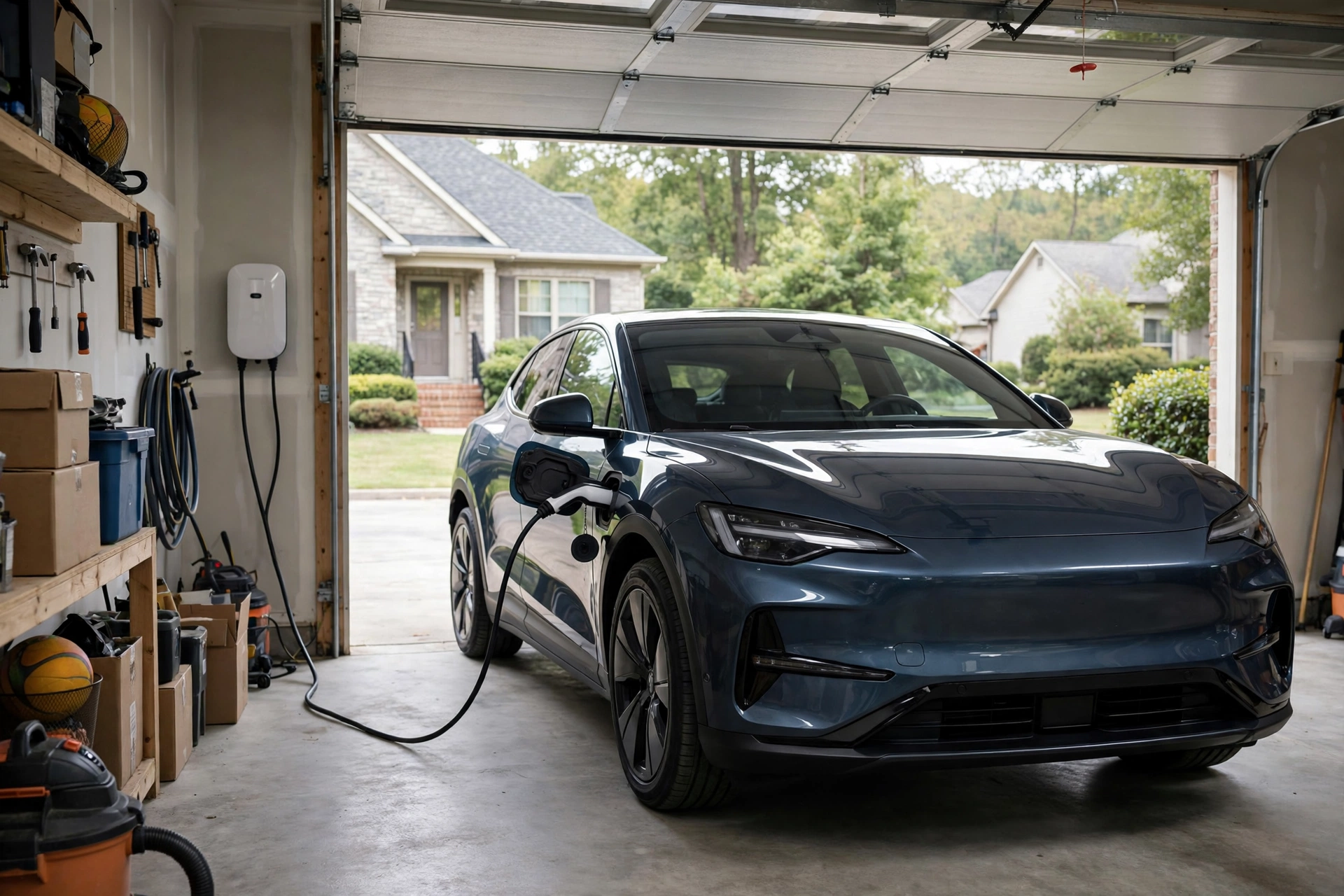
2026 Guide
Bidirectional Charging Home: 2026 V2H Guide & Costs
Can your EV power your house? Our 2026 vehicle-to-home guide covers how bidirectional charging works, hardware…
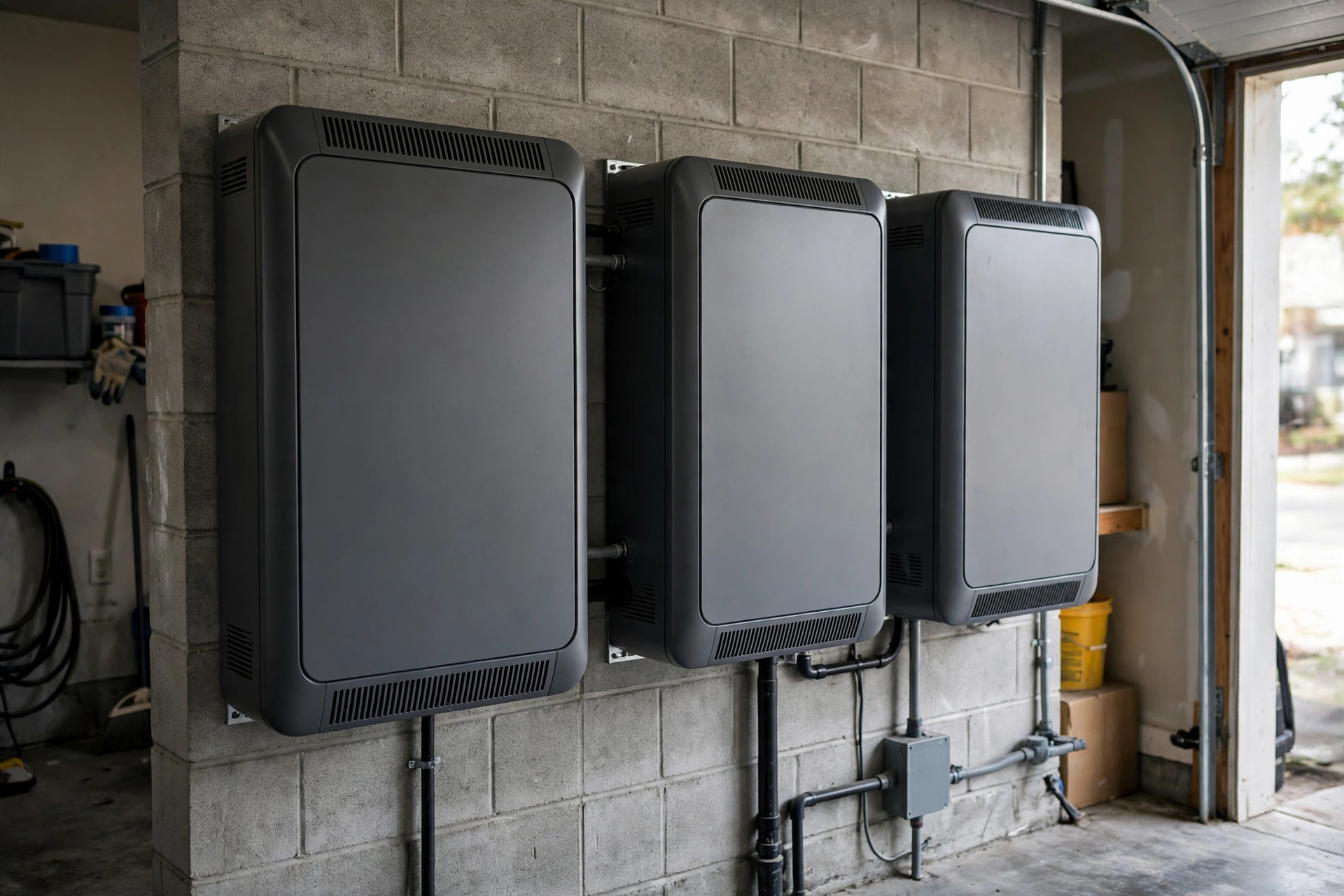
Battery Sizing
Sizing Home Batteries for All-Electric Homes: Heat Pumps, EVs & Induction
Sizing home batteries for all-electric homes takes different math: heat pumps, EVs, and induction change kW an…
Expansion
Adding a Second Home Battery: 2026 Guide
Adding a second home battery in 2026: modular vs add-a-box expansion, inverter headroom, rewiring, permits, an…
Interactive Tool
Home Battery Size Calculator: What Size Do You Need?
How many kWh of battery storage do you need? Our free home battery size calculator estimates your backup need,…
Interactive Tool
Power Outage Cost Calculator: What Blackouts Cost You
What do blackouts really cost you? Our power outage cost calculator totals food loss, hotels, lost work, and f…