How to Help an Elderly Parent Bathe Safely: A Caregiver's Step-by-Step Guide (2026)
Key takeaways
- Fix the bathroom before the water runs: stud-mounted grab bars, a non-slip mat, a shower chair, and water at 120°F or lower remove most fall and burn triggers.
- A predictable routine — same time, same order, same words — reduces resistance and confusion more than any equipment purchase.
- Two to three full showers a week plus sink or sponge-bath freshening is enough for most older adults; clean and calm beats frequent and fraught.
- Let your parent do everything they safely can. Assisting less today preserves their capability tomorrow.
- If refusal is sudden or transfers need two people, get a doctor or occupational therapist involved instead of pushing harder.
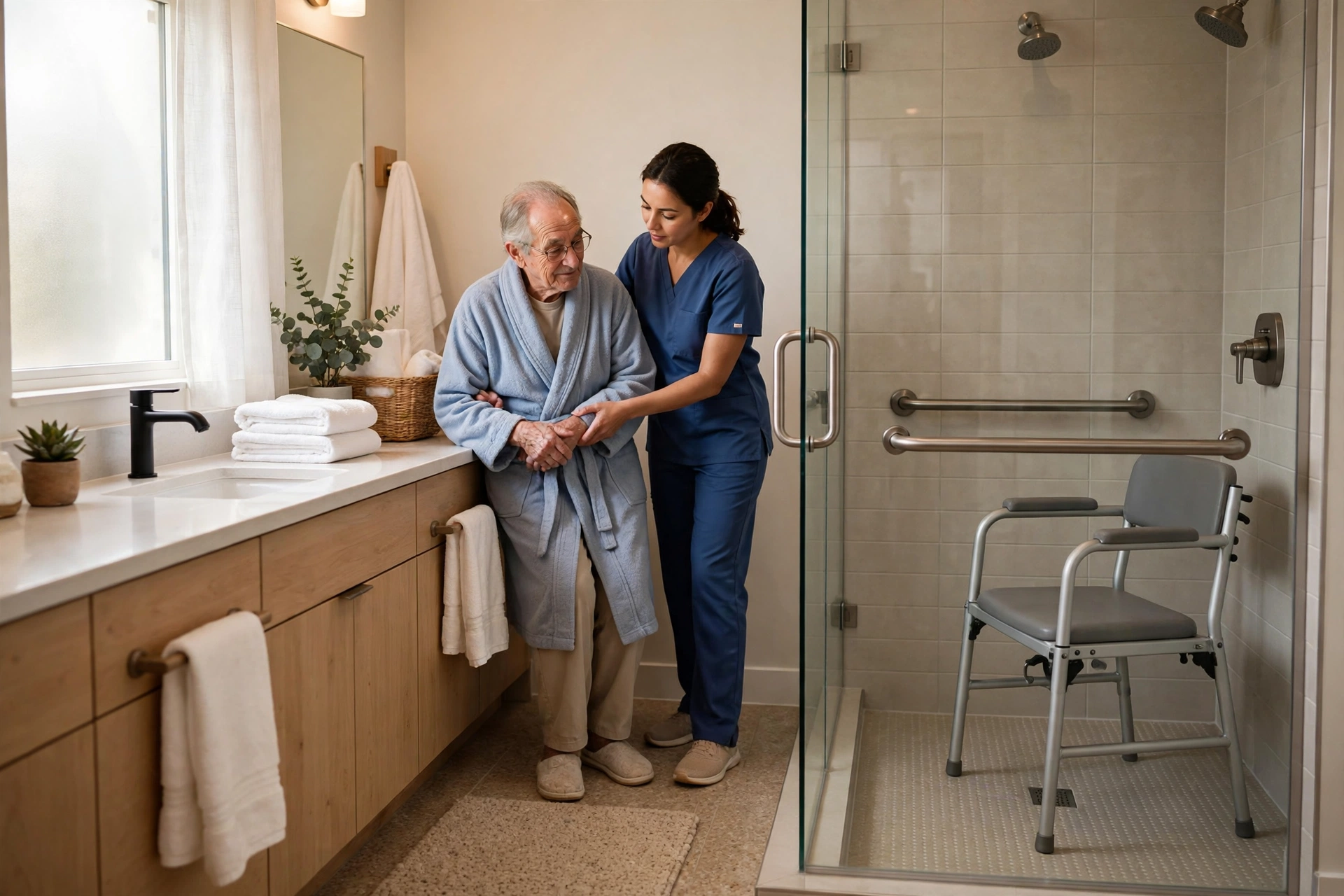
To help an elderly parent bathe safely, set up the bathroom before the water runs: grab bars anchored into studs, a non-slip mat in the tub, a shower chair so nobody balances on one wet foot, and the water heater at 120°F or lower. Then build a calm, predictable routine — same time, same order, same words — that preserves dignity while you stay close enough to catch a slip.
Bathing is the daily activity older adults are most likely to struggle with alone. Slippery surfaces, hot water that aging skin can't judge accurately, and balance problems turn an ordinary shower into the single riskiest routine in the home. The good news: most of what makes helping an elderly parent bathe safe happens before anyone steps into the bathroom.
Start Before Bathing: Set Up a Safer Bathroom
Ninety percent of safe bathing is preparation. Walk through your parent's bathroom and fix the hazards in this order, because each one removes a common fall or burn trigger:
- Grab bars at entry, inside the tub or shower, and beside the toilet. Mount every bar into wall studs — suction-cup handles can pop off at the worst moment. For exact mounting heights and stud-finding tips, see our grab bar placement guide.
- Non-slip coverage inside the tub and on the bathroom floor. A textured mat with suction cups on the tub floor, plus a dry bath mat outside it, eliminates the two most common slip zones: the shower floor and the wet step-out.
- A shower chair or transfer bench. Standing on a wet surface is the highest-risk moment in any shower. A sturdy shower chair lets your parent sit the entire time; a transfer bench bridges the tub wall so they never step over it. Our roundup of the best shower chairs for elderly bathers explains which designs hold up under daily use.
- A handheld shower head. Rinsing hair without a fixed overhead stream means less leaning, less neck craning, and full control of water direction — helpful whether your parent bathes alone or with your assistance.
- Warmth and light. Heat the room for ten minutes beforehand, lay out warm towels and a robe within reach, and fix any dim lighting. Cold rooms make seniors tense up and rush; dark rooms hide trip hazards. If nighttime bathroom trips are part of the picture, our senior bathroom night-safety guide covers lighting and path-clearance upgrades.
- Anti-scald protection. Aging skin burns faster and feels heat less reliably. Set the water heater to 120°F or lower, and always test the stream yourself — on the inside of your wrist — before your parent gets in.
Medline Shower Chair with Backrest and Padded Armrests - 350 lb. capacity, Bath Bench, Seat, Stool for Independent Adult

Top-recommended bathing aid for caregiver-assisted showering: 350-lb capacity chair with backrest and padded armrests
*Affiliate Disclosure: As an Amazon Associate, Elevate Home earns from qualifying purchases. Pricing and availability subject to change.
A Calm Step-by-Step Routine for Bathing an Elderly Parent
Consistency is the safety feature most families overlook. A predictable routine removes surprises, which reduces resistance and lets your parent cooperate instead of bracing. Try this order and adjust to what your parent tolerates best:
- Pick the high-energy time of day. Mid-morning often works better than first thing, when joints are stiff and patience is thin. Bathe at the same time so it becomes habit, not a negotiation.
- Warm the room and run the water first. A cold bathroom makes everything feel harder. Have the water at a tested, comfortable temperature before your parent walks in.
- Lay out everything within reach. Soap, shampoo, washcloth, towels, lotion, clean clothes — anything they must reach for is an accident waiting to happen. Reaching across a wet shower is one of the most common fall setups.
- Offer choices, not questions. “Shower now or after breakfast?” works far better than “Do you want a shower?” Giving control over the when preserves dignity while you keep the that non-negotiable.
- Protect privacy and warmth. Keep a towel over their shoulders and lap while washing. Wash and rinse one body section at a time — face, arms, torso, legs — and keep the rest covered.
- Let them do what they can. Hand them the washcloth and let them wash their own face and arms while you handle the hard-to-reach areas. Doing less for them today keeps them capable tomorrow.
- Use mild, fragrance-free soap. Aging skin is thinner and drier; harsh soaps cause cracking and itching. Pat dry instead of rubbing, especially between the toes and in skin folds where fungal infections start.
- Moisturize while skin is damp. Lotion on dry areas right after toweling off prevents the cracking that leads to painful fissures.
- End with something pleasant. A favorite breakfast, a sit in the sun, a warm robe — pairing bath time with a reward builds a positive association over weeks.
A full shower two or three times a week is usually enough for older adults; warm washcloth freshening at the sink covers the days between. Clean and calm beats frequent and fraught.
When a Parent Refuses to Bathe: What Actually Works
Refusal almost always has a cause, and arguing with the refusal never fixes the cause. Common reasons include fear of falling, pain when standing, embarrassment about needing help, depression, or dementia that makes the water confusing or frightening. Address the underlying barrier:
- Fear of falling: the bathroom upgrades above are the answer — show them the new grab bars and chair before asking again.
- Pain or exhaustion: switch to seated showering or a transfer bench so nothing requires standing or balancing.
- Embarrassment: offer a same-gender helper, a hired home aide, or more covered bathing; sometimes a parent accepts help from someone who isn't their child more easily.
- Depression or apathy: anchor bathing to an outing — “shower, then we go out for lunch” — rather than making hygiene the whole event.
- Dementia: keep everything identical each time, narrate each step before you do it (“I'm going to lift your foot now”), and never rush. Routine is the antidote to confusion.
Pick your battles: poor hygiene that lasts weeks risks skin breakdown and infections, but skipping one day is not a crisis. If refusal is sudden and new, consider a urinary tract infection or medication change — both can cause abrupt behavior changes in older adults — and call their doctor.
Alternatives Between Full Showers
Not every bath needs to be a shower. These gentler options keep a parent clean without the full production:
- Sponge baths with warm water, a basin, and no-rinse cleanser — ideal for days when standing is too much.
- Towel baths using large warm damp towels with no-rinse soap, especially useful for bedbound parents or those with dementia.
- Dry shampoo and no-rinse body wipes for hair and freshening between showers.
- Sink washing of face, underarms, and feet each morning to maintain dignity on non-shower days.
When the Bathroom Itself Is the Problem
Sometimes no amount of routine helps because the fixture is wrong: a deep tub a parent can no longer step into, or a shower curb that catches a walker. If entries and exits are the bottleneck even with a transfer bench, it may be time to change the bathroom rather than the routine. A curbless shower eliminates the step entirely, and a walk-in tub trades step-over height for a seated door entry. Our comparison of walk-in tubs versus curbless showers lays out which suits different mobility levels, and the broader aging-in-place fall-proofing checklist covers the rest of the house your parent navigates before and after the bath.
Protect Yourself Too: Caregiver Body Mechanics
Helping an elderly parent bathe safely means not injuring yourself in the process. Caregiver back injuries are one of the most common reasons families suddenly need paid help, and they're largely preventable:
- Lift with your legs, not your back — bend your knees and keep your parent close to your body during transfers. If you find yourself twisting or pulling, the transfer needs better equipment, not more effort.
- Use the equipment for every transfer. It's tempting to skip the chair “just this once” when you're in a hurry. That's when most injuries happen — to both of you.
- Wear non-slip footwear yourself. Bathroom floors get wet; caregivers fall too.
- Keep transfers seated. A parent should go from bed to wheelchair to transfer bench to chair without ever standing unsupported. Every standing moment is a shared risk.
- Ask for training. An occupational therapist or home health nurse can demonstrate proper transfer technique in your actual bathroom in a single visit — worth it before bad habits set in.
Common Mistakes Families Make
A few well-intentioned habits make bathing more dangerous or more resisted than it needs to be:
- Leaving toiletries across the room. Every reach across a wet shower is a fall setup — stage everything at arm's length before starting.
- Suction-cup grab bars as the only support. They're convenient but can detach without warning; real safety requires bars screwed into studs.
- Water that's “how they've always liked it.” What felt fine at 50 can scald at 80. Trust the thermometer, not habit.
- Rushing. Most resistance and most slips come from a caregiver's schedule, not the parent's capability. Budget unhurried time.
- Doing everything for them. Over-helping accelerates decline. The goal is the maximum independence that stays safe — reassess as abilities change, because both improvement and decline are normal over time.
When It's Time for More Help
You don't have to do this alone, and recognizing that is part of helping an elderly parent bathe safely. Bring in professional help if you see any of these: you're injuring your own back lifting, your parent needs two people for transfers, bathing triggers aggression or extreme distress every time, or hygiene has clearly slipped despite your efforts. A home health aide or occupational therapist can demonstrate safer transfer techniques and recommend equipment sized for your parent's body — an occupational therapist's home assessment is one of the most underused tools families have.
Helping an elderly parent bathe safely is ultimately about two things: removing the hazards that cause falls and burns, and protecting the person's dignity while you do it. Fix the bathroom, keep the routine calm and predictable, and accept help before you burn out. Your parent gets to stay clean and independent longer — and you get to stop dreading bath time.
Frequently asked questions
How often should an elderly parent bathe?
Two to three full showers a week is usually enough for older adults, with warm washcloth freshening at the sink on other days. Over-bathing dries out thin aging skin, so frequency should balance hygiene against skin health — and a calm, predictable schedule matters more than hitting an exact number.
What is the safest water temperature for elderly bathing?
Set the water heater to 120°F or lower and always test the stream on the inside of your wrist before your parent gets in. Aging skin burns faster and senses heat less reliably, so an anti-scald valve or tempering setting is a worthwhile safeguard for parents with neuropathy or dementia.
What should I do if my elderly parent refuses to bathe?
Find the cause instead of arguing about the refusal: fear of falling, pain, embarrassment, depression, or dementia-related confusion are the usual drivers. Fix the bathroom safety setup, offer choices about timing, consider a same-gender or professional aide, and use sponge baths between showers. A sudden new refusal can signal a urinary tract infection or medication issue — call their doctor.
Is a shower chair or a transfer bench better for an elderly parent?
A shower chair suits walk-in showers where the parent can step in safely but shouldn't stand on wet tile. A transfer bench is better for standard tubs: it bridges the tub wall so the parent sits outside, then slides over without ever stepping over the edge. Both eliminate the highest-risk moment — standing or stepping on a wet surface.
When should I hire professional help with my parent's bathing?
Bring in a home health aide or occupational therapist if you're injuring yourself during transfers, your parent needs two people, bathing triggers extreme distress every time, or hygiene has slipped despite your efforts. An occupational therapist's home assessment can recommend correctly sized equipment and safer transfer techniques.
Keep reading
Safety Guide
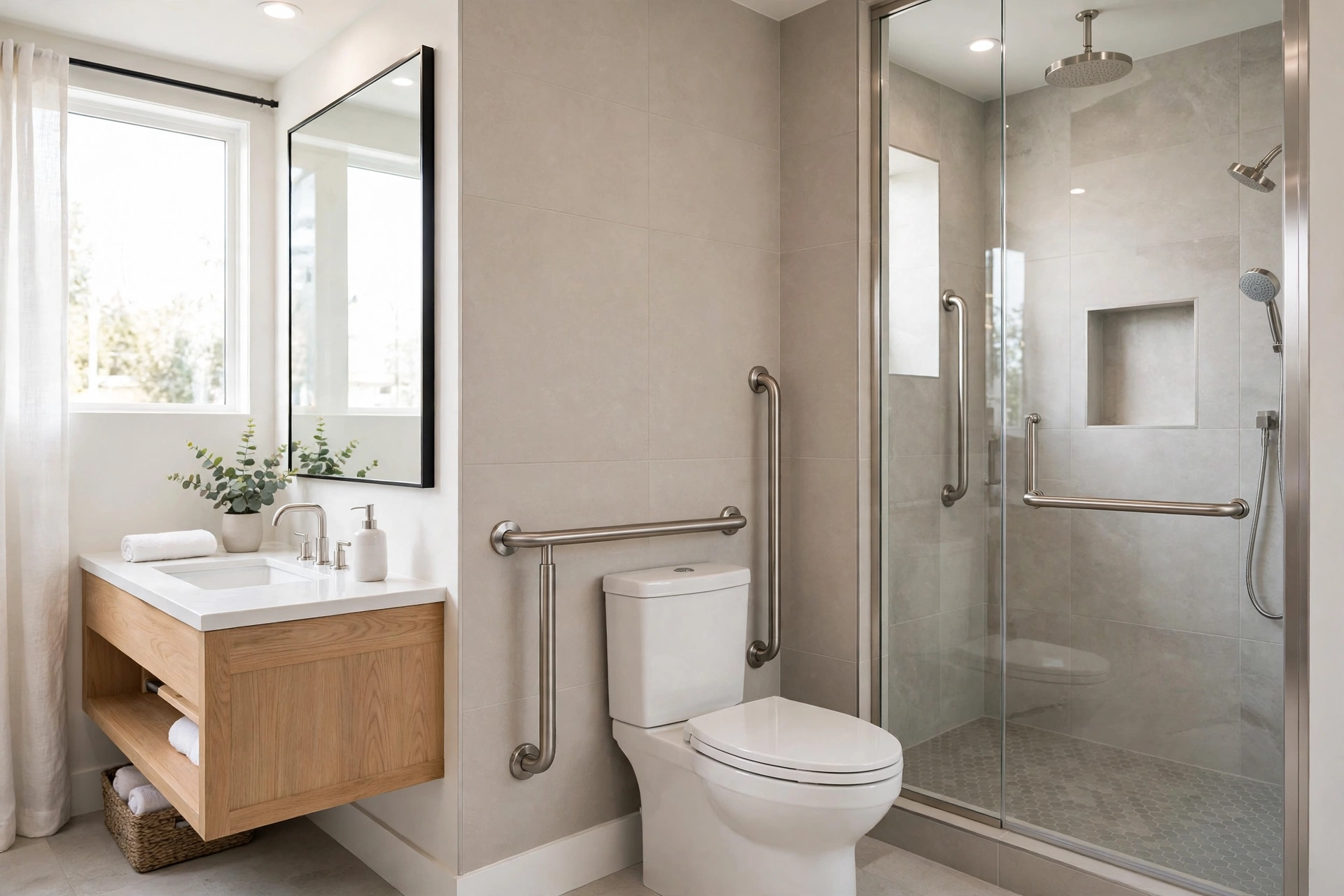
Grab Bar Placement Guide: Safe, Elegant Bathroom Layouts
Grab bar placement guide: shower, toilet, hallway, and stair positioning—plus mounting, heights, designer fini…
Bathroom Safety
Best Shower Chair for Elderly 2026: 7 Safe, Stable Picks Compared
Best shower chair for elderly users in 2026: 7 compared with sizing, safety setup, and our top pick — Medline'…
Safety
Fall-Proofing Your Home: Room-by-Room Checklist
Fall-proofing your home room by room: prevention-focused fixes for stairs, bathrooms, kitchens, and outdoors. …
Comparison
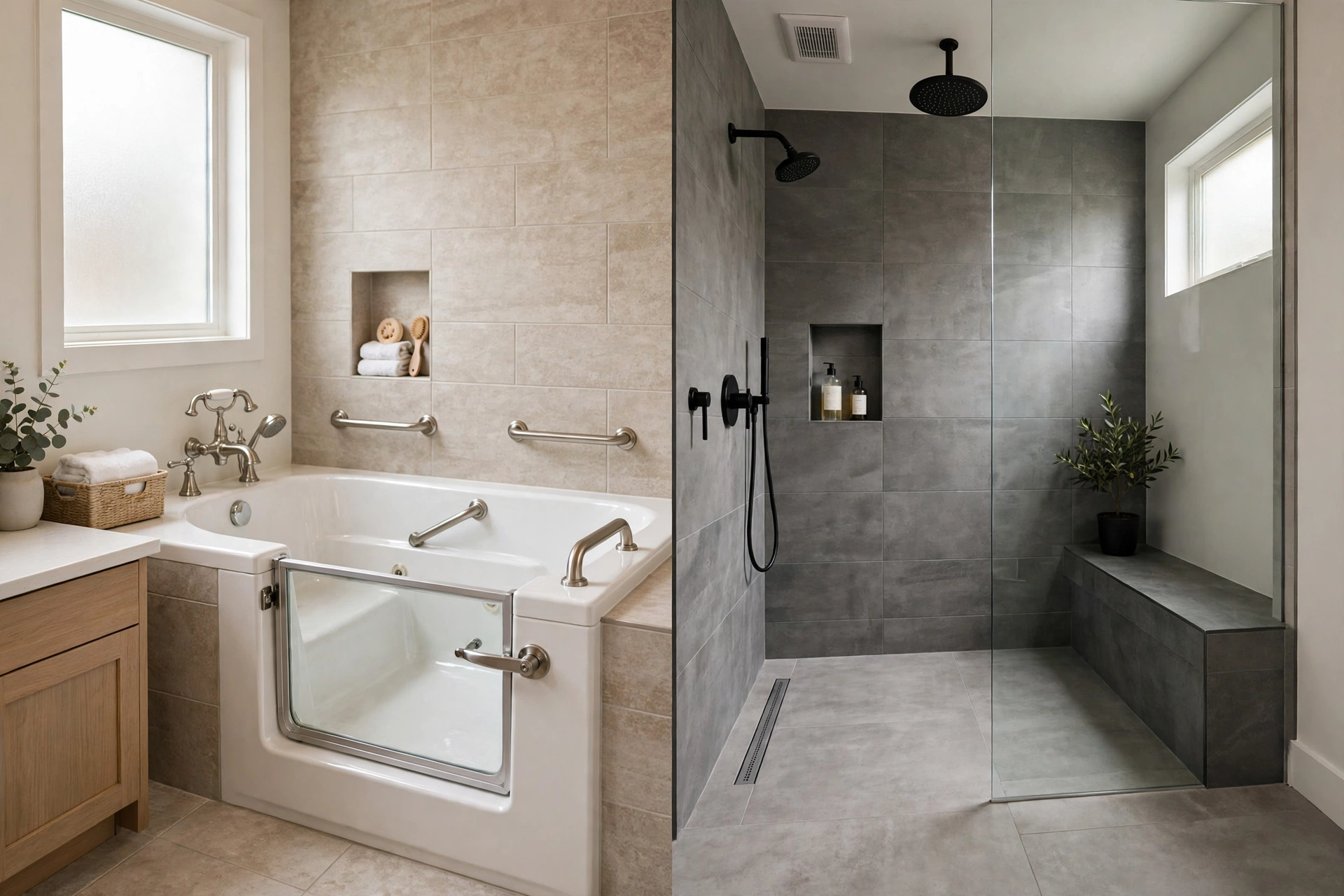
Walk In Tub vs Curbless Shower: Honest 2026 Comparison
Walk-in tub vs curbless shower: honest 2026 costs, accessibility, cleaning, and resale compared. Which bathing…
Interactive Tool
Aging in Place Renovation Cost Estimator 2026 Guide
Budget your aging-in-place renovation with our interactive estimator. Price accessible bathrooms, kitchens, el…
Transfer Equipment
100A vs 200A Automatic Transfer Switch
100 amp vs 200 amp transfer switch: service-entrance vs subpanel topology, when each is required, costs, and l…