
Best Shower Chair for Elderly 2026: 7 Safe, Stable Picks Compared
Key takeaways
- The consensus 2026 best-overall pick is the Medline Shower Chair with Backrest and Padded Armrests: 350 lb capacity, padded arms for safer transfers, 16–21 in height adjustment.
- Buy capacity with margin — rated capacity should exceed the user's weight by at least 50 lb to absorb the dynamic load of sitting and standing.
- Anyone with balance issues needs armrests and a backrest; backless stools are only for steady users who want to rest their legs.
- Tub bathroom? A transfer bench (sit outside, slide in) is safer than any standard chair. Walk-in shower? Get the chair.
- Seat height should put feet flat with knees near 90 degrees; pair the chair with a properly anchored grab bar and re-check leg locks monthly.
The best shower chair for elderly users in 2026 is the Medline Shower Chair with Backrest and Padded Armrests: it earned the consensus best-overall spot across independent 2026 roundups thanks to its 350-pound capacity, padded armrests that steady transfers, and height-adjustable aluminum frame. If you need one decision, that is it — but the right chair depends on the user's balance, the shower footprint, and whether a transfer bench is actually the safer call.
Falls are the leading cause of injury among adults 65 and older, and the bathroom — wet tile, hard surfaces, one slippery step over a tub wall — is where many of them happen. A shower chair attacks the single most dangerous moment: the standing turn, eyes closed, reaching for shampoo, while soap runs over tile. Sitting down removes that moment entirely. It is a sub-$150 device that does more for bathroom safety than most five-figure remodels, which is why occupational therapists routinely recommend one before anything else.
Why a Shower Chair Is the Highest-ROI Fall-Prevention Buy
Three things make a shower chair disproportionately effective. First, it eliminates prolonged single-leg standing on a wet surface — the exact scenario behind most shower slips. Second, it gives the user armrests to push against when sitting and rising, which is where shoulder and wrist injuries occur when people grab towel bars or glass doors instead. Third, it extends safe showering independence: many seniors who dread the shower start skipping it, which cascades into skin problems and lost confidence. A chair they trust keeps the routine intact.
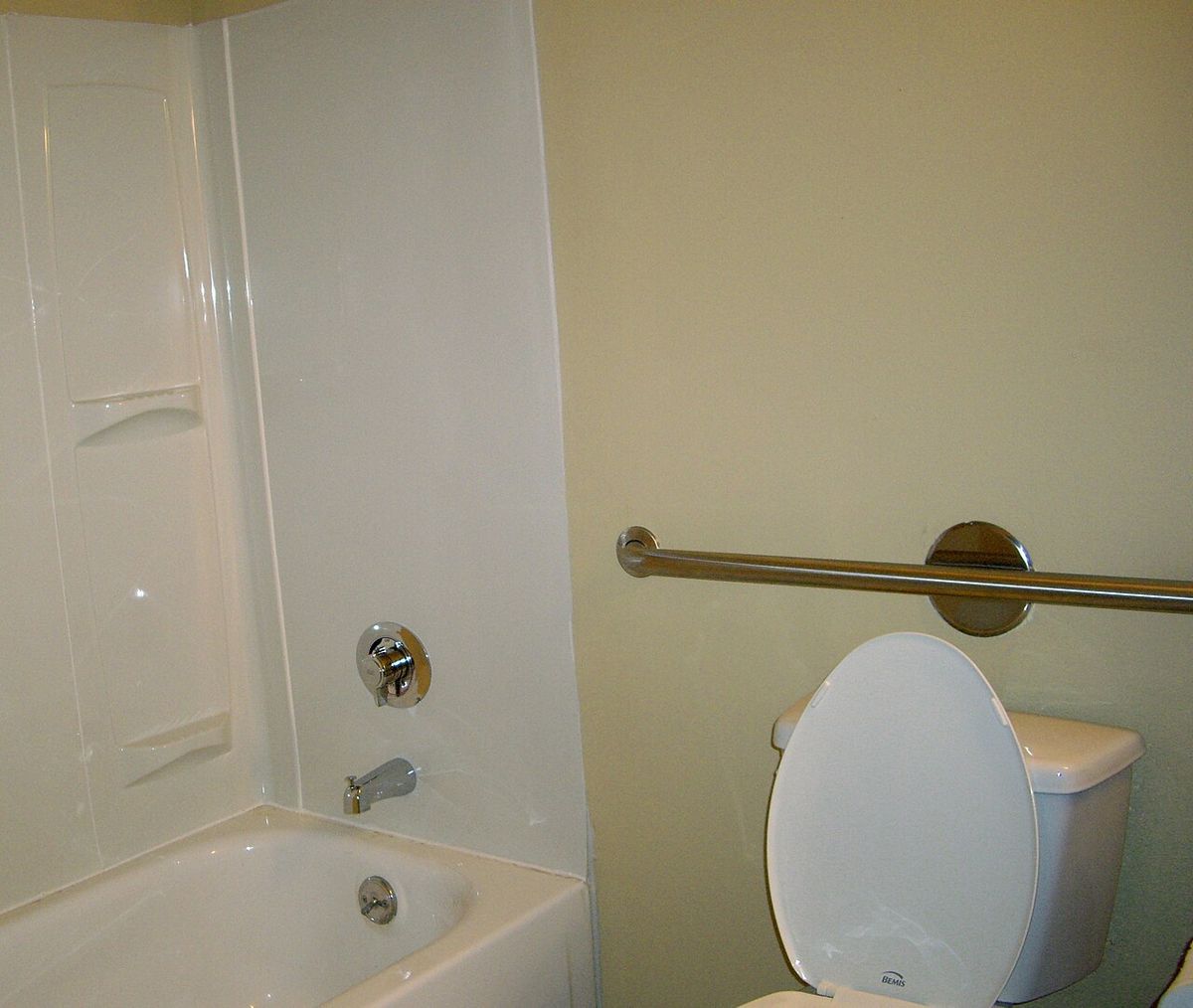
Pairing the chair with properly anchored grab bars multiplies the benefit. A chair without something sturdy to hold during the sit-to-stand transfer is only half a solution — read our grab bar placement guide before you finalize the setup, and run through the full aging-in-place fall-proofing checklist for the rest of the bathroom.
Medline Shower Chair with Backrest and Padded Armrests, 350 lb Capacity

Best-overall pick by multiple independent review sites for 2026 (4.4 stars, In Stock): padded armrests for safer transfers, 350 lb capacity, adjustable height. High buyer intent on this query - families buy within days of discharge.
*Affiliate Disclosure: As an Amazon Associate, Elevate Home earns from qualifying purchases. Pricing and availability subject to change.
The 6 Features That Actually Matter in a Shower Chair for Elderly Users
Ignore marketing fluff and judge every chair on these six criteria, in this order:
1. Weight capacity with real margin. The chair's rated capacity should exceed the user's weight by at least 50 pounds. Dynamic loads — plopping down, shifting, pushing up on the arms — spike well above static body weight. A 250-pound user should be on a 350-pound-rated chair minimum. Bariatric models go to 450–500 pounds.
2. Armrests for transfers. This is the feature reviewers and therapists call out most. Padded armrests give the user a stable push surface to lower onto and rise from the seat. Backless stools are fine for steady users who just want to rest their legs; anyone with balance issues needs arms.
3. A backrest. Users who tire, lean, or have had a stroke or hip replacement should have back support. A contoured backrest with lumbar support also distributes weight and reduces fatigue during longer showers.
4. Height adjustability in small increments. The seat should sit at a height where the user's feet rest flat on the shower floor with knees at roughly 90 degrees — typically 17 to 21 inches for most adults. Tool-free push-button legs adjustable in half-inch or one-inch steps make dialing this in easy, and they matter when the chair moves between a low tub and a curbless shower.
5. Non-slip, non-marking feet. Look for wide rubber or suction-style tips that grip wet tile without scratching it. Angled or splayed legs add lateral stability. Test the chair empty on the actual shower floor — if it skates on your tile, it fails regardless of specs.
6. Drainage and corrosion resistance. A perforated or contoured seat that drains instantly prevents pooling under the user. Anodized aluminum frames resist rust in constant humidity; check that hardware is stainless or coated, because a corroded height-adjustment pin is a failure point.
The 7 Best Shower Chairs for the Elderly in 2026, Compared
These are the models that appear most consistently across 2026 expert roundups and buyer reviews, grouped by the user each one fits. Our overall recommendation — the card above — is the Medline chair with padded armrests; the rest cover the edge cases it does not.
Medline with padded armrests (best overall). The reason this chair tops 2026 lists is the combination: backrest plus padded armrests on an 8-pound aluminum frame, 350-pound capacity, and height adjustment from 16 to 21 inches. The armrests are the differentiator — they convert the scariest part of the shower, the sit-to-stand, into a supported push. Perforated seat drains fast; slip-resistant feet hold on wet tile.
Drive Medical Premium (comfort pick). A near-twin on specs with a slightly plusher seat and the backing of one of the most established medical-equipment brands. Choose it if the user takes long showers and seat comfort is the priority, or if your local medical-supply store stocks Drive parts.
Drive Medical with suction feet (budget pick). The lowest-cost credible option: a wide 19.5-inch seat, backrest, and suction-style feet that grip smooth tile. The trade-offs are a 300-pound capacity and no armrests, so it suits steady users on a tight budget — not the right chair for someone with meaningful balance impairment.
HOMLAND 500 lb (heavy-duty pick). When the user needs real margin — 350+ pounds or a caregiver who leans on the chair during assisted bathing — the reinforced frame and 500-pound rating matter. EVA-padded seat, padded arms, and a wider stance keep it stable under load.
Vaunn compact (small-shower pick). Narrow RV-style and apartment showers reject full-size chairs. The Vaunn's slim footprint fits where others will not, and it assembles without tools. Accept the trade-off: no armrests, so it is for users who are steady on their feet and mainly want to sit while showering.
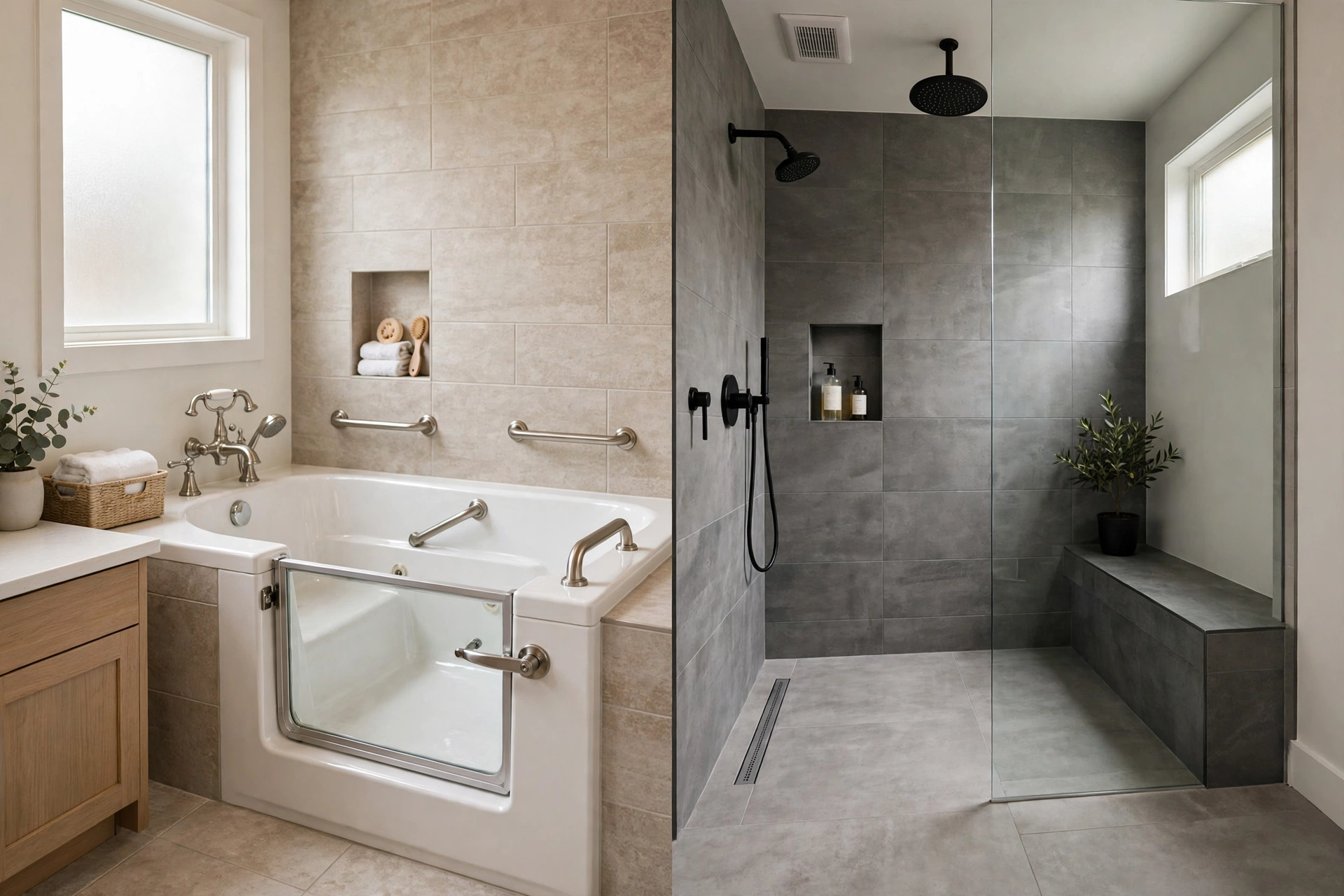
Medline transfer bench (tub pick). If the bathroom has a tub rather than a walk-in shower, stop and reconsider the whole category: a transfer bench lets the user sit on the outside edge and slide across into the tub, never stepping over the wall. For tub bathrooms, this is safer than any standard chair — see our tub cut-out vs. walk-in tub comparison for the permanent-fix alternatives.
KingPavonini swivel (caregiver pick). The rotating seat lets a caregiver position the user without lifting or twisting them. It costs more and has more moving parts to inspect, but for assisted bathing it meaningfully reduces strain on both people.
Sizing It Right: Seat Height, Footprint, and Doorway Math
Measure before you buy. Seat height should put the user's feet flat on the shower floor with knees bent at roughly 90 degrees — too low and standing up becomes a struggle; too high and feet dangle, which destabilizes the sit. For most adults between 5'2" and 6'0", that lands between 17 and 20 inches, which is why the 16–21-inch adjustment range on the top picks covers nearly everyone.
Footprint matters just as much. Measure the shower floor's clear area and compare it against the chair's outside leg dimensions — not the seat dimensions. A chair whose legs splay to 20 by 19 inches needs that full rectangle of flat floor; curbs, slopes toward the drain, and built-in corner benches all eat into it. For tubs, measure the interior width at the height the seat will sit: most standard tubs accept a 17–19-inch-wide seat, but older cast-iron tubs narrow toward the bottom.
Also check the path in: the chair has to get through the bathroom door and into the shower. Folding or tool-free-disassembly models earn their keep in tight bathrooms where the chair must be removed when others shower.
Chair vs. Stool vs. Transfer Bench vs. Wall-Mounted Seat
The four form factors solve different problems. A shower chair with back and arms is the default for elderly users — maximum support, and the right choice whenever balance, stamina, or post-surgical restrictions are in play. A backless stool is lighter, cheaper, dries faster, and takes less space, but it offers nothing to lean on and nothing to push against; reserve it for steady users who simply prefer to sit.
A transfer bench straddles the tub wall so the user sits down outside the tub and slides in — the correct answer for any tub bathroom where stepping over the wall is the hazard. A wall-mounted fold-down seat is the premium permanent option for curbless showers: rock-solid, out of the way when folded, but it requires solid blocking in the wall and professional installation, which puts it in bathroom remodel territory rather than a next-day Amazon order.
When in doubt, match the device to the weakest moment: if the danger is standing in the shower, get the chair; if the danger is getting into the tub, get the transfer bench; if the user cannot reliably sit unsupported, talk to an occupational therapist before buying anything.
Setting It Up Safely: Placement, Grab Bars, and the First Shower
Assembly first: most quality chairs are tool-free, with push-button legs. Set all four legs to the same height, then place the chair and press down hard on each corner — any rocking means a leg is off by a notch or the floor slopes. Re-check monthly; legs drift.
Position the chair so the user faces the shower controls and the handheld sprayer reaches them seated. If you only have a fixed showerhead, a handheld diverter is a cheap upgrade that makes seated showering practical — otherwise the user ends up standing to rinse, defeating the purpose.
The non-negotiable companion is a grab bar within reach of the seated position for the sit-to-stand transfer. Suction-cup bars are not structural; a properly anchored bar into studs or with rated anchors is. Our grab bar placement guide covers heights and stud-finding, and renters should see the no-drill grab bar alternatives. Add a non-slip mat outside the shower and keep the floor dry — most post-shower falls happen on the wet tile after stepping out.
For the first few showers, have someone nearby. Watch how the user transfers: if they grab the shower door, the towel bar, or the chair's backrest to pull themselves up, the setup needs adjusting — the armrests and a grab bar should take that load.
Maintenance: Keeping the Chair Safe Year After Year
A shower chair lives in the harshest room in the house. Inspect it monthly: check rubber feet for wear and cracking, confirm every push-button leg locks at the same notch, and look for corrosion on the frame and hardware. Replace worn feet immediately — they are cheap and they are the entire grip system.
Clean the seat and frame weekly with a non-abrasive bathroom cleaner to prevent biofilm and mildew in the drainage holes; avoid bleach-heavy soaking on aluminum hardware. If the chair starts to wobble, discolor at joints, or any plastic shows stress cracks, replace it — these are not lifetime devices. Most manufacturers suggest reassessing annually, and any chair that has supported a fall should be retired on the spot, since invisible frame damage compromises the next catch.
The Verdict
For the overwhelming majority of elderly users, the best shower chair for elderly buyers in 2026 is a backed chair with padded armrests, at least 350 pounds of capacity, and tool-free height adjustment — the Medline chair in the pick card above is the consensus choice because it delivers all three without bariatric bulk or premium pricing. Size it to the user, anchor a grab bar beside it, and re-check the legs monthly. If the bathroom has a tub instead of a walk-in shower, buy the transfer bench instead — and if stepping over the tub wall is already frightening, price the permanent fixes in our walk-in tub vs. curbless shower guide. The cheapest fall is the one that never happens.
Frequently asked questions
Does Medicare cover shower chairs for the elderly?
Original Medicare (Part B) can cover a shower chair as durable medical equipment, but only with a doctor's prescription and when purchased through a Medicare-approved supplier — and coverage is typically 80% after the deductible. Many families buy out of pocket because the chairs are inexpensive and the paperwork takes longer than the need.
What weight capacity does a shower chair need?
Choose a chair rated at least 50 pounds above the user's body weight to handle dynamic loads from sitting down and pushing up. Standard chairs top out at 300–350 pounds; if the user is over 300 pounds or a caregiver leans on the chair during assisted bathing, step up to a 450–500-pound bariatric model.
Is a transfer bench better than a shower chair?
A transfer bench is safer whenever the bathroom has a tub: it straddles the tub wall so the user sits outside and slides in, eliminating the step-over entirely. A standard shower chair is the right pick for walk-in or curbless showers where the hazard is standing on wet tile, not entering the tub.
Can you use a shower chair in a bathtub?
Yes, most shower chairs work in a standard bathtub as long as the seat width fits the tub interior at seat height and all four feet rest on flat tub floor. Measure first — older tubs narrow toward the bottom. For users who struggle to step over the tub wall at all, a transfer bench is the safer choice.
How often should a shower chair be replaced?
Inspect monthly and plan on reassessing yearly. Replace the chair if you see cracked plastic, corroded height-adjustment pins, worn non-slip feet, or any wobble that re-leveling does not fix. Retire any chair immediately after it has supported a fall, since the frame may have invisible damage.
Do elderly users need a shower chair with arms and a back?
A chair with a backrest and armrests is strongly recommended for anyone with balance issues, post-stroke weakness, hip or knee replacement recovery, or a history of falls. Backless stools suit only steady users who simply want to rest their legs — if the user might lean, tire, or need help standing, arms and a back are not optional.
Keep reading
Bathroom Safety
Best Raised Toilet Seat for Seniors 2026: 7 Picks That Make Standing Safe
Best raised toilet seat for seniors 2026: 7 risers compared by height, clamp security, weight capacity, and ar…
Safety Guide
Grab Bar Placement Guide: Safe, Elegant Bathroom Layouts
Grab bar placement guide: shower, toilet, hallway, and stair positioning—plus mounting, heights, designer fini…
Safety
Fall-Proofing Your Home: Room-by-Room Checklist
Fall-proofing your home room by room: prevention-focused fixes for stairs, bathrooms, kitchens, and outdoors. …
Accessibility Comparison
Bathtub Cut Out vs Walk In Tub: Cost, Safety & the 2026 Verdict
Tub cut-out vs walk-in tub: compare 2026 costs ($370 vs $4k+), safety, install time and resale impact to pick …
Comparison
Walk In Tub vs Curbless Shower: Honest 2026 Comparison
Walk-in tub vs curbless shower: honest 2026 costs, accessibility, cleaning, and resale compared. Which bathing…
Renter Safety
Best Grab Bar Alternatives for Renters: No-Drill Safety That Protects Your Deposit (2026)
Renting and need bathroom safety? The best grab bar alternatives for renters that need no drilling, ranked by …