HVAC Lifespan by Component: What Fails First
How long do HVAC components really last? Compressor, heat exchanger, coil, and blower lifespans compared, plus the repair-vs-replace math for 2026.
10 MIN READ · UPDATED 2026-09-23
Key takeaways
- Think in components, not systems: compressors, heat exchangers, coils, and blowers age at different rates.
- Compressors typically last 12-15 years; they are the most expensive single failure and often trigger replacement.
- Furnace heat exchangers can last 20+ years but a cracked one is an immediate safety replacement.
- Coils fail from corrosion in 10-15 years; blower motors last 15-20 years with clean filters and proper airflow.
- Use the $5,000 rule: repair cost times system age over $5,000 usually means replace.
Ask how long an HVAC system lasts and you will hear a single number, fifteen years, maybe twenty, delivered with false confidence. The truth is more useful: an HVAC system is not one thing but an assembly of components aging at different speeds, and knowing which part fails first changes every decision you make. The capacitor that dies at year seven is a $200 afternoon. The compressor that dies at year thirteen is a $2,800 crossroads. Understanding component lifespans turns surprise breakdowns into planned transitions and keeps you from pouring money into a system that has already told you it is done.
The Short Answer: Components, Not Systems
Think of your HVAC system the way you think of a car. Nobody asks how long a car lasts as a single number; they know tires, brakes, and transmissions have their own schedules. HVAC is the same. The outdoor condenser unit, indoor evaporator coil, furnace or air handler, blower, and controls are distinct machines bolted together, each with its own failure modes, lifespan, and replacement cost. The system's useful life ends when a major component fails at an age where repair no longer makes economic sense.
This framing matters because it changes the repair question. When a technician says the system is 14 years old and the coil is leaking, the relevant facts are the coil's typical lifespan, the compressor's remaining prospects, and the cost of each path, not some generic system age rating. Homeowners who think in components make calmer, cheaper decisions than those who treat every breakdown as a referendum on the entire system.
It also changes maintenance priorities. The components under the most stress deserve the most attention: keeping coils clean protects the compressor, changing filters protects the blower and the coil, and annual electrical checks catch the small parts before they cascade into big ones. Maintenance is not generic system care; it is targeted life support for the components most likely to fail expensively.
The lifespans below are 2026 US market experience for residential equipment from major manufacturers, assuming professional installation and reasonable maintenance. Harsh environments, coastal salt air, desert dust, poor installation, and neglected maintenance all shift these numbers downward, sometimes dramatically. Your specific equipment's history matters more than any national average.
Compressors: What Fails First and Why
The compressor is the heart of any air conditioner or heat pump, a sealed pump that circulates refrigerant, and it is the component whose failure most often ends a system's life. Typical lifespan is 12 to 15 years. When compressors die, they die expensively: replacement runs $2,000 to $3,500 installed, and the repair opens the entire refrigerant circuit, introducing contamination risks that shorten the repaired system's remaining life.
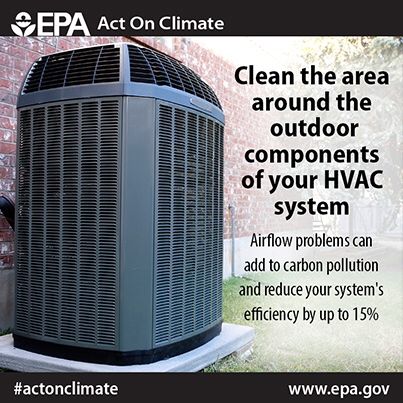
Compressors rarely fail spontaneously; they are usually murdered by system conditions. The leading killers are low refrigerant charge, which starves the compressor of cooling suction gas and overheats its windings; dirty condenser coils, which raise head pressure and operating temperature; and electrical issues like voltage imbalance or failing capacitors, which stress the motor on every start. Acid formation from moisture in the refrigerant circuit is another slow killer, which is why proper evacuation during installation and repair matters so much.
Warning signs are distinctive. Hard starting, where the unit groans, dims the lights, and struggles to kick on, suggests a weakening compressor or failing start components. Rising energy bills without changed usage can indicate declining compressor efficiency. Tripped breakers, especially on hot afternoons, point to a compressor drawing excessive current. And a unit that runs but barely cools, with correct airflow, may have a compressor with failing valves that can no longer pump effectively.
Because compressor replacement is so costly relative to remaining system value, it is the classic trigger for full system replacement past the 10-to-12-year mark. Under 8 years, especially with parts warranty covering the compressor itself, replacement of just the compressor can be rational. Between those ages, run the $5,000 rule and get both quotes; the math usually speaks clearly.
Heat Exchangers, Coils, and Blowers
The furnace heat exchanger is the longevity champion: a steel chamber that contains combustion, with no moving parts and typical lifespans of 20 to 25 years or more. Its failure mode is what matters, though. A cracked heat exchanger can leak carbon monoxide into the supply airstream, which makes it an immediate safety issue, not a deferrable repair. Annual inspection of the heat exchanger is non-negotiable on gas furnaces, and any confirmed crack means the furnace is done, full stop, regardless of its age.
Evaporator and condenser coils live harder lives. Indoor evaporator coils typically last 10 to 15 years before formicary corrosion, the microscopic pitting caused by organic acids, opens pinhole leaks. Outdoor condenser coils face weather, chemicals, and physical damage for a similar 12-to-18-year span, longer in mild climates, shorter near salt water. Coil replacement runs $1,500 to $3,500 installed, and like compressors, coil failure on an aging system often tips the decision toward full replacement.
Blower motors are the steady workhorses, typically lasting 15 to 20 years. Older PSC motors are simple and durable but energy-hungry; modern ECM variable-speed motors are efficient and precise but more sensitive to power quality and more expensive to replace, $600 to $1,200 versus $400 to $700 for PSC. The blower's lifespan depends heavily on airflow: systems choked by dirty filters or undersized ducts make the motor work harder and die younger, which is another reason filter discipline and duct design pay compound dividends.
Small electrical components fail earliest and cheapest. Capacitors last 5 to 10 years and cost $150 to $350 replaced; contactors last 7 to 12 years at $200 to $400; control boards and sensors vary widely but typically survive 10 to 15 years. None of these should ever trigger a system replacement conversation on their own. A technician who suggests replacing the system over a failed capacitor is selling, not diagnosing.
What Shortens Life and What Extends It
Installation quality is the dominant variable most homeowners never see. Systems installed with proper refrigerant charge weighed in by scale, deep evacuation verified by micron gauge, nitrogen-purged brazing, and correct airflow setup routinely outlast sloppy installations by five years or more. The tragedy is that bad installation is invisible until components start dying early, by which point the installer is long gone. This is why choosing a contractor on workmanship, verified by references and process questions, is the highest-leverage decision in HVAC.
Maintenance is the second great lever. Annual professional service, clean coils, correct charge, tight electrical connections, lubricated moving parts where applicable, plus homeowner filter changes on schedule, consistently adds years to every major component. The mechanism is straightforward: every maintenance task removes a specific stress, heat, friction, voltage strain, or airflow restriction, that would otherwise accumulate into failure. It is the cheapest life insurance in homeownership.
Environment and usage patterns set the baseline. Coastal salt air corrodes outdoor coils aggressively; desert dust clogs them; oversized equipment short-cycles, multiplying the stressful starts that wear compressors and electrical parts; undersized ductwork raises static pressure and punishes blowers. None of these are the equipment's fault, and all of them are addressable: coated coils near the ocean, proper sizing by Manual J, and ductwork that can actually breathe.
Power quality is the sleeper factor. Compressors and ECM blower motors are sensitive to voltage sags, surges, and imbalance. A whole-home surge protector, typically $300 to $600 installed, and prompt attention to flickering lights or frequently tripping breakers, protect the most expensive components from the cheapest cause of death. In areas with unstable power, it is not optional equipment.
The 50% Rule and Repair Economics
When a major component fails, two rules of thumb help cut through the sales pressure. The $5,000 rule: multiply the repair cost by the system's age in years; if the result exceeds $5,000, replacement is usually the better investment. A $900 repair on a 6-year-old system scores 5,400, a borderline case worth discussing. The same repair on a 12-year-old system scores 10,800, replace without anguish.
The 50% rule is simpler: if a repair costs more than half the price of a new system, replace. A $3,000 compressor job on a system whose replacement costs $9,000 is right at the line; factor in the new system's warranty, efficiency gains, and the avoided next repair, and replacement usually wins. Both rules are heuristics, not laws, but they prevent the most common expensive error: nursing a dying system through a series of four-figure repairs that total more than replacement would have cost.
Efficiency gains sweeten the replacement math. A 15-year-old 13-SEER air conditioner replaced with a modern high-efficiency system can cut cooling energy use noticeably, and the savings compound over the new system's life. Factor realistic energy savings into the comparison, but do not let a salesperson's optimistic projections carry the decision; use your actual bills and conservative estimates.
Refrigerant type can force the issue independently of economics. Systems on phased-down refrigerants face rising service costs and shrinking parts availability, which shortens their practical economic life even when the components are willing. A 14-year-old system needing a $1,500 coil repair is a worse bet than the same repair on a current-refrigerant system, because every future service call carries the same refrigerant penalty.
Planning Replacement Before Failure
The best time to replace HVAC equipment is before it fails, on your schedule rather than the equipment's. Emergency replacements happen in extreme weather, when contractors are slammed, prices carry urgency premiums, and you choose from whatever is available rather than what is optimal. Planned replacement means multiple quotes, ideal timing in spring or fall, and the freedom to right-size with a proper Manual J load calculation.
Start planning when the air conditioner passes 12 years or the furnace passes 18, even if everything runs fine. Get a preemptive assessment during a routine maintenance visit: ask the technician for an honest condition report on the compressor, heat exchanger, and coils, and for a replacement quote you can keep on file. This costs nothing extra and converts a future emergency into a planned project.
Budget realistically. In 2026, full system replacement typically runs $8,000 to $15,000 for a standard-efficiency split system in an average home, $12,000 to $20,000-plus for high-efficiency or multi-zone configurations, and more for complex installations. Costs are 2026 US market ranges; get itemized local quotes. Knowing the number in advance lets you save, finance sensibly, or time the project to rebate cycles instead of scrambling.
Finally, keep records. Equipment model and serial numbers, installation date, warranty registration, and a log of repairs and maintenance visits turn every future decision into an informed one. When the compressor fails at year thirteen, you want to know its history, not guess at it. The homeowners who get the best value from HVAC are not the ones who buy the most expensive equipment; they are the ones who know exactly what they own, how it has been treated, and when its components are due.
Frequently asked questions
Typically 12 to 17 years for the system as a whole, with the compressor usually being the limiting component at 12 to 15 years. Well-maintained units in mild climates reach the high end; neglected units in harsh coastal or desert environments may fail before 12. The system's lifespan is really the lifespan of its weakest major component at the time of failure.
Small electrical parts fail first: capacitors every 5 to 10 years, contactors every 7 to 12 years. These are cheap repairs, not system-killers. Among major components, evaporator coils often fail first from corrosion at 10 to 15 years, followed by compressors at 12 to 15. Blower motors and heat exchangers generally outlast both.
Rarely on an older system. Compressor replacement runs $2,000 to $3,500 installed, and on a system past 10 to 12 years the remaining components are aging too, making it a poor investment. On a system under 8 years old, especially under parts warranty where you pay labor only, compressor replacement can make sense. Always get the full replacement quote for comparison.
Furnaces generally outlast air conditioners: 18 to 25 years versus 12 to 17. The furnace's core, the heat exchanger, is a simple steel component with no moving parts, while the air conditioner's compressor is a precision machine under constant stress. This is why many homes replace the air conditioner twice in one furnace's lifetime.
Yes, measurably. Studies and contractor experience consistently show maintained systems lasting several years longer than neglected ones. Clean coils, correct refrigerant charge, tight electrical connections, and proper airflow each remove a specific stress that shortens component life. Annual professional maintenance plus regular filter changes is the cheapest life-extension available.
Planning replacement at 15-plus years for air conditioners or 20-plus for furnaces is usually smarter than waiting for a mid-season failure. Proactive replacement lets you get multiple quotes, choose optimal timing, and avoid emergency premiums and discomfort. Watch for rising repair frequency, declining efficiency, and major-component symptoms as your signals.