Compost & Waste Stations for Outdoor Kitchens
Design a compost and waste station for your outdoor kitchen: sorting streams, integrated pull-out cabinets, composting options, odor and pest control, and 2026 costs.
10 MIN READ · UPDATED 2026-09-23
Key takeaways
- Plan three streams (compost, recycling, trash) with recycling sized largest for party volume and compost closest to the prep zone.
- Integrate pull-out waste drawers into the island cabinetry with sealed lids, washable trays, and fronts that match the island doors.
- Choose a composting method that matches real commitment: curbside, pickup service, or a sealed tumbler kept downwind.
- Control odor and pests with daily emptying routines, locking lids, a washdown pad with hose bib, and grease kept out of compost.
- Budget $1,500-$6,000 in 2026 for the full station including the screened cart enclosure and service-side transfer path.
Outdoor kitchens generate waste at a prodigious rate: prep trimmings, plate scrapings, bottles, cans, cardboard from deliveries, grease, and ash. In most backyards, all of it goes into a single plastic bin that overflows by dessert, smells by morning, and draws every raccoon in the neighborhood by the weekend. A compost and waste station brings the discipline of a professional kitchen to the backyard: sorted streams for compost, recycling, and trash, integrated into the island cabinetry so seamlessly that guests sort correctly without thinking, with odor and pest control engineered in rather than hoped for. It is the least glamorous part of an outdoor kitchen and one of the most appreciated in daily use. A well-designed station typically adds $1,500–$6,000 to a project. This guide covers sorting streams, integrated cabinet solutions, composting options, odor and pest control, materials, and placement.
Why Waste Design Belongs in the Plan
Waste is a workflow problem before it is an aesthetic one. In a kitchen without a waste plan, the cook carries dripping scraps across the patio to a distant bin, guests stack plates on the nearest flat surface because no bus tub exists, and recyclables contaminate the trash (or vice versa) because the only bin is unmarked. Every one of these frictions is small; together they define whether the kitchen feels effortless or chaotic during a party.
There is also a regulatory dimension that keeps growing. An increasing number of US municipalities require or incentivize residential composting and enforce recycling sorting, with fines for contaminated bins in some jurisdictions. Designing the station around three or four streams now — rather than retrofitting after the city changes the rules — is simple future-proofing. And for households that garden, a compost stream closes a satisfying loop: prep trimmings and plate scrapings become soil amendment for the same landscape the kitchen overlooks.
Finally, there is the pest and odor reality. Food waste stored outdoors in a warm climate is a dinner invitation to raccoons, rodents, flies, and yellow jackets — and a smelly one for the neighbors. A station designed with sealed containers, proper drainage, and a cleaning routine prevents the problems that make outdoor kitchens unpleasant between parties. Waste design is hospitality design: guests should never see, smell, or think about the waste system, which is precisely why it needs designing.
The Streams: What to Sort and How Many Bins
Most households need three streams: compost/organics, recycling, and landfill trash. Some add a fourth: glass separation (required separately in some municipalities, and worth separating anyway to avoid breakage contaminating other streams) or a dedicated grease and ash stream for grill maintenance waste. More than four streams confuses guests; fewer than three wastes the composting opportunity.
Capacity planning prevents the most common station failure: bins that overflow mid-party. As a rule of thumb, a dinner party of twelve generates roughly one full kitchen trash bag of recyclables and half a bag of food scraps; scale the working bins so the largest gathering you host regularly fits without an emergency trip to the curb carts. When in doubt, oversize the recycling pull-out — it is the stream that surprises owners with its volume, especially once guests learn the station actually works.
Size each stream to its actual volume. In an entertaining-heavy household, recycling is usually the largest stream — bottles, cans, and cardboard dwarf food scraps at a party — so give it the biggest container. Compost runs second during prep-heavy cooking sessions. Trash, paradoxically, is often the smallest stream in a well-sorted kitchen. A common high-functioning setup: a triple pull-out under the prep counter (compost / recycling / trash in 10-to-15-gallon bins) plus a larger standalone recycling station near the serving area for party volume.
Label everything with clear, attractive signage — engraved tags, printed labels behind glass, or color-coded bin fronts — because guests will not sort correctly based on good intentions alone. The labels should say what goes in (“food scraps, coffee grounds, napkins”) rather than relying on the word “compost,” which half of guests interpret differently. Put the compost bin closest to the prep zone (where trimmings are generated) and the recycling closest to the serving zone (where bottles are emptied): sorting compliance follows convenience with remarkable fidelity.
Integrated Cabinet Solutions That Look Intentional
The premium approach hides the entire waste system inside the island: pull-out drawer systems with sealed bins on full-extension, soft-close slides, sized to standard bin dimensions so replacements are easy. Marine-grade polymer or stainless cabinetry houses them; the drawer fronts match the island's door style so the station reads as furniture, not utility. Tilt-out hampers under the sink cabinet work for smaller kitchens, though pull-outs are more ergonomic and hold larger bins.
Details make or break the integration. Specify sealed lids or gasketed bin tops inside the cabinet to contain odor between emptyings. A removable inner caddy for the compost bin — a small countertop container that docks into the larger bin — lets the cook scrape trimmings during prep without opening the full pull-out every time. Ventilate the cabinet interior modestly (a small vent to the toe-kick) so moisture does not accumulate, and line the cabinet floor with a removable, washable tray that catches the inevitable drips.
For the party-volume overflow, plan a back-of-house solution that does not ruin the aesthetic: a screened enclosure or deck box near the kitchen's service side holding full-size rolling carts (the 32-to-64-gallon municipal bins), with a paved, level path for rollout on collection day. Lattice, slatted wood, or masonry screens that match the kitchen's materials keep the carts invisible from the entertaining areas. Never make the cook haul party waste through the dining area to reach the curb — route the service path behind the scenes from the start.
Composting Options: From Curbside to Backyard Systems
What happens to the compost stream depends on the household and the municipality. Curbside organics collection — available in a growing number of US cities — is the simplest: scraps go in the municipal green bin, the city handles the rest. If your city offers it, the station design just needs a clean transfer path from kitchen caddy to curb cart. Private composting services fill the gap in many suburbs: a weekly or biweekly pickup of a 5-gallon bucket for a modest subscription, with finished compost often returned in spring.
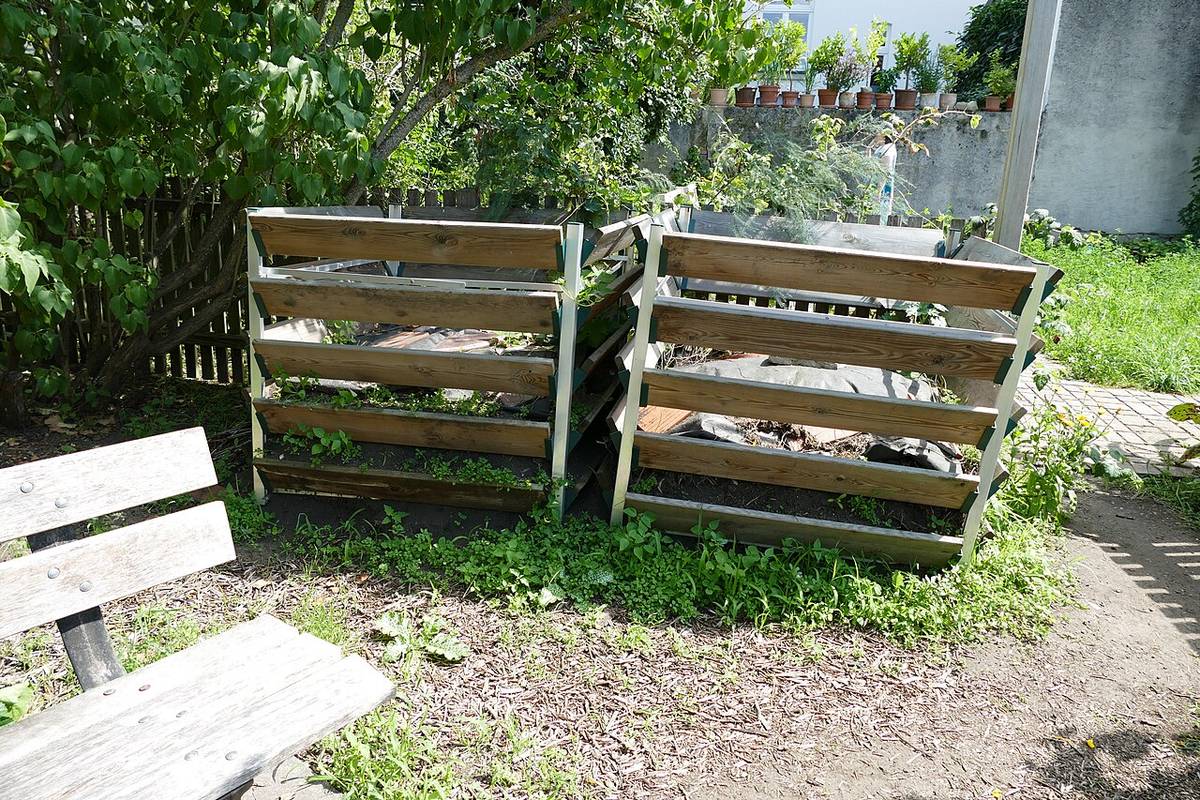
Backyard composting suits households with garden space and the inclination. A sealed tumbler near (but downwind of) the kitchen handles prep scraps and plate scrapings with minimal odor and no pest access; dual-chamber tumblers let one side cure while the other fills. Worm bins (vermicomposting) process kitchen scraps remarkably fast in a small footprint but need shade and freeze protection. Traditional open piles work but belong far from entertaining areas and demand more management to avoid rodents. Whatever the method, keep meat, dairy, and oils out of backyard systems unless the method specifically handles them — they are the odor and pest triggers — and route grill grease to the trash or a dedicated grease-recycling drop-off, never the compost.
Winter changes the routine in cold climates: compost caddies freeze, tumblers stall, and nobody wants to haul scraps through snow. Plan a winter protocol — a sealed 5-gallon bucket staged in the garage or mudroom as the cold-weather transfer point, emptied to the outdoor system on milder days — so the sorting habit survives January. Households on curbside organics service have it easiest; backyard composters should site the tumbler on a clear, shoveled path or accept a seasonal pause without guilt.
Match the method to the household's honest commitment level. A tumbler that gets turned weekly produces beautiful compost; a tumbler that gets ignored becomes a smelly monument to good intentions. When in doubt, start with curbside or a pickup service — the station design accommodates any of them, and the method can evolve.
Odor, Pests, and the Cleaning Routine
Odor control is 80 percent routine, 20 percent equipment. Empty the compost caddy into the sealed outdoor container daily during use seasons; rinse bins weekly; and keep a washdown routine — a hose bib and a sloped, drainable pad at the waste station make a two-minute rinse genuinely easy, which is why it actually happens. Compostable bin liners contain mess and speed emptying; baking soda or purpose-made deodorizer in the bin bottom helps between cleanings.
Pest control layers on top of cleanliness. Sealed, locking lids on all outdoor containers defeat raccoons, which are disturbingly capable with simple latches — look for animal-resistant certification if raccoons are a known local problem. Elevate carts slightly or store them on a hard, cleanable pad rather than soil, which discourages burrowing. Keep the station away from the dining area — downwind and out of sight — while keeping the kitchen's working bins close at hand; the transfer from working bin to sealed cart is the design detail that squares this circle. For flies and yellow jackets in peak season, a lidded working caddy emptied frequently beats any trap.
Grease and ash need their own discipline. Collect grill grease in sealed containers and dispose with trash or through a cooking-oil recycling drop-off — never pour it down the outdoor sink, where it congeals in the drain, and never into the compost. Wood ash from pizza ovens and fire features should cool completely (a full day minimum), then go to trash or, in small quantities, the garden — but never into a plastic bin while even slightly warm.
Materials, Placement, and Budget
Specify waste-station materials for constant moisture and cleaning chemicals: marine-grade polymer or 304 stainless cabinetry, stainless or sealed-stone countertops at the sorting counter, and hardware rated for outdoor exposure. Avoid raw wood interiors (they absorb odor permanently) and porous stone that stains. The sorting counter itself — the landing zone beside the pull-outs where plates get scraped — should be sealed, wipeable, and at a comfortable working height, with a trash sweep: a counter cutout that lets scraps drop straight into the compost bin below, the professional kitchen's simplest and most satisfying detail.
Placement follows the work triangle: the working waste pull-out belongs in or immediately adjacent to the prep zone, within a pivot of the cutting board; the party-volume recycling belongs near the serving and dining zones; the sealed transfer carts live in their screened enclosure on the service side with a clean path to the curb. Keep all of it downwind of dining based on prevailing breezes, and out of the direct sightline from the main entertaining view.
Budget $1,500–$6,000 for the station as part of an outdoor kitchen project in 2026: pull-out hardware and bins ($600–$2,000), the cabinetry run that houses them, sorting counter and trash sweep, the screened cart enclosure ($800–$2,500 depending on materials), and the pad, drainage, and hose bib. Costs are 2026 US market ranges; get itemized local quotes. A compost tumbler adds $150–$400; a year's pickup service subscription typically runs a few hundred dollars. For the money, few upgrades improve the daily experience of an outdoor kitchen more — this is the detail guests never notice and the cook appreciates every single time.
Frequently asked questions
Three works for most households: compost/organics, recycling, and landfill trash. Some add glass separation or a grease-and-ash stream where local rules require it. More than four streams confuses guests; label each bin with what goes in it, not just the stream name, to get real compliance.
Curbside organics collection is simplest where available, followed by private pickup services for a modest subscription. Sealed tumblers work well for households with garden space that will actually maintain them. Match the method to honest commitment: a neglected tumbler becomes an odor problem, while a service just works.
No. Collect grill grease in sealed containers for trash or a cooking-oil recycling drop-off, never the compost and never down the outdoor sink. Keep meat, dairy, and oils out of backyard compost systems generally, since they trigger odor and pest problems.
Layer defenses: sealed locking lids on all outdoor containers (animal-resistant rated where raccoons are a known problem), daily transfer from working caddies to sealed carts, weekly bin rinsing, and carts stored on a hard cleanable pad in a screened enclosure. Cleanliness matters more than any single product.
The working pull-out belongs in or beside the prep zone within a pivot of the cutting board; party-volume recycling goes near serving and dining; sealed transfer carts live in a screened enclosure on the service side with a clean path to the curb. Keep it all downwind of dining areas.
Typically $1,500-$6,000 as part of an outdoor kitchen in 2026: pull-out hardware and bins $600-$2,000, the housing cabinetry, a sorting counter with trash sweep, and the screened cart enclosure at $800-$2,500. Costs are 2026 US market ranges; get itemized local quotes.