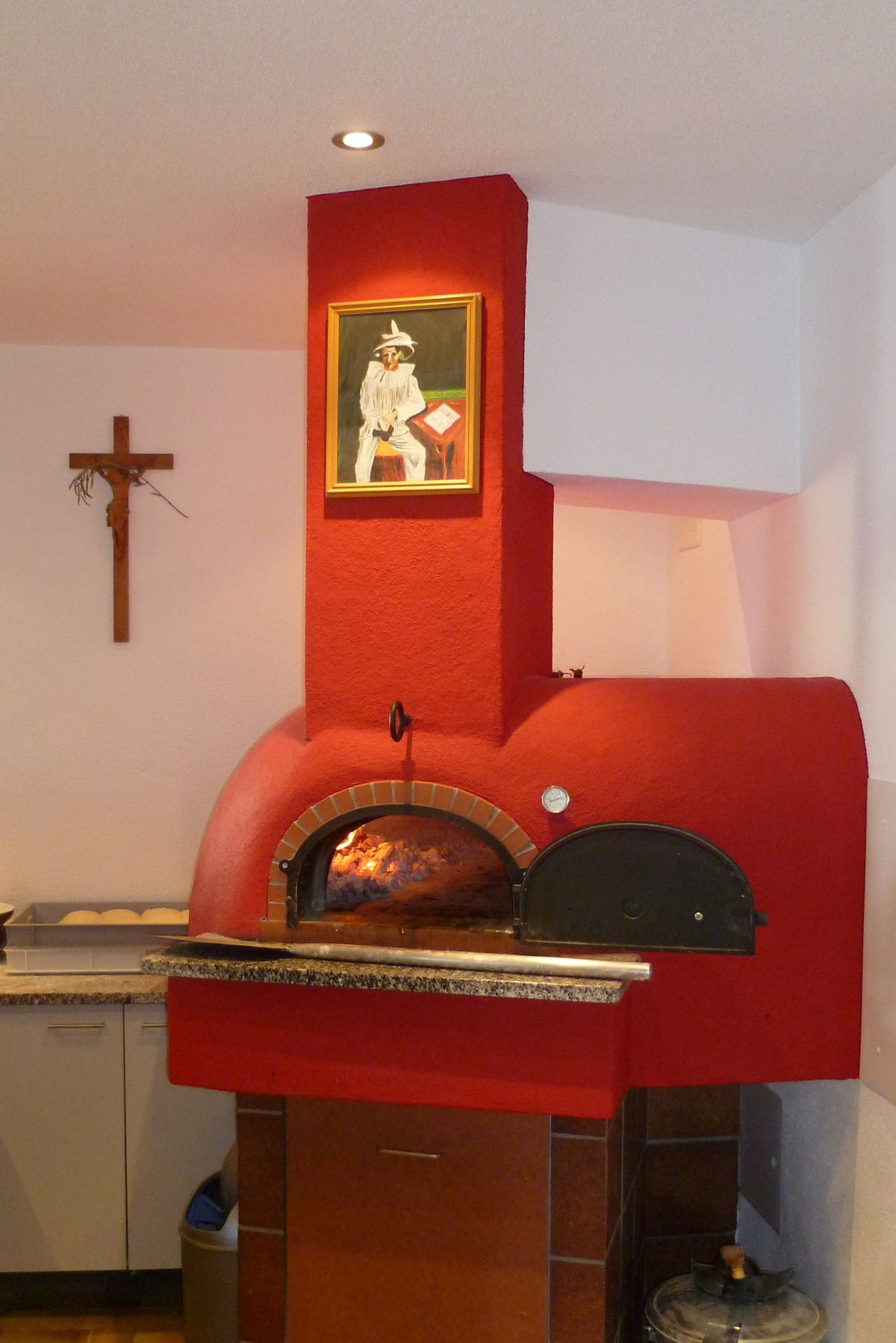
Outdoor Pizza Oven Buying Guide: 2026 Expert Picks
Key takeaways
- Fuel choice drives everything: wood for theater and peak heat, gas for weeknight convenience, dual-fuel for flexibility.
- Size the deck to your real entertaining pattern — mid-size 14–16 inch ovens suit most luxury households.
- Insulation, deck material, and build quality matter more than peak-temperature marketing claims.
- Plan built-in ovens during kitchen design; gas lines require a licensed pro with permits.
- Entry ovens start around $300; premium built-ins and custom masonry run into five figures.
Nothing gathers a crowd like a backyard pizza oven. But between wood-fired romance, gas-fired convenience, and dual-fuel flexibility — plus countertop, freestanding, and built-in formats — buying the right one takes more thought than most shoppers expect. This 2026 guide cuts through the marketing to what actually matters outdoors, so you buy once and buy right.
Wood vs Gas vs Dual-Fuel: The Real Trade-Offs
Fuel choice is the single biggest decision, and it shapes everything from flavor to how often you'll actually fire the oven up.
Wood-fired
The classic. Wood ovens reach the screaming temperatures — 800°F and beyond — that produce leopard-spotted, 90-second Neapolitan-style pizzas. The flavor contribution is real but often overstated for fast-cooking pizzas; where wood truly shines is in longer roasts, breads, and the theater of live fire. Downsides: a learning curve, 30–60 minute heat-up times, ash cleanup, and the need to store dry hardwood. If you love process as much as product, wood is deeply satisfying.
Gas-fired
Gas ovens heat in 15–20 minutes, hold temperature with a dial, and produce essentially no cleanup. Modern gas burners reach legitimate pizza temperatures, and for weeknight use they're unbeatable — many owners report firing their gas oven three times as often as they'd manage with wood. You trade a whisper of wood flavor and some romance for radically higher usage. For busy households, that's usually the right trade.
Dual-fuel
Burn wood, gas, or both. Dual-fuel ovens offer the most flexibility: gas for Tuesday night, wood for Saturday's dinner party. They cost more and the gas burner assemblies add maintenance points, but for entertaining-focused homeowners who want options, they're the sweet spot.
MEATER Plus Smart Wireless Meat Thermometer (165ft Bluetooth)

Completely wire-free probe for rotisseries, smokers, and built-in grills
*Affiliate Disclosure: As an Amazon Associate, Elevate Home earns from qualifying purchases. Pricing and availability subject to change.
Size and Capacity: Buy for Your Crowd
Oven size is measured by the deck — the cooking surface — and it determines both pizza diameter and how many pizzas cook at once.
- Compact / countertop (12-inch pizzas): ideal for couples and small families. Heats fast, sips fuel, and stores easily. Struggles with larger gatherings.
- Mid-size (14–16 inch pizzas): the sweet spot for most luxury homes. Handles a dinner party of 8–12 with pizzas cycling every couple of minutes.
- Large / built-in (16-inch+ or multiple pizzas): for serious entertainers. Higher fuel use and longer heat-up, but you can cook for a crowd without a bottleneck.
Be honest about your entertaining pattern. An oversized oven you fire twice a year is worse than a mid-size one you use weekly.
What Actually Matters Outdoors
Marketing leans hard on peak temperature claims. Here's what experienced owners say actually determines satisfaction:
- Insulation and heat retention: a well-insulated oven holds temperature between pizzas and recovers fast. Thin, poorly insulated ovens swing wildly and burn fuel.
- Deck material: cordierite and biscotto-style stone decks handle thermal shock and produce better crusts than thin steel.
- Build quality and weather resistance: stainless bodies, sealed electronics, and quality hinges survive years of outdoor life; flimsy construction doesn't.
- Chimney and airflow design: good draft means cleaner burns, less smoke in faces, and more even heat.
- Weight and placement: a 200-pound oven needs a serious stand or masonry base — plan the footprint before you buy.
Ask any veteran owner and you'll hear the same thing: the oven you fire up without thinking is the right oven. Convenience features that get you cooking weekly beat peak-temperature bragging rights every time.
Built-In vs Freestanding vs Countertop
Countertop/portable ovens are the low-commitment entry: set one on a sturdy table, connect propane or light wood, and you're cooking. Great for testing whether pizza night becomes a habit before committing to masonry.
Freestanding ovens on carts add mobility and storage, and they look intentional without construction. Many premium models live happily in this format for years.
Built-in ovens integrated into the outdoor kitchen are the luxury endgame — seamless, architectural, and permanent. They require proper clearances, ventilation, and (for gas) a professionally run line. Plan the oven during the kitchen design phase, not after; retrofitting masonry around an oven is far more expensive.
2026 Cost Tiers
Costs are 2026 US market ranges; get itemized local quotes. Prices below cover the oven itself; installation, gas lines, and masonry bases are extra.
| Tier | Typical range | What you get |
|---|---|---|
| Entry countertop | $300–$800 | Compact gas or wood ovens; great pizzas, lighter build, smaller deck |
| Mid-range freestanding | $800–$2,500 | Better insulation, larger decks, dual-fuel options appear |
| Premium / built-in | $2,500–$7,000+ | Serious insulation, large decks, masonry-ready designs, refined finishes |
| Custom masonry | $7,000–$20,000+ | True wood-fired masonry ovens built into the kitchen structure |
Budget an additional $500–$2,000 for a gas line run, and $1,000–$5,000+ for masonry bases or enclosures at the premium end.
Ongoing Fuel Costs and Storage
The purchase price is only the beginning — think about what feeding the oven looks like year after year. Wood-fired owners need dry storage for seasoned hardwood: a covered rack with airflow, kept off the ground. Many owners buy by the quarter-cord from local firewood suppliers, and well-seasoned oak, maple, or fruitwood burns cleaner and hotter than green wood. Expect to pay more for kiln-dried or specialty cooking wood, but a little goes a long way at pizza temperatures.
Propane users have the simplest logistics: standard 20-pound tanks swap at any hardware store or gas station, and a tank typically stretches across several pizza sessions depending on oven size and burner output. If you're already running natural gas to the outdoor kitchen for a grill, adding the pizza oven to that line is usually the cheapest fuel per session over time — but the line itself must be sized and run by a licensed pro, so factor that into the first-year math.
Common Buying Mistakes
- Buying for your fantasy self. The wood-fired purist who realistically cooks twice a month will get more joy from gas. Match fuel to your actual weeknights.
- Oversizing the deck. Bigger ovens burn more fuel and take longer to heat. Unless you regularly host 15+, mid-size is the sweet spot.
- Ignoring clearances. Measure twice: manufacturer clearances from combustibles are non-negotiable, especially for built-ins near cabinetry.
- Skipping the cover. A $100 fitted cover protects a $2,000 oven. This is the highest-ROI accessory in the category.
- Forgetting the foundation. Heavy ovens need a rated stand or masonry base — wobbly tables and top-heavy setups are accidents waiting to happen.
Installation, Gas Lines, and Permits
Any natural gas connection must be run by a licensed gas fitter or plumber, with permits and inspection per local code — no exceptions. Clearance requirements from combustibles vary by model; follow the manufacturer's specs exactly, especially for built-in installations where heat meets cabinetry. Wood-fired ovens need sensible placement too: mind prevailing winds, neighbor proximity, and any local burn regulations or HOA rules.
Care and Maintenance
Burn off residue after cooking, brush the deck once cool, and empty ash before it absorbs moisture. Cover the oven between uses — or in cold climates, follow a full winter shutdown: clean thoroughly, cap the chimney, and protect the deck from freeze-thaw. Quality covers sized to the oven beat generic tarps, which trap moisture against steel.
Buy for the cook you are, not the cook you imagine on your most ambitious Saturday. The best outdoor pizza oven is the one that's hot and ready while the idea is still exciting. Start with honest answers about fuel, size, and placement, and the right oven mostly picks itself. Your future self — the one eating great pizza on a random Tuesday — will thank you.
Gozney Arc XL Outdoor Pizza Oven

A strong alternative to our top pick — compare features and reviews before you buy.
*Affiliate Disclosure: As an Amazon Associate, Elevate Home earns from qualifying purchases. Pricing and availability subject to change.
Frequently asked questions
Wood or gas — which fuel is better?
Wood delivers the highest heat and the romance of live fire, with a real edge for longer roasts and breads. Gas heats in 15–20 minutes with dial control and no cleanup, so owners tend to use gas ovens far more often. Dual-fuel gives you both. Choose based on how you'll actually cook week to week, not on peak-temperature specs.
What size pizza oven do I need?
Match the deck to your crowd. Compact 12-inch ovens suit couples and small families; mid-size 14–16 inch ovens handle dinner parties of 8–12 and suit most luxury homes; large or built-in ovens serve serious entertainers but use more fuel and take longer to heat. An oversized oven you rarely fire is worse than a mid-size one you use weekly.
What actually matters most in a pizza oven?
Insulation and heat retention matter more than peak temperature claims — a well-insulated oven holds heat between pizzas and recovers fast. Also prioritize deck material (cordierite or biscotto-style stone), weather-resistant build quality, good chimney draft, and a weight and footprint that fits your space.
Can a pizza oven be built into my outdoor kitchen?
Yes, provided clearances, ventilation, and heat shielding meet the manufacturer's specs — this is critical where the oven meets cabinetry. Plan the oven during the kitchen design phase; retrofitting masonry around an oven later is far more expensive. Gas connections must be run by a licensed pro with permits.
How much does a good outdoor pizza oven cost?
Costs are 2026 US market ranges; get itemized local quotes. Entry countertop ovens typically run $300–$800, mid-range freestanding models $800–$2,500, premium built-ins $2,500–$7,000+, and custom masonry ovens $7,000–$20,000+. Add $500–$2,000 for a gas line and potentially thousands more for masonry work.
Keep reading
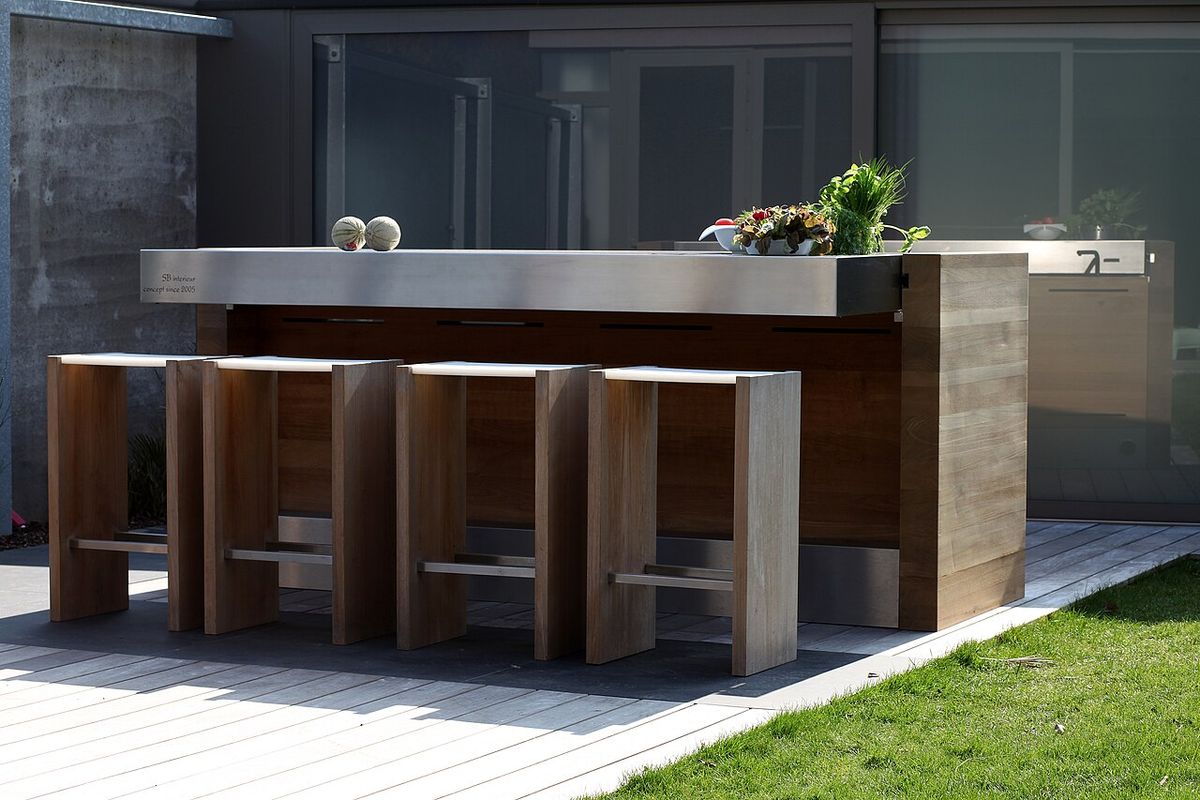
Cost Guide
Outdoor Kitchen Cost in 2026: What $25K–$150K Buys
2026 outdoor kitchen cost guide: $25K–$150K+ builds compared tier by tier — what's included, what drives price…
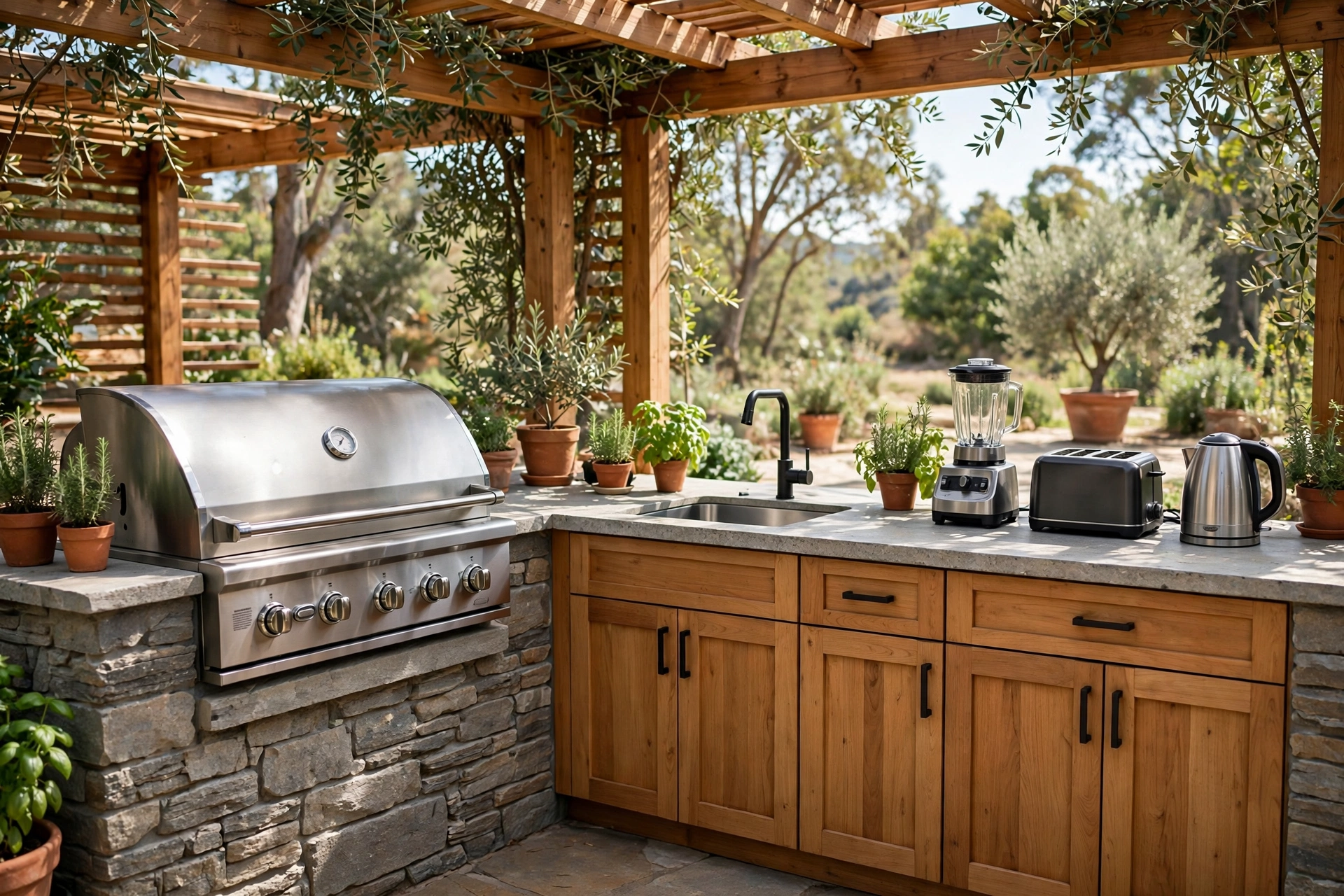
Buyer's Guide
Best Outdoor Kitchen Appliances: 2026 Buyer's Guide
Best outdoor kitchen appliances for 2026, tier by tier: Weber to Kalamazoo. Grills, pizza ovens, refrigeration…
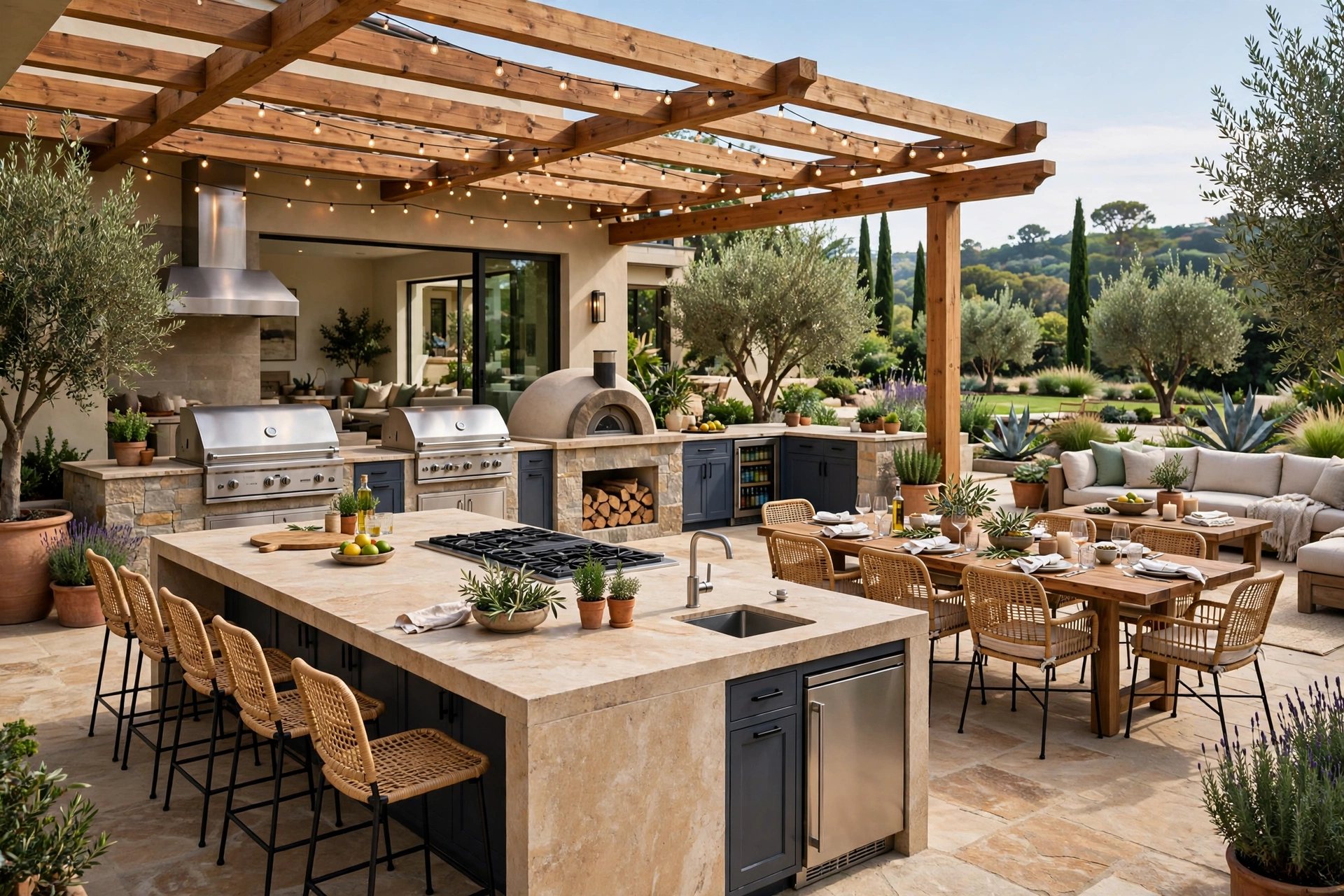
Design Guide
Outdoor Kitchen Ideas & Layouts for Entertaining 2026
Outdoor kitchen ideas & layouts for entertaining: L-shape, galley, island & U-shape designs, work zones, seati…
Cold-Climate Guide
Winterizing Outdoor Kitchen: 2026 Cold-Climate Guide
Our 2026 playbook for winterizing outdoor kitchen plumbing, appliances, and surfaces — shutdown steps, covers,…
Materials Guide
Outdoor Kitchen Countertops: 2026 Materials Compared
Compare outdoor kitchen countertops for 2026: granite, concrete, porcelain, stainless, and soapstone on heat, …
Interactive Tool
Outdoor Kitchen Budget Planner: Plan Your Build Cost
Planning an outdoor kitchen? Our budget planner breaks costs into structure, appliances, countertops, and more…