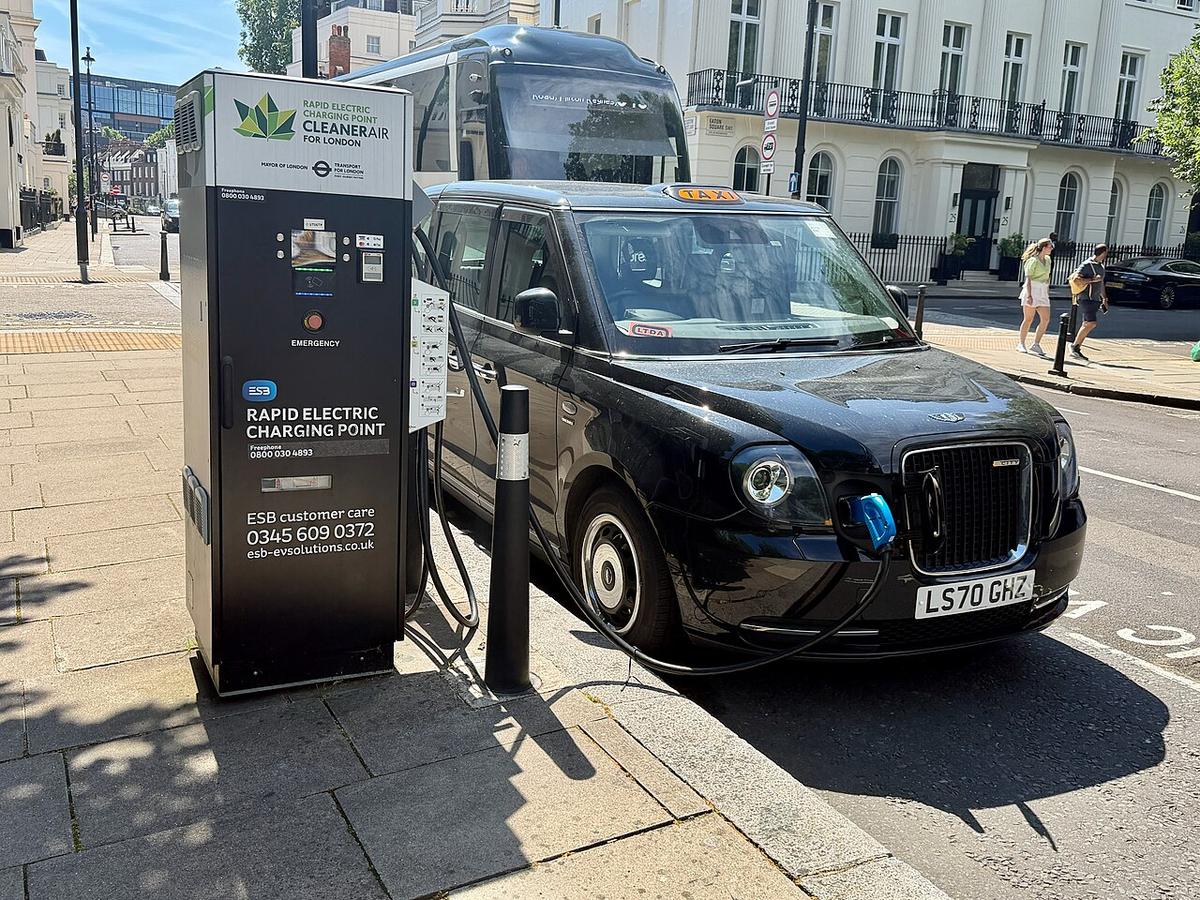
PHEV Home Charging Guide: What Plug-In Hybrids Actually Need (2026)
Key takeaways
- Most PHEVs charge fine on Level 1 overnight: a 15 kWh battery fills in ~11 hours at 1.4 kW, and a typical half-battery day restores in 5–6 hours.
- The onboard charger is the ceiling — many PHEVs max out at 3.3–3.7 kW and even generous ones top out around 7.2–7.7 kW, so a 48A wall unit cannot charge them faster.
- Level 2 pays off for split days and midday turnarounds: a 24A–32A unit on a 30–40A circuit fills a 15 kWh PHEV battery in 2–4 hours.
- A PHEV battery (10–20 kWh) is roughly one-tenth a BEV's (60–130+ kWh) — it needs roughly one-tenth the charging hardware, not the same 48A charger.
- Right-size the spend: the right PHEV setup is $850–$1,400 all-in versus $1,800–$2,800 for an oversized 48A install that buys zero extra speed.
- In a mixed garage, size one 40A–48A charger for the BEV, let the PHEV sip Level 1, and rough-in capacity for the day the PHEV becomes a second BEV.
Most plug-in hybrids charge fine on a standard Level 1 garage outlet overnight, because a PHEV battery holds only 10–20 kWh — and Level 2 only pays off when your driving outruns overnight Level 1 recovery or you need a fast midday turnaround.
This PHEV home charging guide rebuilds our PHEV vs. BEV comparison as a plug-in-hybrid hub: the onboard charger sizes that cap PHEV charging, the circuit recommendations that actually fit, charge-time math worked from real battery sizes, where a PHEV’s needs genuinely differ from a battery-electric’s, and an honest verdict on what to buy. The short version the charger industry will not advertise: a 48-amp charger is a fire hose for a houseplant in a PHEV-only garage, because the car physically cannot use it.
Why PHEVs live in a different energy universe
The entire charging conversation comes down to one number: battery capacity. A typical plug-in hybrid carries a 10–20 kWh battery, good for 25–50 miles of electric range before the gas engine takes over. A typical battery-electric carries 60–130+ kWh, good for 250–350+ miles with no engine at all. The PHEV’s battery is roughly one-tenth the size of the BEV’s, which means it needs roughly one-tenth the charging energy per full cycle, and the hardware required to deliver that energy is proportionally humbler.
This size gap drives everything else. Filling a 15 kWh PHEV battery from empty takes about 15 kWh of electricity — the same energy a large BEV consumes just going from 80% to 92%. A PHEV doing a full electric commute every day still uses less home-charging energy in a week than a BEV uses on a single road-trip top-up. When someone tells you both cars “need a Level 2 charger,” they are ignoring the fact that one car needs a sip and the other needs a meal. Right-sizing starts with respecting that difference, and it is why this hub’s recommendations are so much smaller than BEV recommendations.
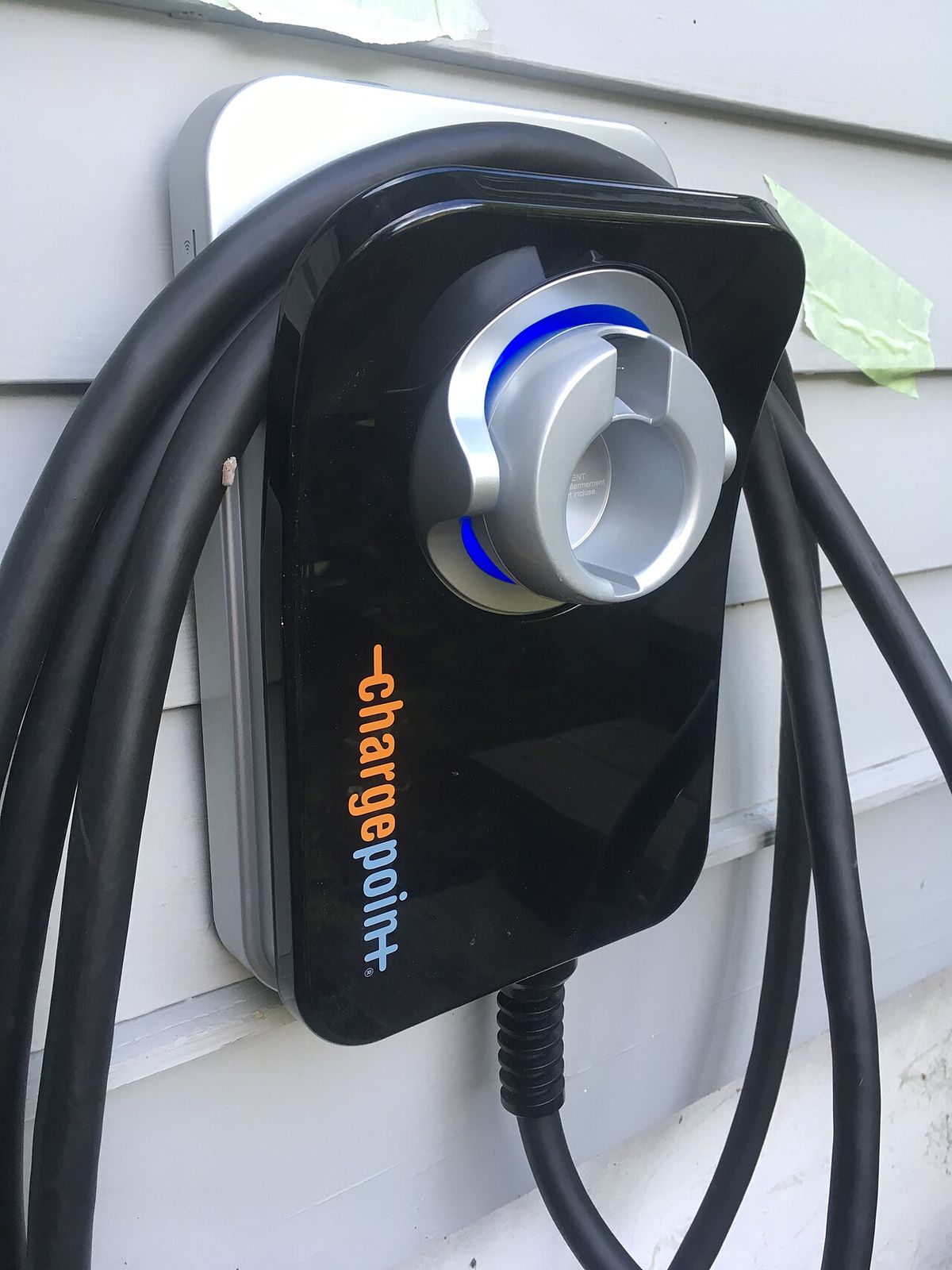
ChargePoint HomeFlex Level 2 EV Charger J1772 (NEMA 6-50 Plug)

J1772 Level 2 fits every PHEV; audit-verified product, right-sized pick for the PHEV hub.
*Affiliate Disclosure: As an Amazon Associate, Elevate Home earns from qualifying purchases. Pricing and availability subject to change.
The onboard charger: the bottleneck that sizes everything
Every plug-in vehicle has an onboard charger — the component that converts your home’s AC into battery-ready DC — and its maximum rate is a hard ceiling no wall unit can exceed. This is where PHEVs get dramatically over-served. Many plug-in hybrids ship with onboard chargers rated at just 3.3–3.7 kW (roughly 16A), and even generous ones top out around 7.2–7.7 kW. Connect a 48A/11.5 kW wall charger to a PHEV with a 3.7 kW onboard limit and the car draws 3.7 kW. The other 7.8 kW of capacity sits idle, permanently.
Always check your specific vehicle’s max AC charging rate before buying anything. It is in the spec sheet, usually listed as “onboard charger” in kW. Divide by 240V to get the max useful amperage: 3.7 kW ≈ 16A, 7.7 kW ≈ 32A, 11.5 kW ≈ 48A. Buy the wall unit that matches that number — plus a little headroom for your next car, not triple it for bragging rights. BEVs play a different game: most accept 7.7–11.5 kW AC, with some large-battery models taking up to 19.2 kW, so a 40A or 48A wall unit feeding a BEV is genuinely utilized. The same 48A charger is a sensible BEV purchase and a wasteful PHEV purchase: identical hardware, but the car’s ability to use it differs by a factor of three.
Level 1 first: when the garage outlet is enough
Do the PHEV math honestly. A 15 kWh battery charged on an ordinary Level 1 household outlet (120V, 12A ≈ 1.4 kW) fills from empty in about 11 hours — comfortably inside an overnight window. Most PHEV owners drive 20–40 electric miles a day, using half the battery or less, which Level 1 restores in 5–6 hours. For a huge share of PHEV drivers, the charging “infrastructure” they need is the outlet that is already in their garage, at zero installed cost.
The honest recommendation is to try Level 1 for a month before spending anything. Track two things during that month: whether the car is full every morning, and whether you ever skipped an electric trip because the battery was not ready. If the answer to the first is yes and the second is never, you are done — no purchase required. PHEVs also barely notice the cold-weather effect that raises a BEV’s amperage requirement by 20–30% in winter, because their energy needs are so small; another quiet argument against oversizing their hardware. Level 1’s weakness is not speed per se, it is margin: a fully depleted battery plus a short night plus a long electric morning is the one combination it cannot cover.
When Level 2 pays off for a PHEV
Level 2 earns its money in specific, recognizable patterns. The first is the split day: a morning school run or commute that empties much of the battery, a midday window at home, and an afternoon or evening trip you want to make on electricity rather than gasoline. A modest 16A–32A Level 2 charger (3.8–7.7 kW) fills a 15 kWh battery in 2–4 hours — exactly the midday turnaround Level 1 cannot deliver. The second pattern is back-to-back long electric days with short overnight windows, where Level 1 recovery never quite catches up. The third is a household determined to maximize electric miles and minimize engine starts, where faster recovery simply gets used every day.
Notice what is not on that list: battery size. Even the heaviest realistic PHEV duty cycle is covered by 32A, because the battery is small and the onboard charger caps acceptance at 3.3–7.7 kW anyway. Anything beyond 32A for a PHEV-only garage is paying for capacity with no job to do. If your driving pattern genuinely outruns overnight Level 1, add a basic 24A–32A Level 2 unit ($300–$450) on a 30–40A circuit. That is a $700–$1,100 installed project, not a $2,000 one. Costs are 2026 US market ranges; get itemized local quotes.
Charge-time math for PHEV batteries
Run your own car through the same division: battery size in kWh divided by charging power in kW gives hours. A 10 kWh PHEV at 1.4 kW needs roughly 7 hours from empty; a 20 kWh PHEV needs roughly 14 hours on Level 1 — the one case where a big-battery PHEV with a short overnight window starts to justify Level 2 on overnight math alone. At the other end, a PHEV whose onboard charger is 3.3–3.7 kW will take about 4 hours to fill 15 kWh no matter what is mounted on the wall. The table’s last row is the most important one in this hub: wall-unit amperage above the onboard limit buys zero minutes.
Circuit recommendations for PHEV charging
Size the circuit to the charger the car can actually use, using the same continuous-load logic as any EV circuit. A 16A Level 2 unit belongs on a 20A circuit; a 24A unit on a 30A circuit; a 32A unit on a 40A circuit. In practice, the sweet spot for a PHEV garage adding Level 2 is a 24A–32A unit on a 30–40A circuit — often a half-day install for a licensed electrician, and the $850–$1,400 all-in project described below rather than a flagship installation. Level 1 needs no circuit work at all beyond a sound garage outlet.
The middle path that threads both risks is to buy the charger for today’s car and wire for tomorrow’s. The electrical rough-in — conduit, feeder capacity, breaker space — is the expensive, disruptive part; the wall unit is a commodity that unbolts in twenty minutes. Spending an extra $200–$300 on heavier conduit and a larger feeder during the first install buys a cheap upgrade path whenever the fleet changes. Spending an extra $1,500 on amperage today’s cars cannot use buys nothing at all. Put the money in the walls, not on the wall.
PHEV vs. BEV home charging: what actually differs
Four differences do all the work. First, energy per day: a PHEV needs a sip (often 8–15 kWh), a BEV needs a meal — a 75 kWh BEV battery on Level 1’s 1.4 kW would take over 50 hours to fill, and even routine 15 kWh daily top-ups need 11 hours with zero margin, which is why every BEV household should plan on a 32A–48A Level 2 charger as the baseline fueling appliance. Second, onboard acceptance: PHEVs cap at 3.3–7.7 kW while most BEVs accept 7.7–11.5 kW, so the wall unit that is fully utilized by a BEV is two-thirds idle behind a PHEV. Third, the cost of undersizing flips: a PHEV on Level 1 that falls behind simply burns some gasoline, while a BEV on an undersized charger may not be ready at all. Fourth, winter margin: cold raises a BEV’s effective amperage need by 20–30%, while PHEVs barely notice.
For the BEV side of a household, the framework is: 32A–40A (7.7–9.6 kW) fully serves a standard-range car doing average mileage, with 200+ miles of overnight recovery on a simple 40–50A circuit; step to 48A (11.5 kW) for large-battery trucks and SUVs, 100+ mile daily driving, or two-EV households sharing one charger, provided the panel clears a 60A circuit. The goal is enough amperage that the car is always full by morning with margin, on the smallest circuit that achieves it. In a mixed PHEV+BEV garage, size one proper 40A–48A charger for the BEV, let the PHEV sip Level 1, and rough-in capacity for the day the PHEV becomes a second BEV. Sharing also works better than expected: a PHEV needing 8 kWh finishes in about an hour on a 40A unit — plug it in at dinner, move to the BEV at bedtime, both full by morning. For zero cable-swapping, add a basic $300–$450 24A–32A unit for the PHEV, not a second flagship.
The J1772 note: one plug for both drivetrains
PHEVs and BEVs share the same AC charging inlet standard: home Level 1 and Level 2 charging uses the J1772 connection, which is why a single wall unit can serve either drivetrain and why the mixed-garage sharing strategy above works mechanically as well as electrically. The connector is not the constraint on a PHEV — the onboard charger behind it is. A PHEV and a BEV can take turns on the same J1772 station all year; the station simply delivers whatever each car asks for, 3.7 kW to the plug-in hybrid and up to 11.5 kW to a BEV that can accept it. When you shop, confirm the station is a J1772 unit (or a unit supplied with the correct connector for your car’s port), and spend your decision energy on amperage matching rather than connector shopping.
The cost of getting it wrong
The oversizing mistake has a precise price tag. The wrong PHEV setup: a 48A hardwired charger ($500–$650) on a new 60A circuit with a long wire run and a panel that is already tight — an electrician’s full day, a possible load-management device, a permit — lands at $1,800–$2,800 all-in. And the PHEV charges at its 3.7–7.7 kW onboard limit regardless, meaning roughly half the project cost bought literally nothing. The right PHEV setup: a 32A plug-in unit ($350–$450) on a 40A circuit, often a half-day install — $850–$1,400 all-in. Same charging speed for the car; a thousand dollars stays in your pocket.
The BEV side has its own version of the mistake, in the opposite direction: the buyer who installs a minimal 24A charger to save $300, then discovers their 130 kWh truck cannot recover from a heavy day inside the off-peak rate window. Now the cheap install gets ripped out and redone at full price — the $300 “saving” becomes a $1,500 do-over. Undersizing a BEV charger is rarer than oversizing a PHEV one, but it is more expensive to fix, because the fix is a second electrical project rather than just a cheaper box. For BEV-only households, budget $950–$2,400 all-in depending on the electrical work. Costs are 2026 US market ranges; get itemized local quotes.
The verdict: what a PHEV household should buy
PHEV only: start with Level 1 (free) for a month, and add a 24A–32A Level 2 unit ($300–$450) only if your driving outruns overnight recovery or you need the 2–4 hour midday turnaround. Total project: $700–$1,200 installed. Never buy 48A for a PHEV-only garage — the car’s onboard charger cannot use it. BEV only: 40A for typical driving and standard-range cars, 48A for heavy drivers, big batteries, or two-EV sharing. Mixed PHEV + BEV: one 40A–48A unit sized for the BEV, the PHEV on Level 1 or a basic second unit, and infrastructure roughed-in for the PHEV’s eventual promotion to full BEV.
The universal rule that prevents every version of this mistake: read the onboard charger spec before you shop. A $600 charger feeding a 3.7 kW-limited PHEV is $350 of wasted capacity plus a $200+ heavier installation — money that could have bought the Level 2 unit the PHEV actually needs with change left over. The right charger is the one matched to the car, not the one with the biggest number on the box. When in doubt, have the conversation with a licensed electrician who does EV work weekly: describe both cars, show them the panel, and let the load calculation and the spec sheets — not the marketing — pick the amperage.
Frequently asked questions
Can I charge a plug-in hybrid on a regular outlet?
Yes — and for most PHEV drivers it's enough. A standard 120V/12A outlet delivers about 1.4 kW, which fills a typical 15 kWh PHEV battery in roughly 11 hours overnight. Since most PHEV owners use half the battery or less daily, Level 1 restores that in 5–6 hours. Try it for a month before spending on Level 2.
What size charger does a PHEV need?
A 16A–32A Level 2 charger (3.8–7.7 kW) covers every realistic PHEV scenario, filling a 15 kWh battery in 2–4 hours. More importantly, check your PHEV's onboard charger limit — many max out at 3.3–7.7 kW, meaning a bigger wall unit charges them no faster. Never buy 48A for a PHEV-only garage.
Why is a 48A charger wasted on a plug-in hybrid?
Two reasons: the battery is small (10–20 kWh fills in 2–4 hours even at modest power), and the car's onboard charger — the component converting AC to DC — is typically capped at 3.3–7.7 kW on PHEVs. A 48A/11.5 kW wall unit feeding a 3.7 kW-limited PHEV delivers 3.7 kW; the rest of the capacity sits idle forever.
When does Level 2 actually pay off for a PHEV?
When your pattern includes split days — a morning trip that empties much of the battery, a midday window at home, and an afternoon trip you want on electricity — or back-to-back long electric days with short overnight windows. A 24A–32A unit on a 30–40A circuit ($700–$1,100 installed) covers those cases; overnight-only drivers usually need nothing beyond Level 1.
We have one PHEV and one BEV. Do we need two chargers?
Not necessarily. Install one 40A–48A charger sized for the BEV and charge the PHEV on Level 1 from a garage outlet — or share the Level 2 unit, since the PHEV's small battery finishes in about an hour. If you want zero cable-swapping, add a basic $300–$450 24A–32A unit for the PHEV rather than a second flagship charger.
Should I oversize my charger in case my next car is a BEV?
Rough in the electrical capacity, but don't overbuy the hardware. Have the electrician run conduit or a feeder sized for a future 48A circuit (cheap during the first install), then buy the charger your current car can actually use. When the PHEV becomes a BEV, the backbone is ready and you only buy the second charger — hundreds now instead of thousands later.
Keep reading
EV Model Guides
NACS Home Charging Guide: Tesla Model 3, Model Y & Kia EV9 Setup (2026)
Charge any NACS EV at home: Model 3, Model Y and Kia EV9 onboard limits, 60A circuit setup, NACS vs CCS explai…
Home EV Charging
CCS Home Charging Guide: J1772, 48A Circuits and Every Model (2026)
How CCS EVs charge at home: the 11 kW onboard limit, 48A/60A circuit sizing, and per-model battery and charger…
Cost Guide
Home EV Charger Installation Cost in 2026: Full Breakdown
How much does home EV charger installation cost in 2026? Hardware, labor, panel upgrades, trenching, and rebat…
Right-Size Power
What Amperage EV Charger Do You Need? 40A vs 48A vs 80A
40A vs 48A vs 80A EV charger: how to match amperage to your driving, your panel capacity, and your budget — th…
Comparison
hardwired vs plug-in EV charger: Which Setup Wins in 2026?
Hardwired or plug-in EV charger? Compare installation costs, GFCI code rules, charging speed, theft protection…
Interactive Tool
EV Charger Installation Cost Estimator: 2026 Prices
Estimate your EV charger installation cost in seconds. 2026 pricing for hardware, labor, panel upgrades, trenc…