Point-of-Use Mini-Tank Water Heaters: 2026 Guide
Point-of-use mini-tank water heaters deliver instant hot water at remote fixtures. Sizing, wiring, install costs, and when they beat recirculation loops.
10 MIN READ · UPDATED 2026-09-22
Key takeaways
- A 2.5- to 6-gallon mini-tank under a remote sink or vanity delivers hot water in 1–3 seconds with no recirculation loop.
- Size to the fixture's longest single draw — 2.5 gallons covers a bathroom sink; 4 gallons suits prep sinks and utility use.
- Most units plug into a 120V outlet, but check GFCI protection, circuit load, and local code with a licensed electrician.
- Installed cost runs $300–$800 for a straightforward plug-in job; new wiring or 240V models can reach $900–$1,400.
- Skip them for full showers, tubs, or four-plus distant fixtures — a recirculation system is the better whole-house answer there.
Waiting 45 seconds for hot water at the guest bath or the kitchen island faucet is a daily irritation with a real price tag: thousands of gallons of perfectly good water running down the drain every year while the pipe run cools. Point-of-use mini-tank water heaters attack the problem at the source, putting a small reservoir of hot water directly under or beside the fixture that needs it. For $300 to $800 installed, they deliver genuinely instant hot water to one or two fixtures without the energy penalty of a recirculation loop running all day. This guide explains how these compact units work, where they earn their keep, how to size them, and what the electrical and plumbing work actually involves.
How Mini-Tank Heaters Actually Work (and What They Don't Do)
A point-of-use mini-tank heater is exactly what it sounds like: a small insulated tank, typically 2.5 to 6 gallons, with its own electric heating element and thermostat, installed within a few feet of the faucet or shower it serves. It connects to the cold-water supply and the fixture's hot-water line, keeping its little reservoir at your set temperature around the clock. When you open the tap, you get hot water in one to three seconds — not because the heater is instant, but because the hot water was already parked inches away.
What it doesn't do is replace your main water heater. These units are designed for low-demand fixtures: a bathroom sink, a kitchen prep sink, a bar sink, or a washing machine fill valve in a remote laundry room. Run a full bath through one and the small reservoir depletes in a couple of minutes, after which you're drinking from whatever the cold line feeds it. They also don't heat on demand like a tankless unit; they cycle their element on and off to maintain temperature, so there is standby heat loss — though with only a few gallons of well-insulated tank, that loss is modest.
Most models are 120-volt plug-in units drawing 1,200 to 1,500 watts, which is why they can often use a standard outlet rather than a dedicated 240-volt circuit. Recovery is slow — a 2.5-gallon unit can take 15 to 25 minutes to fully recover after being depleted — but for hand-washing, shaving, and rinsing, the reservoir is plenty. Think of it as a hot-water buffer stationed at the far end of your plumbing, not a second water heater.
Where They Make the Biggest Difference in a Home
The classic use case is the remote bathroom: the guest bath or master bath at the far end of a long ranch or split-level home, where the hot-water run from the tank exceeds 50 feet. In these layouts, you can waste 2 to 3 gallons just waiting for hot water at a single sink, and the problem repeats every time the pipe cools between uses. A mini-tank under that vanity ends the wait and the waste simultaneously. The same logic applies to kitchen island sinks, which often sit far from the main plumbing core.
Wet bars, coffee stations, and outdoor-adjacent sinks are another strong fit. A basement bar sink fed off a long branch line rarely gets enough hot water to bother with; a 2.5-gallon unit under the counter turns it into a genuinely useful cleanup station. Garage sinks and pool-house bathrooms benefit similarly, especially where running a new hot-water branch from the main heater would mean opening walls.
Mini-tanks also solve a subtler problem: fixtures that need a small amount of hot water frequently, far from the main tank. A laundry-room sink in an unfinished basement, a pet-washing station in the mudroom, or a hair-washing basin in a salon-style powder room — these are all places where a full recirculation system is overkill but the wait for hot water is real. They pair especially well with homes that have already converted to a tankless whole-house heater, since tankless units can have an annoying cold-water sandwich delay at distant low-flow fixtures that a mini-tank completely masks.
Sizing and Capacity: Choosing Between 2.5, 4, and 6-Plus Gallons
For a single bathroom sink used for hand-washing, shaving, and face-washing, a 2.5-gallon unit is the standard choice and it's genuinely sufficient. It delivers roughly two gallons of usable hot water before the incoming cold starts diluting the tank — plenty for several minutes of intermittent sink use, and it recovers between bathroom visits. The 2.5-gallon size is also the easiest to fit: most units measure about 14 inches tall and 14 inches wide, sliding under a standard vanity cabinet.
Step up to 4 gallons when the fixture sees heavier, longer use: a kitchen prep sink where you're filling pasta pots, a utility sink where you rinse mops and buckets, or a bar sink that serves a dishwasher-style routine. Four-gallon units are slightly larger — usually around 16 to 18 inches in each dimension — and cost only marginally more than the 2.5s.
Six-gallon and larger point-of-use units (up to about 20 gallons) blur the line into small conventional tank territory and are best for a compact half-bath with a shower, a remote laundry room serving a washing machine, or a pool cabana bath. At this size, check the electrical draw: many 6-gallon models are still 120-volt, but the larger ones jump to 240-volt and start needing a dedicated circuit like a real water heater. Rule of thumb: size to the fixture's longest single draw, not the day's total use, and round down rather than up — an oversized mini-tank just means more standby loss and a bigger box under your sink.
One more sizing consideration: peak demand overlap. If two people will use adjacent fixtures back to back — say the powder-room sink and the kitchen prep sink share one mini-tank on a tee — size for the combined worst-case draw or install two small units. Mini-tanks are cheap enough that splitting fixtures often beats one larger tank, since each unit then sits closer to its fixture and recovery happens independently.
Electrical Requirements and Code Considerations
Most 2.5- and 4-gallon mini-tanks plug into a standard 120-volt, 15- or 20-amp outlet, drawing roughly 1,400 watts — similar to a space heater or hair dryer. That's convenient, but it still matters: the outlet should be on a GFCI-protected circuit in any bathroom, kitchen, or wet-bar location, and local code in many jurisdictions requires the heater to be on its own dedicated circuit rather than sharing with lighting or receptacles. Have a licensed electrician confirm the circuit can handle the load before you buy.
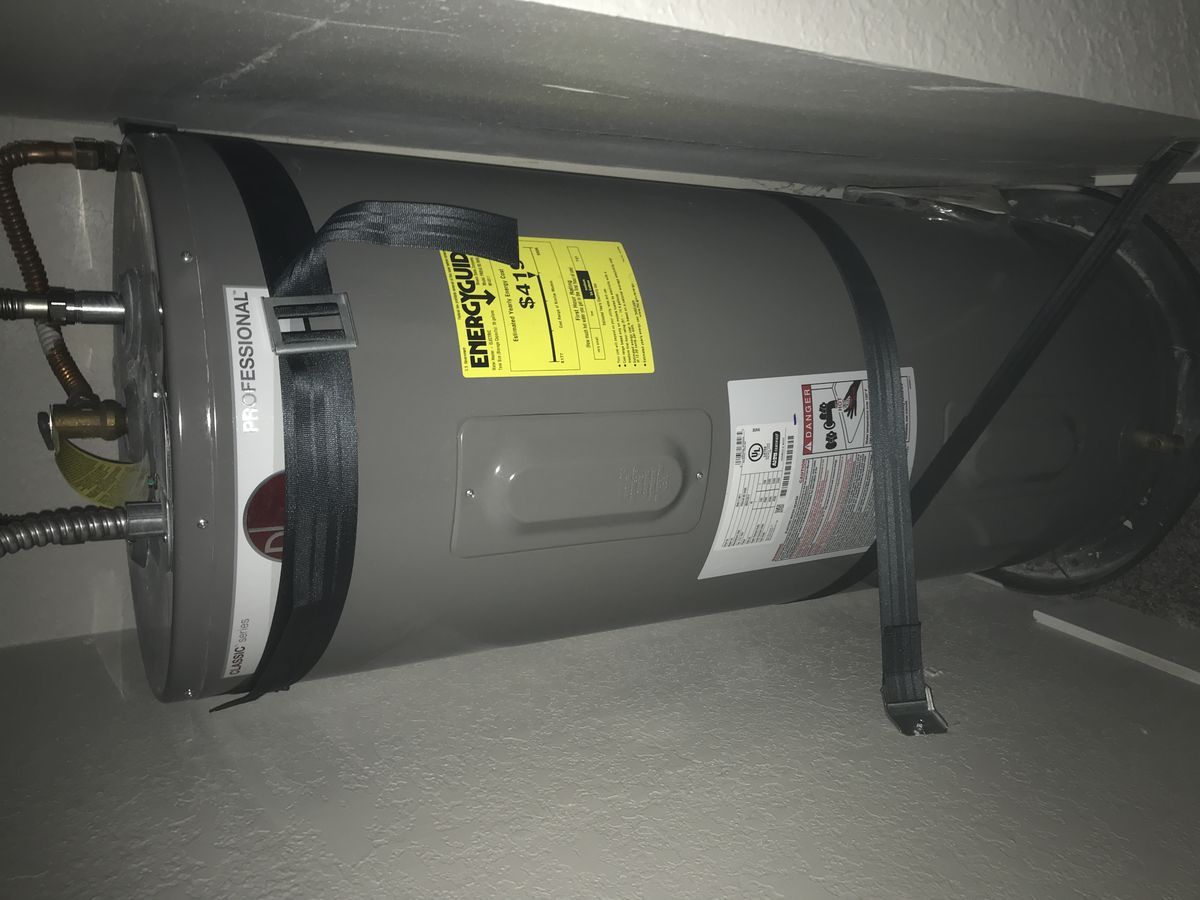
Larger units rated 240 volts need a dedicated breaker and hardwired connection, which means a permit and an electrician, full stop. Even for plug-in models, mounting matters: the unit must be secured so it can't tip, the temperature-and-pressure relief valve must be piped to a safe discharge point (not just aimed at the cabinet floor), and the thermostat should be set no higher than 120°F to control scald risk — the same anti-scald guidance as any water heater.
Check your local plumbing code before installation. Most jurisdictions treat mini-tanks like any water heater: they want a shutoff valve on the cold inlet, a dielectric union or brass fittings where copper meets the tank's steel threads, and in seismic zones, proper strapping. These are small details, but they're the difference between a clean inspection and a failed one. If your home has a closed plumbing system with a pressure-reducing valve, the existing whole-house expansion tank covers the mini-tank too, since it's on the same system — but confirm with your plumber.
Energy-conscious owners sometimes put a plug-in mini-tank on a timer or smart plug so it only maintains temperature during waking hours. This can trim standby use noticeably for a guest bath used on weekends, but avoid powering it off for weeks at a time in humid climates — a cold, damp tank interior invites odor-causing bacteria just like any idle water heater. If the fixture goes unused for a month, run it hot for several minutes before normal use.
Installation, Plumbing Layout, and What It Costs
A typical installation takes a licensed plumber one to two hours when there's an accessible cold-water line and a suitable outlet nearby: mount the unit, tee into the cold supply, connect the hot outlet to the fixture's hot line, set the thermostat, and verify the relief valve discharge. The unit itself runs $180 to $450 depending on capacity and brand tier, and installed cost lands around $300 to $800 for a straightforward plug-in job.
Costs climb when the location needs new infrastructure: adding a GFCI outlet where none exists ($150 to $300), running a new dedicated circuit ($250 to $600), or opening a wall to reach the supply lines. A 240-volt six-gallon install with new wiring and permitting can reach $900 to $1,400 all-in. Costs are 2026 US market ranges; get itemized local quotes.
There are two plumbing layouts worth knowing. The simplest is a standalone install: cold water in, hot water out to the fixture, with the main hot line capped or left disconnected at that branch. The alternative is a booster layout, where the mini-tank sits in series downstream of the main water heater on a long branch — lukewarm water from the far branch enters the mini-tank, which tops it up to full temperature. The booster approach recovers faster (it's heating warm water, not cold) and keeps the mini-tank's standby cycling low, making it the smarter choice when the fixture does get hot water eventually but only after a long wait.
Maintenance, Lifespan, and When to Skip Them
Mini-tanks are low-maintenance but not no-maintenance. Like any tank heater, they accumulate sediment, especially on well water or in hard-water areas — flushing the tank annually through the drain valve extends element life noticeably. The sacrificial anode rod, if the model has one, should be checked every two to three years. Realistic lifespan is 8 to 12 years, similar to a small conventional tank, and replacement is usually simpler than the first install because the plumbing connections and outlet are already in place.
Watch for the two failure modes: a failed heating element (no hot water, often with the breaker tripped) and a failed thermostat (water dangerously hot or lukewarm). Both are cheap parts on plug-in models, but once a unit is past year ten, replacing the whole box usually makes more sense than chasing parts.
When should you skip mini-tanks entirely? If you need instant hot water at four or more far-flung fixtures, a properly designed hot-water recirculation system with a smart timer or on-demand pump is usually the better whole-house answer — one system instead of four little tanks to maintain. They're also wrong for high-draw fixtures like full showers or tubs, and they add a standby electrical load (roughly 30 to 60 kWh per month per unit) that matters in an all-electric home watching its panel capacity. And in a kitchen where the main hot line arrives in under ten seconds, the wait simply isn't long enough to justify the equipment.
Frequently asked questions
It depends on your pipe run, but a fixture 50+ feet from the main heater can waste 2–3 gallons per wait. A household that uses a remote sink four times daily can save roughly 2,000–4,000 gallons a year at that one fixture, plus the energy that heated water you never used.
Not practically. A shower draws 1.5–2.5 gallons per minute, so even a 6-gallon unit is exhausted in a few minutes. Mini-tanks are designed for sinks and low-flow fixtures. For an instant-hot shower far from the main heater, look at a recirculation pump or relocating the water heater instead.
They draw about 1,200–1,500 watts while heating, similar to a space heater, but cycle intermittently to maintain temperature. Expect roughly 30–60 kWh per month per unit in standby and recovery — modest for one unit, but it adds up if you install several.
A handy homeowner can physically mount a plug-in unit, but the plumbing connections, relief-valve discharge, and electrical verification really call for a licensed plumber and electrician. Most jurisdictions require permits for water-heater installs, and a mis-wired unit is a scald and leak risk.
A mini-tank serves one or two nearby fixtures with zero wait and no loop plumbing; a recirculation pump serves the whole house but keeps a loop of pipe hot, using more energy. For one or two far-flung fixtures, the mini-tank is cheaper and simpler. For three or more, recirculation usually wins.
Typically 8–12 years with annual flushing, similar to a small conventional tank. Hard water shortens element and tank life, so a softener or at least a sediment routine helps. Replacement is usually easy since the plumbing and outlet are already in place.