Portable AC vs Window AC Running Costs: Electricity & Efficiency Compared (2026)
Key takeaways
- Window ACs are 30% to 50% cheaper to run: a modern 8,000 BTU window unit costs ~$24 to $32/month compared to $45 to $62/month for a comparable single-hose portable AC at $0.16/kWh.
- The single-hose penalty: single-hose portable ACs expel conditioned indoor air outside across the condenser, creating negative air pressure that pulls hot outdoor air into the room through cracks.
- DOE SACC vs ASHRAE reality: a portable AC marketed as '12,000 BTU ASHRAE' delivers only ~7,500 to 8,200 BTU SACC of usable cooling due to exhaust duct radiant heat leakage.
- Modern inverter window units (CEER 15.0+) cut cooling electricity consumption by up to 35% compared to traditional on/off rotary compressors.
A window air conditioner costs significantly less to operate than a portable air conditioner of equivalent cooling capacity. Under standard 2026 US utility rates ($0.16 per kWh) running 8 hours per day, a modern 8,000 BTU window AC costs approximately $25 to $34 per month, while a comparable portable air conditioner costs $48 to $65 per month—a 40% to 50% operational penalty. In high-rate electricity markets such as California, New York, or Massachusetts ($0.28 to $0.34/kWh), running a portable AC instead of a window unit adds $150 to $280 in excess electricity costs over a single 90-day cooling season.
The vast efficiency gap between window and portable units is not due to manufacturing flaws; it is dictated by thermodynamics. Window air conditioners hang their hot condenser and compressor outside the building envelope, rejecting heat directly into outdoor air. In contrast, portable air conditioners operate their hot mechanical components entirely inside your living room, radiating heat through plastic exhaust hoses and creating negative air pressure that sucks hot, humid outdoor air through drafty doors and windows. This engineering guide breaks down the Department of Energy SACC ratings, calculates exact kilowatt-hour bills, and reveals when dual-hose inverter portables can bridge the gap.
The Thermodynamic Flaw of Single-Hose Portable ACs
To understand why portable ACs consume dramatically more electricity to cool the exact same square footage, look at how heat is rejected from the room:
In a standard window air conditioner, the indoor air and outdoor air streams never mix. The evaporator fan cycles indoor room air across cold aluminum fins inside the window sash. The outdoor fan pulls outside air across the hot condenser coil outside your wall, dumping the captured heat directly outdoors. The wall and double-pane window provide a continuous thermal boundary.
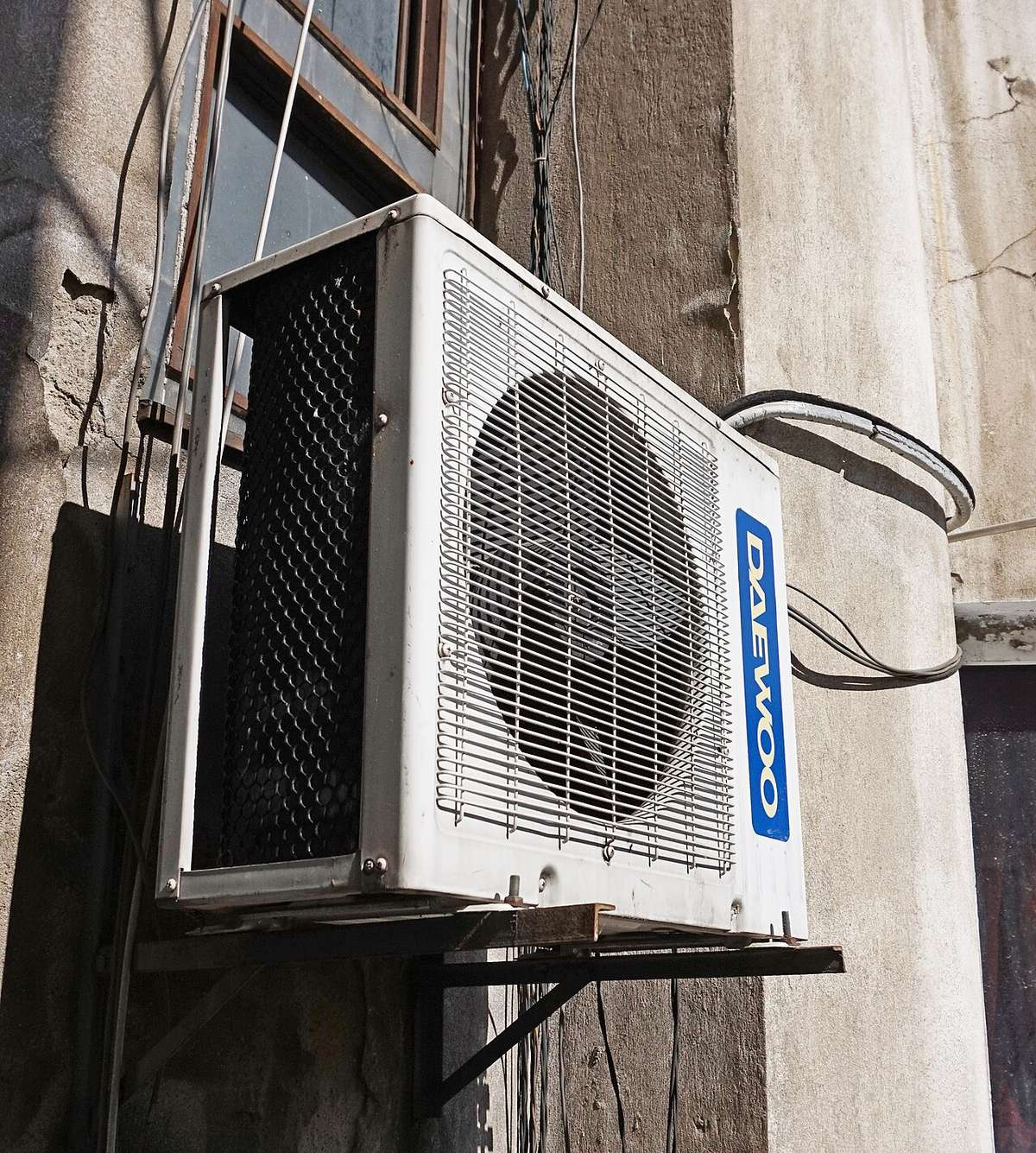
In a single-hose portable air conditioner, both the evaporator (cold side) and the condenser (hot side) are contained inside the room. To cool down its boiling-hot condenser coils, the unit has no choice but to suck in air from inside your air-conditioned room, blow it across the hot coils, and blast it out the window through a flexible 5-inch plastic hose.
The Negative Pressure Penalty
When a single-hose portable AC blasts 150 to 200 CFM of hot air out the exhaust hose, that displaced air must be replaced. This creates a strong negative air pressure zone inside your room. The room continuously draws in hot, humid 90°F outdoor air through door sweeps, electrical outlets, window gaps, and ceiling fixtures. In effect, the machine is cooling the air while simultaneously sucking fresh outdoor heat directly back inside.
Midea U-Shaped Inverter Window Air Conditioner 8,000 BTU
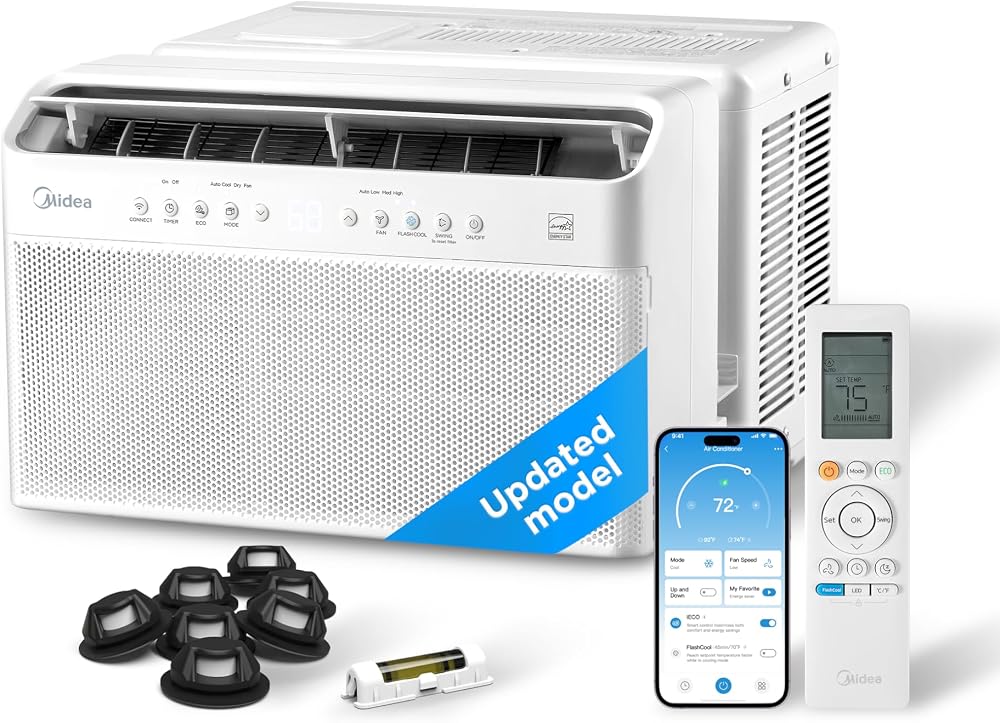
Ultra-efficient CEER 15.0 variable-speed inverter cuts summer cooling electric bills by up to 35%
*Affiliate Disclosure: As an Amazon Associate, Elevate Home earns from qualifying purchases. Pricing and availability subject to change.
DOE SACC vs. ASHRAE: The 35% Sizing Deception
For decades, portable AC manufacturers advertised inflated cooling numbers based on the legacy ASHRAE 128 standard. A unit labeled "12,000 BTU" on the front of the box sounded more powerful than a 10,000 BTU window AC.
To end this misleading practice, the US Department of Energy (DOE) introduced the Seasonally Adjusted Cooling Capacity (SACC) standard. SACC factors in two real-world heat sources:
- Radiant Heat from the Exhaust Duct: The flexible corrugated exhaust hose surface temperature reaches 115°F to 130°F while operating. A 5-foot hose functions essentially as a space heater radiating 400 to 700 BTU/hr of heat directly back into the room.
- Infiltration Air Heat: The thermal load introduced by outdoor air sucked in by negative room pressure.
Under DOE testing, a portable AC advertised as "12,000 BTU ASHRAE" yields an actual usable SACC rating of only 7,500 to 8,200 BTU. You are paying for a 12,000 BTU compressor's electric draw while receiving only 8,000 BTUs of actual net cooling.
Monthly Electricity Running Costs: Side-by-Side Math
Operating costs depend on the unit's electrical wattage, daily run time, and regional electricity tariff. We calculate monthly costs using the standard kilowatt-hour formula: (Watts × Daily Hours × 30 Days ÷ 1,000) × Rate per kWh.
Below is a direct comparison of cooling a 350-square-foot master bedroom for 8 hours per day over a 30-day billing cycle:
To verify the exact operational power draw of your current room units, you can test them with a plug-in meter or track circuit-level consumption using breaker monitors as described in our home energy monitoring guide and test your specific numbers in the appliance electricity cost calculator.
Dual-Hose Portable ACs: The Necessary Compromise
If you live in an apartment complex with strict HOA bylaws prohibiting window-mounted units, or your windows slide horizontally (slider or casement windows) where standard window units cannot install, a portable AC may be your only legal option.
In that situation, insist on a dual-hose portable air conditioner. Dual-hose units incorporate two separate ducts:
- Intake Hose: Pulls outside air into the unit to cool down the condenser coils.
- Exhaust Hose: Expels that same air back outside once it carries the heat away.
Because the condenser airflow circuit is closed to the outdoors, dual-hose systems do not create negative pressure. They do not suck conditioned air out of your room, nor do they pull 95°F street air through your door jambs. While they still lose some efficiency to exhaust hose heat radiation, a dual-hose unit cuts monthly operating costs by 20% to 25% compared to single-hose alternatives.
Inverter Compressors: The 2026 Game Changer
The single biggest efficiency breakthrough in room air conditioning over the past five years is the mainstream adoption of variable-speed inverter compressors. Traditional room ACs operate like a blunt light switch: the compressor runs at 100% full blast until the room cools down, shuts completely off, and restarts with a heavy 20-amp electrical surge when the room warms up.
Inverter compressors never turn off. Once they bring the room to your setpoint (say, 72°F), the electronic inverter slows the motor down to 20% or 30% speed. It continuously hums along drawing as little as 180 to 250 Watts of power—maintaining an exact room temperature within 0.5°F while eliminating loud cycling noise.
Modern U-shaped inverter window units also isolate the compressor behind the window sash. By closing the window down into the center groove of the chassis, window glass acts as an acoustic sound wall, dropping indoor operating sound to a whisper-quiet 36 dBA—quieter than a library.
The 3-Year Total Cost of Ownership (TCO)
When buyers shop at home improvement retailers, portable air conditioners look appealing because there is zero installation hassle. But over three summers of real-world operation, the math shifts drastically:
3-Year Cost Comparison (3 Months per Year, 8 Hours/Day at $0.20/kWh)
- U-Shaped Inverter Window AC (8,000 BTU): Equipment purchase ~$379 + 3-year electricity ($220) = $599 Total Cost.
- Standard Rotary Window AC (8,000 BTU): Equipment purchase ~$249 + 3-year electricity ($306) = $555 Total Cost.
- Dual-Hose Inverter Portable AC (12k BTU): Equipment purchase ~$499 + 3-year electricity ($398) = $897 Total Cost.
- Single-Hose Portable AC (12k BTU): Equipment purchase ~$349 + 3-year electricity ($540) = $889 Total Cost.
Takeaway: A premium inverter window unit pays for its initial price premium in electricity savings within its second summer while delivering whisper-quiet cooling.
The Final Verdict
If your window opening physically permits it and local regulations allow it, always install a window air conditioner over a portable unit. You will save 35% to 50% on your summer electric bills, enjoy far quieter acoustics, and free up 4 square feet of valuable bedroom floor space. Reserve portable air conditioners exclusively for rooms with HOA restrictions, casement windows, or temporary emergency cooling—and if you must buy a portable, choose a dual-hose inverter model to avoid the negative pressure penalty.
Frequently asked questions
Why does a portable AC cost more to run than a window AC?
Single-hose portable ACs use conditioned indoor air to cool their internal compressor coils and exhaust it out the window. This creates negative room pressure that forces unconditioned, hot outdoor air into the room through cracks, requiring the compressor to run 30% to 50% longer to maintain temperature.
How much does it cost to run a window AC all day?
Running an 8,000 BTU window AC continuously for 24 hours at the US average rate of $0.16/kWh costs approximately $2.70 per day (~$81 per month) for a standard rotary unit, or $1.95 per day (~$58 per month) for a modern variable-speed inverter unit.
Are dual-hose portable air conditioners worth the extra cost?
Yes. Dual-hose portable air conditioners draw outside air through one hose to cool the condenser and exhaust it through the other, completely eliminating negative room pressure. They operate 20% to 25% more efficiently than single-hose units, paying back their price difference in lower electric bills over 1 to 2 summers.
Can you wrap a portable AC exhaust hose to save energy?
Yes, insulating the exhaust hose with a zippered thermal sleeve or reflective foil wrap prevents radiant heat (which often exceeds 120°F) from leaching back into your cool room. This simple upgrade improves net cooling capacity by up to 500 BTU/hr and reduces compressor cycle time.
Keep reading
Energy Calculator
Appliance Electricity Cost Calculator & Formula: How to Calculate Your Electric Bill
Calculate how much any household appliance costs to run per hour, month, or year. Learn the exact kWh formula,…
Energy
Sense vs Emporia Energy Monitoring: 2026
Sense vs Emporia Vue energy monitor for 2026: measurement approaches, installation, accuracy, solar and EV int…
Equipment
Two-Stage vs Variable-Speed HVAC: 2026 Guide
Two-stage vs variable-speed HVAC compared: comfort, humidity, cost premiums, repair-cost trade-offs, and which…
2026 Tech
Smart Thermostat Savings: Reality Check 2026
Smart thermostat savings reality check for 2026: what studies actually show, which homes benefit, the heat-pum…
Air Quality Engineering
What Size Air Purifier Do I Need? CADR vs Room Square Footage (2026)
Calculate the exact air purifier size you need using the ANSI/AHAM CADR 2/3 rule, Air Changes per Hour (ACH), …
Transfer Equipment
100A vs 200A Automatic Transfer Switch
100 amp vs 200 amp transfer switch: service-entrance vs subpanel topology, when each is required, costs, and l…