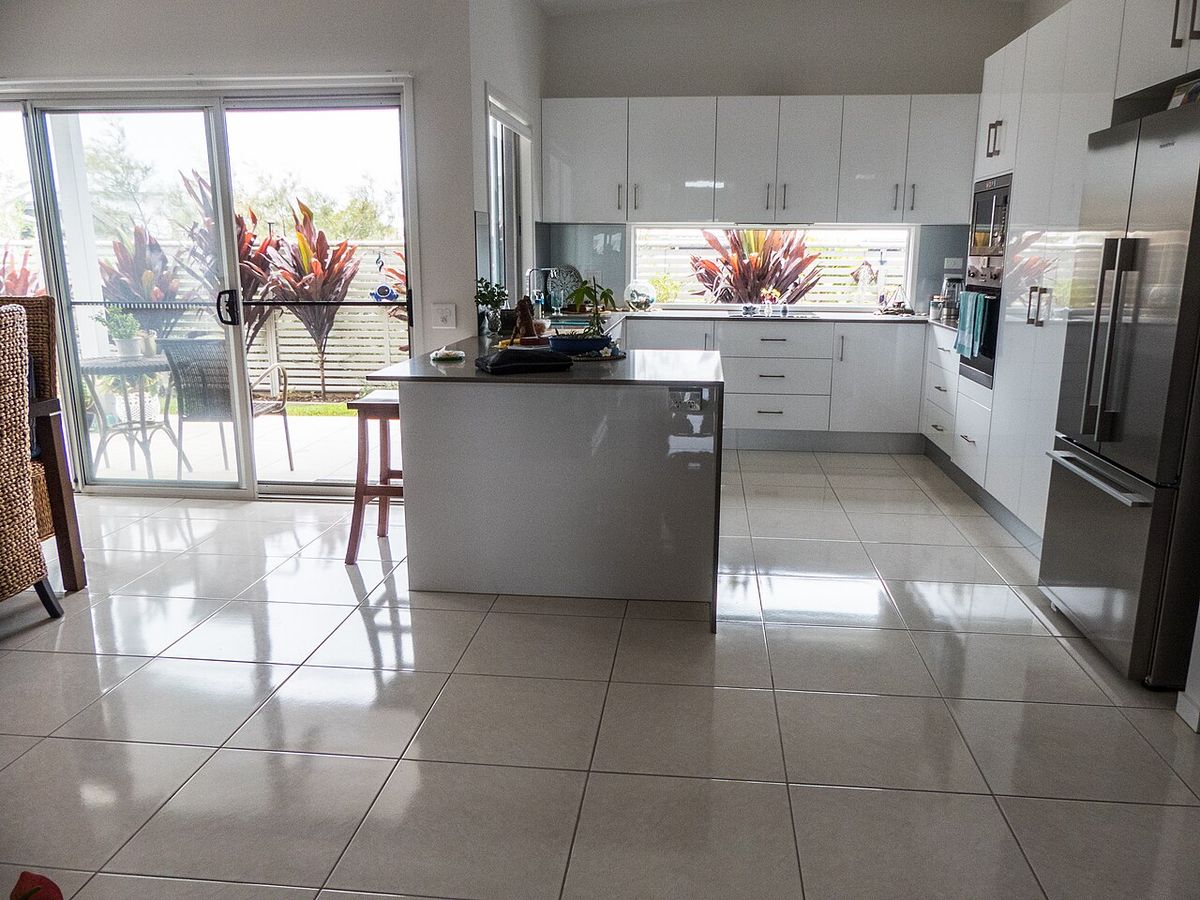
Aging in Place Kitchen Remodel Cost 2026: Pricing Guide
Key takeaways
- A targeted aging in place kitchen retrofit runs $2,500 to $8,000; a full accessible kitchen remodel runs $22,000 to $100,000 or more in 2026.
- Pull-out shelving, a touchless faucet, lever hardware, and under-cabinet task lighting deliver the biggest independence-per-dollar of any upgrades.
- Countertop heights and clearances drive structural cost: a two-height island costs far less when planned into new cabinetry than retrofitted later.
- Phase the work around how you actually cook today — daily-use items between knee and shoulder height of the shortest daily user first.
- A Certified Aging-in-Place Specialist (CAPS) contractor understands blocking, knee clearances, and sight lines that a general remodeler routinely misses.
Aging in place kitchen remodel cost 2026 figures range from about $2,500 for a targeted retrofit package to $22,000–$100,000 or more for a full accessible gut remodel, depending on whether you are adapting the kitchen you have or rebuilding it around how you will cook for the next twenty years. The sweet spot for most homeowners is a mid-range refresh in the $12,000–$30,000 band: new cabinet interiors, a lowered prep section with knee clearance, slip-resistant flooring, layered task lighting, and a touchless or lever faucet. This guide breaks down every line item, shows which upgrades earn their keep, and ends with a clear verdict on where to spend and where to save.
What an Aging in Place Kitchen Remodel Costs in 2026
Kitchens punish poor planning more than any other room, because the work is structural, plumbing-adjacent, and used three times a day. The total cost of your aging in place kitchen remodel hinges on three variables: the scope (retrofit hardware versus new cabinetry), the structural changes (lowered counters, widened openings, relocated plumbing), and the finish level (stock fixtures versus luxury appliances).
Start with an honest assessment of how the kitchen is actually used today. If reaching the top shelf already requires a step stool, if the deep corner cabinet has become a graveyard for cookware, or if turning a stiff faucet knob is a two-hand job, those are not minor annoyances — they are the preview of how the kitchen will fail you later. A room-by-room audit, like the one in our aging in place home assessment checklist, tells you which of the three tiers below you actually need.
Moen 7594EWSRS Arbor Touchless Kitchen Faucet, Spot Resist Stainless

Hands-free MotionSense touchless faucet — the single most-bought aging-in-place kitchen upgrade; eliminates handle strain for arthritis and limited dexterity, fits the remodel buyer intent.
*Affiliate Disclosure: As an Amazon Associate, Elevate Home earns from qualifying purchases. Pricing and availability subject to change.
The Three Cost Tiers: Retrofit, Refresh, and Full Remodel
Almost every aging in place kitchen project falls into one of three tiers. Knowing which tier you are in before you call a contractor is the single best way to control the budget, because each tier has a different cost structure and a different point of no return.
The retrofit tier is where most of the aging-in-place value lives per dollar spent. Pull-out shelving, D-shaped cabinet pulls, a lever or touchless faucet, motion-sensor under-cabinet lighting, and a few anti-fatigue mats can transform how a kitchen feels for under $8,000 — often without a single permit. Compare that to the $54,000-per-year median cost of assisted living, and the math gets simple fast: one year of deferred facility costs pays for several kitchens.
Line-Item Costs: Where the Money Actually Goes
Contractors bid aging in place kitchen work the same way they bid any kitchen, but the line items that matter most are different. Here is what each common accessibility upgrade typically costs in 2026, installed:
Two items deserve special attention because homeowners consistently underestimate them. First, pull-out shelving: at $80–$300 per cabinet for quality retrofit units, outfitting ten base cabinets lands around $1,000–$2,500 installed — and it is the single most-used accessibility upgrade in any kitchen, touched dozens of times a day. Second, the lowered countertop section: doing it during a planned countertop replacement adds a modest premium, but cutting an existing run down afterward means new stone, new plumbing rough-in for the sink, and cabinet surgery — easily doubling the cost.
The 7 Upgrades Worth Every Dollar
Not every accessibility feature earns its keep in a kitchen. Ranked by independence-per-dollar, these seven are the ones that change daily life:
1. Pull-out shelving in every base cabinet. Deep base cabinets are where kitchen accessibility goes to die. Full-extension pull-outs bring the entire cabinet contents into view and within reach — no kneeling, no blind reaching. Prioritize the pots-and-pans cabinet by the range and the under-sink cabinet first.
2. A pull-down shelf in the upper cabinets. The top shelf of a wall cabinet is unreachable for a growing share of adults. A gas-assisted two-tier pull-down system brings high storage down to eye level with a single pull, and locks in the down position for hands-free loading. It is the cheapest way to reclaim 30% of your kitchen storage without touching a stud.
3. A lever or touchless faucet. Grip strength declines with age and arthritis; a faucet that needs a firm twist becomes a daily barrier. A lever handle needs only a push, and a motion-sensor faucet needs nothing at all — wave to start and stop the water. Pair it with a thermostatic or anti-scald setting (120°F at the water heater) for burn protection.
4. Two counter heights. The multigenerational kitchen signature — detailed in our multigenerational kitchen design guide — is a lowered 30–32" prep section with open knee space beside the standard 36" run. Seated prep, rolling dough, and supervising homework all happen at the lower height. In new cabinetry it is an ordering detail; as a retrofit, budget $2,000–$8,000.
5. Layered task lighting. Aging eyes need two to three times more light than younger ones, and a single overhead fixture leaves counters in shadow. Under-cabinet LED strips over every work zone, plus a bright pendant over the island, eliminate the shadow problem. Motion-sensor switches mean the lights greet you at 2 a.m. without a hunt for the switch.
6. Induction cooktop with front controls. The surface stays relatively cool, heats only the pan, and most models auto-shutoff. Front-mounted controls eliminate reaching across hot burners — a meaningful burn and fire-safety upgrade. Budget $1,000–$2,500 for the unit plus $300–$800 for the 240V electrical run if the circuit is not already there.
7. D-shaped pulls and touch-latch hardware. The cheapest line item on this list and one of the most felt: replacing knobs with D-shaped or bar pulls lets a hand, wrist, or even a closed fist open every drawer and door. At $5–$20 per pull, a whole kitchen runs a few hundred dollars.
Sizing and Clearance Rules That Drive the Budget
Clearances are where aging in place kitchen costs quietly balloon, because they dictate how much of the room must change. The rules themselves are straightforward:
Plan a work aisle of at least 42 inches for one cook and 48 inches for two, measured between counter fronts. If a wheelchair or walker is a realistic part of the picture, plan a 60-inch turning circle in the primary work zone and 36-inch-minimum doorways. Keep daily-use items — dishes, pots, spices, cleaning supplies — between knee and shoulder height of the shortest daily user; uppers become seasonal storage, and a pantry with pull-out drawers ($2,000–$8,000) pays for itself daily.
Two layout traps inflate budgets. The first is the U-shaped kitchen with less than 60 inches between opposing arms — fixing it usually means removing a peninsula, which cascades into flooring, electrical, and countertop work. The second is the cooktop against a wall with no landing space beside it: safe practice needs at least 12 inches of heat-resistant landing space on one side. Both are cheap to plan and expensive to fix, which is why the design phase deserves as much budget attention as the demolition phase.
Phasing the Work Without Living in a Construction Zone
You do not have to do everything at once — and for most households, you should not. The smart phasing sequence is: (1) hardware and lighting first (pull-outs, pulls, faucet, under-cabinet LEDs) for immediate daily impact with zero disruption; (2) the lowered prep section and flooring during any planned countertop or floor replacement, when the incremental cost is smallest; (3) structural work — widened openings, relocated plumbing, the 60-inch turning circle — as a single planned project with proper permits.
If you are already planning a standard kitchen refresh, the aging-in-place premium is modest: roughly 10–15% over the standard remodel for the accessibility specification (drawers instead of doors, varied counter heights, induction, touchless faucet). The expensive path is retrofitting accessibility into a finished kitchen one feature at a time, paying demolition and finish-repair costs repeatedly. Our companion aging in place bathroom remodel cost guide follows the same phasing logic, and the two projects share contractors, permits, and often a dumpster — doing them together typically saves 10–20% versus separate projects.
Vetting Your Contractor: The CAPS Difference
A general remodeler can build a beautiful kitchen. A Certified Aging-in-Place Specialist (CAPS) — the National Association of Home Builders designation — builds one that still works when your needs change. The difference shows up in details a standard bid misses: blocking inside walls for future grab bars, knee-clearance dimensions under the lowered section, sight lines from a seated position to the cooktop controls, and drawer depths matched to the reach of the shortest user.
Ask every bidder these questions: How many aging-in-place kitchens have you completed in the last two years? Will you draw a master plan covering all three phases before we start phase one? How do you handle blocking for future grab bars while walls are open? What is your plan for dust and kitchen access during the work — because a household that cooks daily needs a real temporary kitchen, not a microwave in the garage. Get three bids, check two references from accessibility projects specifically, and never let price alone pick the winner on the structural tier.
The Verdict: Where to Spend and Where to Save
If this guide had to collapse to a single budget, it would be the $12,000–$30,000 refresh: pull-out shelving throughout the base cabinets ($1,000–$2,500), a pull-down upper shelf ($300–$1,500), a touchless or lever faucet ($450–$1,200 installed), under-cabinet LED lighting ($400–$1,200), one lowered prep section with knee space ($2,000–$8,000), slip-resistant flooring ($1,500–$4,000 for a typical kitchen), and D-shaped pulls everywhere ($200–$500). That package transforms how the kitchen actually works every single day, requires minimal permitting, and costs less than half a year of assisted living.
Save your money on the full gut remodel unless the layout itself is the problem — clearances under 42 inches, a cooktop you must reach across, or doorways a walker cannot pass. And skip the luxury-tier trap: a $150,000 kitchen that keeps standard-height everything and deep blind-corner cabinets is a more expensive version of the same daily friction. Spend on reach, light, and clearances first; finishes are the last 10% of the budget, not the first.
One final note on the money side: medically necessary modifications can qualify as deductible medical expenses under IRS rules, and some states offer grants or tax credits for accessibility work — see our aging in place tax deductions guide before you sign a contract. The kitchen is the most expensive room to get wrong and the most rewarding to get right. Get the heights, the lighting, and the storage within reach, and it will serve whoever cooks in it for decades.
Frequently asked questions
How much does it cost to make a kitchen wheelchair accessible?
A basic wheelchair-accessible retrofit — lowered prep section with knee clearance, pull-out shelving, widened doorway, and slip-resistant flooring — typically runs $15,000 to $35,000. A full gut remodel with a 60-inch turning circle, relocated plumbing, and all-new accessible cabinetry runs $50,000 to $130,000+ depending on market and finish level.
What is the cheapest way to make a kitchen safer for seniors?
Start with the retrofit tier at $2,500 to $8,000: pull-out shelves in base cabinets ($80-$300 each), D-shaped cabinet pulls ($5-$20 each), a lever or touchless faucet, motion-sensor under-cabinet LED lighting, and non-slip mats. These are mostly DIY-friendly, need no permits, and address the highest-frequency daily tasks first.
Does an aging in place kitchen remodel increase home value?
Well-executed universal design is generally neutral to positive for resale, because pull-out shelving, varied counter heights, and layered lighting read as premium features to any buyer. Avoid institutional-looking modifications; the goal is a beautiful kitchen that happens to be accessible, which protects both daily independence and resale appeal.
Can aging in place kitchen upgrades be tax deductible?
Medically necessary home modifications can qualify as deductible medical expenses under IRS rules when prescribed for a specific condition, subject to the AGI threshold. Some states also offer grants or tax credits for accessibility renovations. Document the medical necessity with your physician and consult a tax professional before claiming.
Should I lower all my kitchen counters or just one section?
Just one section. Most aging-in-place designs keep the main run at the standard 36 inches and add one lowered 30-32 inch section with open knee clearance for seated prep. Lowering the entire kitchen is far more expensive, creates awkward resale, and ignores that different tasks and different cooks need different heights.
Keep reading
Multigenerational
Multigenerational Kitchen Design: 2026 Guide
Multigenerational kitchen design: two-cook layouts, varied counter heights, seated prep zones, reachable stora…
Cost Guide
Aging in Place Bathroom Remodel Cost: 2026 Pricing Guide
What does an aging in place bathroom remodel cost? 2026 US cost tiers from refresh to luxury spa level, plus p…
Cost Guide
Aging in Place Renovation Cost: 2026 Luxury Guide.
High-end aging in place renovation cost in 2026: US cost ranges for luxury accessible bathrooms, kitchens, lig…
Surfaces & Safety
Best Flooring for Aging in Place: Comfort & Safety Guide
Explore the best flooring for aging in place: slip-resistance ratings explained, hardwood vs. LVP vs. tile vs.…
Safety Guide
Aging in Place Lighting: A Complete Safety & Design Guide
Lighting is the most overlooked aging-in-place upgrade. Learn layered lighting design, glare control, motion s…
Tech Guide
Smart Home Aging in Place: The Practical Tech Stack
Smart home aging in place: voice control, automated lighting, fall detection, stove shutoff and video doorbell…