Best Toilet Safety Rails for Elderly 2026: 5 Frames Compared (Vive Pick)
Key takeaways
- The Vive Toilet Safety Rail (4.7 stars, 9,200+ verified reviews, 300-lb capacity) is the consensus best-overall pick for 2026: no tools, fits standard and elongated toilets, and costs under $70.
- Toilet safety rails beat wall grab bars for renters and post-surgery recovery — they install in minutes with zero drilling, but they cannot match a properly anchored grab bar's load rating.
- Buy on weight capacity first, not price: the rail's rating must clear the user's weight by at least 50 pounds to handle dynamic sit-to-stand loads.
- Measure your bowl width before ordering — most frames adjust 17 to 23 inches wide, and a rail that doesn't clear the bowl sides will wobble and get returned.
- If the user cannot stand from a seated position even with rails, skip the rail and consult an occupational therapist — a raised toilet seat or powered lift is the right call.
The best toilet safety rails for elderly 2026 shoppers come down to one clear winner: the Vive Toilet Safety Rail. It holds a 4.7-star average across more than 9,200 verified Amazon reviews, supports up to 300 pounds, adjusts to fit standard and elongated bowls without a single tool, and sells for roughly the price of a nice dinner out. If you need a decision right now, buy the Vive — but the right rail depends on the user's weight, the bathroom footprint, and whether a permanently mounted grab bar is actually the safer long-term answer.
The toilet is the most dangerous seat in the house. The sit-to-stand motion concentrates the full body load on the knees and shoulders at the exact moment balance is most compromised, on a hard porcelain edge, inches from tile. Falls are the leading cause of injury for adults over 65, and the bathroom hosts a wildly disproportionate share of them. A safety rail attacks that moment directly: two rigid armrests, bolted around the bowl, that turn a wobbling free-standing rise into a supported push. It is the single cheapest piece of fall-prevention equipment you can install — under $70 for the category's best-reviewed frame — which is why occupational therapists put it at the top of the post-surgery discharge checklist.
Why Toilet Safety Rails Beat Wall Grab Bars for Most Seniors
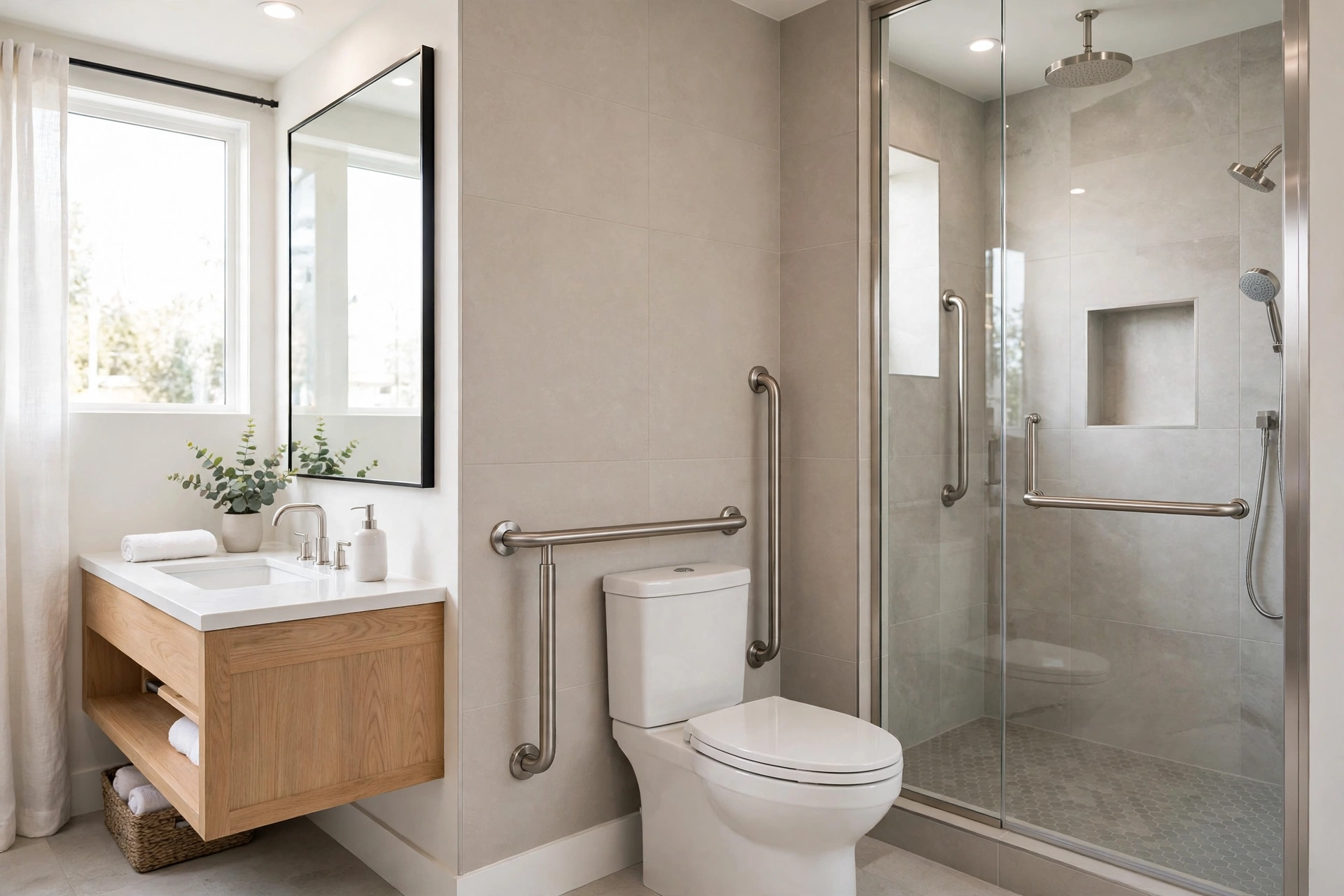
Wall-mounted grab bars are the gold standard for permanent bathroom safety — a properly anchored bar into studs or backing can hold 500 pounds and never moves. The catch is the word permanently. Installing one means locating studs, drilling tile, sealing penetrations, and patching everything if you move. Renters can't do it at all, and families dealing with a sudden hospital discharge don't have a week to schedule a contractor.
Toilet safety rails solve the speed problem. A standalone frame slides under the toilet's existing floor bolts (or wraps the bowl) and locks in with thumb screws — five minutes, zero tools, zero holes. They also solve the geometry problem: the support lands exactly where the hands naturally reach during the sit-to-stand arc, unlike a grab bar that has to be where the studs are. For a detailed look at permanent placement, our grab bar placement guide covers the stud-and-backing rules, and the aging-in-place fall-proofing checklist walks through the rest of the bathroom.
The tradeoff is honest and you should know it before buying. A freestanding rail's stability depends on friction, its own geometry, and the user pushing straight down — it is rated for 250 to 350 pounds, and lateral shoves (the kind that happen when someone loses balance sideways) stress it more than a wall-anchored bar. Rails are the right answer for recovery periods, rentals, and users who still have reasonable leg strength. They are the wrong answer as a permanent crutch for someone who can't stand without hauling themselves up by the arms.
Vive Toilet Safety Rail - Adjustable Grab Bar - Compact Support Frame

Best-seller class safety rail; buyer-intent bathroom fall-prevention query
*Affiliate Disclosure: As an Amazon Associate, Elevate Home earns from qualifying purchases. Pricing and availability subject to change.
The 6 Features That Actually Matter in Toilet Safety Rails
Strip away the marketing copy and every rail is judged on the same six criteria, in this order of importance:
1. Weight capacity with real margin. Rated capacity is a static number; real bodies generate dynamic loads — dropping onto the seat, shifting weight, pushing up hard on the arms. The rule we use: the rail's rating must clear the user's body weight by at least 50 pounds. A 250-pound user needs a 300-pound-rated rail at minimum; over 300 pounds, look for bariatric-rated frames at 350 pounds and up.
2. Width adjustment that clears your bowl. Bowls measure roughly 17 to 23 inches across at the base depending on round vs elongated and manufacturer. The frame's legs must sit outside the bowl footprint with the arms at a natural hand width — too narrow and the user squeezes in; too wide and the frame wobbles. Push-button or clamp width adjustment covering at least 17–23 inches is the safe spec.
3. Height adjustment for the user's reach. The armrests should land at roughly wrist height when the user stands beside the toilet — typically 26 to 32 inches from the floor. Too low and the user has to stoop to grab them (defeating the purpose); too high and the push-down force goes the wrong way. Half-inch or one-inch tool-free steps are what good frames offer.
4. Attachment method: under-bolt vs. wrap. Under-bolt frames sandwich the toilet's floor mounting bolts and are the most stable; bowl-wrap frames clamp around the porcelain and install faster but shift more on glossy floors. Either works if the weight rating has margin — but never buy a rail that relies on the toilet tank lid or seat hinges for structure.
5. Feet that don't skate. Wide rubber tips or suction-style feet matter more than buyers expect. Bathroom tile plus water equals a skating rink; test the frame empty on your actual floor before trusting it, and put a night-light and non-slip strategy around it for good measure.
6. Armrest padding and grip. Bare powder-coated steel gets cold and slippery with wet hands. Foam or rubber-wrapped armrests are worth paying for — the user's hands are wet and often soapy exactly when they grab hardest.
The 5 Best Toilet Safety Rails for Elderly Users Compared
We scored the five rails that dominate 2026 buyer roundups and owner reviews against the six criteria above. Names are the products as sold; the one we recommend has a full verified-product card above.
The Vive wins on the combination that matters: the largest verified owner base in the category (over 9,200 reviews at 4.7 stars as of this writing), genuinely tool-free setup, and compatibility with both round and elongated bowls out of the box. The Vaunn is the smarter pick if the rail needs to fold away daily or travel with the user — its folding frame is unique in this price band. For heavier users above 250 pounds, none of these five is the right call; shop bariatric-rated frames at 350 pounds and up and apply the 50-pound margin rule above.
Sizing and Installation: What the Reviews Get Wrong
The number-one cause of returns in this category isn't quality — it's fit. Owners unbox the rail, set it around the toilet, and discover the legs land on the bowl's curved skirt instead of the flat floor beside it. Three measurements prevent this:
Measure bowl width at the floor line. Wrap a tape measure across the widest point of the bowl where it meets the floor — not at the seat, which is narrower. Compare that number to the rail's adjustable width range. You want at least an inch of clearance on each side for the legs.
Check the side clearance. The rail needs roughly 4 to 6 inches of flat floor on each side of the toilet. Vanities, trash cans, and pedestal sinks eat this space fast in powder rooms. Measure before ordering; in a sub-5-foot-wide bath, wall grab bars may genuinely be the only option.
Set armrest height before the first use. Have the user stand next to the toilet, arms relaxed — the top of the armrest should sit at wrist crease height. Then have them do one supervised sit-to-stand while a second person watches the frame for shifting. Retighten the clamps after the first three uses; the foam feet compress and settle.
Pairing the rail with a raised toilet seat for seniors shortens the travel distance for weak knees, but confirm the rail and seat fit together — some clamp-on seats conflict with wrap-around rail frames. And if the bathroom has dementia-related safety needs, our dementia home safety guide covers locking, scald protection, and wandering precautions that a rail alone won't solve.
When a Safety Rail Isn't Enough: The Honest Verdict
A toilet safety rail is a support device, not a lift device. It helps someone who can mostly stand on their own stand more safely. If the user cannot rise from the seat without hauling their full weight up by the arms, the rail is underspecified for the job and can create a false sense of security — which is worse than no rail at all.
In that case, escalate in this order. First, an occupational therapist home visit — many Medicare Advantage plans cover one — to assess whether a rail plus a raised seat solves it. Second, a powered toilet lift or a commode with a powered seat, which do the mechanical work the arms shouldn't. Third, for a permanent home, properly anchored wall grab bars installed to the grab bar placement guide standard. A $70 rail is the right first step for the vast majority of buyers; it's just not the last step for everyone.
Cost is rarely the barrier here, which is worth saying plainly: the entire category runs from about $40 to $120, with the best-reviewed frames clustered under $70. Compare that to the real-world price of the fall it prevents — a hip fracture hospitalization averages well into five figures before rehab — and the rail's economics are absurdly favorable. If budget is tight, spend the money on the rail first and the decorative bathroom upgrades later. Pair it with the rest of the low-cost playbook: our best shower chair for elderly users guide covers the other half of the bathroom, and the fall-proofing checklist above ties the room together room-by-room.
Bottom line: the best toilet safety rails for elderly 2026 buyers are a solved product category — the Vive frame is the consensus pick for good reason, installation takes five minutes, and the entire purchase costs less than a single urgent-care copay. Measure first, respect the weight rating, and don't ask a $70 rail to do a $7,000 remodel's job.
Frequently asked questions
Do toilet safety rails work with elongated toilets?
Yes — the top-rated frames, including the Vive, are designed for both round and elongated bowls with width adjustment typically covering 17 to 23 inches. Measure your bowl width at the floor line and confirm the rail's range clears it by at least an inch per side.
Can a toilet safety rail be used on a rented apartment toilet?
Yes, and that's one of their main advantages: most frames install with thumb screws or clamps and no drilling, so they leave no damage. Under-bolt frames use the toilet's existing floor bolts and are the most stable option for renters.
How much weight can a toilet safety rail hold?
Most consumer rails are rated for 250 to 300 pounds. Apply the 50-pound margin rule: the rating should exceed the user's body weight by at least 50 pounds to handle dynamic sit-to-stand loads. Users over 250 pounds should shop bariatric-rated frames at 350 pounds and up.
Are toilet safety rails or wall grab bars safer?
Properly anchored wall grab bars are stronger — mounted into studs, they can hold 500 pounds and never shift. But rails install in minutes with no drilling, making them better for renters, recovery periods, and situations where you can't wait for a contractor.
Will a toilet safety rail fit in a small bathroom?
Not always — the frame needs roughly 4 to 6 inches of flat floor on each side of the toilet. In narrow powder rooms where a vanity or sink blocks that space, wall-mounted grab bars are usually the only workable option.
Does Medicare pay for toilet safety rails?
Original Medicare generally classifies toilet safety rails as convenience equipment rather than durable medical equipment, so coverage is not typical. Some Medicare Advantage plans cover them with an occupational therapy assessment — check your specific plan.
Keep reading
Bathroom Safety
Best Raised Toilet Seat for Seniors 2026: 7 Picks That Make Standing Safe
Best raised toilet seat for seniors 2026: 7 risers compared by height, clamp security, weight capacity, and ar…
Safety Guide
Grab Bar Placement Guide: Safe, Elegant Bathroom Layouts
Grab bar placement guide: shower, toilet, hallway, and stair positioning—plus mounting, heights, designer fini…
Safety
Fall-Proofing Your Home: Room-by-Room Checklist
Fall-proofing your home room by room: prevention-focused fixes for stairs, bathrooms, kitchens, and outdoors. …
Bathroom Safety
Best Shower Chair for Elderly 2026: 7 Safe, Stable Picks Compared
Best shower chair for elderly users in 2026: 7 compared with sizing, safety setup, and our top pick — Medline'…
Safety
Senior Bathroom Night Safety Guide: 2026
Senior bathroom night safety: motion-path lighting, nightlight placement, non-glare fixtures, and the full bed…
Condition Guides
Dementia Home Safety Guide: 2026
Dementia home safety modifications: wandering prevention, stove safety, contrast and wayfinding, secure outdoo…