Enphase IQ 10C vs IQ 5P Which Is Better for Your Home? (2026)
Key takeaways
- One IQ Battery 10C holds 10.0 kWh and delivers 7.08 kW continuous with a 90 A motor-start rating, against 5.0 kWh and 3.84 kW for a single 5P.
- At matched 10 kWh, two 5Ps deliver slightly more continuous power (7.68 kW) than one 10C, usually at no higher installed cost.
- The 10C wins on single-unit strength, 90 A motor starts, and a one-cabinet install; the 5P wins on phased budgets, redundancy, and serviceability.
- Both batteries only work with IQ8 microinverters; IQ7 owners cannot use either one, and legacy IQ7-era batteries are end of life.
- Meter-collar savings for the 10C depend on your utility's approval, so confirm it in writing before signing a quote that assumes it.
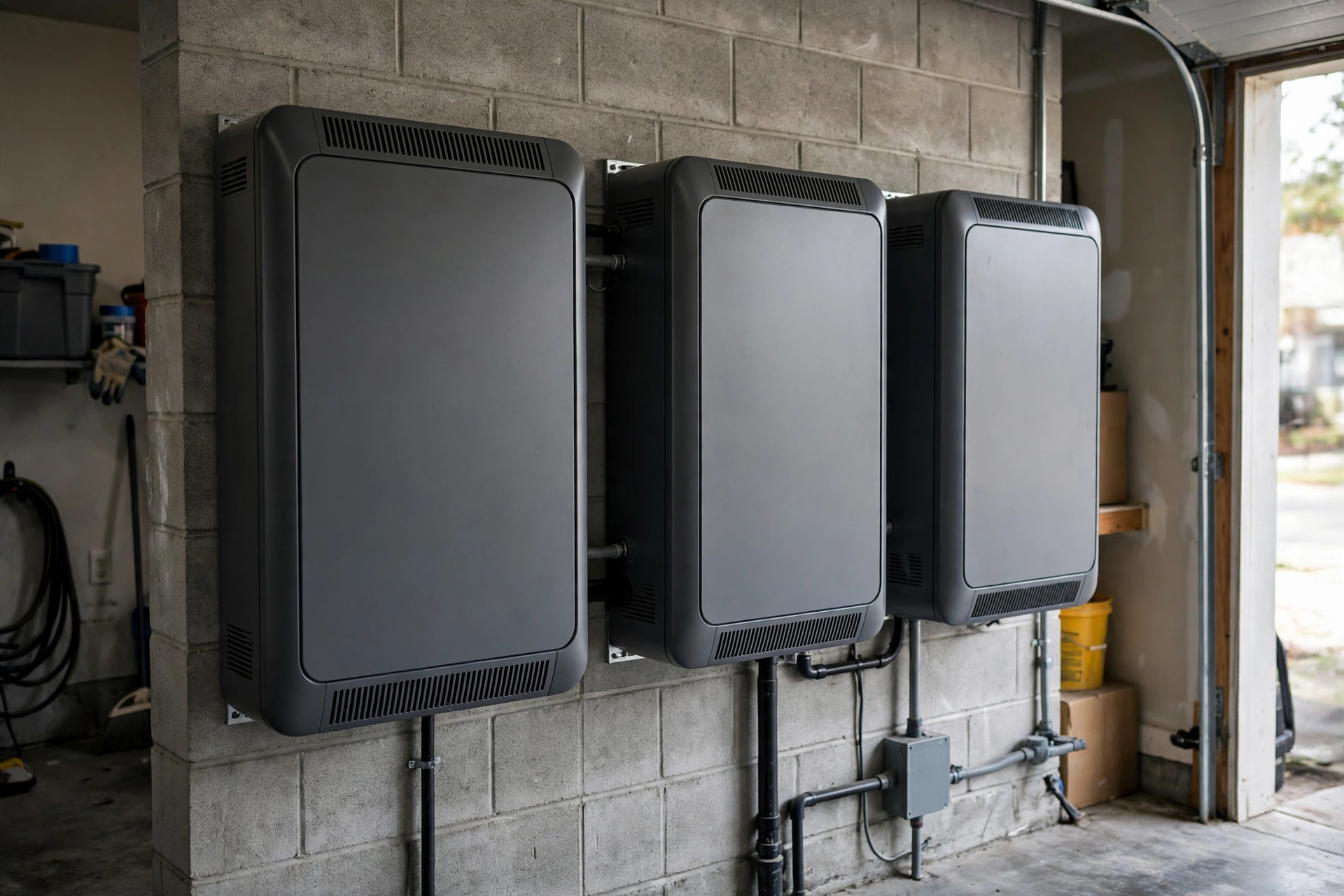
Enphase IQ 10C vs IQ 5P which is better comes down to a single question: do you want the most power in one cabinet, or the most flexibility as your storage needs grow? For most existing Enphase solar owners, the modular IQ Battery 5P is the smarter buy, while the IQ Battery 10C earns its place on new whole-home backup installs where a single large unit, stronger motor starts, and a cleaner wall layout matter most.
Both batteries come from the same Enphase Energy System, share the same lithium iron phosphate chemistry, and carry the same 15-year warranty. That is exactly why the choice confuses buyers: on a spec sheet they look like two sizes of the same product. In practice they are built for different jobs. The 5P is a 5 kWh building block you stack as budget and needs allow. The 10C is a 10 kWh cabinet designed to anchor a whole-home backup system in one step. Understanding where each one wins, and where each one wastes money, is the whole decision.
This guide compares the two on the numbers that change a real install: usable capacity, continuous and peak power, motor-start capability, expansion, serviceability, installation hardware, and compatibility with the solar system you already own. It also flags the one compatibility rule that overrides everything else, because if your roof system fails it, neither battery is the right next step without a bigger conversation with your installer.
Enphase IQ 10C vs IQ 5P Specs Compared
Start with the published specifications, because most of the marketing noise disappears once the two units sit in the same table. The 5P stores 5.0 kWh of usable energy and delivers 3.84 kW of continuous power, with 7.68 kW of peak power for short surges. The 10C stores 10.0 kWh usable and delivers 7.08 kW continuous, with 14.16 kW peak. Both use lithium iron phosphate cells, passive convection cooling with no fans, and field-replaceable microinverter modules, and both are warranted for 15 years or 6,000 cycles to 60 percent retained capacity.
The headline reading is simple: one 10C is roughly two 5Ps in capacity, with noticeably more continuous power than a single 5P. But that is the wrong comparison for most buyers, because nobody choosing between these two is deciding between 5 kWh and 10 kWh in the abstract. The real decision is between one 10C and two 5Ps, and there the story flips in ways that matter.
EF ECOFLOW 12kWh Power Station: DELTA Pro Ultra with Extra Battery, 120/240V 7200W AC Output, Lifepo4 Home Battery Backup Expandable to 90kWh, Solar Generator for Home Use, Emergency, Camping, RV

Modular 12kWh LFP home-battery alternative for buyers comparing permanent Enphase systems; expandable to 90kWh, live listing shipped and sold by EcoFlow Inc.
*Affiliate Disclosure: As an Amazon Associate, Elevate Home earns from qualifying purchases. Pricing and availability subject to change.
Power Where It Counts: Continuous Output and Motor Starts
Capacity, measured in kWh, decides how long a battery runs. Power, measured in kW, decides what it can run at the same time. A home with a large air conditioner, a well pump, or an electric range needs power first and capacity second, because a battery that cannot start the load is useless no matter how many kWh it holds.
On a single-unit basis, the 10C is clearly stronger: 7.08 kW continuous against 3.84 kW, and a 90 A locked-rotor rating against 48 A. That is why installers reach for the 10C when a quote has to start a central air conditioner or a large motor load from one cabinet. A single 5P, by contrast, is an essentials battery: lights, refrigeration, internet, outlets, and a few small loads on a critical-loads subpanel. It is not a whole-home battery on its own, and any quote that presents it as one deserves a second opinion.
Stack the units, though, and the gap narrows fast. Two 5Ps deliver 7.68 kW continuous, slightly more than one 10C, and their combined peak output exceeds the 10C as well. What the 10C keeps is the single-unit motor-start advantage and the simplicity of one cabinet, one mounting, and one set of connections. If your backup plan hinges on starting one big motor, the 10C's 90 A rating is a genuine, quote-changing advantage. If your plan is to run many moderate loads through an outage, two 5Ps match or beat it on power while keeping the modular benefits below.
For context on how these Enphase units sit against the wider market, our Tesla Powerwall 3 vs Enphase IQ Battery 5P comparison shows where a single large-format battery beats a modular stack, and where it does not. The same logic applies inside the Enphase family: bigger single units win on simplicity and peak capability, while stacks win on flexibility.
Matched at 10 kWh: Two IQ 5Ps vs One IQ 10C
Comparing one 5P against one 10C is apples to oranges, since the capacities differ by a factor of two. The honest comparison holds capacity constant at 10 kWh and asks what changes. The answer is: less than the marketing suggests on power, and a lot on cost, expansion, and service.
Installer experience backs the table. Florida installers who fit both units report that two 5Ps do the same backup job as one 10C for typical essentials loads, at lower cost, while letting the homeowner add capacity gradually. The 10C's advantages show up only when the job specifically needs its single-unit power, its 90 A motor start, or its compact single-cabinet install. For a household whose outage plan is lights, fridge, internet, and outlets, paying the 10C premium buys capability the home will rarely use.
Serviceability cuts the same way. Enphase's modular design means a faulty microinverter module inside a 5P can be isolated and replaced without taking the whole system down. With a single 10C, a service event takes all 10 kWh offline at once. That is not a reason to reject the 10C, but for a home with medical equipment or a home office that cannot lose a day, the redundancy of a stack is worth real money. Think of it the way you would think about any critical system: two smaller units fail gracefully, one big unit fails completely.
Runtime math also helps set expectations. Divide usable capacity by your average load to estimate hours: 10 kWh divided by a 1 kW average essentials load is roughly 10 hours, before efficiency losses and before any solar recharging during the day. A single 5P halves that. Neither number is a promise, since real loads surge and cycle, but the formula stops the most common sizing mistake, which is buying kWh when the home actually needed kW, or vice versa. Our 10 kWh vs 13.5 kWh vs 20 kWh home battery guide walks through the same sizing math across capacity tiers.
Cost and Installation: What Actually Drives the Quote
Neither Enphase battery is sold as a standalone retail box the way a portable power station is. Both are dealer-installed systems, and the installed quote includes the battery, the backup hardware, labor, permits, and any electrical work the home needs. That structure explains most of the price behavior buyers find confusing.
First, the 10C costs more upfront per install than a single 5P, which surprises no one, but two 5Ps frequently land at or below a single 10C for the same 10 kWh once the full quote is tallied. The reason is that the 10C is a newer, larger, heavier unit with a more complex install, while 5Ps are a mature, high-volume product installers fit quickly. If a quote for one 10C comes in well above a quote for two 5Ps at the same capacity, that is not an error to correct; it is the market telling you something about where the value sits.
Second, the shared hardware matters as much as the battery. Whole-home backup needs islanding hardware that disconnects the home from the grid during an outage, typically an IQ System Controller, plus a critical-loads subpanel or whole-home configuration. The 10C's headline installation feature is the IQ Meter Collar, a meter-socket device that can simplify backup wiring and, in some installs, avoid a main-panel upgrade. That is a real advantage where it is approved, and a non-advantage where it is not: meter-collar approval varies by utility, and installers in some regions report that the utilities that matter most locally have not approved it. Never let a quote assume meter-collar savings until your installer confirms your utility allows it.
Third, the federal incentive picture changed at the end of 2025, when the federal residential tax credit expired. That shifts the value calculation toward state, utility, and time-of-use rate programs, which vary sharply by region, and toward the resilience value of backup itself rather than a payback promise. Any quote that still leans on an expired federal credit is out of date; ask for the math without it. Buyers comparing Enphase against the wider field should also read our Enphase IQ 5P vs FranklinWH aPower 2 comparison and our guide to expanding Enphase vs FranklinWH systems, since the gateway and expansion economics differ by brand as much as the batteries do.
Compatibility: The IQ8 Rule That Decides for Many Owners
Here is the rule that overrides every spec above: the current Enphase batteries, the 5P and the 10C, only work with IQ8 microinverters. Per Enphase's own compatibility matrix, older IQ7 systems cannot take either battery. The legacy second-generation Enphase batteries that worked with IQ7, the IQ Battery 3, 10, 3T, and 10T, are end of life, with shrinking inventory and rising prices, and they were never designed for whole-home backup in the first place.
That leaves IQ7 owners with an uncomfortable fork: upgrade the solar electronics, choose a different battery brand that can AC-couple to the existing system, or wait. None of those is a reason to buy a 5P or 10C that cannot communicate with the roof. Before any quote, confirm which microinverter generation is on your roof from the Enphase app or your original install paperwork, and make the installer state compatibility in writing. This single check saves more wasted quotes than any spec comparison.
For IQ8 owners, the news is good: both batteries integrate natively, share the Enphase app, and support the same backup modes, including self-consumption, time-of-use arbitrage where rates reward it, and storm-watch style reserve behavior. The choice returns to capacity steps, power, and cost, which is exactly where it should be.
Which Enphase Battery Should You Buy?
Buy the IQ Battery 5P, ideally two of them over time, if you already own Enphase IQ8 solar, your outage plan centers on essentials, your budget favors phased spending, or you value redundancy and easy service. The 5P is the proven, flexible, lower-risk default, and at matched 10 kWh it matches or beats the 10C on continuous power while usually costing no more. Start with one 5P if money is tight, add a second when the budget allows, and you have a 10 kWh system built in the size steps real households actually buy.
Buy the IQ Battery 10C if you are designing whole-home backup from scratch, your quote must start a large motor load from a single unit, wall space is tight and one cabinet beats two, or your utility approves the meter collar and your installer can use it to simplify the install. The 10C is also the cleaner choice for a new solar-plus-storage install where the system is sized once, correctly, rather than grown over years. Its premium buys simplicity and single-unit strength, not more capacity per dollar.
Avoid either battery as a first purchase if you own IQ7 microinverters, if your installer cannot confirm utility approval for the planned backup hardware, or if your real goal is portable backup you can take to a rental, a job site, or a second property. Permanent Enphase batteries are wired into one home; portable stations serve a different job entirely, and our best home batteries for outage-prone areas guide covers that side of the market.
The bottom line is refreshingly undramatic for a product comparison. Enphase did not build a good battery and a bad battery; it built a building block and a flagship. Most homes are better served by the building block, stacked as needed. Homes that need the flagship know it, because their load list or their wall layout says so. Match the battery to that answer, confirm IQ8 compatibility and utility approval in writing, and the 5P vs 10C decision largely makes itself.
Frequently asked questions
Can I mix an IQ Battery 10C and IQ Battery 5P in the same system?
Yes. Enphase systems commonly combine a 10C with one or more 5Ps; for example, one 10C plus one 5P gives 15 kWh usable with about 10.9 kW of continuous power. Mixing lets you size capacity in 5 kWh steps around a strong 10C anchor, which is useful when a single 10C is not quite enough but a second 10C is more than the home needs.
Do the IQ Battery 5P and 10C work with older IQ7 solar systems?
Both batteries are designed for Enphase IQ8-based systems only. If your roof uses older IQ7 microinverters, neither the 5P nor the 10C is compatible, and the legacy IQ7-era batteries are end of life. Check your microinverter generation in the Enphase app or your install paperwork before accepting any battery quote.
How long will an IQ Battery 5P or 10C run my home during an outage?
It depends on your average load, not just the battery size. As a rough estimate, divide usable capacity by average draw: 10 kWh supporting a 1 kW average essentials load lasts roughly 10 hours before efficiency losses, while a single 5 kWh unit lasts roughly half that. Solar recharging during the day extends both figures, and large motor loads shorten them sharply.
Is the IQ Meter Collar available for the 10C in my area?
It varies by utility, and that variation is the point. The IQ Meter Collar can simplify backup wiring and sometimes avoid a main-panel upgrade, but some utilities have not approved it, so the saving may not exist in your area. Ask your installer to confirm meter-collar approval with your specific utility before signing a quote that depends on it.
Which lasts longer, the IQ Battery 5P or the 10C?
Neither battery is meaningfully ahead on longevity. Both use lithium iron phosphate chemistry and carry the same 15-year or 6,000-cycle warranty to 60 percent retained capacity. Choose between them on capacity steps, power, motor starts, and install cost, not on expected lifespan, where they are effectively tied.
Keep reading
Head-to-Head
Powerwall 3 vs Enphase IQ Battery 5P: Luxury Homes
Powerwall 3 vs Enphase IQ Battery 5P for large homes: power output, expandability, apps, aesthetics and warran…

Battery Comparisons
Enphase IQ Battery 5P vs FranklinWH aPower 2: 2026 Guide
Enphase IQ Battery 5P vs FranklinWH aPower 2 for 2026: microinverter vs aGate architecture, box-count math, ex…
Pillar 01 · Energy Resilience
10kWh vs 13.5kWh vs 20kWh Home Battery: Which Size Is Right? (2026)
10kWh vs 13.5kWh vs 20kWh home battery compared: usable capacity, backup runtime, solar pairing, and which tie…

Battery Brands
Expanding Enphase vs FranklinWH Systems
Expanding Enphase vs FranklinWH battery systems compared: increment sizes, installer steps, compatibility limi…
Pillar 01 · Energy Resilience
Best Home Battery for Outage Prone Areas 2026: Picks for Every Outage
Best home battery for outage prone areas 2026: installed vs portable picks, sizing math, and the verdict for s…
Pillar 01 · Energy Resilience
Adding a Second Tesla Powerwall Cost: What Changes and What It Adds (2026)
Adding a second Tesla Powerwall costs roughly $7,000–$16,000 installed. Expansion vs full unit, Gateway reuse,…