Pool Alarms & Safety Tech: 2026 Guide
Pool alarms and safety tech save lives when layers overlap. ASTM alarms, AI cameras, smart covers, and 2026 costs for a layered pool safety plan.
10 MIN READ · UPDATED 2026-09-22
Key takeaways
- No single device prevents drowning — safety comes from overlapping layers: barriers, alarms, supervision, and swim skills.
- Look for alarms certified to ASTM F2208 (surface, subsurface, or wristband types); certification is the meaningful quality signal.
- AI pool cameras add a valuable monitoring layer in 2026, but they supplement — never replace — active adult supervision.
- Budget $200–$600 for quality alarm coverage of a residential pool, $1,500–$4,000 for AI camera systems with professional installation.
- Test alarms monthly, replace batteries on schedule, and make sure every caregiver in the home knows what each alert sounds like.
Drowning is fast, silent, and brutally unforgiving of the 'I just turned away for a second' moment — which is why pool safety has never been about a single gadget. The families and safety engineers who think about this hardest all converge on the same doctrine: layers. A fence keeps children out, an alarm announces entry, a camera watches when eyes wander, a cover locks the water away, and an attentive adult ties it all together. In 2026 the technology layers have gotten genuinely impressive — AI cameras that recognize distress, alarms that meet rigorous ASTM standards, smart covers and locks that integrate with home automation. This guide maps the full layered-safety playbook: what each technology does, what it costs, where each one fails, and how to assemble the combination that fits your household.
The Layered Safety Doctrine: Why One Device Is Never Enough
Every major drowning-prevention organization — the CDC, the American Academy of Pediatrics, the Pool & Hot Tub Alliance — teaches the same framework: layers of protection. The logic is borrowed from engineering safety: no single barrier is foolproof, so you stack independent barriers such that all of them must fail simultaneously for tragedy to occur. A gate left unlatched is caught by the door alarm; a dead alarm battery is caught by the fence; a distracted adult is caught by the camera alert.
The standard residential layers are: (1) barriers — four-sided isolation fencing with self-closing, self-latching gates, the single most effective layer; (2) alarms — in-pool, door, and gate alarms that announce entry; (3) covers — automatic safety covers that physically block access; (4) supervision — designated, undistracted adult watchers; (5) swim skills and rescue readiness — lessons for children, CPR training for adults, and reachable rescue equipment. Technology has upgraded layers 2 and 3 dramatically in recent years, but it has not changed the doctrine: the layers work as a system.
This matters because the most dangerous pool-safety purchase is the one that creates confidence without coverage — a camera that parents trust while nobody watches, an alarm with dead batteries that everyone assumes is armed. As you read about each technology below, evaluate it the way a safety engineer would: what failure modes does it have, what covers those failures, and who in your household owns each layer? The goal is not to buy the most gadgets; it is to build a system with no single point of failure.
Pool Alarms: Types, ASTM F2208, and What to Buy
Surface-wave alarms float on the water and detect the wave pattern of an entry — the most common and affordable type ($100–$250). They work well but are the most false-alarm prone: high wind, pool cleaners, and waterfalls can trigger them. Subsurface alarms mount below the waterline (in the skimmer or on the pool wall) and detect pressure waves underwater, making them far less sensitive to surface chop from wind — generally the better choice for pools with water features or in windy areas ($150–$350). Wearable alarms are wristbands for non-swimmers that shriek when submerged; excellent for toddlers visiting grandparents, with the obvious limitation that the child must be wearing it ($50–$100 each).
Door and gate alarms ($40–$120) complete the perimeter: any door from the house to the pool area gets an alarm that sounds when opened, with an adult-height bypass button. Many jurisdictions require these by code, and they are the cheapest high-value layer available — a $60 door alarm has arguably saved more lives per dollar than any other pool product. Gate alarms serve the same function on fence gates.
The quality signal that cuts through marketing noise is ASTM F2208 certification — the standard specifying detection performance for a child-sized entry and resistance to false alarms. Uncertified alarms are a gamble: some work fine, some miss entries, some cry wolf until the household disables them. Buy certified, from established safety brands, and verify the certification claim rather than trusting a badge on a box. Then — critically — test monthly: toss the test weight in, confirm the siren, check batteries. An untested alarm is a decoration.
AI Cameras and Smart Monitoring in 2026
Integration is where these systems graduate from gadgets to infrastructure. The best 2026 setups tie camera alerts into the household's existing smart-home platform — triggering outdoor lights, sounding interior chimes, and pushing alerts to every caregiver's phone simultaneously rather than relying on a single app on a single device. Plan for connectivity redundancy: a camera that alerts over Wi-Fi goes silent when the router does, so commercial-grade installations add cellular backup for the alert path, the same principle as a monitored alarm system. And test the entire chain quarterly — trigger a test alert, confirm every phone receives it, confirm the local siren sounds, confirm the designated responder actually heard it. An alert nobody receives is indistinguishable from no system at all, and chains break silently: app permissions revoked by a phone update, a notification channel muted, a camera knocked two degrees off its zone.
Pool monitoring cameras with AI analytics are the most genuinely new layer in residential pool safety. A weatherproof camera (or pair) mounted with a clear view of the pool feeds video to on-device or cloud AI trained to recognize distress patterns and unsupervised entry: a child entering the pool area alone, a swimmer going still underwater, prolonged submersion. On detection, the system pushes instant alerts to phones, sounds local alarms, and some integrate with smart-home systems to flash lights or unlock gates for responders.
The technology in 2026 is meaningfully better than the gimmicky first generation: fewer false alarms from pool toys and shadows, faster detection (seconds, not minutes), and some systems now track individual swimmers and learn normal patterns. Installed cost runs $1,500–$4,000 for a proper setup — camera hardware, mounting with clean sightlines, processing, and professional configuration. DIY camera-plus-app bundles exist cheaper, but configuration (angles, zones, sensitivity) is where these systems succeed or fail, and it is skilled work.
The limitations deserve equal airtime. Cameras need light and line of sight: glare at certain hours, night swimming without pool lighting, steam on an indoor pool, or a camera knocked askew all degrade detection. They do not prevent entry — they announce it, and the alert is only as good as the human response chain. And they raise privacy considerations: position cameras to cover the pool, not the neighbors, and inform guests. The right mental model is a tireless assistant watcher, not a replacement watcher — superb at catching the moment attention lapses, useless if no one is available to respond.
Covers, Locks, and the Physical Layers
Technology gets the headlines, but the strongest single layer remains physical: an automatic safety cover ($12,000–$25,000 installed) that closes over the pool at the turn of a key, supporting the weight of a child or pet and locking the water away entirely. For households with toddlers or for pools at vacation homes where supervision is intermittent, nothing else approaches this level of protection. Manual safety covers (mesh or solid, $3,000–$8,000) offer similar protection with more effort per use — which means they get used less consistently, the eternal trade-off.
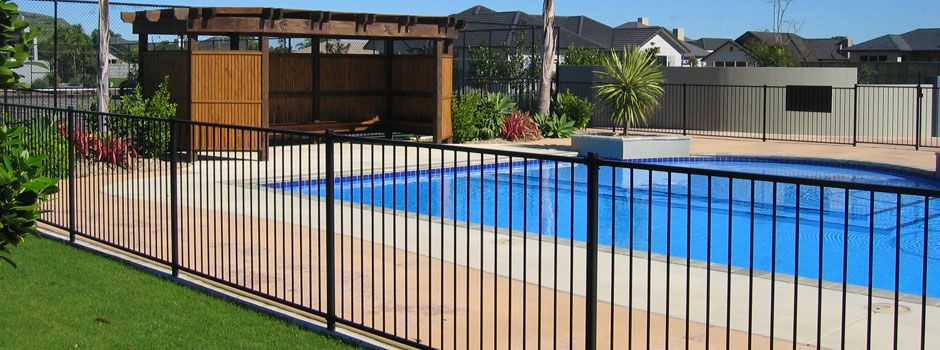
Fencing remains the highest-value layer per dollar: four-sided isolation fencing (house not counted as the fourth side) at least 48–60 inches high, with self-closing, self-latching gates opening outward, typically costs $3,000–$10,000 installed depending on linear footage and materials. It is also the layer most jurisdictions require by code — check local requirements derived from the International Swimming Pool and Spa Code before finalizing any design.
Do not overlook the small physical details: door locks and alarms on every house exit to the pool area, pool ladders removed or locked on above-ground pools when not in use, and drain covers compliant with the Virginia Graeme Baker Pool and Spa Safety Act — entrapment on a broken or missing drain cover is rare but catastrophic, and compliant covers are inexpensive. Rescue equipment (a reaching pole and ring buoy, $50–$100) should be mounted poolside, visible, and known to every adult in the house.
Supervision: The Layer Technology Cannot Replace
Here is the statistic that should reframe every gadget purchase: most childhood drownings happen during lapses in supervision, often under five minutes, frequently with adults nearby but distracted. No camera, alarm, or cover fixes a household where 'watching the kids' means glancing up from a phone. The supervision layer is free, it is the most effective layer, and it is the one most often neglected.
What effective supervision looks like in practice: a designated water watcher — one adult, explicitly assigned, phone down, eyes on the water — with the role rotating every 15–30 minutes so attention stays fresh. Some families use a physical water-watcher tag or lanyard passed between adults so the responsibility is never ambiguous. During parties and gatherings, the risk spikes because everyone assumes someone else is watching; the watcher system exists precisely for these moments.
Two more human layers complete the system: swim lessons for children (the AAP notes they reduce drowning risk, while emphasizing lessons do not make children 'drown-proof') and CPR training for the adults — a weekend course that costs little and matters enormously in the minutes before paramedics arrive. Pair the human layers with the technology layers and you have a genuine system: fence plus alarms plus watcher plus skills, each covering the others' failure modes. That is what 'layered safety' means, and no product page will say it as plainly: the best pool safety tech of 2026 is still an attentive adult.
Building Your Household's Safety Plan (and Budget)
Assemble your layers to match your risk profile. Young children in the home: four-sided fence with self-latching gates (code in most places), door alarms on every pool exit, an ASTM F2208 in-pool alarm, and a strict water-watcher rule — budget $4,000–$12,000 for fence plus alarms, more with an automatic cover. Grandchildren visit intermittently: fence and door alarms as the always-on base, wearable alarms for visiting non-swimmers ($50–$100 each, kept with the guest towels), and a written briefing for visiting adults. Teens and adults only: fence and gate alarms per code, rescue equipment, and CPR-trained adults — lighter, but never zero.
Vacation or rental pool: this is the highest-risk residential scenario — unfamiliar water, unfamiliar rules, often alcohol involved. Layer maximally: fence, alarms, automatic cover if the budget allows, posted rules, and consider an AI camera system for remote alerting. Check your insurance carrier's requirements and your local short-term-rental ordinances; both increasingly specify safety equipment.
Whatever you install, commission it like a safety system: test every alarm monthly, verify camera alerts reach every caregiver's phone, confirm gate latches self-close from a push (not a slam), and re-brief the household at the start of each swim season. Put battery replacement on the calendar — smoke-detector day is a good anchor. Total investment for a well-layered residential setup typically runs $1,000–$5,000 beyond code-required fencing, or $15,000–$30,000 with an automatic cover and AI monitoring. Against what is at stake, it is the easiest money in the entire pool project. Costs are 2026 US market ranges; get itemized local quotes.
Frequently asked questions
ASTM F2208 is the voluntary US standard that pool alarms are tested against — it measures whether an alarm reliably detects a child-sized entry into the water while resisting false alarms from wind, rain, and pool equipment. Alarms come in surface-wave, subsurface-disturbance, and wearable wristband variants. Choosing a certified model is the single best way to avoid both dangerous silence and alarm fatigue from constant false triggers.
Alarms buy critical seconds by alerting adults the moment someone enters the water unexpectedly — and drowning is fast and silent, often unfolding in under a minute. But studies and safety organizations consistently stress that alarms are one layer, not a solution: most incidents involve lapses in supervision, missing barriers, or both. Treat an alarm as a backup to fencing and watchful adults, and it earns its place; treat it as the plan, and it does not.
A quality ASTM-certified surface or subsurface alarm runs $100–$300 per unit, so $200–$600 covers a typical residential pool with a house-door alarm added. AI camera systems with drowning-detection analytics run $1,500–$4,000 installed including cameras, processing hardware, and app integration. Automatic safety covers — the strongest single physical layer — run $12,000–$25,000 installed. Costs are 2026 US market ranges; get itemized local quotes.
The technology has improved markedly: modern systems use computer vision to distinguish swimmers from pool toys and can alert within seconds of detecting distress patterns or unsupervised entry. But cameras need clear sightlines, good lighting, and maintained lenses — glare, night swimming, and occlusions degrade performance. Use them as an alerting layer alongside barriers and supervision, and test the alert chain (camera to phone to human response) the way you would test a smoke detector.
Requirements vary by state and municipality, but most jurisdictions require isolation fencing with self-closing, self-latching gates under codes derived from the International Swimming Pool and Spa Code. Some states and cities additionally require alarms on doors leading to the pool area or in-pool alarms meeting ASTM F2208. Check your local building department before relying on any single measure — and note that insurance carriers may have their own requirements.
Layer aggressively since visits are intermittent: a four-sided isolation fence with a self-latching gate as the base layer, door alarms on every house exit to the pool area, and a wearable alarm on non-swimming grandchildren during visits. Add a strict house rule that an adult 'water watcher' is designated — phone down, eyes on the pool — whenever children are in or near the water. Brief every visiting adult on the rules; assumptions are where layers fail.