Stair Lift for Narrow Staircase: Best Slim-Rail Options (2026)
Key takeaways
- Most standard seated stair lifts need a staircase at least 28–29 inches wide; anything narrower is a genuine fit problem.
- The number that matters is the folded profile, not the rail alone — the slimmest seated lifts fold to 10.5–12 inches.
- For straight narrow stairs, the AmeriGlide Rave 2 is the only widely available DIY-install lift you can buy outright online, with a ~11.5-inch track.
- Perch (standing) lifts are the backup answer when stairs are too narrow for any seated model.
- Always measure the narrowest point of the staircase, including handrails, before ordering any lift.
A stair lift for narrow staircase homes is absolutely possible, but only if you shop by folded width: standard seated lifts need roughly 28–29 inches of stair width to work safely, and the slimmest models fold to just 10.5–12 inches so other people can still pass. Below, we break down the minimum-width rules, the slim-rail models that actually fit, how to measure your staircase, and the best buy-it-yourself option for straight narrow stairs.
Most stair lift articles pretend every model fits every staircase. It does not. A narrow staircase — common in pre-1980 homes, split-levels, and older townhouses — is the single most common reason a stair lift installation gets complicated, quoted higher, or declined outright. The good news: manufacturers have been shrinking folded profiles for years, and today there are real options down to about 28 inches of clear stair width. The trick is knowing which spec to read, because the brochure number (rail width) is not the number that decides whether your family can still walk past the chair.
What Counts as a Narrow Staircase for a Stair Lift?
Most seated straight stair lifts can be installed on staircases as narrow as about 28–29 inches. Anything below that is considered narrow in the stair lift industry and starts to pose genuine safety and code questions: the seated user needs enough room that knees and shoulders stay inside the stairwell, and folded chairs still have to leave a passable route for everyone else in the household.
It helps to know the building-code backdrop. The International Residential Code (IRC R311.7.1) requires new residential stairways to be at least 36 inches wide above the handrail height — but most narrow staircases predate that rule or were built under local variations, so plenty of existing homes sit in the 28–32 inch range. A stair lift installer is not allowed to create an unsafe condition, so reputable dealers will measure and will tell you when the stairs are simply too tight for a seated model.
For a quick self-check, measure the clear width of your staircase at its narrowest point, wall to wall or handrail to wall, at several points along the flight. If the narrowest reading is 30 inches or more, most straight lifts will fit. From 28 to 30 inches, you need a slim-profile model. Under 28 inches, seated options run out and a perch (standing) lift becomes the realistic conversation.
AmeriGlide Rave 2 Stair Lift for Seniors – DIY Self-Install Straight Stair Lift – Fits Most Straight Staircases – 350 lb Capacity – Battery Powered – Made in USA

Only narrow-stair-suitable stair lift buyers can purchase outright and self-install; strong match for DIY buyer intent on this keyword.
*Affiliate Disclosure: As an Amazon Associate, Elevate Home earns from qualifying purchases. Pricing and availability subject to change.
The Spec That Actually Matters: Folded Profile vs Rail Width
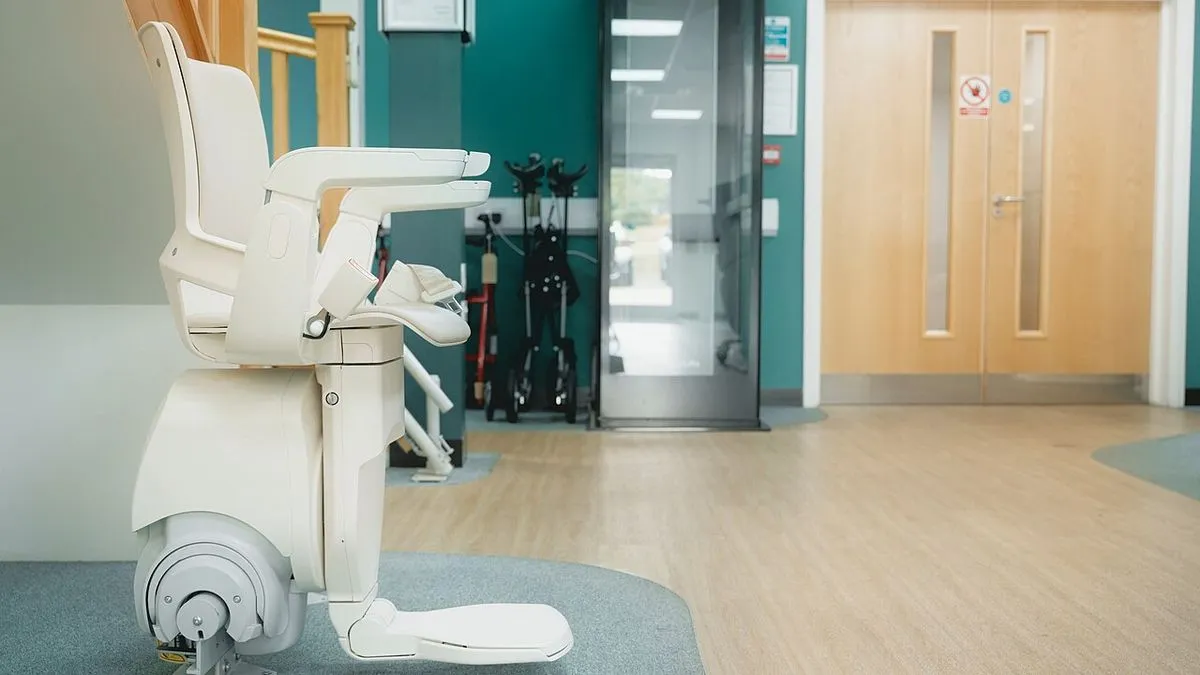
Brochures advertise rail width — how much of the stair tread the track covers. That matters for installation, but the number that decides daily life is the folded profile: how far the parked chair sticks out from the wall when the seat, footrest, and armrests are flipped up. A lift with a slim rail but a bulky folded chair still blocks the stairs for everyone else.
Here is how the most commonly cited slim models compare on the numbers that matter for narrow staircases:
A note on honesty: folded-width and minimum-width figures come from manufacturer and dealer documentation, and they assume ideal conditions. Your staircase's handrails, newel posts, radiators, and head clearance at the bottom landing all eat into the real number. Treat the table as a shortlist filter, not a purchase guarantee — the in-home survey is still the final word, as our curved-stair comparison also explains for complex flights.
Straight Narrow Stairs: The Buy-It-Yourself Option
Here is the part most stair lift content hides: Bruno, Harmar, Handicare, and Savaria are sold through dealer networks with in-home surveys, custom quotes, and professional installation. That is the right path for curved stairs or very tight clearances — but it also means weeks of lead time and sales appointments. For a straight narrow staircase where you would rather buy outright and install yourself (or with a handy family member), there is exactly one well-established option sold directly online: the AmeriGlide Rave 2.
The Rave 2 is a battery-powered straight-rail lift with a 350-lb capacity and a 15-foot track included, which covers a standard 12–13 step residential flight. AmeriGlide publishes a DIY installation process that most handy homeowners complete in an afternoon, and the unit ships to your door rather than arriving with a survey appointment. Its track occupies roughly 11.5 inches of stair width — meaningfully slimmer than many dealer-sold rails — and the seat, footrest, and armrests fold up when parked so the rest of the household can use the stairs.
Trade-offs are real and worth stating plainly. It is straight-stairs only: any bend, landing, or fan turn rules it out. Battery power means it keeps working through outages (a genuine safety plus), but batteries need periodic charging and eventual replacement. And the 15-foot track sets a hard limit on total flight length — measure your staircase nose-to-nose and confirm the track length before ordering, because a multi-flight run needs a different solution. If your stairs are under 28 inches clear, the Rave 2 is not the answer either; read the perch-lift section below instead.
Why it earns the card above for this keyword: it is the only narrow-stair-suitable lift a buyer can actually purchase from a cart, self-install on a weekend, and have running without a dealer contract — at a published equipment price that undercuts installed dealer quotes for straight lifts. For the specific searcher typing "stair lift for narrow staircase" with a straight flight and a DIY mindset, it is the honest best fit.
When the Stairs Are Too Narrow for a Seated Lift: Perch Lifts
Below about 28 inches of clear width, a seated chair lift becomes a genuine hazard: the user's knees or shoulders can strike the wall or balustrade during travel. The industry's answer is the perch (perching) stair lift — a higher, narrower seat the user half-stands on, leaning back against a small padded support rather than sitting fully down.
Perch lifts work on stairs as narrow as roughly 24 inches because the rider's body stays more vertical and the unit's footprint is smaller. They are also a good fit for people who struggle to bend into a low seated position — arthritis sufferers, for example, often find perching easier than sitting and standing. The obvious caveat: the user must have enough leg strength, balance, and trunk control to ride in a semi-standing position safely. A perch lift is a mobility compromise, not a comfort upgrade, and a proper assessment by the dealer (or an occupational therapist) is essential before choosing one.
Perch models are dealer-sold and custom-fitted; you will not find them in a shopping cart. If your stairs measure under 28 inches, start with a local dealer survey rather than an online purchase.
How to Measure Your Staircase Before You Buy Anything
Whether you are ordering a DIY lift or booking a dealer survey, accurate measurements save a return or a re-quote. You need five numbers:
1. Clear width at the narrowest point. Measure wall-to-wall (or handrail-to-wall) at the top, middle, and bottom of the flight. The smallest number is your working width. If a handrail protrudes, measure with it in place — and note that relocating a handrail to the opposite wall sometimes buys an extra inch or two.
2. Total flight length. Measure from the nose of the top step to the nose of the bottom step, following the slope. A standard straight flight is around 12–14 feet; the Rave 2's 15-foot track covers most of these with room for the top and bottom rail overruns.
3. Head clearance. Stand on the stairs and check for bulkheads, low ceilings, or stairwell openings where a seated rider's head would travel. Narrow older stairwells often combine tight width with tight headroom.
4. Top and bottom landings. The rail overruns past the top and bottom steps, and the chair needs clear parking space at both ends. Folding-rail options (available on some models) help when a door or hallway crowds the bottom of the stairs.
5. Electrical outlet. Battery-powered lifts like the Rave 2 trickle-charge between trips; plug-in models need a standard outlet near the rail. Either way, confirm power before the unit arrives.
If any measurement lands in the borderline zone (28–30 inches), photograph the staircase from top and bottom and send the photos with your measurements when you order or request a quote. Dealers routinely spot clearance issues in photos that tape-measure numbers miss. For broader stair-safety context beyond the lift itself, see our guide on making stairs safer for elderly family members.
Narrow Stairs vs Curved Stairs: Different Problems
Shoppers often conflate narrow stairs with curved stairs, but they are different engineering problems with different price tags. A narrow straight staircase is a clearance problem solved by a slim folded profile — the rail is still a standard straight track, and solutions like the Rave 2 stay affordable. A curved staircase is a geometry problem: the rail must be custom-bent to follow the flight, which means factory measurement, custom fabrication, and typically two to three times the cost of a straight lift.
If your staircase is both narrow and curved or has an intermediate landing, you are in custom-rail territory: slim curved options exist (compact models with folding rails that hug the wall), but they are dealer-quoted, not cart-purchasable. Our curved-stair lift guide covers those models in detail, and the stairlift vs home elevator comparison is worth reading if a custom curved quote makes you reconsider the whole approach.
Costs, Installation, and What to Budget
Installed straight stair lifts from dealer brands typically run in the low thousands of dollars, while custom curved rails climb much higher; we keep the full breakdown in our brand-by-brand stair lift comparison. The DIY route changes the math: you pay published equipment cost plus your own afternoon of labor, with no survey fee and no installation invoice.
Three cost traps to avoid on narrow stairs specifically. First, do not pay for a custom rail when a slim straight rail fits — insist the dealer proves why standard will not work. Second, budget for the staircase prep, not just the lift: relocating a handrail, trimming a newel post, or adding an outlet at the landing are the small jobs that make the lift actually usable. Third, ask about the battery replacement schedule on battery-powered models; a lift that dies mid-staircase during an outage is a safety device that failed, so keep the charging routine and know the battery's expected service life.
The Verdict: Which Stair Lift for a Narrow Staircase?
Match the lift to your measurements, not to the brochure. If your straight staircase measures 28 inches or wider at its narrowest point and you want to buy outright and install it yourself, the AmeriGlide Rave 2 is the practical pick: slim ~11.5-inch track, 350-lb capacity, battery backup for outages, and no dealer appointment required. If your stairs are 28–30 inches and you prefer professional installation, get quotes on slim dealer models like the Harmar Pinnacle SL600 or Bruno Elan and compare folded profiles, not just prices. Under 28 inches, stop shopping seated lifts and talk to a dealer about a perch lift — and if the staircase is also curved, read our curved-stair guide before spending anything. Measure twice, order once, and the narrow staircase stops being a problem.
Frequently asked questions
What is the minimum staircase width for a stair lift?
Most standard seated straight stair lifts need about 28–29 inches of clear stair width. Compact models like the Handicare 1100 are rated for stairs as narrow as roughly 25.5 inches, and below about 24–28 inches a perch (standing) lift is usually the only safe option.
Can you put a stair lift on a 28-inch staircase?
Yes, 28 inches is the practical lower limit for most slim-profile seated straight lifts, including the AmeriGlide Rave 2 and Harmar SL300. Measure the clear width at the narrowest point with handrails in place; anything under 28 inches usually calls for a perch lift and a dealer survey.
Do perch stair lifts work better on narrow stairs?
For stairs under about 28 inches, yes. Perch lifts keep the rider semi-standing, so the unit needs less width and the rider's knees stay clear of the wall. They are dealer-fitted and require enough leg strength and balance to ride safely, so an in-person assessment is essential.
How much stair width does a folded stair lift block?
The slimmest seated lifts fold to about 10.5–12 inches from the wall (for example, the Harmar Pinnacle SL600 folds to around 10.5 inches). That folded profile is the number to compare, since it decides whether the rest of the household can still use the stairs comfortably.
Can I install a stair lift myself on narrow stairs?
On a straight staircase, yes. The AmeriGlide Rave 2 is designed for DIY installation with basic tools and ships with a 15-foot track. Dealer brands like Bruno and Harmar normally require professional installation, and curved rails are always custom-fitted by a dealer.
Will a stair lift damage narrow stairs?
No. Stair lifts mount to the stair treads, not the wall, with brackets screwed into the steps. On narrow stairs the installer may need to reposition a handrail, but the lift itself does not structurally alter the staircase and can be removed later, leaving only small screw holes.
Keep reading
Aging in Place · Mobility
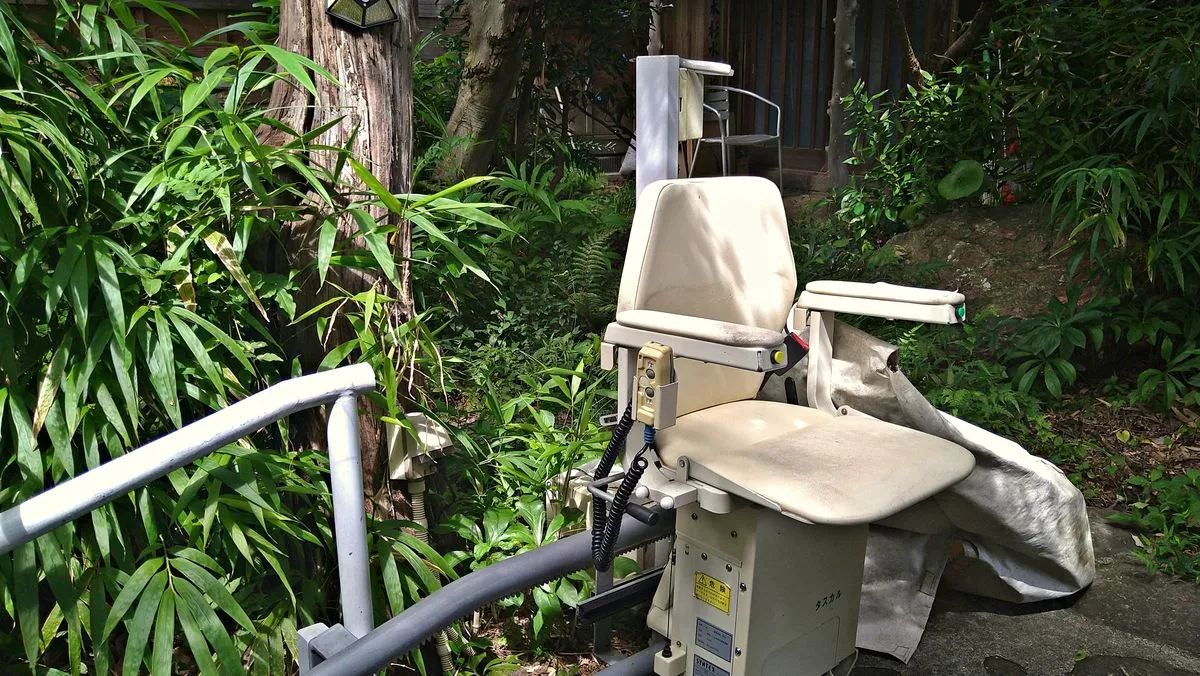
Best Stair Lift for Curved Stairs 2026: 5 Models Compared & How to Buy
Best stair lift for curved stairs in 2026: 5 models compared by cost, rail type, and fit. Learn why curved lif…
Fall Prevention
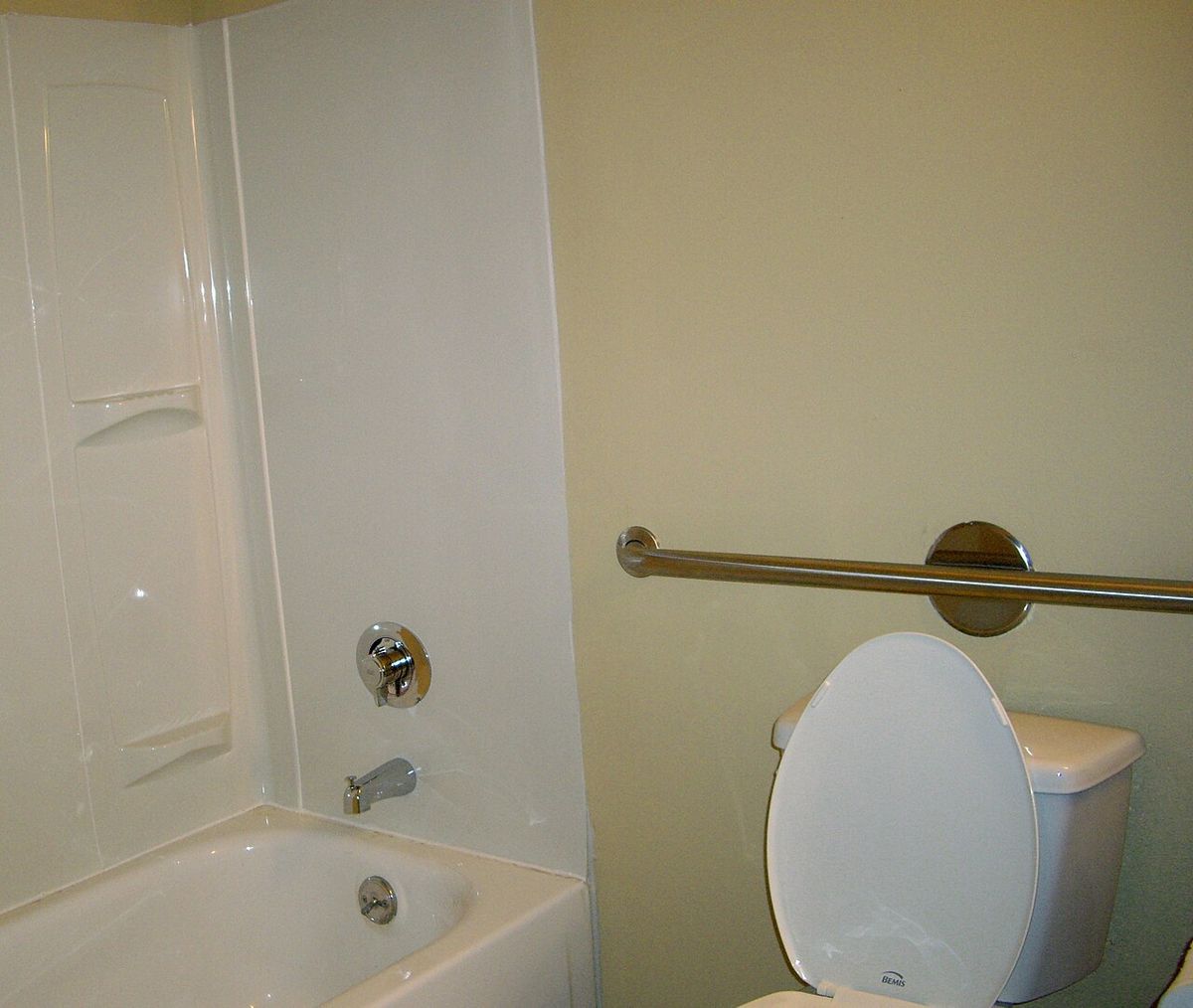
How to Make Stairs Safer for Elderly: 12 Upgrades (2026)
How to make stairs safer for elderly loved ones: 12 proven upgrades, from motion-sensor stair lights to handra…
Decision Guide
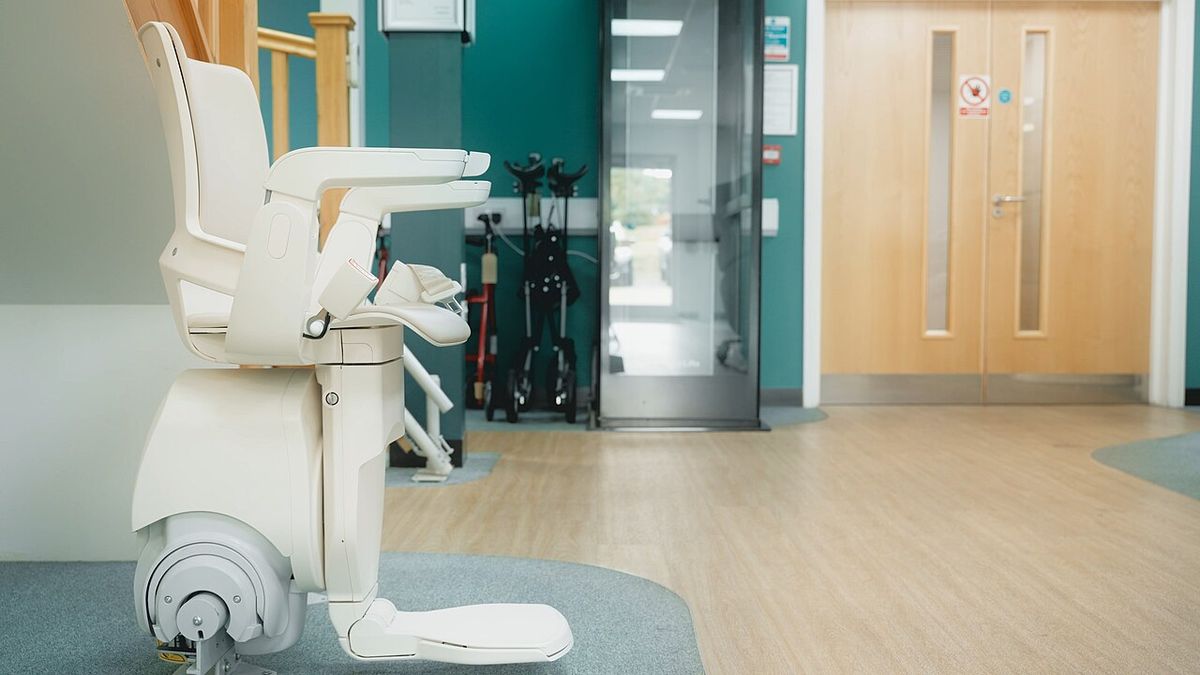
Stairlift vs Home Elevator: Which Lift Is Right for You?
Stairlift vs home elevator compared: 2026 costs, space needs, installation timelines, and resale impact to hel…
Aging in Place · Mobility
Best Stair Lift Brands 2026 Acorn vs Bruno vs Stannah: Which Is Worth Your Money?
Acorn vs Bruno vs Stannah stair lifts compared for 2026: installed costs, warranty, reliability, and which bra…
Interactive Tool
Aging in Place Renovation Cost Estimator 2026 Guide
Budget your aging-in-place renovation with our interactive estimator. Price accessible bathrooms, kitchens, el…
Transfer Equipment
100A vs 200A Automatic Transfer Switch
100 amp vs 200 amp transfer switch: service-entrance vs subpanel topology, when each is required, costs, and l…