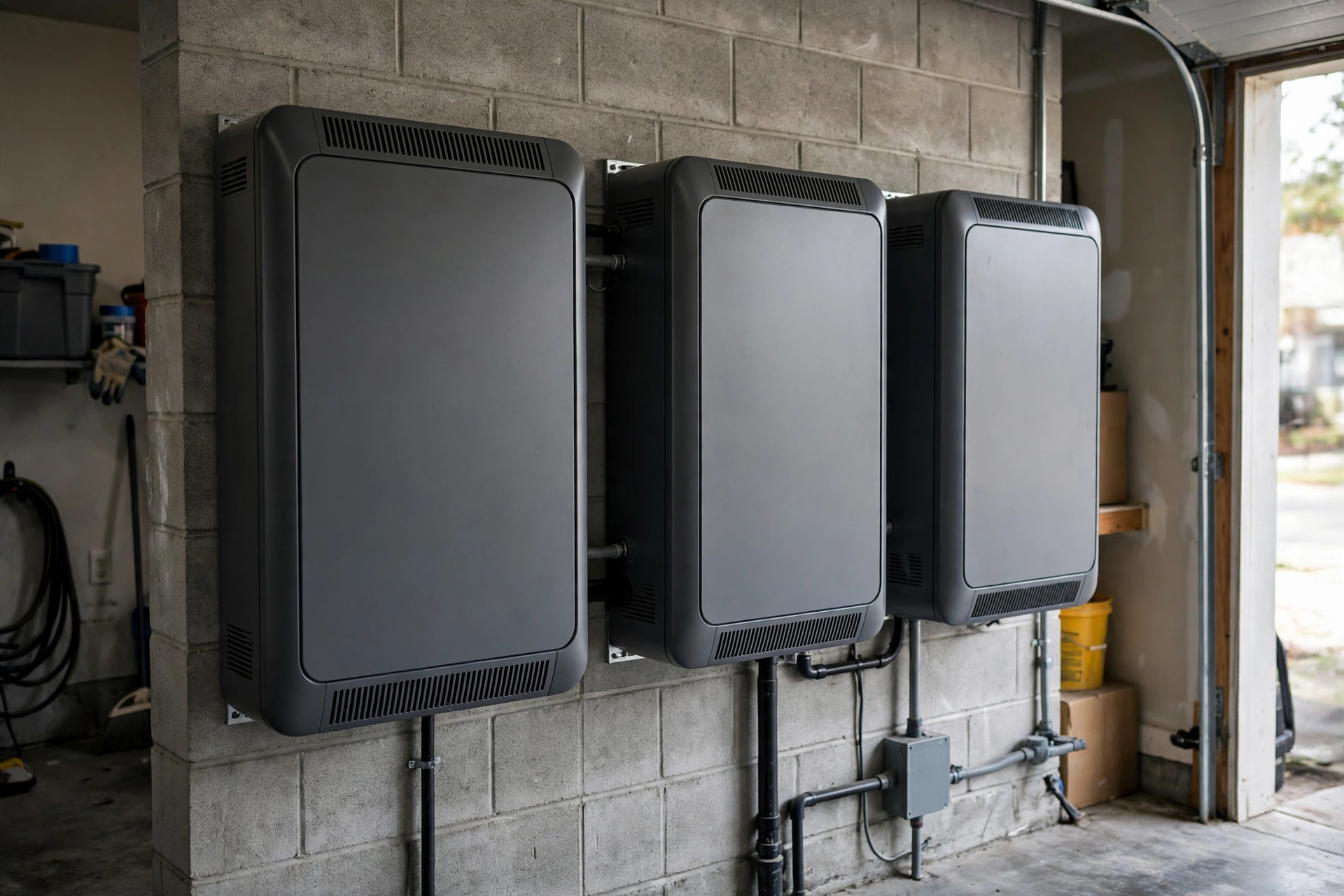
Bluetti vs EcoFlow Whole Home Battery Backup: Which Wins? (2026)
Key takeaways
- EcoFlow's DELTA Pro Ultra wins the flagship comparison: 7,200 W of 120/240 V output, 5,600 W solar input, and a smart panel path for automatic backup.
- Bluetti wins on value and modularity: start with an Apex 300 or AC500 for essentials, then add battery packs as your needs grow.
- Output in watts decides what you can run at once; capacity in kilowatt-hours decides how long it runs — size output above your simultaneous load list.
- Neither brand switches a house on automatically by itself: budget for a transfer switch, inlet box, or smart panel before you buy the battery.
- For daily solar and rate savings, Bluetti's grid-interactive EP900 is the alternative worth comparing against EcoFlow's flagship.
Bluetti vs EcoFlow whole home battery backup is a choice between two different philosophies: EcoFlow builds the more powerful whole-home system with the higher output and the more complete automatic backup path, while Bluetti builds the more modular, better-value system that lets you start smaller and expand over time. If your goal is running a whole house, including heavy 240-volt loads, through an outage, EcoFlow's flagship DELTA Pro Ultra platform is the stronger pick. If your goal is covering essential circuits at the lowest total cost with room to grow, Bluetti's modular lineup is the smarter buy.
Both brands sell lithium iron phosphate (LFP) portable power stations that scale into whole-home backup, and both have earned large, loyal owner bases. That similarity is exactly what makes the comparison confusing: the spec sheets look close until you examine output, expansion, solar input, and how each system actually connects to your home's electrical panel. This guide compares the two brands head-to-head on the factors that decide whether a system works in a real outage, not just on a spec sheet.
One important framing note: neither brand's portable platform is a direct replacement for a permanently installed wall battery like a Tesla Powerwall in every situation. Installed batteries switch a whole backed-up panel automatically and deliver higher continuous power. Portables win on speed, flexibility, and cost: you can buy one in days, move it, and expand it later. If you are still deciding between the two classes, read our guide to portable power stations for home backup and our guide to batteries for outage-prone areas first, then come back here to pick a brand.
Bluetti vs EcoFlow: The Short Answer
For most whole-home buyers, EcoFlow wins the flagship comparison. The DELTA Pro Ultra delivers 7,200 watts of continuous 120/240-volt output from a single inverter, expands from 6.1 kWh to a very large bank, and pairs with EcoFlow's Smart Home Panel for automatic, hands-free backup of chosen circuits. That combination — high output plus a real automatic transfer path — is what whole-home backup actually requires, and it is the area where EcoFlow's platform is most complete.
Bluetti wins on value and modularity. Its AC500 platform delivers 5,000 watts and expands to more than 18 kWh, its EP900 platform adds grid-interactive capability with up to 9,000 watts, and its newer Apex 300 gives essential-load buyers a lower entry cost with expansion batteries that can be added later. Bluetti's modular design — a separate inverter module plus stackable battery packs — also means a single failed component does not necessarily take down the whole system, and you can size the battery bank independently of the inverter.
The honest summary is this: buy EcoFlow if you want the most capable single system and are willing to pay the premium for it. Buy Bluetti if you want the best capacity per dollar, want to start with essential loads and grow, or value a modular platform you can reconfigure over time. The sections below show exactly where each brand wins and why.
EF ECOFLOW 12kWh Power Station: DELTA Pro Ultra with Extra Battery, 120/240V 7200W AC Output, LiFePO4 Home Battery Backup Expandable to 90kWh

Flagship whole-home portable platform: 7200W 120/240V output, expandable bank, smart-panel automatic backup path; verified live 2026-10-26 via browser.open fallback (curl hit AI-agent wall this run)
*Affiliate Disclosure: As an Amazon Associate, Elevate Home earns from qualifying purchases. Pricing and availability subject to change.
Flagship Whole-Home Systems Compared
The table below compares the systems each brand actually positions for whole-home backup. Note that Bluetti's lineup is modular by design, so its figures depend on which inverter and battery combination you buy; EcoFlow's DELTA Pro Ultra is a single inverter plus stackable batteries. Treat every figure as a manufacturer-stated specification and confirm it against the current listing before buying, since both brands revise bundles regularly.
Two patterns jump out. First, EcoFlow's flagship has the highest single-inverter output in this comparison, which matters for heavy loads. Second, Bluetti's lineup covers more price points: the Apex 300 serves essential-load buyers, the AC500 serves mid-range whole-home buyers, and the EP900 serves buyers who want a permanently installed, grid-interactive system. EcoFlow's range is narrower at the top but deeper at the flagship level, where expansion batteries can take one inverter a very long way.
Output and 240-Volt Power: What Each Brand Can Actually Run
Output, measured in watts, decides what your system can run at the same time. Capacity, measured in kilowatt-hours, decides how long it runs. Buyers routinely confuse the two, and it is the most common sizing mistake in whole-home backup. A system with a huge battery but modest output will run a fridge for days yet trip the moment you add a well pump or an electric range.
EcoFlow's DELTA Pro Ultra delivers 7,200 watts of continuous 120/240-volt output, which is enough for most homes' essential plus heavy loads: fridge, freezer, lights, internet, and, within limits, a central air conditioner, electric range, or well pump, provided you manage simultaneous loads. That 240-volt capability from a single inverter is the flagship's defining advantage. It is also why the platform pairs well with EcoFlow's Smart Home Panel, which can automatically back up a set of circuits without you running extension cords in the dark.
Bluetti's AC500 delivers 5,000 watts, which covers essential circuits comfortably and many heavy loads one at a time, but not the same simultaneous heavy-load margin. The EP900 closes that gap with up to 9,000 watts and a grid-interactive design, but it is a different kind of product: a residential energy storage system installed at your panel, not a portable you can also take camping. The Apex 300, at 3,840 watts, is an essential-load machine — fridge, freezer, router, lights, and electronics — not a whole-house heavy-load system. Match the output tier to your load list honestly: write down everything you want running at once during an outage, add up the watts, and buy output above that total, not just capacity above it.
Capacity and Expansion: How Big Each System Gets
Both brands expand by adding battery packs, and both reward buyers who think in stages rather than buying everything at once. Our expansion guide walks through the start-small strategy in detail, and the capacity-tier comparison shows what 10, 13.5, and 20 kWh actually cover in a real home. The brand difference is in how far each platform stretches and what each expansion step costs you in complexity.
EcoFlow's DELTA Pro Ultra starts at 6.1 kWh and expands with additional batteries to a very large bank, with the platform marketed up to a multi-dozen kilowatt-hour scale. In practice, most whole-home buyers land between 12 and 24 kWh — enough for an evening and overnight of essential loads plus selective heavy loads, or a full day of essentials-only backup. The advantage of one inverter platform is simplicity: one app, one set of controls, one output limit to plan around.
Bluetti's modular approach stretches differently. The AC500 pairs with up to four battery packs for about 18.4 kWh, the EP900 platform reaches about 19.2 kWh, and the Apex 300 grows by adding its own expansion batteries. The modular trade-off is real: separate inverter and battery units mean more boxes, more cables, and more floor space, but also more flexibility — you can replace or add a battery without replacing the inverter, and you can split the system between uses if your needs change. For buyers who expect their backup needs to grow over several years, that flexibility is worth real money.
Solar Charging and Recharge Speed
A backup battery is only as good as its ability to recharge during a multi-day outage, and that is where solar input matters. EcoFlow's DELTA Pro Ultra accepts up to 5,600 watts of solar input, which is the highest in this comparison and a genuine advantage for solar-equipped homes or buyers planning a large array. More solar input means faster daytime recovery and a better chance of riding through a multi-day outage without a generator.
Bluetti's solar figures vary by platform: the AC500 accepts about 3,000 watts, the EP900 about 4,800 watts, and the AC300 about 2,400 watts. Those are respectable numbers, and for most rooftop arrays they are not the binding constraint — your roof, your panel count, and your climate usually limit solar harvest before the inverter's input limit does. But if you are building a large ground-mounted array specifically to recharge a big battery bank, EcoFlow's higher ceiling gives you more headroom.
Recharge speed from the wall is a draw: both brands charge a typical bank in roughly one and a half to two hours from a standard outlet at full input, and both support dual charging from wall plus solar. Do not over-index on wall-charge speed, though — during an outage, wall power is gone by definition, so solar input and generator input are the recharge paths that matter. If your outage plan includes a generator, check that your chosen platform accepts generator charging cleanly and at a useful rate before you buy.
Automatic Backup: Transfer Switches and Smart Panels
This is the section most buyers skip and most regret skipping. A portable power station without a transfer path is an extension-cord system: when the grid fails, you walk to the unit, plug things in, and manage loads by hand. That works, and for many buyers it is fine, but it is not whole-home backup in the automatic sense, and it is miserable at 2 a.m. in a storm.
EcoFlow's Smart Home Panel path is the more complete automatic option for a portable platform: installed by an electrician, it switches your chosen circuits to battery power automatically and can also manage charging schedules. Bluetti's EP900 answers with a genuinely grid-interactive system that can charge from the grid during cheap-rate hours and discharge during expensive hours, which opens up daily savings beyond outages — see our time-of-use battery guide for how that math works. If automatic switching is your priority, EcoFlow's panel path is simpler to buy into. If daily grid interaction and rate savings matter as much as outages, Bluetti's EP900 deserves a close look.
App, Monitoring, and Daily Ownership
Both brands offer app control over Wi-Fi and Bluetooth, with scheduling, monitoring, and firmware updates. In practice, the apps are comparable for basic tasks — checking state of charge, setting charge windows, and monitoring solar input — and both have improved steadily over successive generations. The differences that matter are narrower: EcoFlow's app and panel integration give its flagship a more unified whole-home view, while Bluetti's app handles its modular multi-unit setups well but can feel more fragmented when you run several pieces of hardware.
Two ownership details deserve attention regardless of brand. First, standby consumption: a system that idles at high wattage quietly drains itself between outages, so check the standby figure and keep the unit in its low-power mode when it is not in use. Second, firmware updates: both brands ship meaningful improvements over the air, so buy a unit with current firmware support and a track record of updates, not a discontinued platform that has stopped receiving them. Our all-electric home sizing guide also covers how standby loads and phantom draw affect the battery size you actually need.
Warranty, Cycle Life, and Long-Term Value
Both brands build around LFP chemistry and offer multi-year warranties, typically five years on their flagship platforms, with cycle ratings in the thousands before capacity fades to 80 percent. Bluetti's newer Apex platform advertises 6,000 or more cycles, and its AC300 platform is rated around 3,500 cycles; EcoFlow's DELTA Pro Ultra is rated around 3,500 cycles as well. Treat cycle ratings as manufacturer claims measured under lab conditions, not guarantees — real-world life depends on depth of discharge, temperature, and how often you cycle.
For outage-only use, cycle ratings barely matter: a battery cycled a few dozen times a year will outlive its warranty on cycles alone. For daily cycling — solar self-consumption or time-of-use arbitrage — cycle life matters a great deal, and it is one reason to favor LFP over older chemistries and to size the bank so you are not deep-cycling it every day. Also read the warranty terms, not just the headline years: check what counts as degradation, whether the warranty covers the inverter and batteries separately, and whether professional installation is required to keep it valid.
On value, the honest read is that Bluetti gives you more battery per dollar in most size classes, while EcoFlow gives you more power per dollar at the flagship level. If your budget is fixed and capacity is your constraint, Bluetti stretches it further. If your constraint is running heavy loads and you can afford the flagship, EcoFlow's output advantage is worth the premium. Neither brand is the cheap option in absolute terms — whole-home backup is a major purchase either way — so judge value on the system that meets your load list, not on the lowest sticker price.
The Verdict: Who Should Buy Bluetti, and Who Should Buy EcoFlow
Buy EcoFlow's DELTA Pro Ultra platform if you want the most capable whole-home portable system: the highest single-inverter output, the largest solar input, and the most complete automatic backup path through its smart panel. It is the right pick for homeowners who want to run heavy 240-volt loads, ride through multi-day outages with solar recharge, and never touch an extension cord during a blackout. The card in this article points to the DELTA Pro Ultra listing so you can check the current bundle and availability.
Buy Bluetti if you want modular value: start with an Apex 300 for essentials or an AC500 for mid-range whole-home coverage, add batteries as your needs or budget grow, and keep the option of a grid-interactive EP900 system if daily rate savings join outages on your priority list. Bluetti is also the better pick if you want to split a system between home backup and mobile use, since its modular units separate more cleanly than a single large inverter.
Whichever brand you choose, do three things before buying. First, list your outage loads in watts and size output above that total. Second, decide your backup path — extension cords, transfer switch, or smart panel — before you buy the battery, because the path can cost as much as a battery pack. Third, check your solar plans against the platform's solar input, since recharge speed decides whether a big battery is an asset or a paperweight on day three of an outage. And if your home is all-electric with large heating or cooling loads, compare both brands against a permanently installed battery as well — our second-battery expansion guide shows how installed systems scale when a portable platform stops being enough.
Frequently asked questions
Which is better for whole home backup, Bluetti or EcoFlow?
For most whole-home buyers, EcoFlow's DELTA Pro Ultra platform is stronger: 7,200 watts of 120/240-volt output, up to 5,600 watts of solar input, and a smart panel path for automatic backup. Bluetti is better on value and modularity, letting you start smaller with an Apex 300 or AC500 and expand with extra batteries over time.
Can a Bluetti or EcoFlow power station run a whole house?
Yes, within limits. A flagship system can run essential circuits plus selected heavy loads, but it cannot run every load in a large all-electric home at once. Whole-home coverage depends on output in watts, not just capacity: list everything you want running simultaneously, add up the watts, and buy a system whose continuous output exceeds that total.
Do Bluetti and EcoFlow systems switch on automatically in an outage?
Not by themselves. A portable station without a transfer path requires manual plug-in. EcoFlow's Smart Home Panel switches chosen circuits automatically, and a manual transfer switch or inlet box gives panel-level backup with a manual switchover. Bluetti's EP900 is a grid-interactive installed system rather than a portable. Decide your backup path before buying the battery.
How much solar do I need to recharge a Bluetti or EcoFlow home battery?
It depends on your battery size and outage length. EcoFlow's DELTA Pro Ultra accepts up to 5,600 watts of solar input, while Bluetti's platforms accept roughly 2,400 to 4,800 watts depending on the model. In most homes, the roof and panel count limit solar harvest before the inverter's input limit does, so size your array to your daily outage consumption, not just to the inverter ceiling.
Is Bluetti cheaper than EcoFlow for home backup?
Generally, yes: Bluetti offers more battery capacity per dollar in most size classes, and its modular lineup covers lower entry price points. EcoFlow's flagship costs more but delivers more output and solar input per system. Compare the system that meets your load list rather than the lowest sticker price, since an underpowered system is the most expensive mistake.
Keep reading
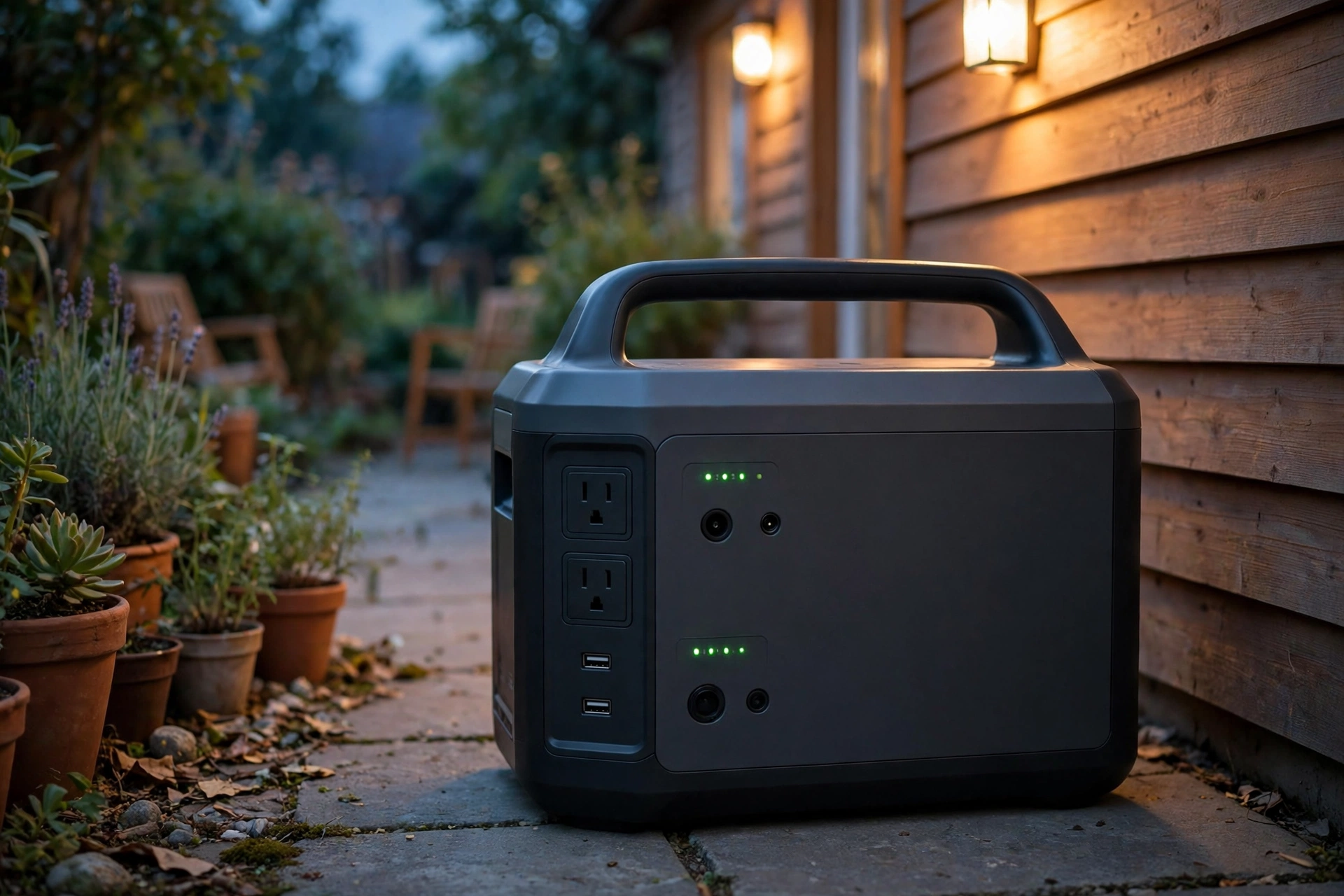
Battery Backup · Portable Power
Best Portable Power Station for Home Backup: 2026 Buyer's Guide
The best portable power station for home backup in 2026: sizing math, the specs that matter, top picks compare…
Pillar 01 · Energy Resilience
Best Home Battery for Outage Prone Areas 2026: Picks for Every Outage
Best home battery for outage prone areas 2026: installed vs portable picks, sizing math, and the verdict for s…
Pillar 01 · Energy Resilience
10kWh vs 13.5kWh vs 20kWh Home Battery: Which Size Is Right? (2026)
10kWh vs 13.5kWh vs 20kWh home battery compared: usable capacity, backup runtime, solar pairing, and which tie…
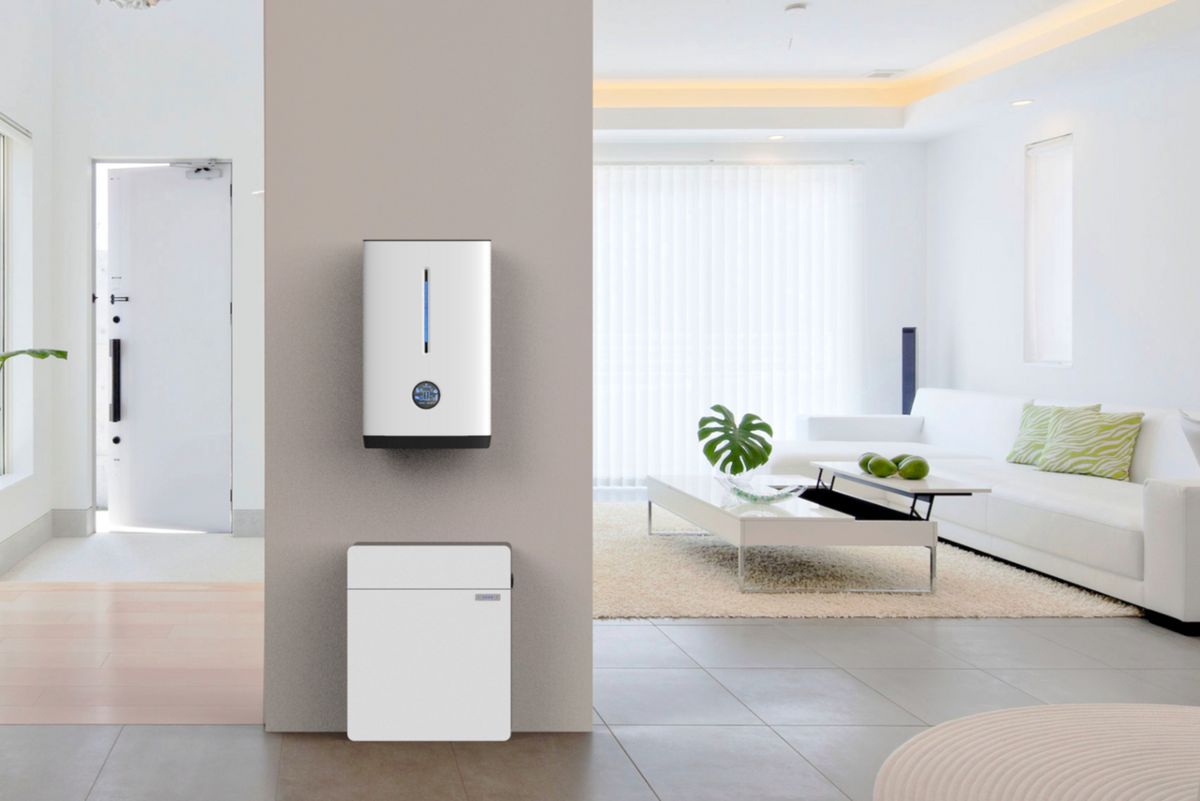
Expansion
Adding a Second Home Battery: 2026 Guide
Adding a second home battery in 2026: modular vs add-a-box expansion, inverter headroom, rewiring, permits, an…
Pillar 01 · Energy Resilience
Best Whole Home Battery for Time of Use Rates 2026: Picks That Earn Their Keep
Best whole home battery for time of use rates 2026: TOU arbitrage math, the features that decide payback, and …
Battery Sizing
Sizing Home Batteries for All-Electric Homes: Heat Pumps, EVs & Induction
Sizing home batteries for all-electric homes takes different math: heat pumps, EVs, and induction change kW an…